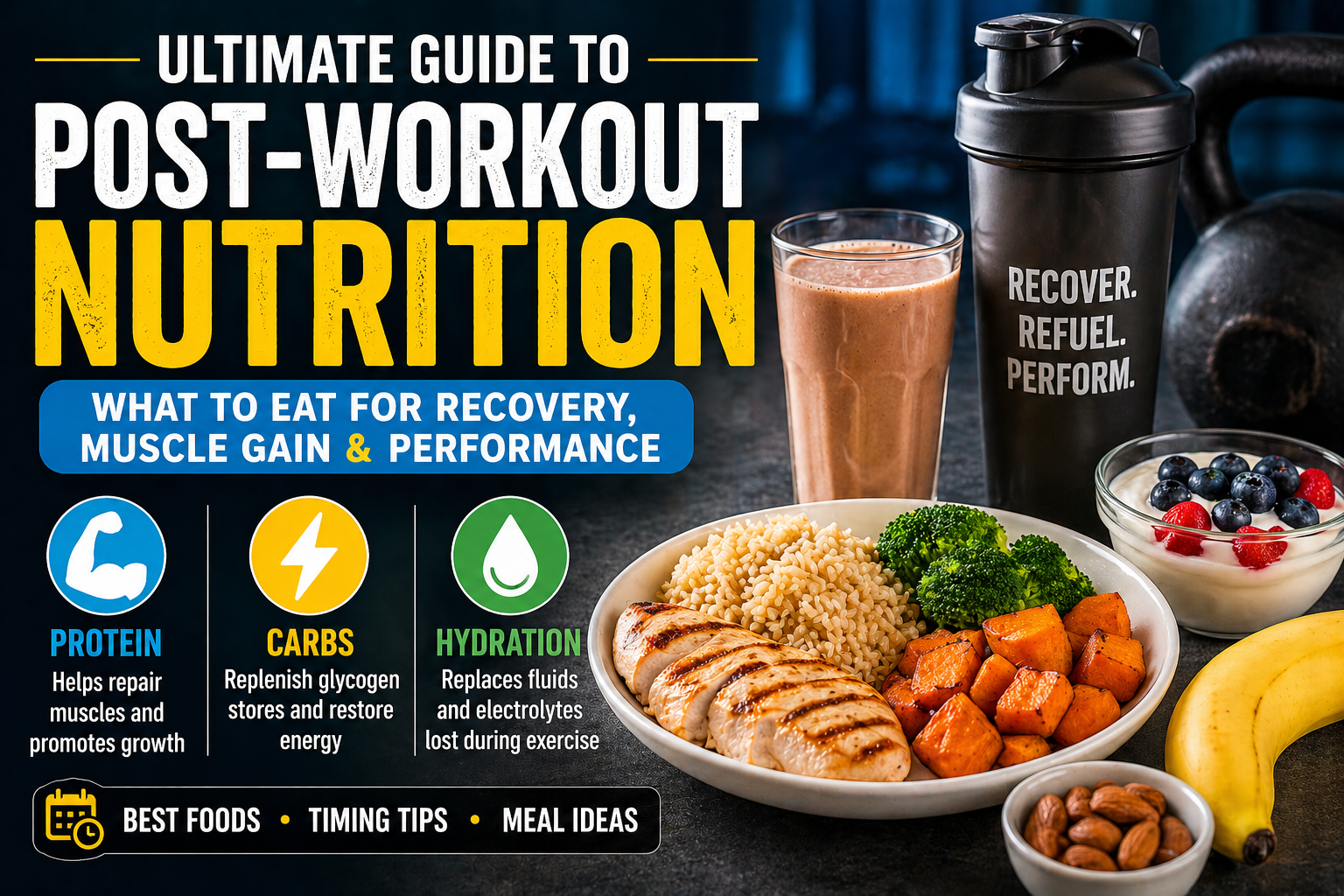
You’ve finished your last set, the sweat is drying, and your muscles are likely humming with that post-exercise glow. But while the gym session is over, the real transformation is just starting inside your body.
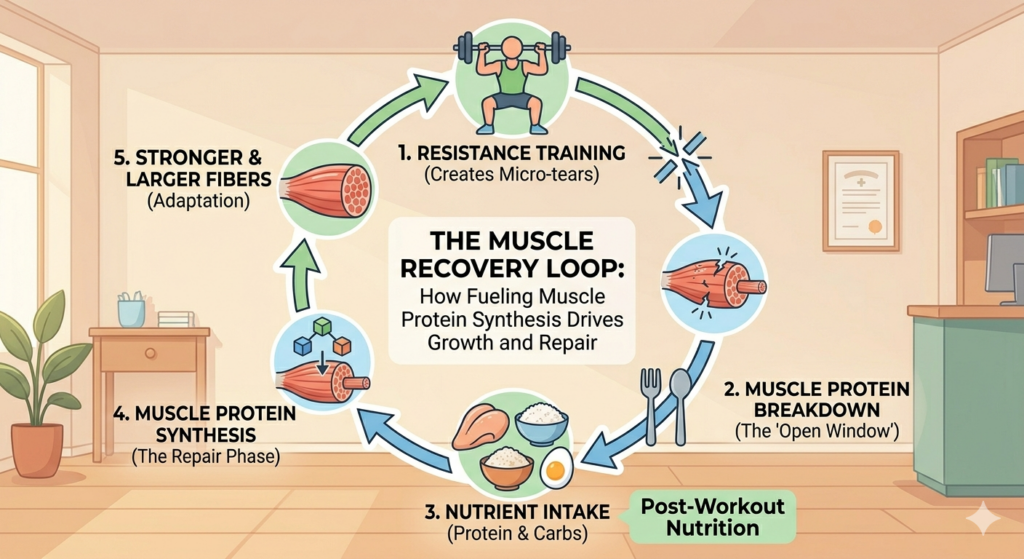
What you eat after exercise strongly influences muscle recovery, energy restoration, and body composition. During training, you don’t actually build muscle; you break it down. You create microscopic tears in muscle fibers, drain your energy “tanks,” and lose vital fluids.
The post-workout meal acts as the “repair crew” that arrives at the construction site. This guide explains exactly what to eat, when to eat it, and how to match your post exercise nutrition to your specific fitness goals.
⚡ Quick Answer: The Post-Workout Essentials
The best post-workout nutrition includes 20–40 grams of high-quality protein to stimulate muscle protein synthesis and enough carbohydrates to restore glycogen. Eating within 1–2 hours after exercise helps reduce fatigue and prepares your body for the next session. Hydration is equally critical; aim to replace 150% of the fluid lost during your workout.
Why Post-Workout Nutrition Matters (The Science)
Many people treat the post workout meal as an afterthought. However, skipping this window is like building a house but never delivering the bricks. To optimize your results, you must address three physiological needs:
1. Muscle Protein Synthesis (MPS)
Exercise triggers muscle protein breakdown. To repair those fibers and grow stronger, your body must enter a state of muscle protein synthesis. Consuming protein after a workout provides the amino acids—specifically leucine—needed to flip the “on switch” for repair.
2. Glycogen Replenishment
Your muscles store energy as glycogen. High-intensity training can drain these stores significantly. If you don’t replenish them with carbohydrates, your performance in the next workout will likely suffer.
3. Hormonal Balance and Recovery
Training spikes cortisol, a stress hormone. While cortisol is necessary for energy mobilization, keeping it elevated too long can be catabolic (muscle-wasting). Nutrition helps manage the stress response by restoring glycogen and supporting recovery, which gradually lowers cortisol levels after exercise.
The Three Pillars of Post-Workout Nutrition
A successful post workout recovery meal is built on three core nutrients: Protein, Carbohydrates, and Fluids.
1. Protein for Muscle Repair
Protein is the most critical component of the after workout meal for muscle gain. It provides the building blocks for tissue repair.
- Target: 0.14–0.23 grams of protein per pound of body weight (roughly 20–40g for most people).
- Best Sources: Whey, eggs, Greek yogurt, chicken, or soy protein.
2. Carbohydrates for Energy Restoration
Carbohydrates increase insulin, which helps reduce muscle protein breakdown and supports glycogen replenishment. While protein builds the “house,” carbs provide the “fuel” for the workers.
- Target: 0.5–0.7 grams of carbs per pound of body weight for intense sessions.
- Best Sources: Rice, potatoes, fruit, oats, and pasta.
3. Fluids and Electrolytes
Hydration supports kidney function and helps your body process protein efficiently. Through sweat, you lose sodium, potassium, and magnesium.
- Target: Drink 16–24 ounces of water for every pound lost during exercise.
The 3 Biggest Post-Workout Nutrition Myths
There is a lot of “bro-science” in the fitness world. Let’s debunk the three most common myths.
Myth 1: You must eat within 30 minutes or you lose your gains.
The “anabolic window” is much wider than we once thought. If you had a meal 1–2 hours before training, your body is still absorbing those nutrients. While eating sooner is better for those training twice a day, a 1–2 hour window is perfectly fine for most.
Myth 2: Protein shakes are mandatory.
While whey protein is convenient and fast-absorbing, whole foods like chicken, eggs, or fish are just as effective for muscle growth. Shakes are a tool, not a requirement.
Myth 3: Carbs make you fat after a workout.
Actually, your body is most “primed” to handle carbohydrates immediately after exercise. The insulin spike helps drive nutrients into hungry muscle cells rather than storing them as fat.
How to Match Nutrition to Your Fitness Goals
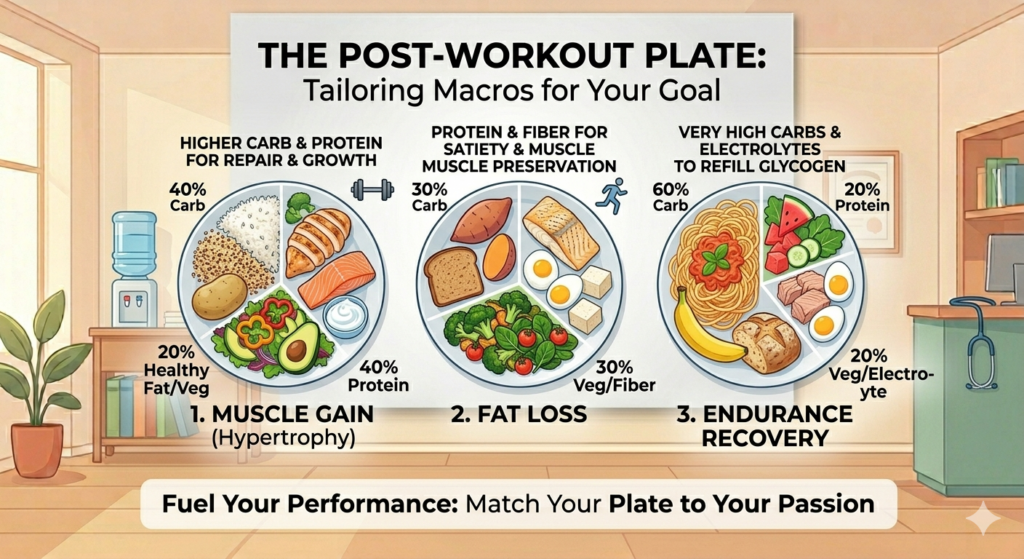
One size does not fit all. Your post workout nutrition should reflect what you did on the gym floor.
For Muscle Gain (Hypertrophy)
To grow, you need a surplus of energy and plenty of building blocks.
- The Plate: 40% Carbs, 30% Protein, 30% Healthy Fats/Veg.
- Key Food: A large bowl of chicken, white rice, and avocado.
For Fat Loss
When losing weight, you want to protect muscle while burning fat.
- The Plate: 50% Fiber-rich Veg, 30% Lean Protein, 20% Complex Carbs.
- Key Food: Grilled salmon, a small sweet potato, and a large helping of broccoli.
For Endurance Recovery
Runners and cyclists need to focus on refilling the tank.
- The Plate: 60% Carbs, 20% Protein, 20% Veg/Electrolytes.
- Key Food: A large plate of pasta with lean turkey bolognese and a side of fruit.
Best Foods to Eat After a Workout
Choosing the best post workout foods involves finding a balance between fast digestion and nutrient density.
Top-Tier Protein Sources
- Whey Protein: The “gold standard” for speed and leucine content.
- Greek Yogurt: High in protein and contains probiotics for gut health.
- Egg Whites: Pure protein that is very easy to digest.
- Chicken or Turkey: Lean, versatile, and high in B vitamins.
Top-Tier Carbohydrate Sources
- White Rice: Very low fiber, making it the fastest way to refill glycogen.
- Bananas: Provides quick glucose and potassium for electrolyte balance.
- Sweet Potatoes: A “slow-burn” carb rich in Vitamin A.
- Berries: High in antioxidants to help manage post-exercise inflammation.
Best Post-Workout Snacks (When You’re Busy)
- Chocolate Milk: The classic 3:1 carb-to-protein ratio.
- Protein Bar + Apple: A portable, shelf-stable option.
- Rice Cakes with Nut Butter & Honey: Quick carbs with a hint of healthy fat.
- Jerky + Dried Fruit: A savory, high-protein snack for hikers or travelers.
Post-Workout Nutrition Timeline for Success
To get the most out of your training, follow this ultimate guide to post-workout nutrition schedule:
- 0–15 Minutes After: Rehydrate. Sip water or an electrolyte drink immediately.
- 30–90 Minutes After: Consume your primary post workout meal. This is when your body is most receptive to nutrients.
- 2–3 Hours After: Have a balanced snack or meal. If your primary meal was a shake, eat whole foods now.
- Rest of the Day: Focus on consistent protein intake every 3–4 hours to keep muscle protein synthesis elevated.
Common Mistakes That Slow Your Recovery
- Relying on “Cheat Meals”: Just because you worked out doesn’t mean your body needs a high-fat pizza. Very high-fat meals may slow digestion slightly, which isn’t ideal for rapid recovery.
- Only Drinking Water: If you’re a heavy sweater, water alone can dilute your sodium levels. Use an electrolyte powder or have a salty snack.
- Under-eating Carbs: Even on a “low carb” diet, a small amount of post-workout carbs can significantly improve recovery and reduce muscle soreness.
- Assuming a Shake is Enough: A 120-calorie protein shake isn’t a meal. If you don’t eat real food, you’ll likely feel ravenous and overeat later in the evening.
FAQ: Your Post-Workout Questions Answered
1. Is it bad to not eat after a workout?
Yes, for long-term progress. Skipping your meal increases muscle protein breakdown and leaves you fatigued. If you aren’t hungry, try a liquid shake to get the necessary nutrients without the “heavy” feeling.
2. Should I eat protein before or after a workout?
Both are beneficial. Pre-workout protein ensures amino acids are in the blood during the session. Post-workout protein ensures you have the materials to repair the damage once the session ends.
3. What should I eat after workout for muscle recovery and soreness?
Focus on protein and anti-inflammatory foods. Tart cherry juice, salmon (Omega-3s), and colorful berries can help reduce the severity of Delayed Onset Muscle Soreness (DOMS).
4. Can I eat fat after a workout?
Yes, but keep it moderate. While fat doesn’t “ruin” a workout, a massive amount can slow down the absorption of the carbs and protein your muscles need immediately.
5. How much protein after workout is too much?
Most research shows that the body can only use about 20–40g of protein at once for muscle building. Anything more will likely be used for energy or excreted, though it isn’t harmful to healthy individuals.
Final Verdict: The 3 Simple Rules
If you’re overwhelmed by the science, just follow these three rules:
- Prioritize Protein: Get 20–40g within 90 minutes.
- Add Your Carbs: More for heavy lifting/cardio, less for light yoga.
- Hydrate with Salt: Water + a pinch of salt or electrolytes.
Stop guessing and start fueling! For the next 7 days, try to have a high-protein, moderate-carb meal within 60 minutes of every workout. Take a note of your energy levels the following morning. You’ll likely be surprised at how much stronger you feel.
Looking for more? Check out our Guide to the Best Pre-Workout Foods or discover the Best Exercises for Insulin Resistance!
Sources & References
- Kerksick, et al. (2017). International Society of Sports Nutrition Position Stand: Nutrient Timing. Journal of the International Society of Sports Nutrition.
- Schoenfeld & Aragon (2013). Nutrient timing revisited: is there a post-exercise anabolic window?
- Thomas, et al. (2016). American College of Sports Medicine Joint Position Statement: Nutrition and Athletic Performance.
- Ivy, J. L. (2004). Regulation of Muscle Glycogen Repetitions Post-Exercise. Journal of Sports Science and Medicine.
Author: Marco Reed, CSCS, CISSN (Certified Strength and Conditioning Specialist)
Reviewed By: Registered Dietitian Nutritionist (RDN) & Sports Nutrition Board
This guide is rigorously vetted to align with the International Society of Sports Nutrition (ISSN) position stands and peer-reviewed metabolic research.
Disclaimer: This article is for informational purposes and does not replace professional medical advice. Always consult a healthcare provider before starting a new nutrition or supplement regimen.