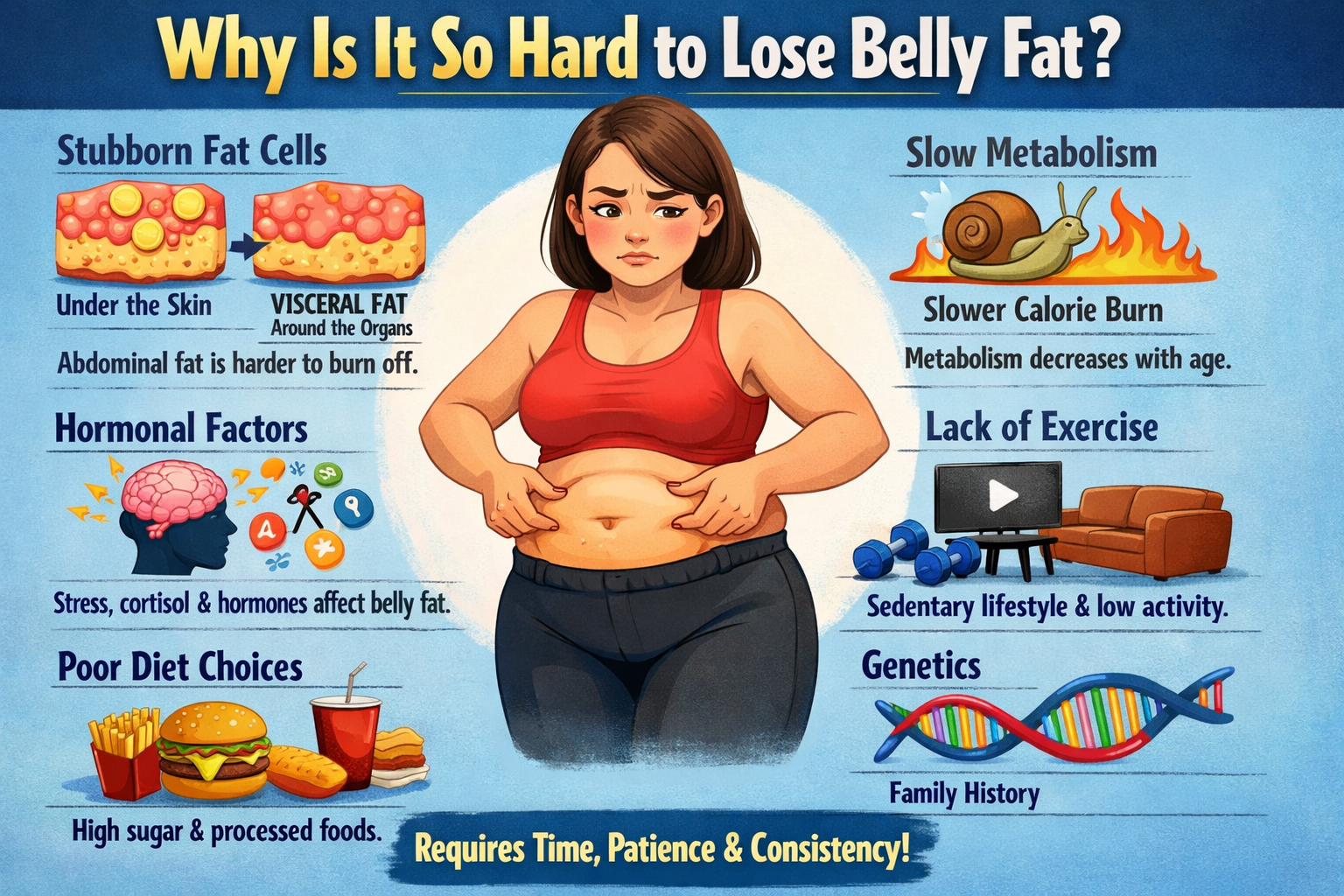
You have likely stood in front of the mirror, pinched your midsection, and wondered why that specific area refuses to change. You might eat salads, spend hours on the treadmill, and get plenty of sleep, yet your waistline remains stubborn. It feels as though your belly fat operates under a different set of biological rules than the rest of your body. This frustration is incredibly common, and for many, it feels like an uphill battle against their own physiology.
This struggle matters because abdominal fat is more than just a cosmetic concern. It represents a significant health risk, as the fat stored deep within your abdomen can wrap around vital organs and disrupt your metabolism. Unlike the fat on your arms or legs, belly fat actively produces hormones and inflammatory signals that can increase your risk of chronic diseases. Understanding why this area is so resistant to change is the first step toward reclaiming your health and confidence.
In this guide, you will learn the fascinating science behind “stubborn” fat cells and why they are biologically programmed to hold on tight. We will explore the roles of hormones like cortisol and insulin, the impact of your genetics, and the lifestyle habits that might be secretly stalling your progress. By the end of this article, you will have a clear, evidence-based roadmap of the specific exercises and dietary changes that actually work to reduce belly fat.
Why is it so hard to lose belly fat?
Belly fat is difficult to lose because it contains a higher density of “alpha-receptors,” which slow down the fat-burning process. Additionally, abdominal fat is highly sensitive to insulin and cortisol. These hormones trigger fat storage and inflammation, making the midsection more resistant to traditional weight loss methods than other body parts.
Understanding the Two Types of Belly Fat
Before you can lose belly fat, you must understand what you are fighting. Your midsection contains two very different types of fat.
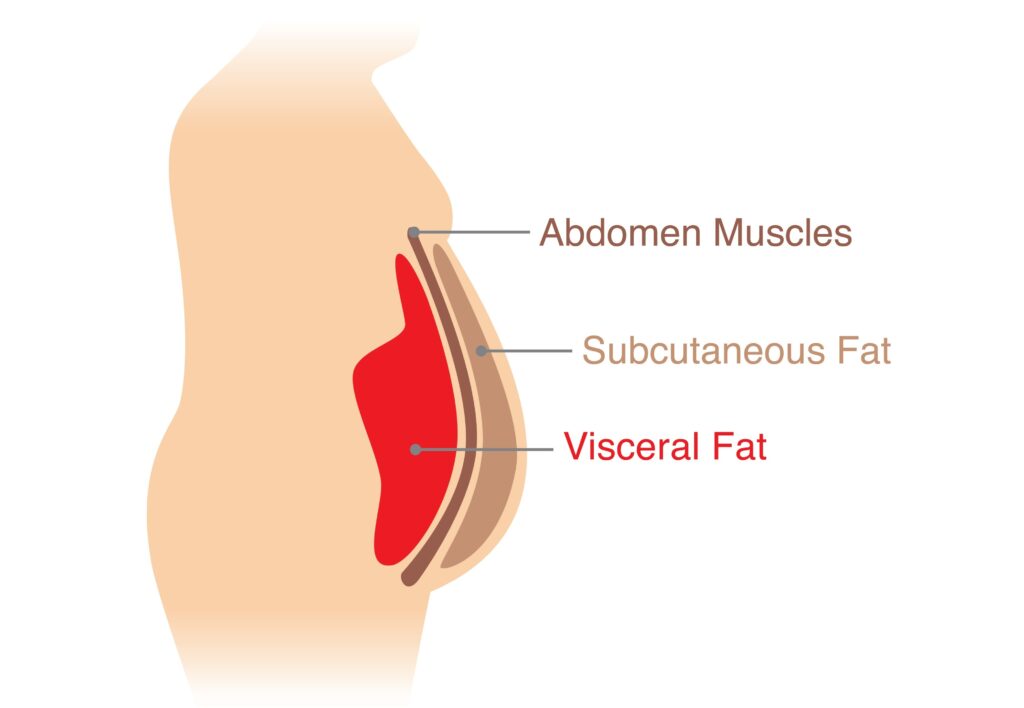
Subcutaneous vs. Visceral Fat
Subcutaneous fat sits right under your skin. This is the fat you can pinch with your fingers. While it might frustrate you when you put on a pair of jeans, it is relatively harmless from a medical standpoint. It acts as an energy reserve and provides padding for your body.
Visceral fat is the real culprit. This fat lives deep inside your abdominal cavity, surrounding your liver, intestines, and pancreas. You cannot see it or pinch it directly, but it creates a firm, protruding belly. Visceral fat is “metabolically active,” meaning it functions like an independent organ. It pumps out inflammatory chemicals called cytokines, which can lead to heart disease and Type 2 diabetes.
Because these two fats behave differently, they require different approaches. Visceral fat actually responds quite well to exercise and diet because it has a high blood supply. Subcutaneous fat, however, is often the “stubborn” layer that sticks around even after you have improved your health markers.
The Science of Receptors: Why Some Fat Is “Stubborn”
Many people ask, “Why is it so hard to lose belly fat?” while their face or arms get leaner. The answer lies in your cell receptors. To burn fat, your body must first release it from the cell through a process called lipolysis. Hormones like adrenaline trigger this release by docking onto receptors on the fat cell’s surface.
Fat cells have two main types of receptors: alpha-receptors and beta-receptors.
- Beta-receptors act like a green light. They speed up fat breakdown and make it easy for the body to use that fat for fuel.
- Alpha-receptors act like a red light. they slow down fat breakdown and make the cell resistant to releasing its energy.
Unfortunately, the fat in your abdominal region has a much higher concentration of alpha-receptors than fat in other areas. This is why you might see your face or chest thin out quickly, while your waist stays the same. Your body simply finds it harder to “unlock” the energy stored in your belly because of this biological programming.
Hormones and Belly Fat: The Invisible Gatekeepers
Your hormones act as the directors of your metabolism. They tell your body where to store fat and when to burn it. Two specific hormones play a massive role in why belly fat is hard to lose: insulin and cortisol.
Insulin is your primary storage hormone. Every time you eat sugar or refined carbohydrates, your blood sugar spikes. Your pancreas releases insulin to move that sugar into your cells. However, high insulin levels also signal your body to stop burning fat and start storing it. If your insulin remains high because of a poor diet, your belly fat stays “locked” away.
Cortisol is known as the stress hormone. When you face chronic stress—from work, lack of sleep, or anxiety—your cortisol levels stay elevated. High cortisol specifically triggers the storage of visceral fat. It tells your body that you are in a “crisis,” so it stores energy in the most convenient place: right in your midsection. This is why many people develop a “stress belly” even if they eat a healthy diet.
Insulin Resistance and the Midsection
Insulin resistance occurs when your cells stop responding to the hormone insulin. When this happens, your pancreas must pump out even more insulin to keep your blood sugar stable. This creates a vicious cycle. Because insulin is a fat-storage hormone, having high levels in your blood makes it almost impossible to lose weight around your middle.
Recent research, including a 2019 study published in the Journal of Clinical Investigation, suggests that insulin resistance specifically promotes the growth of visceral fat cells. This creates an inflammatory environment that further worsens insulin resistance.
To break this cycle, you must focus on improving your insulin sensitivity. This usually involves reducing added sugars, increasing your fiber intake, and moving your body consistently. As your cells become more sensitive to insulin, your body will finally feel “safe” enough to release the fat stored in your abdomen.
The Role of Cortisol: Stress and Fat Storage
You cannot ignore the mental component of weight loss. If you are constantly stressed, your body will prioritize fat storage over fat burning. Cortisol increases your appetite and drives cravings for “comfort foods” that are high in fat and sugar.
A 2018 study from Yale University found that even thin women who were stressed had higher levels of abdominal fat. This happens because abdominal fat cells have more receptors for cortisol than fat cells in other parts of the body. When cortisol levels rise, these cells effectively “grab” fat from the bloodstream and pull it into storage.
Managing stress through meditation, deep breathing, or simply taking walks can lower your cortisol. When your cortisol drops, you remove the chemical signal that tells your body to accumulate belly fat. This makes your diet and exercise efforts far more effective.
Read more>>The Role of Cortisol in Stubborn Belly Fat
Why Diet Alone Often Fails
Many people try to lose belly fat by simply eating less. While a calorie deficit is necessary for weight loss, it isn’t always enough to target the midsection. If you cut calories too drastically, your body may enter “starvation mode.” This increases cortisol and slows your metabolism, which can actually cause your body to hold onto belly fat even tighter.
The quality of your food matters just as much as the quantity. Diets high in ultra-processed foods—like white bread, sugary cereals, and packaged snacks—spike your insulin levels constantly. Even if you stay within your calorie limit, these insulin spikes keep your fat-burning enzymes turned off.
Instead of just “eating less,” focus on eating “better.” Prioritize protein, which keeps you full and preserves muscle mass. Include plenty of fiber, which slows down the absorption of sugar and prevents insulin spikes. When you focus on nutrient density, you create a hormonal environment that encourages fat loss rather than fat storage.
Foods That Specifically Cause Belly Fat
While no single food will instantly give you a belly, certain dietary choices make fat storage much more likely. Added sugars and high-fructose corn syrup are the primary offenders. Unlike other sugars, the liver processes fructose. When you consume too much, the liver converts it directly into visceral fat.
Trans fats, often found in some margarines and fried fast foods, are another major concern. A 6-year study on monkeys found that those fed a diet high in trans fats gained 30% more belly fat than those fed monounsaturated fats, even when total calories were the same. Trans fats cause inflammation and move fat from other parts of the body to the abdomen.
Alcohol also contributes to the “beer belly.” When you drink alcohol, your liver prioritizes burning the alcohol for fuel instead of fat. This halts your fat-burning process. Alcohol can also lower your inhibitions, leading to poor food choices that further contribute to weight gain in the midsection.
The Best Diet for Belly Fat Loss
If you want to lose belly fat, the Mediterranean Diet is often cited by researchers as the gold standard. This eating pattern emphasizes whole foods like vegetables, fruits, whole grains, beans, nuts, and healthy fats like olive oil.
A 2020 study in the journal Nutrients highlighted that a high-protein, Mediterranean-style diet significantly reduced visceral fat in participants. Protein is particularly important because it has a high thermic effect, meaning your body burns more calories digesting it than it does for fats or carbs.
Key dietary strategies include:
- Increasing Soluble Fiber: Foods like oats, flaxseeds, and avocados help you feel full and reduce the absorption of fat.
- Prioritizing Lean Protein: Aim for chicken, fish, eggs, or plant-based proteins at every meal.
- Limiting Liquid Calories: Swap sodas and juices for water, green tea, or black coffee.
Read more>>Best Foods That Burn Belly Fat Fast
Exercises to Lose Belly Fat: What Works?
You have likely heard that you can’t “spot reduce” fat. This means doing 500 crunches a day won’t specifically burn the fat off your stomach. However, you can choose exercises that create the best hormonal and metabolic environment for fat loss across your whole body.
Strength Training is the foundation. Lifting weights builds muscle mass. Muscle is metabolically active, meaning it burns more calories than fat, even when you are resting. By increasing your muscle mass, you raise your baseline metabolism, making it easier to maintain a calorie deficit.
High-Intensity Interval Training (HIIT) is another powerful tool. HIIT involves short bursts of intense exercise followed by brief recovery periods. Research shows that HIIT can be more effective at reducing visceral fat than steady-state cardio (like jogging) because it triggers a significant hormonal response that keeps your metabolism elevated for hours after the workout.
NEAT (Non-Exercise Activity Thermogenesis) is the secret weapon. This includes all the movement you do outside of the gym—walking the dog, cleaning the house, or taking the stairs. Increasing your daily step count to 8,000 or 10,000 is one of the most sustainable ways to burn extra calories and keep your insulin levels stable.
The Importance of Sleep and Circadian Rhythm
Sleep is often the missing piece of the puzzle for those wondering why it is so hard to lose belly fat. When you are sleep-deprived, your body experiences a double-whammy of hormonal disruption. Your levels of ghrelin (the hunger hormone) go up, and your levels of leptin (the fullness hormone) go down.
Furthermore, poor sleep spikes your cortisol. A 2022 study published in The Journal of the American College of Cardiology found that lack of sleep led to an 11% increase in visceral fat. Even if the participants didn’t gain much total weight, the fat they did gain was stored in the most dangerous place: the abdomen.
Your body also follows a “circadian rhythm,” an internal clock that regulates your metabolism. Eating late at night, when your body is preparing for sleep, can disrupt insulin sensitivity. Try to finish your last meal at least two to three hours before bedtime to give your body a chance to process the energy before you rest.
Age and Muscle Mass: The Metabolic Shift
As we age, our bodies naturally undergo changes that make it harder to lose belly fat. One of the biggest shifts is the loss of muscle mass, known as sarcopenia. Starting in our 30s, we can lose 3% to 5% of our muscle mass per decade if we aren’t active.
Less muscle means a slower metabolism. This is why many people find that they gain weight in their 40s and 50s even if they haven’t changed their diet. For women, the transition through menopause causes a drop in estrogen, which tells the body to redistribute fat from the hips and thighs to the abdomen.
To combat this, resistance training becomes non-negotiable as you get older. You must give your body a reason to keep its muscle. Lifting weights or doing bodyweight exercises twice a week can help you maintain your metabolic rate and fight the “middle-age spread.”
The Impact of Genetics: Is It Your DNA?
Your genetics do play a role in where your body stores fat. Some people are predisposed to an “apple” shape, while others are “pears.” Studies have identified specific genes that influence how your body handles insulin and where it deposits fat cells.
However, your genes are not your destiny. Think of your genetics as “loading the gun” and your lifestyle as “pulling the trigger.” Even if you have a genetic tendency to store fat in your midsection, you can still achieve a lean waistline through consistent habits.
Understanding your genetic tendency simply means you may need to be more diligent with your diet and stress management than someone else. It might take you longer to see results, but the biological laws of energy balance and hormonal regulation still apply to you.
Why Progress Takes Time: The Timeline
Patience is the hardest part of losing belly fat. Because abdominal fat has those “alpha-receptors” we mentioned earlier, it is often the last place you will see significant change. Your body will likely burn fat from your face, arms, and legs first.
Many people quit after three or four weeks because their waistline hasn’t shrunk. However, your body may be losing visceral fat (the dangerous kind) first, which you can’t always see in the mirror. You might notice your energy levels improve, your digestion get better, or your blood pressure drop before you see a difference in your belt size.
Expect a realistic timeline. It can take 12 weeks of consistent effort to see a visible reduction in stubborn subcutaneous belly fat. Consistency beats intensity every single time. If you can stick to a moderate plan for six months, you will see much better results than if you follow an extreme plan for six days.
Real-World Example: Sarah’s Story
Consider Sarah, a 42-year-old office manager. Sarah ate 1,500 calories a day and ran for 30 minutes every morning. Despite this, she couldn’t lose her “muffin top.” Sarah was stressed, slept six hours a night, and her diet consisted of “low-fat” processed snacks and diet sodas.
Sarah made three changes. First, she swapped her morning runs for three days of strength training. Second, she prioritized protein and whole fibers, which stabilized her insulin. Third, she started a 10-minute meditation habit and went to bed an hour earlier to lower her cortisol.
In four months, Sarah’s weight only dropped by five pounds, but she lost three inches off her waist. By shifting her focus from “losing weight” to “balancing hormones” and “building muscle,” she finally overcame the biological barriers that had kept her stuck for years.
Frequently Asked Questions (FAQ)
Why is belly fat the last to go?
Abdominal fat cells have a high density of alpha-receptors, which inhibit fat breakdown. Your body naturally prioritizes burning fat from areas with more beta-receptors, like your face or limbs, before it finally accesses the more resistant fat in your midsection.
Can you target belly fat specifically?
You cannot “spot reduce” fat through specific exercises like crunches. However, you can target the hormonal causes of belly fat. By lowering insulin and cortisol through diet, sleep, and stress management, you encourage your body to burn fat from the abdominal region.
What foods cause belly fat the most?
Foods high in added sugar, high-fructose corn syrup, and trans fats are the primary contributors. These foods spike insulin and cause inflammation. Alcohol also contributes by stalling the fat-burning process and increasing the storage of visceral fat around the organs.
How does stress affect my waistline?
Stress triggers the release of cortisol. High cortisol levels signal your body to store fat deep in the abdomen to protect your vital organs. Chronic stress also increases your appetite for high-calorie “comfort foods,” making weight loss around the middle even harder.
Why am I not losing belly fat even when I exercise?
You might be focusing too much on cardio and not enough on strength training. Cardio burns calories, but muscle builds your metabolism. Additionally, if your exercise is too intense and you aren’t recovering, you may be keeping your cortisol levels too high.
Does sleep really help lose belly fat?
Yes. Sleep deprivation increases ghrelin (hunger hormone) and cortisol, while decreasing leptin (fullness hormone). A lack of sleep makes your body more likely to store fat in the visceral area and makes it harder for your cells to respond to insulin.
What is the best exercise for belly fat?
A combination of strength training and High-Intensity Interval Training (HIIT) is most effective. Strength training builds muscle to boost your metabolism, while HIIT triggers a hormonal response that specifically targets fat loss. Daily walking (NEAT) is also essential for keeping insulin stable.
Is belly fat a sign of a medical issue?
Excessive belly fat, especially visceral fat, can be a symptom of insulin resistance, metabolic syndrome, or hormonal imbalances like PCOS. If you are struggling despite consistent lifestyle changes, it is a good idea to consult a healthcare professional for blood work.
Ready to start your journey toward a healthier, leaner midsection? Don’t try to change everything at once. Choose one strategy from this guide—whether it’s adding ten minutes of daily walking, eating more protein, or going to bed thirty minutes earlier—and commit to it for the next two weeks. Consistency is the key to overcoming your biology. If you found this guide helpful, share it with a friend or subscribe to our newsletter for more science-backed health tips!