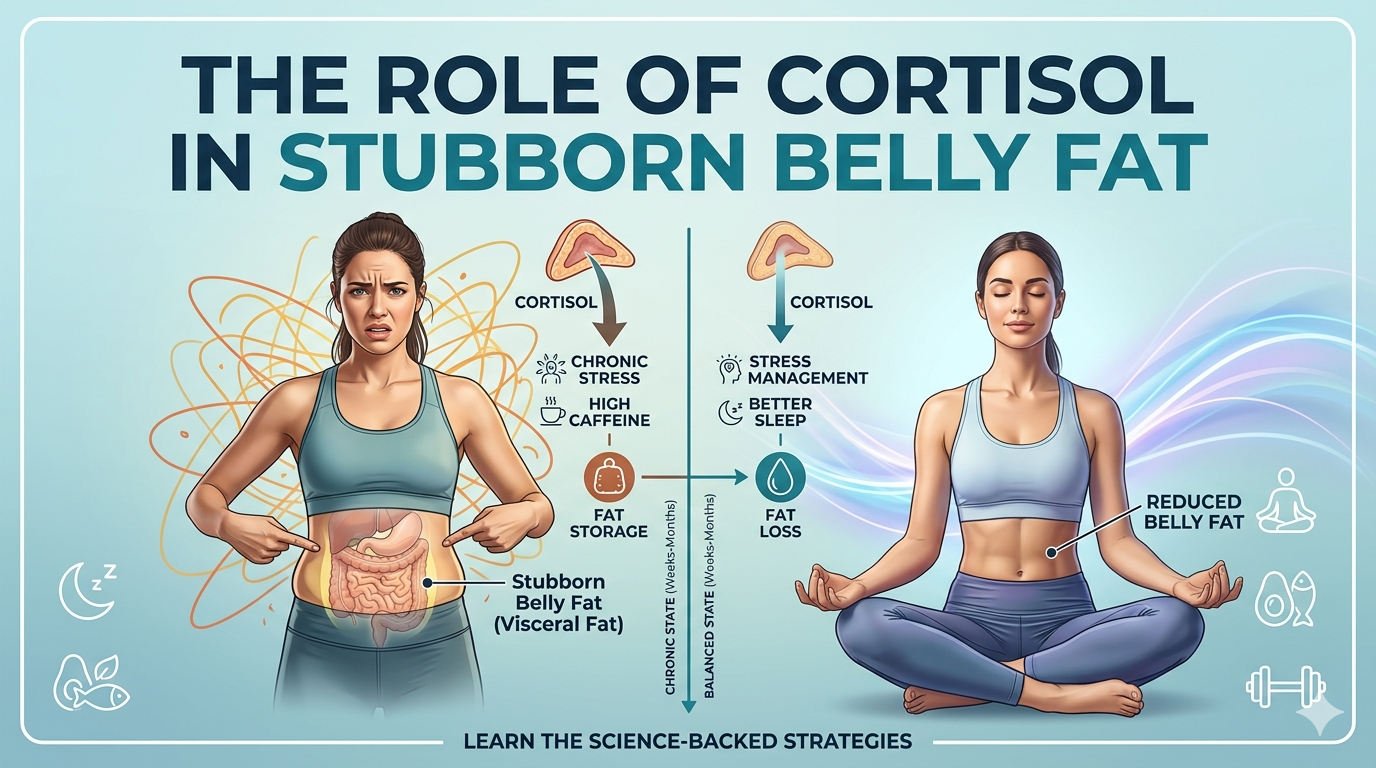
Have you ever felt like you’re doing everything right—hitting the gym four times a week, swapping soda for seltzer, and tracking every calorie—yet your waistband refuses to budge? If you are struggling with stubborn fat specifically around your midsection, the culprit might not be your diet or your willpower. It might be your hormones.
While calories in versus calories out is a fundamental principle of weight loss, it doesn’t tell the whole story. Your body is a complex chemical factory governed by hormones that dictate where you store fat and how easily you burn it. Among these, cortisol—often called the “stress hormone”—is the primary driver of abdominal weight gain.
Understanding the cortisol and belly fat connection is the missing link for many who feel stuck in their fitness journey. In this comprehensive guide, we will dive into the science of how stress reshapes your body and, more importantly, how you can lower your cortisol levels naturally to finally lose that stubborn visceral fat.
Does Cortisol Cause Belly Fat? Cortisol is a stress hormone released by the adrenal glands. When cortisol levels remain elevated for long periods, the body tends to store fat—especially around the abdomen. This hormonal response is linked to increased cravings, insulin resistance, and slowed metabolism, creating what is commonly referred to as “stress belly fat.”
What Is Cortisol and Why the Body Needs It?
Before we label cortisol as the villain of your fitness story, it is important to understand that you cannot live without it. Cortisol is a steroid hormone produced by the adrenal glands, which sit right atop your kidneys. It is part of a class of hormones called glucocorticoids.
In a healthy body, cortisol acts as a built-in alarm system. It is the star player in the “fight-or-flight” response. When your brain perceives a threat—whether it’s a predatory animal or a looming work deadline—the hypothalamus signals your adrenal glands to pump cortisol into your bloodstream.
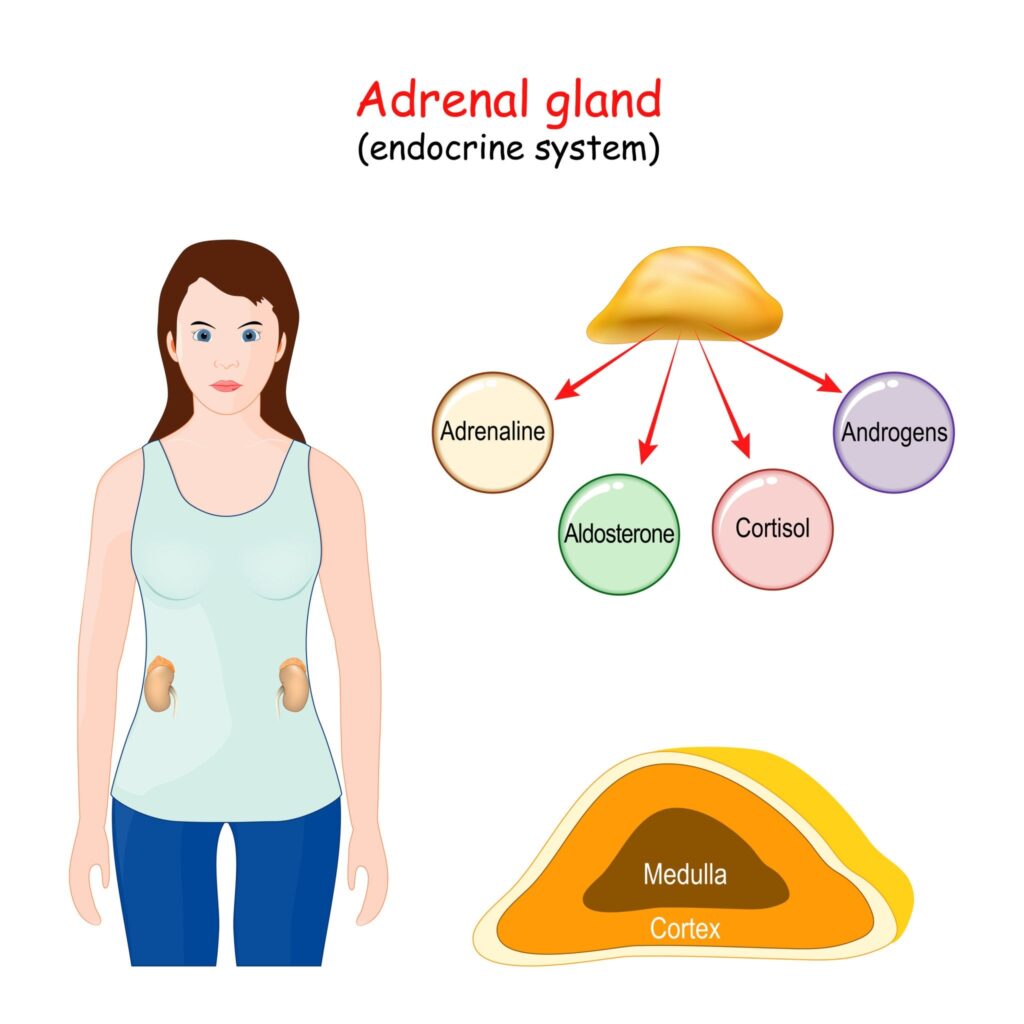
Adrenal gland. Human endocrine system
The Essential Functions of Cortisol:
- Metabolism Regulation: It helps the body manage how it uses carbohydrates, fats, and proteins.
- Blood Sugar Control: It increases glucose in the bloodstream to provide immediate energy for “fighting” or “fleeing.”
- Inflammation Reduction: It has powerful anti-inflammatory effects (which is why synthetic versions like hydrocortisone are used in medicine).
- Blood Pressure Management: It helps maintain a healthy cardiovascular system.
The problem isn’t cortisol itself; it is the duration of its presence. Evolutionarily, stress was meant to be acute (short-lived). Today, however, our bodies are bombarded by chronic stressors—traffic, social media, financial anxiety, and lack of sleep. When cortisol stays elevated for weeks or months at a time, it transforms from a life-saving hormone into a metabolic disruptor.
The Biological Mechanism: How Cortisol Causes Stubborn Belly Fat
The relationship between cortisol and abdominal fat is rooted in deep biology. If you find that your arms and legs stay lean while your stomach grows, you are likely dealing with “stress fat.” Here is exactly how that process works.
A. Cortisol Promotes Fat Storage
Fat cells in the abdominal area (visceral fat) are uniquely sensitive to cortisol. These cells have four times more cortisol receptors than fat cells located elsewhere in the body. When cortisol levels are high, it activates an enzyme called lipoprotein lipase (LPL), which encourages the body to shuttle fat into the deep abdominal cavity, surrounding your vital organs.
B. Increased Cravings for “Comfort Foods”
Cortisol doesn’t just change your biology; it changes your behavior. High cortisol levels increase the production of neuropeptide Y, a chemical that triggers intense cravings for carbohydrates and sugar. This is why we reach for cookies or pasta when we’re stressed—our brain thinks it needs quick energy to survive a perceived crisis.
C. Insulin Resistance and Metabolic Changes
Cortisol’s primary job is to raise blood sugar to give you energy. If you are chronically stressed, your blood sugar remains perpetually high. To compensate, your pancreas pumps out more insulin. Over time, your cells become “numb” to insulin—a state called insulin resistance. Since insulin is a fat-storage hormone, high levels of both cortisol and insulin create the perfect storm for rapid belly fat accumulation.
D. Muscle Breakdown
Cortisol is “catabolic,” meaning it breaks down tissues. To keep blood sugar high during stress, cortisol may break down muscle protein to convert it into glucose (a process called gluconeogenesis). Because muscle is metabolically active tissue that burns calories at rest, losing muscle leads to a significantly slower metabolism.
E. The Sleep-Cortisol Loop
Cortisol follows a circadian rhythm: it should be highest in the morning to wake you up and lowest at night to let you sleep. Chronic stress flips this cycle. High nighttime cortisol leads to insomnia or fragmented sleep. Lack of sleep then triggers even higher cortisol levels the following day, creating a vicious cycle that makes weight loss nearly impossible.
Expert Insight: The Medical Connection
According to endocrinologists, the way our body distributes fat is not random; it is highly directed by our endocrine system.
“Chronic stress can significantly influence fat distribution in the body. Research shows that elevated cortisol levels are associated with increased abdominal fat storage and metabolic changes that make weight loss more difficult.”
This expert observation confirms that cortisol weight gain is a medical reality. If your cortisol is chronically high, your body is essentially receiving a constant signal to “build a fortress” of fat around your internal organs for protection.
Signs Your Belly Fat May Be Linked to High Cortisol
How do you know if your weight gain is due to excess calories or hormonal imbalance? While only a medical professional can diagnose high cortisol (often via saliva or blood tests), several hallmark symptoms suggest stress belly fat:
- The “Apple” Shape: You carry a disproportionate amount of weight in your stomach while your limbs remain thin.
- The Afternoon Crash: You feel “tired but wired” at night but can barely keep your eyes open at 3:00 PM.
- Intense Sugar Cravings: A physical, almost uncontrollable need for sweets or salty snacks, especially under pressure.
- Thinning Skin or Slow Healing: High cortisol can inhibit collagen production, leading to skin that bruises easily or takes a long time to heal.
- Moon Face: A rounding of the face caused by fat deposits, often associated with very high cortisol levels (Cushing’s Syndrome).
- Brain Fog: Difficulty concentrating or remembering tasks due to the impact of stress hormones on the hippocampus.
Lifestyle Factors That Drive Cortisol Up
Modern life is designed to keep our cortisol levels spiked. Recognizing these triggers is the first step toward reclaiming your hormonal health.
- Chronic Psychological Stress: Constant worrying about things out of your immediate control keeps the adrenal glands in a state of hyper-vigilance.
- Sleep Deprivation: Even one night of poor sleep (less than 6 hours) can raise cortisol levels by over 50% the next evening.
- Overtraining: While exercise is good, “more” isn’t always “better.” Doing high-intensity interval training (HIIT) or heavy cardio every single day without rest tells the body it is under physical attack, driving cortisol through the roof.
- Excessive Caffeine: Caffeine stimulates the adrenals. If you are already stressed, that third cup of coffee acts as “liquid stress.”
- Inflammatory Diet: Diets high in processed seed oils, refined sugars, and chemical additives cause internal physiological stress, prompting a cortisol response to manage the inflammation.
Effective Ways to Reduce Cortisol and Belly Fat
If you want to reduce cortisol belly fat, you have to stop fighting your body and start supporting it. Here are science-backed strategies to lower your levels.
Prioritize Sleep Hygiene
Sleep is the only time your cortisol levels naturally bottom out. Aim for 7–9 hours of quality rest. To achieve this, turn off blue-light devices (phones/tablets) 60 minutes before bed and keep your room cool (around 18°C or 65°F).
Adjust Your Exercise Routine
If you suspect high cortisol, swap some of your intense cardio sessions for low-intensity steady state (LISS) exercise. Activities like walking in nature, yoga, or Pilates have been shown to lower cortisol while still burning calories. Strength training is also vital, as building muscle helps counteract cortisol-induced muscle wasting.
Meditation and Deep Breathing
It sounds “woo-woo,” but it is biological. Slow, diaphragmatic breathing stimulates the vagus nerve, which sends a signal to your brain to turn off the fight-or-flight response. Just five minutes of focused breathing can measurably lower cortisol in the bloodstream.
Supplement Wisely
Certain herbs known as adaptogens help the body “adapt” to stress.
- Ashwagandha: Clinical studies show it can reduce cortisol levels by up to 30%.
- Magnesium: Known as the “relaxation mineral,” it helps regulate the nervous system.
- Omega-3s: Found in fish oil, these reduce inflammation and dampen the cortisol response.
Read more: Best Foods That Burn Belly Fat Fast
The Cortisol-Lowering Diet: What to Eat
You can’t starve your way out of high cortisol; in fact, extreme calorie restriction is a major stressor that raises cortisol further. Instead, focus on foods that stabilize blood sugar and soothe the adrenals.
| Food Category | Examples | Why it helps |
| Healthy Fats | Avocados, Olive oil, Walnuts | Provides the building blocks for hormones and satiates hunger. |
| Omega-3 Fish | Salmon, Mackerel, Sardines | Reduces the inflammatory markers that trigger cortisol. |
| Magnesium-Rich Greens | Spinach, Swiss chard | Relaxes muscles and supports the nervous system. |
| Probiotic Foods | Kimchi, Kefir, Sauerkraut | 90% of serotonin is made in the gut; a healthy gut equals a calmer brain. |
| Vitamin C Fruits | Oranges, Strawberries, Kiwis | The adrenal glands have high concentrations of Vitamin C; it helps them recover after stress. |
Frequently Asked Questions (FAQs)
Does cortisol really cause belly fat?
Yes. Through a combination of increasing insulin resistance, triggering cravings, and activating fat-storage enzymes specifically in the abdomen, cortisol is a primary driver of visceral fat gain.
How can I tell if my cortisol levels are high?
Common signs include a “tired but wired” feeling at night, weight gain around the midsection despite exercise, frequent colds, and high blood pressure. A 24-hour salivary cortisol test is the most accurate way to confirm.
Can stress prevent weight loss?
Absolutely. Even if you are in a calorie deficit, high cortisol can cause your body to hold onto fat as a survival mechanism and break down muscle instead, stalling your progress.
What is the fastest way to reduce cortisol naturally?
The most immediate way is deep breathing and improving sleep. Over the long term, reducing caffeine, taking adaptogens like Ashwagandha, and walking daily are highly effective.
Should I test my cortisol levels?
If you have persistent abdominal fat along with symptoms like insomnia, anxiety, or extreme fatigue, testing can provide a clear roadmap for your recovery.
Conclusion: Take a Full-Body Approach to Weight Loss
The presence of stubborn belly fat is often your body’s way of telling you that your internal environment is out of balance. While we have been conditioned to believe that weight loss is purely a matter of eating less and moving more, the role of cortisol proves that stress management is just as important as your workout routine.
By prioritizing sleep, choosing whole foods, and incorporating stress-reduction techniques, you can lower your cortisol levels and signal to your body that it is “safe” to release stored fat. True metabolic health isn’t about punishing your body in the gym—it’s about creating a lifestyle where your hormones can work with you, not against you.
Start today by taking a 10-minute walk or practicing five minutes of deep breathing. Your waistline—and your peace of mind—will thank you.