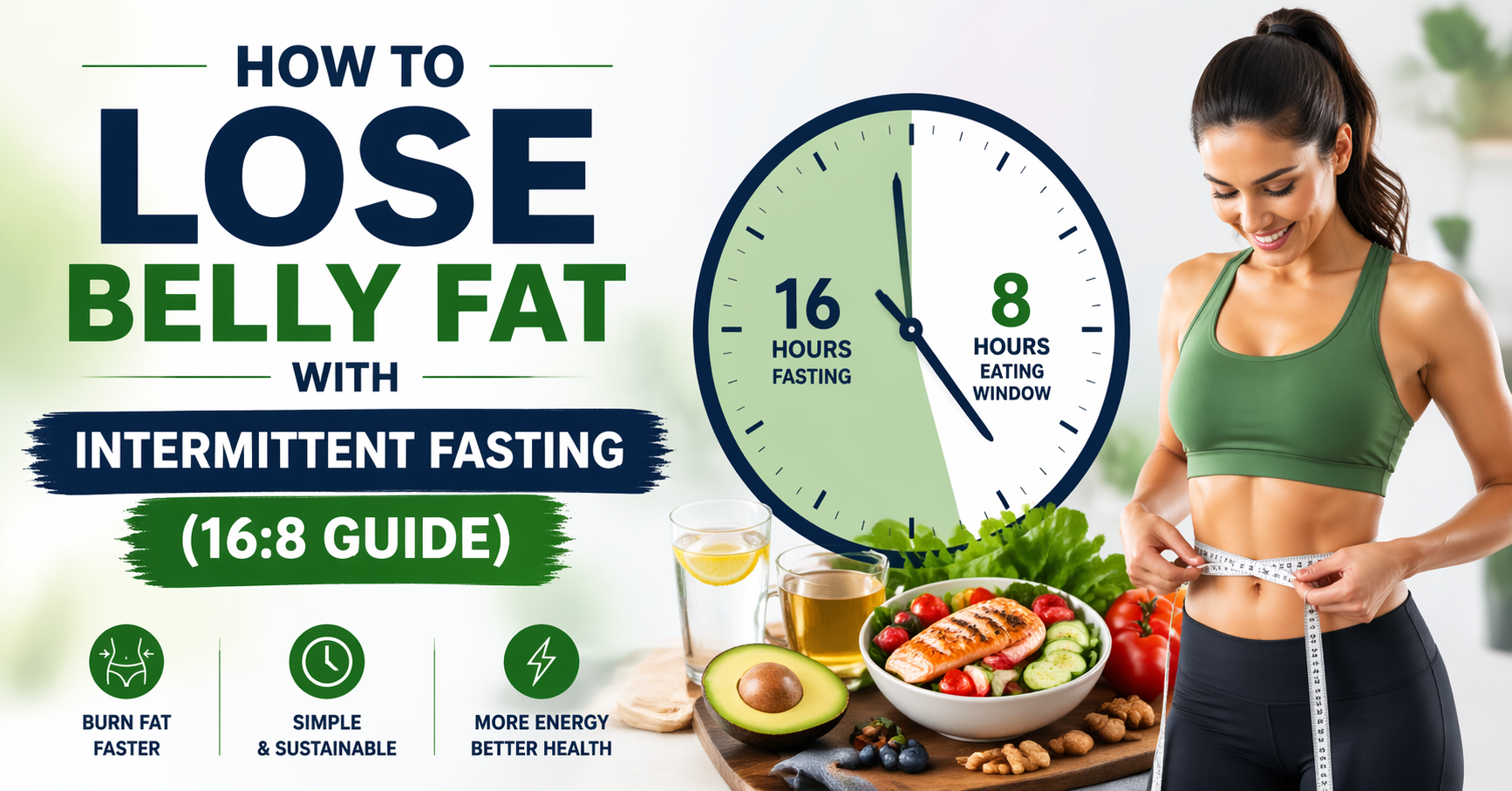
Belly fat often feels like it follows a completely different set of rules than the rest of your body. You might see your face thin out or your arms become more defined, yet that stubborn midsection refuses to budge. For many, this leads to a cycle of restrictive dieting and grueling workouts that yield little to no change in waist circumference. This isn’t necessarily a failure of willpower; it is often a result of how our hormones manage energy storage in the abdominal region.
This struggle matters because abdominal weight is more than a wardrobe inconvenience. Research consistently shows that visceral fat—the kind stored deep around your organs—is a major driver of metabolic syndrome and chronic inflammation. Reducing this fat isn’t just about aesthetics; it is about protecting your heart and improving your long-term vitality. Intermittent fasting (IF) has emerged as a powerful strategy because it addresses the hormonal root causes of fat storage rather than just cutting calories.
In this guide, you will learn exactly how to lose belly fat with intermittent fasting. We will break down the science of insulin sensitivity, explore the most effective fasting schedules for beginners, and provide a roadmap for long-term success. By the end of this article, you’ll understand how to shift your body from storing fat to utilizing it efficiently, helping you reclaim your health and your confidence.
Real-World Insight
Many people report that the hardest part of intermittent fasting isn’t hunger—it’s habit. The urge to eat at certain times is often psychological, not physical. In practice, many people find that once this behavioral pattern is broken (usually after 10–14 days), fasting becomes significantly easier to maintain and even feels like a natural state of being as the body adapts to burning its own fuel.
How to lose belly fat with intermittent fasting?
Intermittent fasting reduces belly fat by lowering insulin levels and increasing fat-burning hormones like norepinephrine. This metabolic shift encourages the body to utilize stored visceral fat for energy. Popular methods, such as the 16:8 schedule, create a natural calorie deficit and improve fat metabolism without the need for extreme restriction.
The Biology: How Fasting Affects Metabolism and Fat Storage
To understand why fasting works, we have to look at the “fed” and “fasted” states. When you eat, your body releases insulin to shuttle glucose into your cells. Because insulin is a storage hormone, having high levels in your blood can reduce your body’s ability to access stored fat efficiently. Most modern eating patterns keep us in a “fed” state for nearly 16 hours a day, leaving very little time for fat burning.
When you practice intermittent fasting, you extend the period where insulin remains low. Research published in The New England Journal of Medicine suggests that this triggers a “metabolic switch.” Once your body uses up its immediate glucose stores, it begins to break down fat into ketones for fuel. Studies suggest intermittent fasting can reduce visceral fat by up to 10–15% over several weeks when combined with a balanced diet.
Furthermore, fasting helps support your metabolic rate by increasing levels of norepinephrine (noradrenaline). This hormone sends signals to your fat cells, telling them to break down body fat into free fatty acids that can be burned for energy. This combination of low insulin and high norepinephrine helps create a favorable environment for intermittent fasting weight loss.
Expert Insight
“Intermittent fasting improves insulin sensitivity and promotes fat oxidation, making it particularly effective for reducing visceral fat—the type most strongly linked to chronic disease.” — Based on research published in The New England Journal of Medicine and Cell Metabolism.
Visceral vs. Subcutaneous Fat: Knowing Your Enemy
It is important to distinguish between the two types of fat in your midsection. Subcutaneous fat is the “pinchable” fat right under your skin. While it can be frustrating to see, it is relatively harmless from a medical standpoint. Visceral fat, on the other hand, is hidden deep within the abdominal cavity, wrapping around your liver, stomach, and intestines.
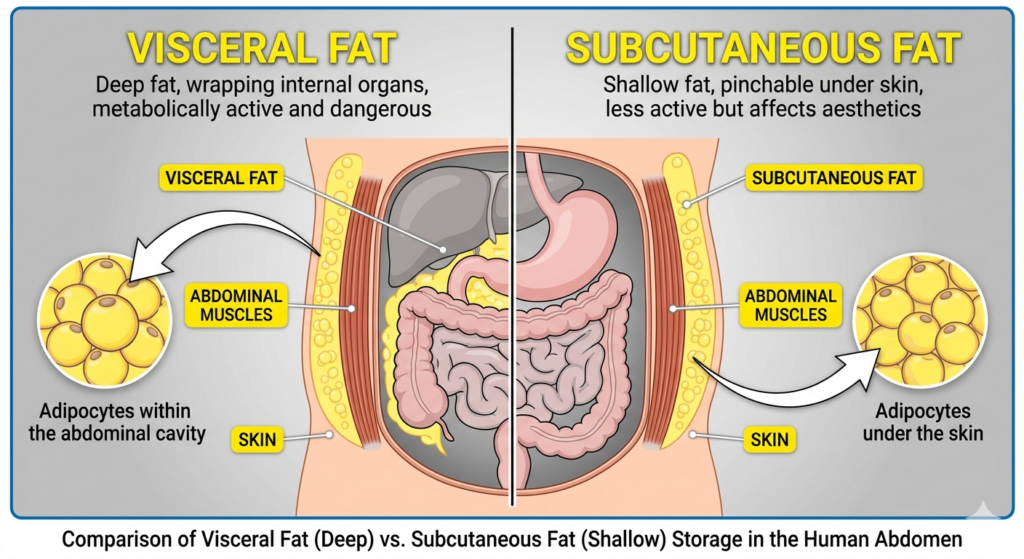
Does intermittent fasting burn belly fat? It is one of the most effective ways to target the dangerous visceral kind. Because visceral fat is more “metabolically active” than subcutaneous fat, it responds more quickly to the hormonal changes triggered by fasting. Clinically, a waist measurement over 40 inches for men or 35 inches for women often indicates an excess of visceral fat, making intermittent fasting for fat loss a high-value intervention for health.
The Best Intermittent Fasting Schedule for Fat Loss
Choosing the right schedule is the first step in learning how to lose belly fat with fasting. While there are many variations, the goal is to find a window that feels sustainable for your lifestyle.
1. The 16:8 Method (The Gold Standard)
The 16:8 schedule involves fasting for 16 hours and eating during an 8-hour window. For most, this looks like skipping breakfast and eating between 12:00 PM and 8:00 PM. This is often the best intermittent fasting schedule because it aligns with natural circadian rhythms and is easy to maintain long-term.
2. The 14:10 Method (The “Gentle” Start)
If 16 hours feels too long, starting with a 14-hour fast and a 10-hour eating window is an excellent way to ease in. It still provides a significant drop in insulin levels compared to grazing all day, making it a great choice for intermittent fasting for beginners.
3. One Meal a Day (OMAD)
OMAD involves a 23-hour fast with a 1-hour eating window. While this can lead to rapid intermittent fasting results, it is an advanced technique. It can be highly effective for breaking through weight loss plateaus, but it requires careful meal planning to ensure you are getting enough nutrients.
Intermittent Fasting 16:8 Results for Belly Fat
Consistency is the primary driver of intermittent fasting 16:8 results for belly fat. In the first week, most people notice a significant reduction in bloating and water weight. By weeks four through six, the body has typically become “fat-adapted,” meaning it can switch between burning sugar and burning fat more seamlessly.
A study in Cell Metabolism found that people who limited their eating to an 8-hour window lost more weight and had better blood pressure levels than those who ate whenever they wanted. Participants often report that their “energy crashes” disappear because their blood sugar remains stable throughout the morning. This stability is key to preventing the hunger spikes that usually lead to overeating.
Intermittent Fasting Meal Plan for Belly Fat Loss
What you eat during your window is just as important as when you fast. To maximize fasting for fat loss, your meals should be built around satiety and blood sugar control.
- Protein First: Aim for 25–30 grams of protein per meal. Protein has a high thermic effect and protects your muscle mass while you lose fat.
- Healthy Fats: Include avocados, olive oil, or nuts. These slow down digestion and keep you feeling full during your fasting window.
- Fiber-Rich Carbs: Focus on leafy greens, berries, and cruciferous vegetables like broccoli.
Example 16:8 Meal Plan:
- 12:00 PM (First Meal): 3-egg omelet with spinach, feta, and a side of avocado.
- 3:30 PM (Snack): A handful of almonds or a Greek yogurt with blueberries.
- 7:30 PM (Last Meal): Grilled salmon with roasted Brussels sprouts and a small serving of quinoa.
Common Mistakes When Using Intermittent Fasting for Belly Fat
Many people struggle to see results because of subtle errors in their routine. If you want to reduce abdominal fat with IF effectively, avoid these pitfalls:
- “Breaking” the Fast Early: Even a small amount of cream in your coffee or a sugary “zero-calorie” drink can trigger an insulin response. Stick to water, black coffee, or plain green tea during the fast.
- Overeating During the Window: Fasting is not a license to eat an unlimited amount of ultra-processed food. Calorie quality still matters for belly fat reduction tips to be effective.
- Ignoring Sleep and Stress: High cortisol (the stress hormone) can counteract the benefits of fasting by encouraging fat storage in the abdomen. Priority should be given to 7-9 hours of sleep.
Why Chronic Inflammation Matters
One of the key reasons why intermittent fasting helps reduce abdominal fat is its effect on inflammation. Visceral fat cells act like small factories, pumping out inflammatory markers called cytokines. This inflammation makes your cells resistant to insulin, which in turn leads to more belly fat.
Intermittent fasting breaks this cycle. By giving the digestive system a rest, it allows the body to focus on cellular repair (a process called autophagy) and reduces systemic inflammation. This is one of the reasons IF can be more effective for many people than traditional calorie counting alone.
Frequently Asked Questions (FAQ)
Does intermittent fasting burn belly fat?
Yes. By keeping insulin low and increasing growth hormone, fasting encourages the body to oxidize stored fat—particularly the visceral fat located in the abdominal cavity—for fuel.
How long does it take to lose belly fat with intermittent fasting?
While bloating often decreases within days, visible fat loss typically takes 4 to 8 weeks of consistent fasting. Long-term results are best seen after 90 days of following a steady schedule.
Can intermittent fasting reduce stubborn lower belly fat?
Lower belly fat is often the most resistant because it has a high density of alpha-receptors, which slow down fat release. Consistent fasting helps lower the insulin levels that usually keep these receptors in “storage mode.”
Does intermittent fasting target belly fat specifically?
Intermittent fasting does not “spot treat” fat, but it is particularly effective at reducing visceral fat due to the specific hormonal changes it triggers, such as the increase in norepinephrine and the drop in insulin.
Is intermittent fasting safe for everyone?
While safe for most, people with a history of eating disorders, pregnant women, or those with Type 1 diabetes should consult a medical professional before starting an intermittent fasting protocol.
Start Your Fasting Journey
Now you know exactly how to lose belly fat with intermittent fasting in a sustainable way. You don’t need to be perfect to see results; you just need to be consistent.
Start today with a simple rule: stop eating after dinner tonight and delay breakfast tomorrow. That’s your first fast. Track your waist measurement—not just your weight—for the next 2 weeks. This is where you’ll notice the real change.
Consistency—not perfection—is what reduces belly fat. For more help, explore our guide on the best foods to burn belly fat naturally or check out our beginner workouts for fat loss at home to supercharge your metabolic health!
Sources & References
- Vander Wal, J. et al. (2008). Egg breakfast enhances weight loss. International Journal of Obesity.
- De Cabo, R. & Mattson, M. P. (2019). Effects of Intermittent Fasting on Health, Aging, and Disease. The New England Journal of Medicine.
- Varady, K. A. et al. (2022). Time-restricted eating for the treatment of obesity. Cell Metabolism.
- Harvard T.H. Chan School of Public Health (2023). Abdominal Fat and Cardiovascular Risk. Harvard Health Publications.
Reviewed By: Our Editorial Team
Disclaimer: The information provided in this article is for educational and informational purposes only and should not be considered professional advice. Always consult a qualified professional before making significant changes to your diet or lifestyle.