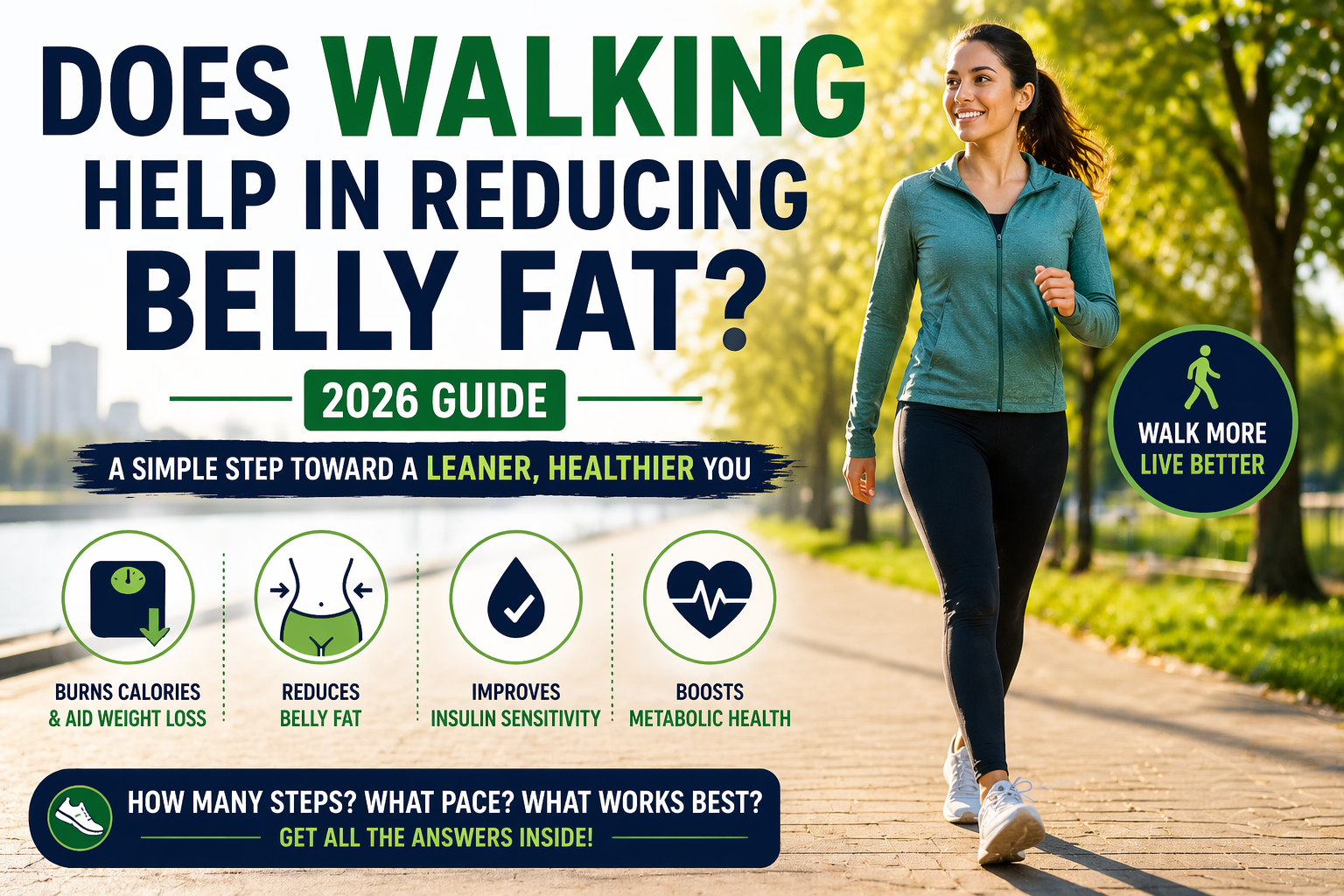
Many people assume that to lose belly fat, they must spend hours performing high-intensity interval training or grueling abdominal circuits. While those methods certainly have their place, one of the most effective tools for trimming your waistline is actually free, accessible, and likely something you already do every day: walking. It is often dismissed as being “too easy” to yield real results, but modern exercise science suggests otherwise.
The struggle to lose abdominal weight is about more than just aesthetics. Belly fat, particularly the deep-seated visceral fat that wraps around your organs, is a major risk factor for heart disease and type 2 diabetes. Finding a sustainable way to reduce this fat is a priority for millions of people. Walking offers a low-impact, highly consistent way to burn calories and improve metabolic health without the high burnout rate associated with more intense gym routines.
In this comprehensive guide, we will explore the science behind why walking is a secret weapon for fat loss. You will learn the difference between strolling and brisk walking, how walking affects your hormones, and exactly how many steps you need to see a change in your midsection. By the end of this article, you will have a clear, actionable plan to turn your daily walk into a consistent fat-burning routine.
Why Walking Works Better Than Hard Workouts for Some People
It may sound counterintuitive, but lower-intensity exercise like walking can outperform intense workouts for fat loss in real life. The reason is simple: consistency beats intensity. A workout you can sustain daily will always outperform one you quit after two weeks.
Does walking help in reducing belly fat?
Yes, walking is highly effective for reducing belly fat, particularly visceral fat. As an aerobic exercise, walking increases fat oxidation and improves insulin sensitivity. Studies show that consistent brisk walking—roughly 30 to 60 minutes most days—can significantly decrease waist circumference and total body fat even without high-intensity workouts.
The Biological Link: How Walking Targets the Midsection
To answer the question, “Does walking help in reducing belly fat?” we first have to look at how the body burns fuel. Walking is a “steady-state” aerobic exercise. When you walk at a moderate pace, your body relies heavily on oxygen to produce energy. In this state, your body is more efficient at using stored fat as its primary fuel source compared to high-intensity sprinting, which relies more on stored sugars (glycogen).
The Battle Against Visceral Fat
Belly fat is unique because it comes in two forms: subcutaneous (the fat you can pinch) and visceral (the fat hidden deep in your abdomen). Visceral fat is metabolically active and releases inflammatory chemicals. Research published in The Journal of Exercise Nutrition & Biochemistry found that walking is specifically effective at reducing this dangerous visceral fat. Because walking lowers systemic inflammation, it helps “unlock” these stubborn fat stores for energy.
Improving Insulin Sensitivity
One of the main reasons people store fat in the belly is insulin resistance. When your cells stop responding to insulin, your body stores more sugar as fat in the abdominal area. Walking helps your muscles soak up glucose from your bloodstream without requiring as much insulin. Over time, this improves your metabolic health and makes it much easier for your body to stop storing—and start burning—abdominal fat.
Walking vs. Running: Which is Better for Your Waistline?
A common debate in the fitness world is whether walking vs running for belly fat is more effective. While running burns more calories per minute, it isn’t always the winner for long-term fat loss.
The Sustainability Factor
The “best” exercise is the one you actually do. Many people find running to be too taxing on their joints or too mentally draining to maintain every day. Walking, however, has a much higher adherence rate. If you can walk for 60 minutes but can only run for 10, the total calorie burn and fat oxidation from the walk will likely be higher.
Cortisol and the “Stress Belly”
High-intensity exercise like running can significantly spike cortisol, the body’s stress hormone. While this is normal, chronically high cortisol levels can actually signal the body to hold onto belly fat. Walking is a “cortisol-conscious” exercise. It lowers stress and keeps cortisol in check, which is why many experts recommend walking for belly fat loss to those who lead high-stress lives.
Brisk Walking for Fat Burning: Intensity Matters
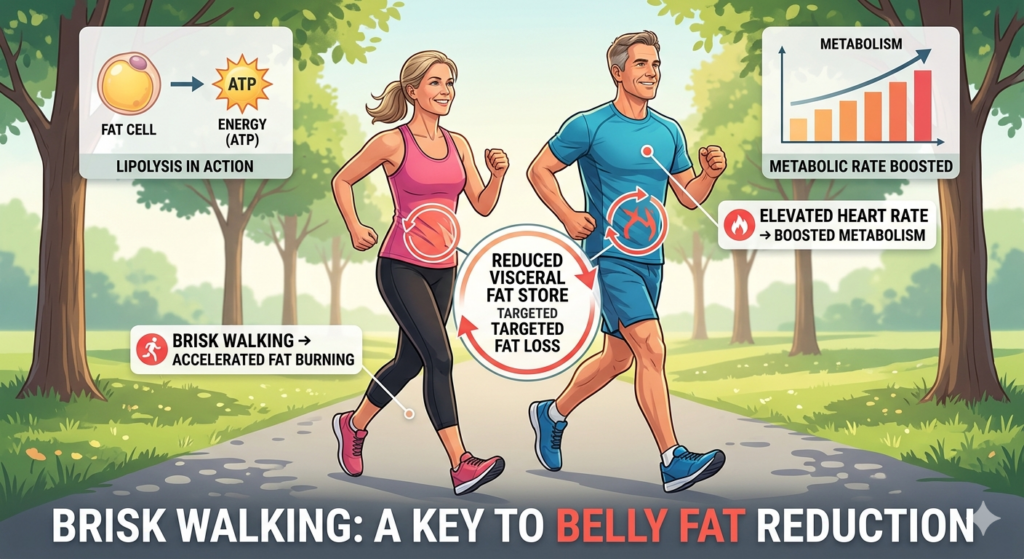
Not all walks are created equal. If you are wondering, “why am I walking but not losing weight?” the answer likely lies in your intensity. To see results, you need to move from a casual stroll to brisk walking for fat burning.
Finding Your “Fat-Burning Zone”
Your “fat-burning zone” is generally between 60% and 70% of your maximum heart rate. At this intensity, you should be breathing harder than usual but still able to carry on a brief conversation. This is the sweet spot where your body optimizes fat oxidation. If you are walking too slowly, your heart rate won’t stay elevated enough to trigger significant metabolic changes.
The Power of the Incline
If you want to boost your results without running, find a hill or use the incline setting on a treadmill. Walking at an incline engages more muscle groups—specifically your glutes, hamstrings, and core. This increases your heart rate and calorie burn significantly. For example, walking at a 5% incline can burn nearly 50% more calories than walking on a flat surface at the same speed.
How Much Walking Do You Actually Need?
The most frequent question people ask is: How much walking to lose belly fat? While the “10,000 steps” rule is a popular marketing term, the actual science is a bit more nuanced.
The Step Count Breakdown
According to a 2024 study in JAMA Internal Medicine, the benefits of walking for weight management begin to peak around 7,000 to 9,000 steps per day.
- Less than 5,000 steps: Sedentary (likely to gain or maintain weight).
- 5,000 to 7,500 steps: Moderately active (good for maintenance).
- 7,500 to 10,000+ steps: Active (optimal for walking for weight loss).
A large 2024 study found that individuals who increased their daily steps from 5,000 to 8,000 reduced their risk of weight gain by over 30% over time.
Duration vs. Distance
Instead of just focusing on steps, consider your “time under tension.” Aiming for 30 to 45 minutes of continuous brisk walking is often more effective than hitting 10,000 steps spread throughout a slow day. This continuous movement keeps your heart rate in the aerobic zone long enough to tap into fat stores.
Optimizing Your Walk: Advanced Strategies for Results
If you’ve hit a plateau, you can use these “pro” strategies to make your best walking workout for abdominal fat even more effective.
1. Interval Walking
Just like HIIT, you can do interval walking. Try walking at your fastest possible pace for 1 minute, followed by 2 minutes at a moderate pace. This variation in intensity has been shown to improve aerobic capacity and burn more visceral fat than walking at a constant speed.
2. Weighted Vests or Rucking
Rucking—walking with a weighted backpack—is a trend that has exploded in 2026. By adding just 10 to 20 pounds to your frame, you increase the resistance your body must overcome. This turns a simple walk into a strength-and-cardio hybrid, forcing your core to stay engaged and burning significantly more calories.
3. Post-Meal Walks
Walking for just 10 to 15 minutes after a meal is a powerful way to blunt the glucose spike from your food. This prevents the “insulin surge” that leads to fat storage. A 2025 review in Sports Medicine found that light walking after eating is one of the most effective lifestyle habits for reducing abdominal girth.
The Role of Nutrition: Why You Can’t “Out-Walk” a Bad Diet
It is important to be realistic: walking is a tool, not a magic wand. If you walk 10,000 steps but consume a diet high in processed sugars and liquid calories, your progress will be stalled.
Creating a Calorie Deficit
To lose fat, you must be in a calorie deficit. Walking helps increase the “calories out” side of the equation. For most people, a 45-minute brisk walk burns between 200 and 400 calories. This can be the difference between being in a surplus (gaining weight) or a deficit (losing weight).
Protein and Fiber
To maximize the effects of walking for belly fat loss, prioritize protein. Protein helps maintain the muscle you have, ensuring that the weight you lose comes from fat, not muscle tissue. Pair this with high-fiber foods to keep your insulin stable and your hunger in check. [Insert link to best foods for belly fat reduction].
Real-World Insights: Consistency Over Intensity
Let’s look at a practical example. Consider “Sarah,” a 45-year-old office worker. She tried high-intensity boot camps but found them too painful for her knees. She switched to walking 4 miles every morning (about 8,000 steps). Within three months, she lost two inches from her waistline without ever stepping foot in a gym.
Sarah’s success wasn’t because walking is “better” than a boot camp; it was because she could do it every single day without failing. Can walking reduce visceral fat? Absolutely, but only if you do it consistently. The cumulative effect of 28 walks a month is far greater than the effect of three “hard” workouts you eventually quit.
Common Myths About Walking and Belly Fat
To truly succeed, we must debunk a few misconceptions that might be holding you back.
Myth 1: “You have to walk for an hour to see results.”
False. While longer walks are great, “exercise snacking”—breaking your walks into three 10-minute sessions—has been shown to be nearly as effective for blood sugar control and fat loss as one long session.
Myth 2: “Walking doesn’t build muscle.”
While it won’t give you the physique of a bodybuilder, brisk walking—especially on inclines—builds functional muscle in your legs and core. This increases your resting metabolic rate, helping you burn more fat even when you are sitting down.
Myth 3: “Hand weights make you burn more fat.”
Using small dumbbells while walking can actually strain your joints and alter your natural gait. If you want more resistance, a weighted vest is a much safer and more effective option.
Frequently Asked Questions (FAQ)
1. Does walking help in reducing belly fat?
Yes, walking is a highly effective aerobic exercise that targets visceral fat. By increasing your daily calorie burn and improving insulin sensitivity, walking helps your body utilize stored abdominal fat for energy, especially when done at a brisk pace.
2. How many steps per day to lose belly fat?
While any movement is good, most research suggests that 7,000 to 10,000 steps per day is the optimal range for weight loss. Consistency is key; hitting this target most days of the week is essential for seeing changes in your midsection.
3. Is walking better than running for belly fat?
Walking isn’t necessarily “better” in terms of calories burned per minute, but it is often more sustainable. Because walking is lower-impact and produces less cortisol (stress hormone), many people find it more effective for long-term abdominal fat loss.
4. Can I lose belly fat by walking 30 minutes a day?
Yes, provided you walk at a brisk pace and maintain a healthy diet. A 30-minute brisk walk can burn approximately 150–200 calories and, over time, contributes to the calorie deficit needed to reduce total body fat and waist circumference.
5. Why am I walking every day but not losing belly fat?
If your weight isn’t changing, you may be consuming too many calories or walking at a pace that is too slow to raise your heart rate. Ensure you are in a calorie deficit and aim for a “brisk” intensity.In many cases, the issue isn’t effort—it’s awareness. People often overestimate their walking intensity and underestimate their calorie intake.
6. Does walking on an incline help with belly fat?
Absolutely. Walking on an incline increases your heart rate and muscle engagement without requiring you to run. This burns significantly more calories and can accelerate the fat-loss process compared to walking on flat ground.
Walking is perhaps the most underrated tool in the fitness world. It is a gentle yet powerful way to reclaim your health and trim your waistline. You don’t need a gym membership or expensive equipment to start—you just need a pair of comfortable shoes and the willingness to take the first step.
Start today—not tomorrow. Take a 20-minute brisk walk after your next meal. That single habit can begin improving your metabolism immediately. Experience the immediate benefits of improved digestion and lower stress levels. If you found this guide helpful, check out our other resources on “The Best Foods to Reduce Belly Fat Naturally“ or our “2026 Guide to Metabolic Health.” Your journey to a leaner, healthier you starts with the very next step you take!
Sources & References
- Harvard Health Publishing (2024). “Walking: Your steps to health.”
- JAMA Internal Medicine (2024). “Step Count and its Relationship to All-Cause Mortality and Weight Management.”
- The Journal of Exercise Nutrition & Biochemistry (2023). “Effect of walking on abdominal fat and insulin resistance.”
- Sports Medicine Journal (2025). “The metabolic benefits of post-prandial walking: A systematic review.”
- British Journal of Sports Medicine (2024). “Intensity vs. Duration: What drives fat oxidation in aerobic exercise?”
Reviewed By: Our Editorial Team
This article has been reviewed by certified fitness professionals and nutritionists to ensure that the information is accurate, evidence-based, and aligned with 2026 health and wellness standards.
Disclaimer
The information provided in this article is for educational and informational purposes only and should not be considered professional medical or fitness advice. Always consult a healthcare professional before starting a new exercise program, especially if you have underlying health conditions.
Last Updated: April 21, 2026