Have you ever started a workout feeling motivated, only to “hit a wall” 20 minutes in? That sudden wave of fatigue or lightheadedness often has nothing to do with your willpower. Instead, it is usually a sign that your body has run out of accessible fuel. Just like a car cannot run on an empty tank, your muscles cannot perform at their peak without the right nutrients.
Pre-workout nutrition is the bridge between your daily diet and your performance. What you eat before you hit the gym determines whether you will have explosive energy or if you will spend your session watching the clock. Understanding the best pre-workout foods helps both casual exercisers and serious athletes get more from every workout.
In this guide, we will break down the science of fueling. You will learn about macronutrient ratios, how to time your meals, and exactly what to eat before a workout based on your goals. We will move beyond general advice to provide practical, evidence-based meal and snack ideas that fit your lifestyle.
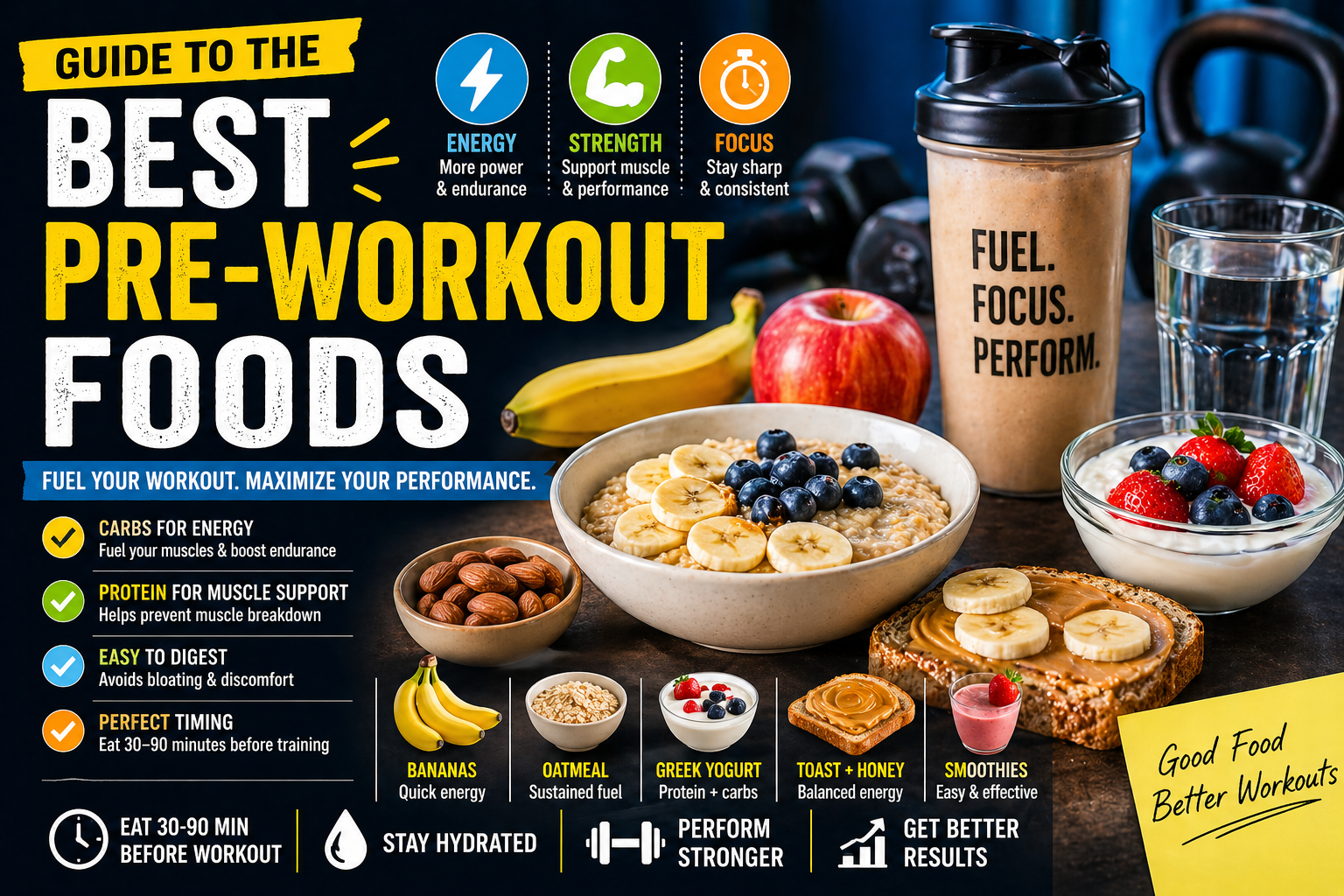
The best foods to eat before a workout include:
- Bananas (for fast-acting energy and potassium)
- Oatmeal (for sustained glucose release)
- Greek yogurt with fruit (for a carb-protein balance)
- Rice cakes (for light, easily digestible fuel)
- Whole-grain toast (for complex carbohydrates)
These foods provide carbohydrates for energy and protein to support muscle performance. For optimal results, eat a balanced meal 2–3 hours before exercise, or a small snack 30–60 minutes before you begin.
The Science of Fueling: Why What You Eat Matters
When you exercise, your body demands energy at a rapid pace. This energy primarily comes from blood glucose and glycogen (sugar stored in your muscles and liver). Understanding pre workout nutrition is about managing these stores.
The Role of Carbohydrates
Carbohydrates are your body’s preferred fuel source. When you eat carbs, they break down into glucose. During intense exercise, your body relies on this glucose to power muscle contractions. If glycogen stores become very low, the body may increase protein breakdown to support energy production. Consuming the best food before workout sessions ensures your glycogen levels are topped off.
The Role of Protein
Protein isn’t a primary energy source, but it is a “muscle protector.” Having amino acids available may help reduce muscle protein breakdown during training. This is why including protein-rich foods in your pre workout meal is a smart strategy for long-term growth.
The Role of Fats
Fats provide long-lasting energy for low-intensity activities like walking. However, they take a long time to digest. Eating a high-fat meal too close to a workout can lead to a sluggish feeling because blood flow is diverted to the stomach for digestion instead of to your muscles.
Pre-Workout Macronutrient Ratios
To maximize foods for workout energy, you need the right balance of nutrients. While everyone is different, a typical pre-workout meal ratio looks like this:
- 50–60% Carbohydrates: The primary fuel for your engine.
- 20–30% Protein: To protect muscle fibers.
- 10–20% Fat: Kept low to ensure fast digestion.
This ratio ensures that you have enough sugar for intensity without the digestive “heavy” feeling that comes from too much fat or fiber.
Timing Your Pre-Workout Nutrition
The “when” determines the “what.” Use this timeline to plan your pre-exercise meals and pre workout snacks.
2–3 Hours Before: The Full Meal
If you have a few hours, aim for a complete meal. This allows time for complex carbohydrates to break down.
- Focus: Complex carbs, lean protein, and some fiber.
- Foods: Brown rice, sweet potatoes, grilled chicken, or tofu.
60–90 Minutes Before: The Large Snack
At this mark, choose something that digests faster. This is the perfect time for foods that are moderate in carbs and protein.
- Focus: Easily digestible carbs and some protein.
- Foods: Oatmeal with a scoop of protein, or an apple with peanut butter.
30–60 Minutes Before: The Energy Boost
If you are rushing to the gym, you need “fast” fuel. This means simple sugars that enter the bloodstream almost immediately.
- Focus: Simple carbohydrates, very low fiber, and very low fat.
- Foods: A banana, rice cakes, or a slice of white toast with honey.
The Top 10 Best Pre-Workout Foods
If you are looking for what to eat before gym sessions, these ten options are staples in sports nutrition.
1. Bananas
Packed with fast-acting carbohydrates and potassium, bananas help maintain nerve and muscle function. They are arguably the most convenient pre workout snacks.
2. Rolled Oats
Oats release energy slowly. This provides a steady stream of glucose, making them perfect for long lifting sessions or endurance training.
3. Fruit Smoothies
Smoothies are liquid, which the body processes quickly. Use berries for antioxidants and Greek yogurt for protein.
4. Whole Grain Bread
A slice of whole-grain toast provides complex carbs. Top it with a sliced egg for a balanced pre workout nutrition choice.
5. Greek Yogurt
Greek yogurt contains double the protein of regular yogurt. It’s light on the stomach and pairs perfectly with fruit.
6. Rice Cakes
For a light snack, rice cakes are highly digestible. They provide immediate energy without the bloating associated with heavier grains.
7. Apples and Peanut Butter (60-90 min before)
The apple provides simple sugars, while the peanut butter offers enough protein to keep hunger at bay.
8. Dried Fruit
Dried fruits like raisins or dates are concentrated energy sources. They are perfect for a quick “sugar hit” right before a HIIT class.
9. Sweet Potatoes (2-3 hours before)
Rich in complex carbohydrates, sweet potatoes are a favorite among endurance athletes for long-lasting fuel.
10. Caffeine (Coffee or Green Tea)
Caffeine reduces the perception of effort. A cup of black coffee 30 minutes before training can significantly boost your output.
Goal-Based Fueling: Matching Food to Your Mission
Best Pre-Workout Foods for Weight Loss
When fat loss is the goal, you want to fuel the workout without over-consuming calories.
- The Strategy: Focus on low-calorie, high-volume foods.
- Idea: Half a grapefruit and a hard-boiled egg. The citrus provides a small glucose lift, while the egg provides protein satiety.
For Muscle Gain (Hypertrophy)
To build muscle, you need to lift heavy. This requires significant glycogen.
- The Strategy: Higher carb intake to power through intense sets.
- Idea: A large turkey sandwich on whole-wheat bread or a bowl of pasta with lean meat sauce.
For Endurance (Running/Cycling)
Endurance athletes need to avoid the “mid-run crash.”
- The Strategy: Focus on slow-releasing complex carbs and electrolytes.
- Idea: Quinoa salad with chickpeas and orange slices.
Pre-Workout Nutrition by Time of Day
What to Eat Before Morning Exercise?
If you train at 6:00 AM, you likely don’t have hours to digest.
- Option A: If you feel good training fasted, stick to water. (Check our guide: [Should I Work Out on an Empty Stomach]).
- Option B: A small snack like a handful of grapes or a piece of white toast.
Afternoon Workouts
This is usually the easiest time to fuel. Ensure your lunch contains a balance of protein and complex carbs, then have a light piece of fruit 30 minutes before you start. You should also plan for your [Ultimate Guide to Post-Workout Nutrition] to ensure recovery is just as strong as your start.
Foods to Avoid Before a Workout
Some foods are “performance killers” because they cause digestive distress or sluggishness.
- High-Fiber Legumes: Beans and lentils can cause gas and bloating during movement.
- Greasy/Fried Foods: These slow down digestion significantly and can cause acid reflux.
- Heavy Dairy: Large amounts of milk or cheese can lead to a “heavy” stomach feeling.
- Sugary Soda: While simple carbs are good, sugary drinks may lead to rapid spikes in blood sugar followed by drops in energy for some people.
Final Verdict
The “best” pre-workout food is the one that makes you feel energized without causing a stomach ache. While the science points toward a combination of carbohydrates and protein, individual tolerance varies. Some athletes can eat a full meal and run, while others need only a banana.
The goal of pre-workout nutrition is to provide a steady supply of glucose to your muscles. By timing your intake—eating larger meals 2–3 hours before and smaller snacks 30–60 minutes before—you ensure your body is ready to perform. Once you find the fuel that works for your body, stick with it.
Frequently Asked Questions (FAQ)
1. What is the best food to eat before a workout?
Bananas are widely considered the best choice because they are easy to digest, high in carbs for energy, and contain potassium to prevent muscle cramping.
2. Should I eat carbs before a workout?
Yes. Carbs are the primary fuel for both high-intensity lifting and endurance cardio. They ensure your glycogen stores are full so you don’t tire out early.
3. Is it better to work out on an empty stomach?
This depends on your goal. Some prefer it for light cardio, but for intense training, most people perform better with a small pre-workout snack to avoid dizziness.
4. Can I use a pre-workout supplement instead of food?
Supplements help with focus and blood flow, but they do not provide the actual calories (energy) your muscles need to function. Use food as your primary fuel.
5. How long should I wait to work out after eating?
Wait 2–3 hours after a large meal. If you have a small snack like rice cakes or fruit, 30–60 minutes is usually sufficient time for digestion.
6. Are eggs a good pre-workout food?
Eggs are excellent for protein, but because they contain fat, they are best eaten 90–120 minutes before a session rather than right before you start.
Try one of these pre-workout snacks before your next training session and notice how your energy changes. Small nutrition adjustments can dramatically improve performance. Ready to learn more? Explore our [Ultimate Guide to Post-Workout Nutrition] to master your recovery!
Sources & References
- Thomas, D. T., et al. (2016). American College of Sports Medicine Joint Position Statement: Nutrition and Athletic Performance. Medicine & Science in Sports & Exercise.
- Kerksick, C. M., et al. (2018). ISSN exercise & sports nutrition review update: research & recommendations. Journal of the International Society of Sports Nutrition.
- Ormsbee, M. J., et al. (2014). Pre-exercise nutrition: the role of macronutrients and supplements. Nutrients.
Author: Julian Vance, CNS, LDN | Certified Nutrition Specialist & Licensed Dietitian Nutritionist
Medically Reviewed By:
Dr. Sarah Mitchell, MD, is a board-certified endocrinologist specializing in insulin resistance, metabolic health, and diabetes prevention. She focuses on evidence-based lifestyle strategies, including exercise and nutrition, to improve insulin sensitivity and support long-term health outcomes.
Disclaimer: The information provided in this article is for educational and informational purposes only and should not be considered professional advice. Always consult a qualified professional or specialist before making decisions related to the topic.