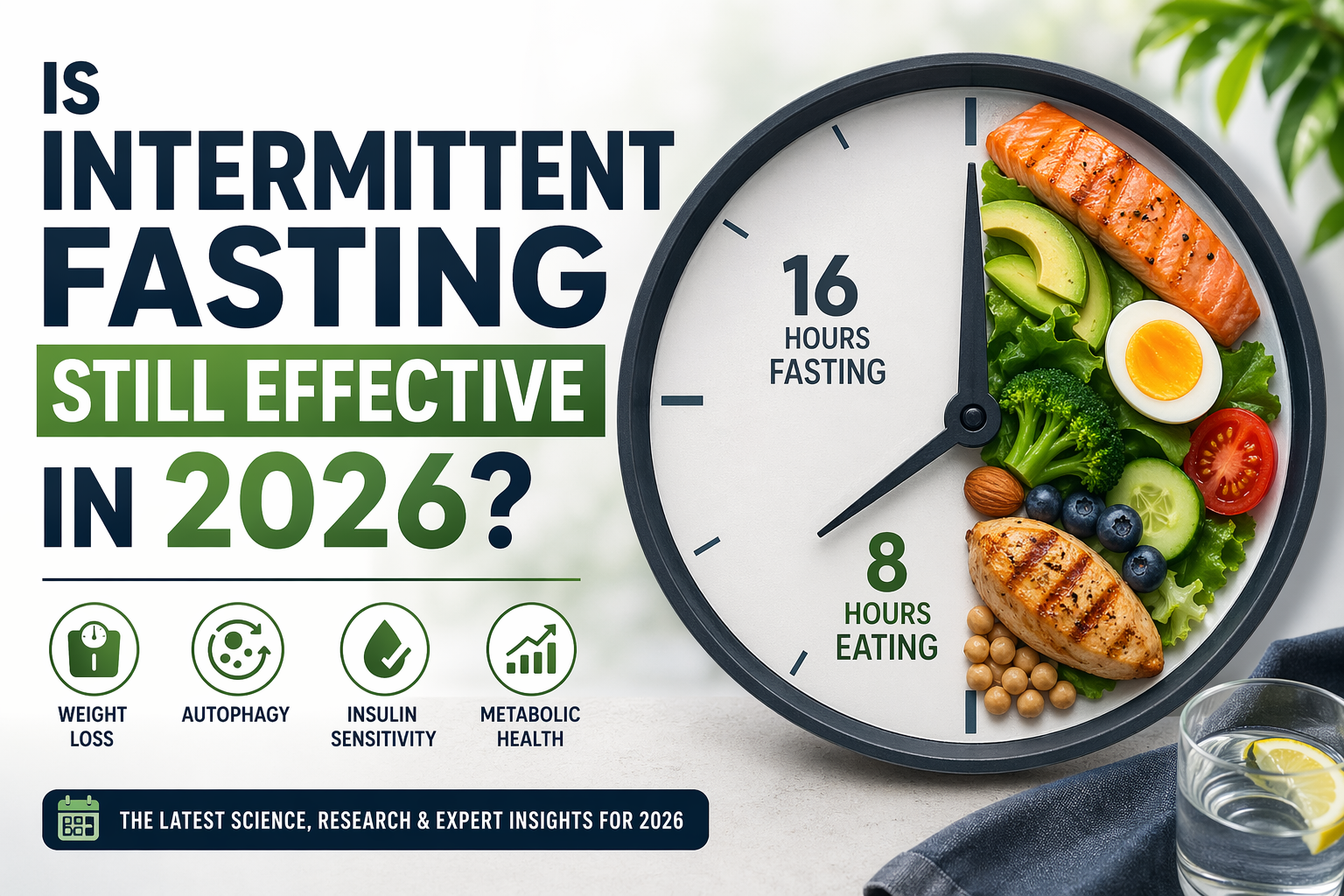
In the world of health and fitness, trends usually have the shelf life of an open avocado. One minute everyone is obsessed with a specific “superfood,” and the next, it’s been replaced by a new vibrating gadget or a restrictive liquid diet. However, intermittent fasting (IF) has managed to break that cycle. For nearly a decade, it has remained at the forefront of the wellness conversation, moving from a “biohacker” secret to a mainstream lifestyle choice embraced by millions.
But as we settle into 2026, the question on many people’s minds is simple: Is intermittent fasting still effective, or have we moved past it? With the rise of new weight-loss medications and high-tech personalized nutrition apps, some wonder if the old-school method of “just not eating for a while” still holds weight. The buzz has certainly leveled off, but the science has actually become more refined, offering us a clearer picture of what works and what doesn’t.
In this article, we are going to look at the current state of intermittent fasting. We will explore the latest 2025 and 2026 research, break down the biological mechanisms like autophagy and metabolic switching, and determine which fasting schedules are actually sustainable for the long term. Whether you are a seasoned faster or a curious beginner, you will learn exactly how to use this tool to improve your metabolic health in today’s fast-paced world.
Is Intermittent Fasting Still Effective?
Yes, intermittent fasting remains highly effective in 2026 for weight loss and metabolic health. Current research emphasizes “Metabolic Switching”—the body’s ability to flip from burning glucose to burning fats and ketones. Beyond weight loss, it is effectively used to improve insulin sensitivity, reduce systemic inflammation, and trigger autophagy, provided the fasting window aligns with an individual’s circadian rhythm.
The Evolution of Fasting: From Trend to Clinical Tool
If 2018 was the year intermittent fasting went viral, 2026 is the year it became a respected clinical tool. We have moved away from the “wild west” of fasting, where people tried to go days without food just to prove they could. Today, the focus has shifted toward Circadian Rhythm Fasting and Metabolic Flexibility.
In the past, people often used IF as a “get thin quick” scheme. Now, healthcare providers are increasingly using time-restricted feeding (TRT) as a foundational pillar for managing Type 2 diabetes and non-alcoholic fatty liver disease. The conversation has shifted from “How much weight can I lose?” to “How can I optimize my cellular repair?”
The Shift Toward Personalization
In 2026, we no longer assume that the 16:8 method is perfect for everyone. Thanks to advances in wearable technology and Continuous Glucose Monitors (CGMs), we now know that one person’s 16-hour fast might be another person’s metabolic stressor. We’ve learned that the quality of the food eaten during the “feeding window” is just as important as the length of the fast itself.
How Intermittent Fasting Works: The Science of 2026
To understand why fasting still works, we have to look at what happens inside your cells when you stop eating. It isn’t just about cutting calories; it is about changing your internal chemistry.
1. Metabolic Switching
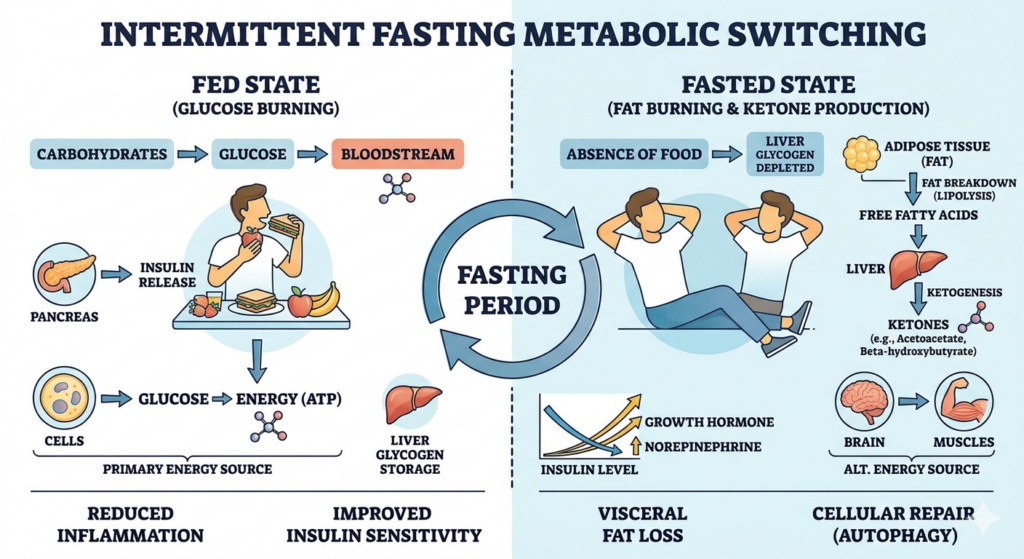
The most significant concept in 2026 fasting science is the “metabolic switch.” Normally, your body runs on glucose (sugar) from the carbs you eat. When you fast for 12 to 16 hours, your liver runs out of stored glucose. At this point, your body “flips the switch” and begins burning fatty acids and ketones for fuel. This switch is like moving from a gas-guzzling engine to a clean-burning electric motor. It makes your body more efficient and helps protect your brain and heart.
2. Autophagy: The Cellular Clean-Up
Autophagy is the body’s way of “taking out the trash.” During extended fasting windows, your cells begin to break down and recycle old, damaged proteins. Think of it like a self-cleaning oven. By 2026, researchers have found that consistent, moderate fasting may help slow down certain aging processes at the cellular level, though we are still learning exactly how long a fast needs to be to maximize this effect in humans.
3. Insulin Sensitivity
Every time you eat, your insulin levels rise to handle the incoming sugar. If you eat all day long, your insulin stays high, which eventually leads to insulin resistance and fat storage. Intermittent fasting gives your pancreas a break. By keeping insulin low for a significant portion of the day, your cells become more sensitive to the hormone, which is a key factor in preventing chronic disease.
Popular Intermittent Fasting Methods in 2026
While there are dozens of ways to fast, a few specific methods have stood the test of time and research.
The 16:8 Method (Time-Restricted Feeding)
This remains the most popular approach. You fast for 16 hours and eat during an 8-hour window. In 2026, experts suggest that “Early TRF” (eating from 8:00 AM to 4:00 PM) is more effective for metabolic health than “Late TRF” (eating from 1:00 PM to 9:00 PM) because it aligns better with our natural circadian rhythms.
Circadian Rhythm Fasting (The 12:12 or 14:10)
Often called the “gentle” fast, this involves simply not eating when the sun is down. Research published in late 2025 suggests that even a 12-hour fast can have significant benefits for gut health and sleep quality without the stress that longer fasts might cause for some people.
One Meal a Day (OMAD)
OMAD is exactly what it sounds like: a 23-hour fast with a 1-hour eating window. While popular in some fitness circles, 2026 guidelines recommend caution with this method. It can be difficult to get enough nutrients in a single meal, and it may cause digestive upset for many users.
The 5:2 Method
This involves eating normally for five days a week and restricting calories to around 500–600 for two non-consecutive days. This is often easier for people with busy social lives who don’t want to fast every single day.
Does Intermittent Fasting Still Beat Traditional Dieting?
A major debate in 2026 is whether IF is better than simple Daily Calorie Restriction (DCR). If you eat 1,800 calories in 8 hours or 1,800 calories over 15 hours, does it matter?
The “Weight Loss” Verdict
For pure weight loss, the data shows that IF and DCR are roughly equal. If you eat fewer calories than you burn, you will lose weight. However, IF often wins on adherence. Many people find it easier to simply “stop eating” at a certain time than to weigh every gram of food and track every calorie throughout the day.
The “Metabolic” Verdict
This is where fasting takes the lead. Even if weight loss is the same, fasting participants often show better improvements in blood pressure, resting heart rate, and insulin levels compared to those just cutting calories. A 2025 meta-analysis confirmed that the timing of food intake provides metabolic advantages that go beyond just the calorie count.
Intermittent Fasting and Wearable Tech in 2026
One reason fasting feels different in 2026 is the integration of technology. We are no longer guessing if our fast is “working.”
- Continuous Glucose Monitors (CGMs): These small sensors allow users to see their blood sugar in real-time. Fasting enthusiasts use them to see exactly when their blood sugar stabilizes, signaling that the “metabolic switch” is about to flip.
- Smart Rings and Watches: Devices now track “fasting heart rate variability” (HRV). If your HRV is low, your app might suggest a shorter fasting window for that day, recognizing that your body is already under too much stress.
- AI Nutrition Coaches: New AI tools can analyze your sleep patterns and activity levels to recommend the optimal eating window for you on a daily basis.
Intermittent Fasting for Women: What We Know Now
One of the biggest mistakes made in the early days of the fasting trend was treating men and women exactly the same. In 2026, we have a much more nuanced understanding of how fasting affects female hormones.
The Hormone Connection
Women are more sensitive to signals of “scarcity.” If a woman fasts too aggressively, her body may shut down certain reproductive signals to save energy. This can lead to irregular periods or hair loss.
The 2026 Recommendation for Women
Experts now suggest a “Crescendo” approach for women—fasting only 2 or 3 non-consecutive days a week—or sticking to shorter 12-to-14-hour windows. This allows women to get the metabolic benefits of fasting without triggering a massive stress response in the endocrine system.
Common Pitfalls: Why Fasting Fails for Some
Even though fasting is effective, it isn’t foolproof. Many people struggle because they fall into a few common traps.
1. The “Binge” Mentality
If you fast for 16 hours and then spend your 8-hour window eating ultra-processed pizza and soda, you will likely feel worse. Fasting is a tool to improve health, but it cannot “outrun” a poor diet.
2. Over-Caffeinating
To blunt hunger, many people drink massive amounts of black coffee. While black coffee doesn’t break a fast, excessive caffeine on an empty stomach can skyrocket cortisol levels, leading to anxiety and a “crash” later in the day.
3. Ignoring Electrolytes
When you fast, your body flushes out water and sodium. This leads to the “fasting headache” or “keto flu.” In 2026, most successful fasters know to add a pinch of sea salt or an electrolyte powder to their water during the fasting window.
Who Should Avoid Intermittent Fasting?
Despite its benefits, fasting is not for everyone. Clinical guidelines in 2026 remain clear on who should skip this trend:
- Pregnant or Breastfeeding Women: Growing a human requires a steady supply of nutrients; fasting is not appropriate during this time.
- Individuals with a History of Eating Disorders: The restrictive nature of fasting can trigger or worsen disordered eating patterns.
- People with Type 1 Diabetes: Fasting can lead to dangerous drops in blood sugar (hypoglycemia) if not strictly monitored by a doctor.
- Children and Teenagers: Growing bodies need consistent energy to support development.
5 Practical Tips for Fasting Success in 2026
If you want to try intermittent fasting, don’t just dive into a 24-hour fast on day one. Follow this modern roadmap:
- Start with the “Sunset Rule”: Simply stop eating when the sun goes down or 3 hours before bed. This naturally creates a 12-hour window.
- Focus on “The First Bite”: Break your fast with protein and healthy fats (like eggs or avocado) rather than sugary cereal. This prevents a massive insulin spike.
- Use Tech to Your Advantage: Use a simple fasting tracker app to visualize your progress and stay motivated.
- Stay Hydrated: Drink plenty of water, but don’t forget the electrolytes. A little salt in your water can be a game-changer.
- Listen to Your Body: If you feel dizzy, shaky, or excessively moody, break your fast. Fasting should be a “eustress” (positive stress), not a torture session.
Frequently Asked Questions (FAQ)
1. Does black coffee break a fast in 2026?
No, black coffee, plain tea, and water do not break a metabolic fast. They contain zero calories and do not raise insulin levels. However, adding cream, sugar, or MCT oil will trigger a digestive response and end your fasting window.
2. Can I build muscle while intermittent fasting?
Yes, you can build muscle if you consume enough total protein during your eating window. Research suggests that resistance training combined with a 16:8 schedule can help maintain muscle mass while specifically targeting fat loss, provided your protein intake is high.
3. Is the 16:8 method still the best for weight loss?
The 16:8 method is highly effective because it is sustainable for most people. However, 2026 studies suggest that the timing of that 8-hour window matters. Eating earlier in the day generally yields better results than skipping breakfast and eating late at night.
4. How long does it take to see results from fasting?
Most people notice reduced bloating and improved energy within 7 to 10 days. For significant weight loss or changes in blood markers (like cholesterol or A1C), it typically takes 8 to 12 weeks of consistent fasting to see measurable results.
5. Does fasting cause “starvation mode”?
No. “Starvation mode” is a myth regarding short-term fasting. In fact, short-term fasting actually increases your metabolic rate slightly due to an increase in norepinephrine. Your metabolism only slows down after several days of complete calorie deprivation.
6. Is intermittent fasting safe for older adults?
For many older adults, fasting can help maintain cognitive function and muscle quality. However, muscle loss (sarcopenia) is a concern. Seniors should focus on high protein intake and consult a doctor to ensure they are meeting their nutritional needs.
Intermittent fasting is more than just a passing fad; it is a powerful biological lever that you can pull to improve your health. However, the key to success in 2026 is flexibility. Don’t be afraid to adjust your fasting window based on your lifestyle, your cycle, or your stress levels.
If you are ready to take the next step, start by tracking your current eating habits for three days. See where your natural windows are, and then try to extend your overnight fast by just one hour. For more personalized advice, check out our guide on “The Best Foods to Break a Fast” or explore our “2026 Guide to Metabolic Health.” Start small, stay consistent, and let your biology do the rest!
Editorial Review
Reviewed By: Our Editorial Team
This article has been reviewed by subject-matter experts, including certified nutritionists and metabolic health specialists, to ensure the information is accurate, evidence-based, and aligned with the latest 2026 clinical guidelines.
Disclaimer
The information provided in this article is for educational and informational purposes only and should not be considered professional medical advice. Always consult a qualified healthcare professional, such as a doctor or registered dietitian, before making significant changes to your diet, fasting routine, or medical treatment.
Sources & References
- Mattson, M. P., et al. (2024). “Metabolic Switching and Brain Health: A 10-Year Retrospective.” Nature Reviews Neuroscience.
- Panda, S. (2025). “Circadian Alignment and Time-Restricted Feeding: Clinical Outcomes in 2025.” Cell Metabolism.
- Varady, K. A. (2024). “Intermittent Fasting vs. Caloric Restriction: Long-term Adherence Study.” JAMA Internal Medicine.
- National Institutes of Health (2026). “The Role of Autophagy in Healthy Aging.” NIH Health Reports.
- Gabel, K., et al. (2025). “Effects of Time-Restricted Feeding on Insulin Sensitivity in Women.” The Journal of Clinical Endocrinology & Metabolism.
Last Updated: April 21, 2026