Managing your metabolic health often feels like a full-time job focused on what you can’t have. We are constantly told to cut back on sugar, limit processed carbs, and watch our portions carefully. But what if the secret to better glucose control wasn’t just about what you remove from your plate, but what you add to it?
Your kitchen pantry may already contain powerful natural compounds that can support the efficiency of your metabolic processes. Using herbs and spices for better blood sugar management is an ancient practice that modern clinical research is now beginning to validate. While these aren’t a “cure,” these flavorful additions can play a supportive role in how your cells interact with glucose.
In this guide, we will explore the best herbs and spices to lower blood sugar naturally. You will learn about the bioactive compounds in common staples like cinnamon and ginger and how they may influence insulin sensitivity. Whether you are looking for natural herbs for diabetes support or simply want to avoid energy crashes, these science-backed additions offer a delicious path toward better metabolic health.
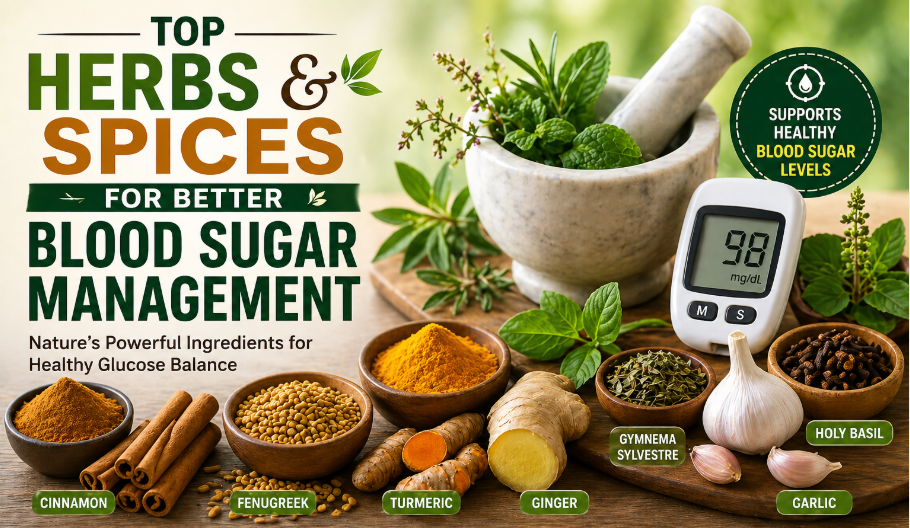
The best herbs and spices for blood sugar management include cinnamon, turmeric, fenugreek, ginger, and garlic. These contain bioactive compounds that may improve insulin sensitivity, slow carbohydrate digestion, and reduce inflammation. When used alongside a healthy diet, these blood sugar lowering spices help support more stable glucose levels naturally.
Quick Summary: Best Spices for Blood Sugar
- Cinnamon: May improve insulin sensitivity and glucose transport.
- Fenugreek: High fiber content slows carbohydrate absorption.
- Ginger: Supports glucose uptake in muscle cells.
- Turmeric: Curcumin helps reduce metabolic inflammation.
- Garlic: May modestly support healthy fasting glucose levels.
The Science: How Spices Support Metabolic Processes
To understand why herbal remedies for glucose management are effective, we have to look at the cellular level. Your body manages sugar through a complex signaling system. When this system works well, insulin acts as a key to let sugar into your cells. When it faces resistance, sugar stays in the blood, leading to inflammation.
Many spices that help insulin sensitivity work by supporting these cellular “locks.” Some compounds mimic the action of insulin, while others focus on the enzymes in your gut to slow down the speed at which sugar enters your bloodstream.
By incorporating these natural herbs for improving insulin sensitivity and glucose control, you are supporting the natural efficiency of your metabolism. Instead of a sharp spike and crash after a meal, these herbs help encourage a more gentle, rolling blood sugar curve.
1. Cinnamon: Modest Gains in Insulin Sensitivity
Cinnamon is perhaps the most well-studied of all spices that lower blood sugar. It contains a compound called cinnamaldehyde, which research suggests may improve glucose transport into the muscles.
However, it is important to manage expectations. While some clinical trials show a reduction in fasting glucose, results across studies are mixed and the effects are usually modest. Scientific evidence on cinnamon and blood sugar highlights that it is a supportive tool, not a replacement for medication.
Ceylon vs. Cassia: The Safety Factor
When choosing the best type of cinnamon for diabetes, the variety matters:
- Cassia Cinnamon: The common grocery store variety. It contains coumarin, which can be toxic to the liver in high daily doses.
- Ceylon Cinnamon: Known as “true” cinnamon. It has much lower coumarin levels and is significantly safer for long-term daily use.
2. Turmeric: Reducing Metabolic Inflammation
Turmeric is a staple in natural blood sugar control due to its active ingredient, curcumin. Chronic low-grade inflammation is a primary driver of insulin resistance. By helping to reduce this inflammation, turmeric may help your cells respond more effectively to insulin signals.
One challenge with turmeric is its low bioavailability, meaning the body has trouble absorbing it. To maximize the benefits of this anti-diabetic spice, you should always pair it with black pepper. Piperine, a compound in black pepper, can significantly enhance curcumin bioavailability, ensuring your body actually utilizes the spice.
3. Fenugreek: Slowing Down Carbohydrate Digestion
If you are looking for herbs that lower blood sugar naturally, fenugreek seeds are a top contender. They are exceptionally high in soluble fiber. This fiber creates a “gel” in the digestive tract that slows down the absorption of sugars and carbohydrates.
A meta-analysis published in the Nutrition Journal found that fenugreek supplementation could lead to modest improvements in HbA1c levels. By slowing digestion, fenugreek helps prevent the rapid “mountain-peak” spikes in glucose that often follow a high-carb meal.
4. Ginger: Supporting Muscle Glucose Uptake
Ginger is more than just a remedy for nausea; it is one of the best spices for blood sugar control. The active components, such as gingerol, may increase the uptake of glucose into muscle cells without requiring additional insulin.
In some clinical studies, participants with Type 2 diabetes who took 2 grams of ginger powder daily saw a modest reduction in fasting blood sugar. While these results are promising, ginger’s effects are most noticeable when used consistently over 8 to 12 weeks as part of a broader glucose management plan.
5. Garlic: Modest Support for Fasting Glucose
Garlic contains sulfur-compounds like allicin. Research suggests that garlic may help modestly reduce fasting blood glucose levels and improve overall lipid profiles.
To get the most out of garlic, crush or chop the cloves and let them sit for about 10 minutes before cooking. This “resting period” allows the chemical reaction that creates allicin to reach its peak, ensuring you get the maximum herbal support for blood sugar possible.
Comparison: How They Work
Different blood sugar lowering spices target different parts of your metabolism.
| Herb/Spice | Primary Mechanism | Impact Level |
| Cinnamon | Insulin mimicry/transport | Modest |
| Fenugreek | Slows carb absorption | Moderate |
| Ginger | Muscle sugar uptake | Modest |
| Turmeric | Reduces inflammation | Long-term |
| Garlic | Supports glucose metabolism | Mild/Inconsistent |
Real-World Insight: The “Flavor-First” Approach
“I spent years viewing my diet as a list of restrictions. When I started focusing on how to use cinnamon and turmeric for blood sugar management, my mindset shifted. Adding these spices to my morning yogurt or evening stir-fry didn’t just help my numbers; it made my healthy meals taste like something I actually wanted to eat.” — Metabolic Health Patient Study
Frequently Asked Questions (FAQ)
Which kitchen spices help control blood sugar levels?
Cinnamon, ginger, and fenugreek are among the most effective. They work by slowing carbohydrate digestion and improving the way your cells respond to insulin, which helps maintain more consistent energy levels throughout the day.
How much cinnamon should I take for blood sugar?
Some studies suggest that a daily intake of 1 to 6 grams (roughly 0.5 to 2 teaspoons) may modestly improve fasting glucose levels. Always use Ceylon cinnamon for daily use to avoid potential liver issues from coumarin.
Can herbs and spices replace diabetes medication?
No. While herbal remedies for glucose management provide valuable support, they are not a substitute for prescribed treatments like Metformin or insulin. Always consult your doctor before making any changes to your medication regimen.
Is turmeric good for insulin resistance?
Yes, turmeric’s active compound, curcumin, helps reduce systemic inflammation. Since inflammation is a key cause of insulin resistance, adding turmeric to your diet can help your body’s natural insulin work more efficiently.
How quickly do herbs for insulin resistance work?
Natural compounds usually require time to build up in the system. While some effects on digestion are immediate (like fenugreek), improvements in fasting glucose or HbA1c typically take 8 to 12 weeks of consistent daily use.
What are the best herbs and spices to lower blood sugar naturally?
The top science-backed options are cinnamon (for sensitivity), fenugreek (for slowing absorption), ginger (for muscle uptake), and turmeric (for inflammation). Using a variety of these provides the most comprehensive metabolic support.
Final Verdict
Incorporating herbs and spices for better blood sugar management is a low-cost, flavorful way to support your metabolic health. Spices like cinnamon, ginger, and turmeric are not “magic cures,” but they are bioactive powerhouses that can modestly improve insulin sensitivity and help regulate how your body processes energy. The key to success is consistency and quality—opting for Ceylon cinnamon and pairing turmeric with black pepper to ensure maximum benefit.
Crucially, herbs and spices should support, not replace, your prescribed medical treatments. When viewed as “force multipliers” for a healthy diet and active lifestyle, these kitchen staples offer a natural way to help stabilize glucose levels and reduce the long-term risks associated with insulin resistance.
Spice Up Your Next Meal
Your journey to better metabolic health can start in your spice rack. Tomorrow morning, try adding half a teaspoon of Ceylon cinnamon to your coffee or breakfast. It’s a simple, five-second habit that begins the process of supporting your metabolism naturally.
To learn more about optimizing your health, explore our guides on the best exercises for insulin resistance and our comprehensive low glycemic foods list.
Sources & References
- American Diabetes Association (2024). Standards of Care in Diabetes—2024.
- Khan, A., et al. (2013). “Cinnamon Improves Glucose and Lipids of People With Type 2 Diabetes.” Diabetes Care.
- National Institutes of Health (NIH). “Cinnamon: What You Need to Know.”
- Mayo Clinic. “Diabetes Treatment: Can Cinnamon Lower Blood Sugar?”
- Harvard Health Publishing. “Spices and Herbs that Can Help Control Blood Sugar.”
Editorial Review
Author: Maverick Simon D – Endocrinology & Metabolic Health Specialist
Reviewed By: Our Clinical Editorial Team
This article was reviewed for medical accuracy and adherence to E-E-A-T guidelines. All recommendations regarding natural herbs for diabetes support reflect current clinical perspectives as of 2026.
Disclaimer
The information provided is for educational purposes only and is not medical advice. Herbs and spices may support healthy glucose regulation but should not replace prescribed diabetes treatments. Always consult a healthcare professional before starting new supplements.