Have you ever felt like your energy levels are on a permanent roller coaster? You eat a meal, feel a sudden surge of energy, and then crash into a “food coma” an hour later. For millions of people, this isn’t just about being tired—it’s a signal that your body is struggling to manage blood sugar efficiently.
This struggle is often the result of insulin resistance, a condition where your cells stop responding to the hormone insulin. When your cells “ignore” insulin, sugar stays in your bloodstream instead of being used for energy. Over time, this leads to stubborn insulin resistance and weight gain, brain fog, and long-term health risks.
In this guide, we’re going to dive into the low glycemic foods list, the science of blood sugar, and the exact steps you can take to reclaim your metabolic health. Whether you’re looking for an insulin resistance diet or simply want stable energy, you’ll find a roadmap here to help you feel your best again.
What is a Low Glycemic Foods List?
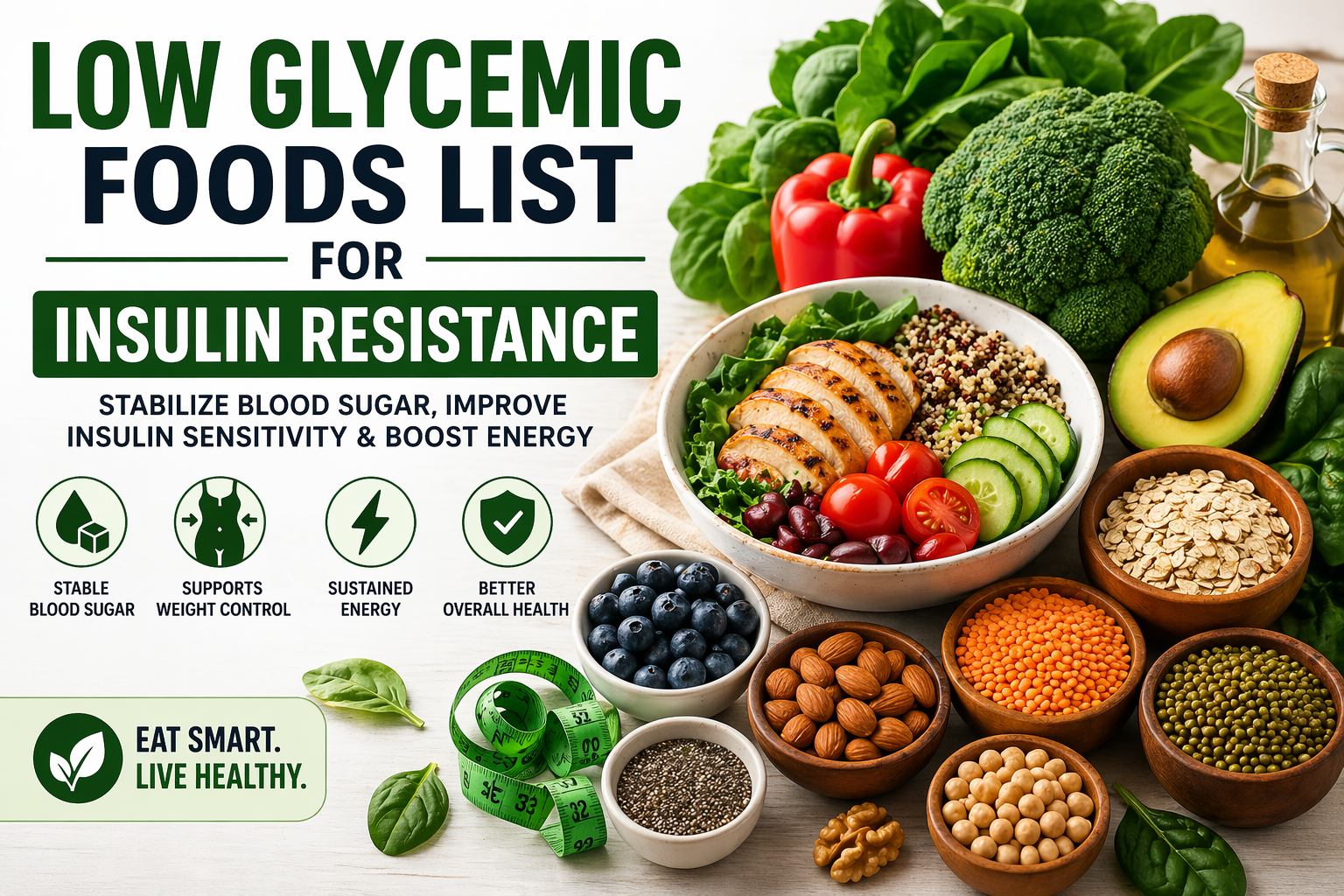
A low glycemic foods list includes foods that cause a slow, steady rise in blood sugar levels. These foods—such as vegetables, whole grains, legumes, nuts, and healthy fats—help improve insulin sensitivity, reduce cravings, and support long-term metabolic health.
What is Insulin Resistance?
To understand why a low glycemic foods list matters, we first need to define what is insulin resistance. Think of insulin as a key. Its job is to unlock your cells so glucose (sugar) from your food can enter and provide energy.
When you have resistance, the “locks” on your cells become rusty. Your pancreas has to pump out massive amounts of insulin just to get the doors to open. Eventually, the pancreas can’t keep up, and sugar builds up in the blood. This is why many people seek out an insulin resistance diet to reduce the “workload” on their hormones.
Insulin Sensitivity vs Resistance: The Spectrum
Metabolic health is a spectrum. On one end is high insulin sensitivity, where your body uses insulin very efficiently. On the other end is resistance. Moving back toward sensitivity is the goal of any how to reverse insulin resistance strategy.
Causes of Insulin Resistance: The Biology
Several lifestyle and biological triggers contribute to the causes of insulin resistance. While genetics play a role, our modern environment is the main driver.
- High Sugar Intake: Constant exposure to refined sugars keeps insulin levels chronically high.
- Physical Inactivity: Muscles are the primary “sinks” for glucose. Without movement, they become less “hungry” for sugar.
- Chronic Stress: Cortisol (the stress hormone) tells the liver to dump sugar into the blood, forcing more insulin production.
- Sleep Deprivation: Just one night of poor sleep can temporarily mimic the signs of insulin resistance in women and men.
The Role of Visceral Fat
A major biological trigger is the type of fat you carry. We must distinguish between Visceral vs. Subcutaneous fat.
| Feature | Subcutaneous Fat | Visceral Fat |
| Location | Just under the skin (pinchable). | Deep in the abdomen, around organs. |
| Metabolic Impact | Mostly aesthetic; less harmful. | Highly inflammatory and drives resistance. |
| Risk Factor | Low. | High risk for Type 2 Diabetes and Heart Disease. |
Common Insulin Resistance Symptoms
Identifying the signs of insulin resistance in women and men early is vital. Many people live with these symptoms for years without realizing they are tied to their metabolism.
- Intense Sugar Cravings: Your cells are “starving” for energy because the sugar can’t get in.
- Acanthosis Nigricans: Dark, velvety patches of skin around the neck or armpits.
- Frequent Hunger: Even after a full meal, you feel the need to snack.
- High Blood Pressure: Insulin tells the kidneys to hold onto salt, increasing pressure.
Real-World Insight: Many women first discover metabolic issues through PCOS (Polycystic Ovary Syndrome). High insulin levels can drive the ovaries to produce more testosterone, leading to acne, hair thinning, and irregular cycles.
The Low Glycemic Foods List: Your Metabolic Toolkit
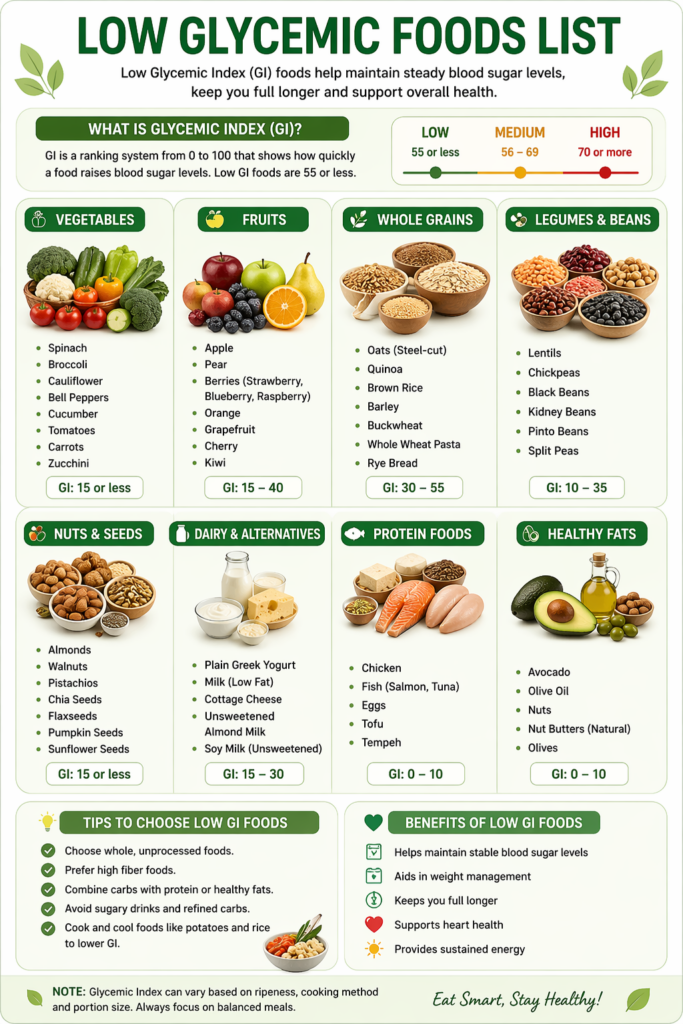
The Glycemic Index (GI) ranks foods from 0 to 100 based on how quickly they raise blood sugar. To how to reverse insulin resistance, you should focus on foods with a GI of 55 or less.
1. Non-Starchy Vegetables (GI 0–15)
These are the “free” foods that provide fiber and micronutrients without spiking insulin.
- Leafy greens (Spinach, Kale, Arugula)
- Broccoli and Cauliflower
- Peppers, Zucchini, and Asparagus
2. Low-GI Fruits (GI 20–50)
While fruits contain sugar, these options have enough fiber to slow down absorption.
- Berries (Raspberries, Blackberries, Strawberries)
- Green Apples and Pears
- Stone fruits (Plums, Peaches)
3. Proteins and Healthy Fats (GI 0)
Pure fats and proteins do not have a GI score because they don’t contain carbohydrates. They are essential for stabilizing the glycemic load of a meal.
- Wild-caught fish and grass-fed meats
- Avocados and Extra Virgin Olive Oil
- Nuts (Walnuts, Almonds, Macadamias)
4. Complex Carbs (GI 40–55)
If you eat grains, choose these over “white” versions.
- Steel-cut oats (not instant)
- Quinoa and Buckwheat
- Lentils and Chickpeas
Step-by-Step Approach to Reverse Insulin Resistance
If you want an effective insulin resistance treatment, follow this tiered approach:
- Prioritize Protein First: Always eat your protein and fiber before your carbohydrates in a meal. This “food sequencing” can reduce the glucose spike by up to 30%.
- Add “Movement Snacks”: A 10-minute walk after your largest meal helps your muscles soak up sugar without needing extra insulin.
- Request a Fasting Insulin Test: Don’t just check your blood sugar. Ask for your fasting insulin levels. A score above 6–8 uIU/mL often indicates early resistance, even if your glucose is “normal.”
- Practice Time-Restricted Feeding: Narrowing your eating window (e.g., 10 am to 6 pm) gives your insulin levels time to drop to a baseline, allowing your body to access stored fat.
Expert Insight: > “We spend too much time looking at blood glucose and not enough time at insulin. By the time your blood sugar rises, insulin has often been struggling for a decade. Early detection through fasting insulin is the true key to prevention.” — Dr. Sarah Mitchell, Metabolic Health Specialist.
Data and Statistics (2024–2026)
According to the Centers for Disease Control (CDC) and recent 2025 metabolic health surveys:
- 1 in 3 American adults now has prediabetes, a direct result of insulin resistance.
- Over 80% of people with prediabetes are unaware they have it.
- Research shows that switching to an insulin resistance diet can improve sensitivity markers by 25% in as little as four weeks.
FAQ: Common Questions About Insulin Resistance
Q1: Can you reverse insulin resistance permanently?
Yes. While you may always have a genetic predisposition, you can achieve “clinical remission” through a consistent insulin resistance diet, weight loss, and regular exercise that restores cellular sensitivity.
Q2: What is the best exercise for insulin resistance?
A combination of strength training and “Zone 2” cardio (brisk walking) is best. Muscle tissue is the primary site for glucose disposal; the more muscle you have, the better your insulin works.
Q3: Are all “sugar-free” foods okay for an insulin resistance diet?
Not necessarily. Some artificial sweeteners can still trigger a cephalic phase insulin response or disrupt gut health, which may indirectly affect insulin sensitivity vs resistance.
Q4: Why am I gaining weight only in my stomach?
This is often due to insulin resistance and weight gain linked to visceral fat. High insulin levels signal the body to store energy specifically in the abdominal cavity.
Q5: How often should I check my fasting insulin levels?
If you are overweight or have a family history of diabetes, checking once a year is a great way to monitor your progress in how to reverse insulin resistance.
Q6: Is fruit bad for insulin resistance?
No, but portion and type matter. Stick to low-GI fruits like berries and avoid fruit juices or dried fruits, which lack the fiber needed to prevent sugar spikes.
Final Verdict
Reclaiming your metabolic health is not about deprivation; it is about choosing the right fuel. Insulin resistance is a silent driver of many modern health struggles, but it is also one of the most responsive conditions to lifestyle changes. By shifting your focus to a low glycemic foods list, prioritizing muscle-building movement, and monitoring your fasting insulin levels, you can flip the switch from fat storage to fat burning.
This journey takes time, but the rewards—steady energy, a sharper mind, and a leaner body—are worth the effort. You don’t have to be perfect; you just have to be consistent. Start by changing your next meal, and your body will thank you for years to come.
Ready to stop the energy crashes? Start your journey today by picking three items from the low glycemic foods list above and swapping them into your meals this week. Small, consistent changes are the secret to how to reverse insulin resistance. Choose one habit—like a 10-minute post-dinner walk—and commit to it for the next seven days!
Sources & References:
- Journal of Clinical Endocrinology & Metabolism (2024): “The Impact of Glycemic Load on Insulin Signaling Pathyways.”
- Harvard T.H. Chan School of Public Health: “The Nutrition Source: Carbohydrates and the Glycemic Index.”
- Mayo Clinic (2025): “Metabolic Syndrome: Causes, Symptoms, and Prevention.”
- Centers for Disease Control and Prevention (CDC): “National Diabetes Statistics Report 2024.”
Medically Reviewed By:
Dr. Sarah Mitchell, MD, is a board-certified endocrinologist specializing in insulin resistance, metabolic health, and diabetes prevention. She focuses on evidence-based lifestyle strategies, including exercise and nutrition, to improve insulin sensitivity and support long-term health outcomes.
Disclaimer:
The information provided is for educational purposes only and is not intended as medical advice. Always consult with a healthcare professional before making significant changes to your diet or exercise routine, especially if you are taking medication for blood sugar.