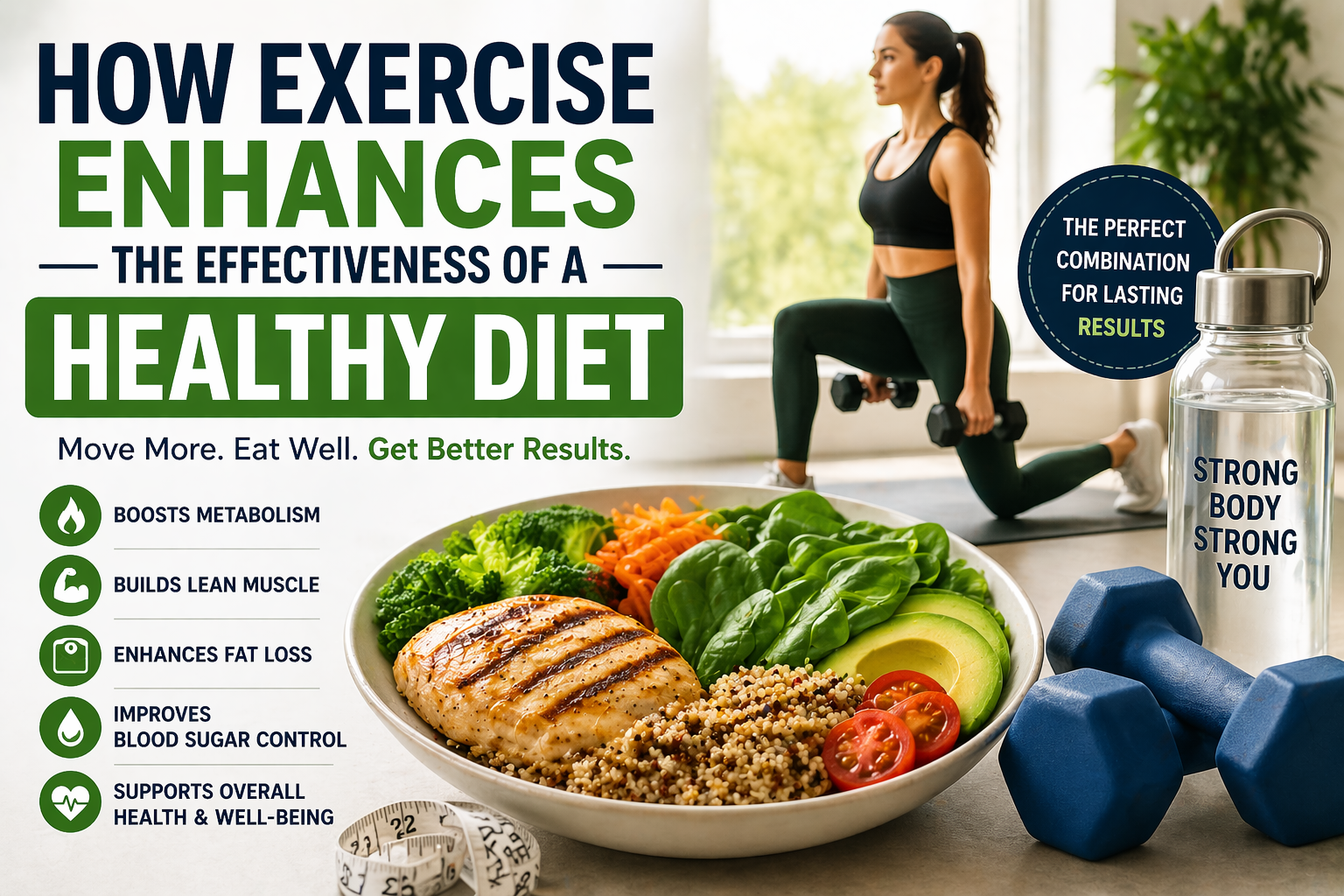
For decades, the wellness space has treated physical activity and nutrition as separate tools. Often, people attempt to “out-train” poor eating habits or rely solely on food restriction while remaining completely sedentary. However, clinical research indicates that these two elements are deeply interconnected. If you have ever wondered how exercise enhances the effectiveness of a healthy diet, the answer lies in long-term physiological adaptation.
While a nutrient-dense diet provides the essential materials your body needs, physical activity dictates how your cells utilize those materials. Moving your body regularly promotes metabolic flexibility—the ability to efficiently switch between burning carbohydrates and fats for fuel. By combining both habits, you create an environment that supports sustainable energy utilization far better than either approach alone.
How does exercise enhance a healthy diet?
Exercise enhances a healthy diet by improving insulin sensitivity and nutrient use. This helps the body direct calories toward muscle repair and energy production instead of fat storage.
The Science: How Movement Amplifies Nutrition
When analyzing the body’s response to food and movement, there is a clear physiological hierarchy. The combination of a nutritious diet and regular movement triggers specific biological mechanisms that change how food is processed.
1. Improved Insulin Sensitivity (The Primary Driver)
The most critical way exercise supports your diet is through the regulation of insulin, the hormone responsible for unlocking your cells to let blood sugar inside. A diet high in refined sugars combined with a sedentary lifestyle can lead to insulin resistance, forcing the pancreas to produce excess insulin to manage blood sugar levels.
Regular physical activity is one of the most well-supported interventions for combating this issue. When you move, your muscles require immediate fuel, naturally enhancing cellular glucose uptake even without the presence of high insulin. Some research suggests that just one bout of moderate exercise can improve how efficiently your body processes healthy carbohydrates for up to 24 hours.
👉 For more details, explore our guide: Best Exercise for Insulin Resistance
2. Preservation of Lean Muscle Mass (The Long-Term Anchor)
When individuals adopt a calorie-deficit diet for weight loss without exercising, they typically lose a combination of both fat and lean muscle tissue. Because muscle is highly metabolically active, losing it lowers your resting metabolic rate, making it harder to maintain energy balance over time.
Incorporating exercise—specifically strength training—signals to your body that it needs to preserve its muscle mass. This ensures that the high-quality proteins you consume are utilized to protect lean tissue, thereby sustaining a healthy resting metabolism and improving your overall body composition during weight loss.
3. Optimized Nutrient Partitioning (The Supporting Concept)
Nutrient partitioning refers to how your body decides to route the calories you consume. Will they be stored as adipose (fat) tissue, or will they be used for muscular energy?
When you work out, you deplete your muscular energy stores (glycogen) and create micro-tears in muscle fibers. Consequently, the healthy proteins and complex carbohydrates you eat in the hours following a workout are preferentially shuttled toward glycogen replenishment and tissue repair. Exercise essentially creates a high-priority “demand” for the nutrients you consume.
Comparing Approaches: Diet vs. Exercise
To illustrate the compounding effects of these habits, here is a general overview of how different lifestyle approaches impact the human body:
| Approach | Primary Benefit | Potential Drawback | Overall Metabolic Impact |
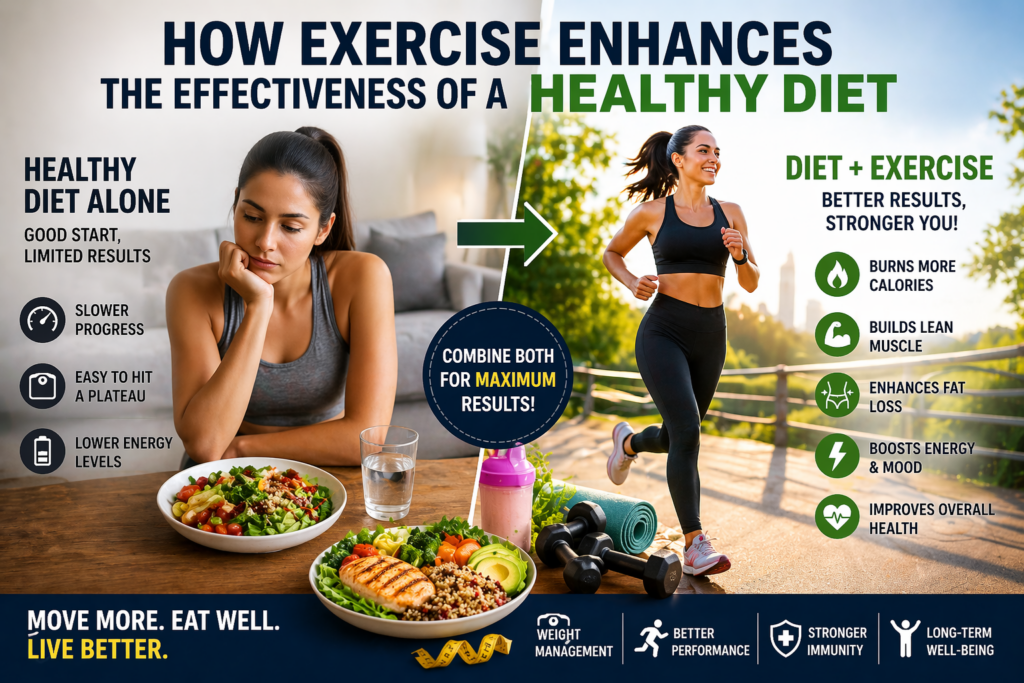
| Healthy Diet Alone | Controls caloric intake and provides essential micronutrients. | May lead to muscle loss if in a calorie deficit; lower overall energy expenditure. | Moderate |
| Exercise Alone | Improves cardiovascular health and builds muscular strength. | Difficult to out-train excessive caloric intake or poor dietary quality. | Moderate |
| Combined Approach | Optimizes nutrient partitioning, preserves muscle, and supports metabolic flexibility. | Requires more time management and intentional lifestyle adjustment. | Optimal |
Note: Individual results vary based on genetics, medical history, and consistency.
Frequently Asked Questions (FAQ)
Can I achieve my health goals with just a healthy diet?
While a healthy diet is critical for weight management and cellular health, nutrition alone cannot build cardiovascular endurance or significantly increase muscle mass. Combining diet with exercise yields the most comprehensive long-term health benefits.
Does exercise make you process food differently?
Yes. Regular physical activity improves insulin sensitivity and nutrient partitioning, meaning your body becomes more efficient at directing the calories you consume toward muscle energy and repair rather than fat storage.
What should I eat to support my exercise routine?
Research suggests a balanced intake of complex carbohydrates for energy, lean protein for muscle repair, and healthy fats for hormonal health. Consuming these nutrients consistently supports recovery and performance.
Is cardio or strength training better for enhancing my diet?
Both offer highly complementary benefits. Cardiovascular exercise is excellent for rapid glucose uptake and heart health, while strength training is vital for preserving muscle mass and increasing your resting metabolic rate. A mix of both is optimal.
Can exercise help reduce dietary cravings?
Some evidence indicates that moderate-to-vigorous exercise may help regulate appetite hormones like ghrelin and peptide YY. This can potentially reduce cravings for highly processed foods, making dietary adherence easier.
Conclusion and Next Steps
Understanding how exercise enhances the effectiveness of a healthy diet shifts the focus away from mere restriction and toward metabolic empowerment. Your diet provides the high-quality building blocks, and physical activity ensures those materials are efficiently used to build a resilient, metabolically flexible body.
To start experiencing this synergy, you do not need to overhaul your entire life overnight. Try implementing these actionable steps this week:
- Walk 10–15 minutes after meals: This simple habit takes advantage of natural muscle contractions to clear glucose from your bloodstream and blunt post-meal sugar spikes.
- Add 2 resistance sessions weekly: Use bodyweight exercises, bands, or dumbbells to signal to your body to preserve metabolically active lean muscle.
- Track your energy response: Pay attention to how your body feels after combining a balanced meal with a workout, and adjust your macronutrients to support sustained energy.
Sources & References
- Bird, S. R., & Hawley, J. A. (2017). Update on the effects of physical activity on insulin sensitivity in humans. BMJ Open Sport & Exercise Medicine.
- Cava, E., Yeat, N. C., & Mittendorfer, B. (2017). Preserving Healthy Muscle during Weight Loss. Advances in Nutrition (Bethesda, Md.)
- Centers for Disease Control and Prevention (CDC). (2023). Benefits of Physical Activity. U.S. Department of Health & Human Services.
- Aragon, A. A., & Schoenfeld, B. J. (2013). Nutrient timing revisited: is there a post-exercise anabolic window? Journal of the International Society of Sports Nutrition.
- Dorling, J., et al. (2018). Acute and Chronic Effects of Exercise on Appetite, Energy Intake, and Appetite-Related Hormones: The Modulating Effect of Adiposity, Sex, and Habitual Physical Activity. Nutrients.
Medically Reviewed By:
Dr. Elena Ramirez, MD, DipABLM Board-Certified Endocrinologist & Lifestyle Medicine Physician With over 15 years of clinical experience in metabolic health, Dr. Ramirez specializes in the physiological synergy between nutrition, exercise, and hormonal balance. She uses evidence-based lifestyle interventions to help patients improve insulin sensitivity and optimize body composition.
Medical Disclaimer
The information provided in this article is for educational and informational purposes only and is not intended as medical advice. Always consult a qualified healthcare professional before making changes to your diet, exercise routine, supplements, or medical treatment.
Evidence Policy:
Our content is based on peer-reviewed medical research and guidance from trusted health organizations such as the Centers for Disease Control and Prevention (CDC) and the American Diabetes Association (ADA).