
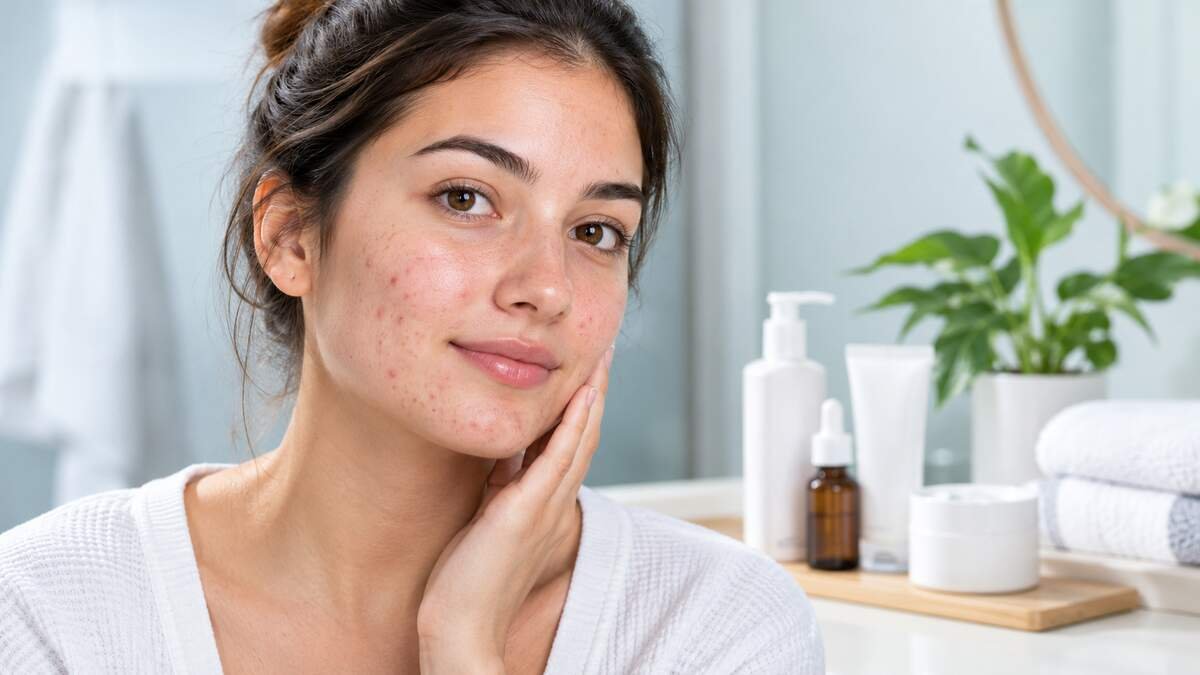

Persistent breakouts, clogged pores, and the marks they leave behind can wear down your patience and your confidence. Acne affects people of many ages and skin types, and choosing a treatment is confusing because products work in different ways. A cleanser, a gel, a prescription cream, and a pill may all promise clearer skin, yet they are not interchangeable.
This guide compares evidence-based acne treatment options in 2026: over-the-counter ingredients, prescription medicines, supportive skincare, and professional care. It draws on clinical guidance from the American Academy of Dermatology (AAD) and the UK’s National Institute for Health and Care Excellence (NICE). The best option depends on your type and severity of acne, skin sensitivity, medical history, and whether breakouts are leaving scars.
No single product works for everyone, and no treatment guarantees permanent clearing. Effective care usually means consistent use of appropriate active ingredients, realistic expectations, and professional help when needed. This information is general and does not replace personalized medical advice.
What Is Acne and Why Does It Develop?
Acne vulgaris is a common skin condition that develops in the hair follicles, the small openings that contain a hair and an oil gland. According to the National Institute of Arthritis and Musculoskeletal and Skin Diseases (NIAMS), acne forms when follicles become clogged with oil and dead skin cells. Bacteria that live on the skin, including Cutibacterium acnes, can then contribute to inflammation and red, swollen lesions.
Several factors can play a role:
- Increased oil (sebum) production
- Blocked hair follicles
- Inflammation
- Hormonal changes, such as those during puberty, menstrual cycles, or pregnancy
- Genetic predisposition
- Certain medications and individual product sensitivities
Acne is not simply a result of poor hygiene. Mayo Clinic notes that scrubbing too hard or washing too often can make acne worse by irritating the skin. Breakouts can also continue into adulthood, influenced by hormones, medications, stress, or changes in skincare products. To explore triggers in more depth, read CollectedMed’s guide to what causes acne.
What Are the Different Types of Acne?
Acne looks different depending on the type of lesion and the amount of inflammation. Knowing what you have helps you and your clinician match the treatment to the problem.
Whiteheads and blackheads
These are noninflammatory lesions, also called comedones. A whitehead forms when a pore is clogged and closed, while a blackhead forms when the clogged pore stays open. The dark color of a blackhead comes from the trapped material oxidizing at the surface, not from dirt.
Papules and pustules
Papules are small, red, tender bumps caused by inflamed follicles. Pustules look similar but have visible pus at the tip. Both are inflammatory acne.
Nodules and cyst-like lesions
Nodules are large, firm, often painful bumps that sit deep in the skin. Cyst-like lesions are deep and may feel pus-filled. These lesions carry a higher risk of scarring and often need prescription treatment, according to the AAD.
Hormonal and adult acne
Some people notice recurring breakouts along the jawline and lower face, particularly around the menstrual cycle. This pattern is common in adult acne, but appearance alone cannot confirm that acne is hormonal. A clinician can review your history and symptoms before suggesting a hormone-related approach.
In general, mild clogged pores may respond to topical products. Deep, painful, or scarring acne warrants professional assessment.
What Are the Most Effective Acne Treatment Options in 2026?
Acne treatments work in different ways, so the useful comparison is about purpose, strengths, and limits. Over-the-counter (OTC) products are available without a prescription; the others require a clinician’s guidance. Both the AAD and NICE recommend matching treatment to severity and favoring combinations of ingredients with complementary effects.
| Treatment | Main role | Availability | Common drawbacks |
|---|---|---|---|
| Benzoyl peroxide | Reduces acne bacteria, helps inflammatory lesions | OTC and prescription | Dryness, irritation, bleaches fabric |
| Topical retinoids | Unclog pores, help reduce new lesions | OTC (adapalene) and prescription | Irritation, sun sensitivity, avoid in pregnancy |
| Salicylic acid | Exfoliates and unclogs pores | OTC | Dryness, mild irritation |
| Azelaic acid | Helps acne and dark marks | Prescription and some OTC products | Tingling, irritation |
| Topical antibiotics | Reduce bacteria and inflammation | Prescription | Resistance if used alone |
| Oral antibiotics | Reduce inflammatory acne | Prescription | Side effects, resistance, pregnancy restrictions |
| Hormonal treatments | May help selected patients | Prescription | Side effects, suitability varies |
| Oral isotretinoin | Severe or resistant acne | Specialist prescription | Significant safety requirements |
Benzoyl peroxide
Benzoyl peroxide reduces acne-associated bacteria and helps treat inflammatory breakouts. The AAD guideline strongly recommends it, both on its own for mild to moderate acne and as part of combination regimens.
The NHS explains that it can cause dryness, redness, and irritation, and can bleach hair, towels, and clothing. Introduce it carefully, especially if your skin is sensitive. Starting with a lower strength or using it every other day can improve tolerance.
Topical retinoids
Topical retinoids include adapalene (available OTC) and prescription options such as tretinoin. They help unclog pores and reduce the formation of new lesions, and the AAD guideline strongly recommends them for acne.
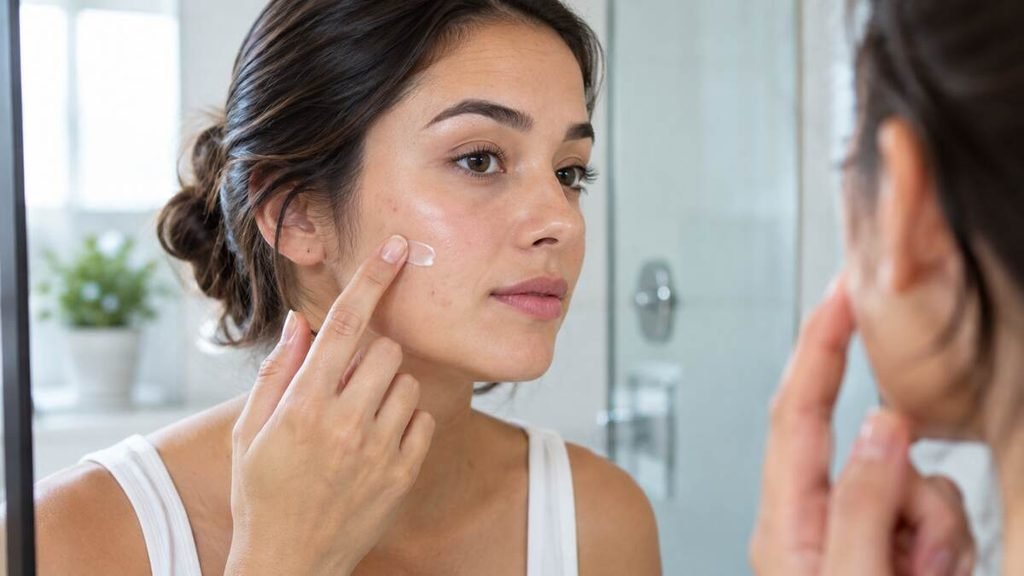
Expect some dryness and irritation at first, and introduce them gradually, often a few nights per week. They can make skin more sun-sensitive, so daily sunscreen matters. Topical retinoids are generally avoided during pregnancy or when planning pregnancy. If you are pregnant or breastfeeding, ask a clinician about suitable alternatives.
Salicylic acid
Salicylic acid is an exfoliating ingredient that helps unclog pores, so it may be useful for blackheads and whiteheads. It is found in many cleansers and leave-on products. It may cause dryness or irritation and is not a substitute for prescription treatment in severe or nodular acne. The AAD guideline gives it a conditional recommendation, reflecting more limited evidence than for benzoyl peroxide or retinoids.
Azelaic acid
Azelaic acid can treat acne and may improve post-inflammatory dark marks, the flat discoloration left after a pimple heals. It can be a useful option for people who cannot tolerate other topicals. The AAD guideline gives it a conditional recommendation. Results vary, and persistent pigmentation or acne may need professional treatment.
Topical antibiotics and combination treatments
Prescription topical antibiotics, such as clindamycin, may be used for inflammatory acne as part of a combination regimen. They should not be used alone because bacteria can develop resistance. NICE specifically advises against topical antibiotic monotherapy and recommends pairing them with other treatments, such as benzoyl peroxide.
Combining ingredients with different mechanisms often works better than relying on one. Fixed-dose products that pair benzoyl peroxide with a retinoid or an antibiotic are common examples. A dermatologist or other clinician can help you choose a combination that suits your skin.
Oral antibiotics
Oral antibiotics such as doxycycline may be options for moderate to severe inflammatory acne under medical supervision. The AAD guideline recommends limiting their duration and using them with a topical treatment, such as benzoyl peroxide, to reduce resistance. NICE similarly advises reviewing treatment at 12 weeks and stopping the antibiotic as soon as possible.
Possible effects include stomach upset and sun sensitivity, and some antibiotics are not suitable during pregnancy. Do not self-prescribe or obtain antibiotics without clinical guidance.
Hormonal treatments
Combined oral contraceptives and spironolactone may help selected patients with hormonally influenced acne. The AAD guideline discusses both as options for some women, depending on medical history and circumstances.
These medicines are not suitable for everyone. They require a clinician’s assessment of medical history, other medicines, side effects, and pregnancy considerations. Because hormonal acne cannot be diagnosed solely by where breakouts appear, professional evaluation matters.
Oral isotretinoin
Oral isotretinoin is a specialist-prescribed option for selected people with severe, scarring, or treatment-resistant acne. It can be very effective but carries significant safety considerations, including a serious risk of birth defects. The NHS describes strict pregnancy-prevention requirements for anyone who could become pregnant, along with monitoring during treatment. In the United States, prescribing and dispensing are managed through the iPLEDGE program.
Isotretinoin must never be self-prescribed or bought as an unsupervised shortcut. NICE updated its recommendations on approval for people under 18 on April 30, 2026. Because rules differ between countries, follow your own prescriber’s guidance.
Professional procedures and acne scar treatments
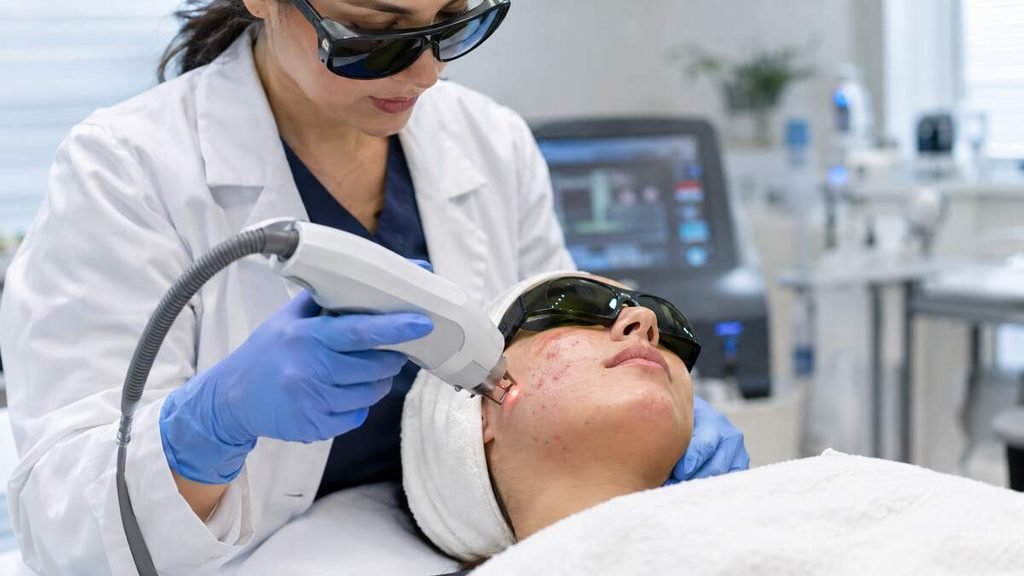
Some people benefit from procedures in addition to medicine. Examples include corticosteroid injections for certain large inflammatory lesions and specialist-directed treatments for persistent acne scars. The AAD guideline gives intralesional corticosteroids a conditional recommendation for selected lesions.
Procedures do not replace controlling active acne, and there is not enough evidence to call facials, chemical peels, lasers, or light-based devices universally effective. If scars concern you, ask a dermatologist what is appropriate for your skin and scar type.
Section takeaway: Benzoyl peroxide, topical retinoids, azelaic acid, and other evidence-based treatments serve different purposes. More severe acne may need prescription combinations or specialist care rather than increasingly aggressive OTC products. Newer prescription options also exist, so ask a dermatologist what is currently available and appropriate for you.
How to Build an Effective Acne Skincare Routine
You do not need a long list of products. A simple, consistent routine is easier to follow and less likely to irritate your skin.
Morning routine
- Cleanse with a gentle, non-comedogenic cleanser (one designed not to clog pores).
- Apply an acne treatment if your clinician or the product instructions recommend morning use.
- Use a lightweight, non-comedogenic moisturizer.
- Apply broad-spectrum sunscreen with SPF 30 or higher.
The AAD recommends sun protection, and sunscreen may also help limit darkening of post-acne marks. Several acne treatments increase sun sensitivity, which is another reason to wear it daily.
Evening routine
- Remove makeup and sunscreen, then cleanse gently.
- Apply your acne treatment according to its instructions.
- Use a moisturizer to support the skin barrier.
Retinoids are often used at night, while other treatments can be used at different times. Follow the product instructions and avoid layering several irritating ingredients at once.
Tips for sensitive skin
Introduce one new active ingredient at a time. Start with a lower concentration or less frequent use, and increase gradually as your skin tolerates it. Burning, persistent redness, swelling, or significant peeling may signal irritation. Stop the suspected product, and seek advice if symptoms are severe or do not settle. Acne treatments often cause dryness, so our guide to dry skin and skin barrier care can help you keep your skin comfortable while you treat breakouts.
Can Diet, Stress, Sleep, and Exercise Affect Acne?
Lifestyle factors can influence skin health, but they do not replace established acne treatments.
Diet and acne
The evidence is limited but evolving. Some studies link acne in certain people with high-glycemic eating patterns and, in some cases, dairy products. The AAD notes that the evidence is not strong enough to make firm dietary recommendations for everyone. Sugar, chocolate, and dairy do not universally cause acne. A balanced eating pattern is more reasonable than restrictive diets or unproven supplements. See CollectedMed’s overview of what a healthy diet looks like.
Stress and sleep
Stress may aggravate acne in some people, and adequate sleep supports overall health. Neither is a stand-alone acne treatment. For practical strategies, see our guides on how to reduce stress and how to improve sleep.
Exercise and sweat
Exercise itself does not necessarily cause acne, and regular activity has wider health benefits. However, friction, tight or occlusive equipment, sweat, and prolonged contact with sweaty clothing may contribute to breakouts in susceptible skin. Shower after exercise when possible, change out of sweaty clothes, clean shared equipment, and avoid harsh scrubbing.
How Long Does Acne Treatment Take to Work?
Acne treatments generally need several weeks of consistent use. Some people notice improvement within four to eight weeks, and fuller benefits can take longer. NICE advises treatment courses of about 12 weeks and recommends reviewing the plan then to check for improvement and side effects.
Several factors affect how quickly you respond:
- Acne severity and lesion type
- Consistency of use
- Tolerability and side effects
- Whether the treatment targets your type of acne
- The need for combination therapy or prescription treatment
Increasing irritation is not a sign a treatment is working. Do not keep using a painful or damaging routine just to reach an arbitrary deadline. If you are not improving after a reasonable trial, or side effects are troublesome, talk with a pharmacist or clinician about adjusting the plan.
What Acne Treatments Should You Avoid?
Some common habits irritate the skin or delay effective treatment.
- Overwashing and harsh scrubs. Washing too often, scrubbing hard, or using abrasive brushes can damage the skin barrier. Mayo Clinic advises washing gently and avoiding scrubbing.
- Picking and squeezing pimples. Picking raises the risk of inflammation, dark marks, infection, and scarring. The AAD advises against it.
- Using too many active ingredients. Combining several strong exfoliants, retinoids, and acne treatments without a plan can cause redness, peeling, and a damaged barrier. Add actives one at a time.
- Unproven home remedies. Lemon juice, toothpaste, baking soda, and similar household substances can irritate or burn the skin and are not recommended for acne. Natural products are not automatically safer or more effective than tested treatments.
- Unsupervised antibiotics and prescription medicines. Using antibiotics without clinical guidance contributes to antimicrobial resistance, and other prescription medicines carry risks if not monitored.
When Should You See a Dermatologist?
Consider professional evaluation if you have:
- Deep, painful nodules or cyst-like lesions
- Acne that is leaving scars or persistent dark marks
- Widespread or persistent acne that is not improving
- Significant emotional distress, anxiety, or reduced confidence related to acne (our overview of anxiety explains when to seek support)
- Suspected medication-related acne
- Sudden or unusual breakouts accompanied by other concerning symptoms
People with mild to moderate acne that does not respond to an adequate treatment course may need a different approach, and more severe acne may call for earlier assessment. The AAD encourages seeking care early to reduce the risk of permanent scars, so do not wait for scarring to develop.
How to Choose the Best Acne Treatment for Your Skin
There is no universally superior product, but a simple framework can guide a conversation with your clinician.
| Acne presentation | Treatment direction to discuss |
|---|---|
| Mainly blackheads and whiteheads | A topical retinoid or salicylic acid, depending on suitability |
| Mild inflammatory pimples | Benzoyl peroxide or an appropriate combination treatment |
| Acne with dark marks | Azelaic acid and consistent sun protection |
| Moderate or widespread inflammatory acne | Prescription combination treatment with a clinician |
| Deep, painful, or scarring acne | Prompt medical assessment for prescription or specialist treatment |
| Persistent acne despite treatment | Review technique, tolerability, adherence, and alternatives with a healthcare professional |
This table is a starting point, not a diagnosis or prescription. The most effective treatment matches your acne type, fits your medical circumstances, and can be used consistently and safely.
Frequently Asked Questions About Acne
What is the best acne treatment in 2026?
There is no single best treatment for everyone. Benzoyl peroxide, topical retinoids, azelaic acid, and prescription combinations have different roles depending on acne severity and individual suitability. The AAD guideline outlines options by treatment type and severity.
How can I get rid of acne quickly?
Acne usually needs consistent treatment over several weeks, so there is rarely an overnight fix. Aggressive scrubbing, squeezing, and layering many strong products can irritate the skin and set you back. A simple routine and a reassessment after about 12 weeks, as NICE suggests, is a more realistic plan.
Does benzoyl peroxide work better than salicylic acid?
They work differently. Benzoyl peroxide targets acne-associated bacteria and is particularly useful for inflammatory acne, while salicylic acid helps unclog pores. The better choice depends on the lesions being treated and how well your skin tolerates the product.
Can acne go away without treatment?
Some mild acne improves over time, but persistent, painful, or scarring acne should not be ignored. Early treatment can reduce the risk of lasting marks.
Is acne caused by poor hygiene?
No. Gentle cleansing supports treatment, but washing too often or scrubbing can irritate the skin, as Mayo Clinic explains. For other contributors, see what causes acne.
When should I change my acne treatment?
Many first-line treatments should be reassessed after about 12 weeks, according to NICE. Talk with a clinician sooner if you have significant side effects or if severe acne is worsening.
Conclusion
Effective acne treatment starts with identifying the type and severity of your acne, choosing evidence-based ingredients, following a consistent routine, and getting professional advice when needed. Improvement takes time, and severe acne deserves medical attention to reduce the risk of permanent scars.
You do not need an elaborate skincare routine; you need a sustainable plan that fits your skin and your health. If you are unsure where to start, a pharmacist or dermatologist can help you build one.
Sources
- American Academy of Dermatology. Acne clinical guideline
- American Academy of Dermatology. Acne: Diagnosis and treatment
- National Institute for Health and Care Excellence. Acne vulgaris: management (NG198)
- NHS. Benzoyl peroxide
- NHS. Isotretinoin (Roaccutane)
- National Institute of Arthritis and Musculoskeletal and Skin Diseases. Acne
- Mayo Clinic. Acne: Symptoms and causes
- iPLEDGE Program. Isotretinoin risk management program
Medical Disclaimer: This article is for educational purposes only and does not replace professional medical advice, diagnosis, or treatment. Acne treatments can have side effects, and some are not safe during pregnancy or breastfeeding. Talk with a doctor, dermatologist, or pharmacist before starting, changing, or stopping any acne treatment, especially prescription medicines.