
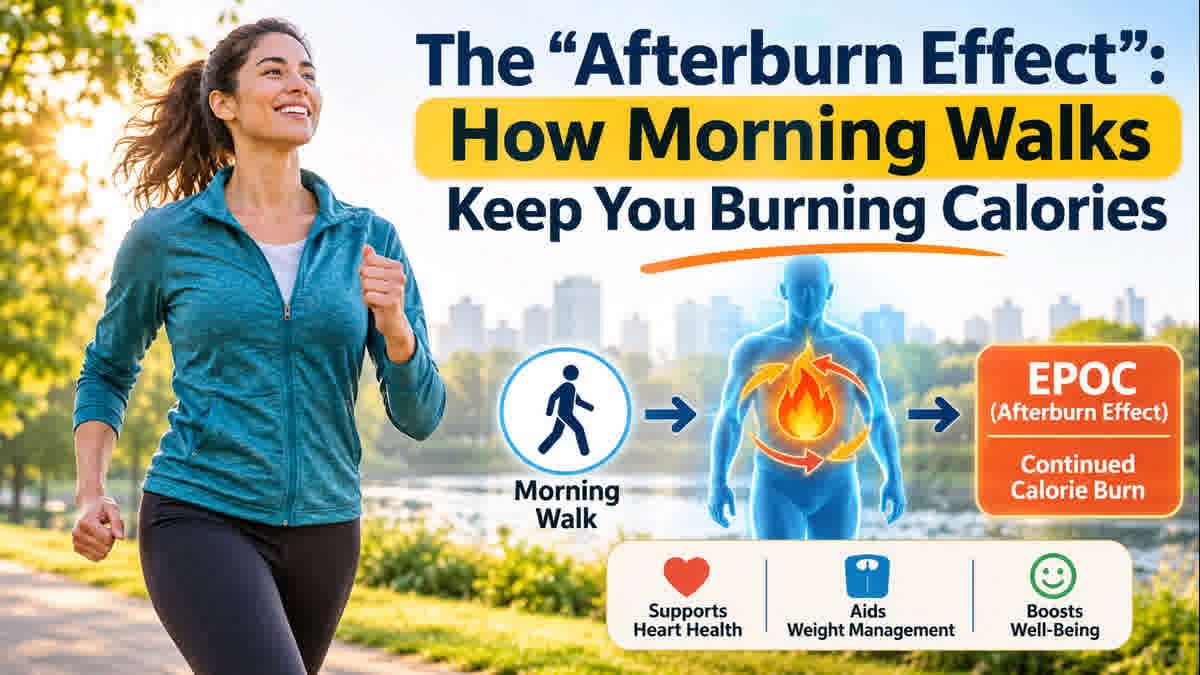

Many people start the day with a walk to build fitness, support a healthy weight, or simply wake up. But what happens once the walk ends? Does your body return to its usual calorie-burning rate right away, or does it keep using a little extra energy while it recovers? That question sits at the heart of the morning walk afterburn effect.
The afterburn effect is the popular name for excess post-exercise oxygen consumption (EPOC). After certain kinds of exercise, oxygen use and energy expenditure can stay temporarily elevated as the body returns to its resting state. It is a real physiological response, but its size depends heavily on how hard and how long you exercise.
So can a simple morning walk produce it, and does your pace make a difference? This article explains what EPOC is, what the research does and does not show about walking, and how to build a morning routine that supports your health without relying on exaggerated calorie claims.
What Is the Afterburn Effect? Understanding EPOC
The afterburn effect is a temporary increase in energy expenditure after physical activity. Its scientific name is excess post-exercise oxygen consumption (EPOC). In simple terms, your body keeps using extra oxygen and energy for a time after you stop moving, because it has recovery work to do.
How Does EPOC Work?
Exercise raises your body’s demand for oxygen and energy. When you stop, your body still needs energy to restore itself to its normal resting condition. A research review on exercise intensity, duration, and mode describes several processes behind this response, including:
- Replenishing immediate energy stores such as phosphocreatine
- Restoring oxygen levels in muscle and blood
- Regulating body temperature
- Returning heart rate and breathing toward resting levels
- Supporting metabolic and hormonal recovery
Think of a car engine. Even after you switch it off, it takes time for the heat to dissipate. Your body works in a similar way after exercise, using extra energy to settle back to baseline.
This does not mean your metabolism stays dramatically elevated. The increase is temporary and, for most everyday activity, fairly small.
Why Does the Body Continue Burning Calories?
Recovery takes energy, so your body does not stop using extra calories the instant you finish exercising. It helps to separate two amounts: the calories burned during the activity itself, and the additional calories burned during recovery.
The second amount is usually much smaller than the first. A review by LaForgia and colleagues discusses the relatively limited contribution of EPOC to total exercise energy expenditure.
How Morning Walks Affect Your Metabolism
Walking uses large muscle groups, raises oxygen demand, and increases energy expenditure above your resting level. How much it changes depends on how challenging the walk is for you. Understanding walking and metabolism starts with what happens during the walk itself.
What Happens to Your Body During a Morning Walk?
As you walk, several things change at once:
- Your heart rate rises.
- Your oxygen consumption increases.
- Your muscles work harder.
- Your energy needs go up.
- Your breathing and body temperature shift.
When you stop, these responses gradually return toward resting levels. For a deeper look at how this habit fits into daily health, see our guide to morning walk health benefits.
Does Your Metabolism Stay Elevated After Walking?
A temporary rise in oxygen consumption is not the same as a permanent change in your metabolic rate. A morning walk can create some additional post-exercise energy expenditure, but after low-intensity activity the effect is generally modest.
Regular activity can lead to longer-term fitness adaptations over weeks and months. Those adaptations are different from EPOC, which is a short-term recovery response and not a lasting metabolic transformation.
Do Morning Walks Actually Trigger the Afterburn Effect?
Walking can produce a post-exercise increase in oxygen consumption, but a relaxed walk is unlikely to produce a substantial afterburn effect. The more demanding the walk, the more likely the response is to be measurable. Evidence specific to ordinary walking is limited, so claims about big calorie gains deserve caution.
The Difference Between Casual Walking and Brisk Walking
The table below offers a general, qualitative comparison. It is not a measurement, and individual responses vary with fitness, body size, and health.
| Walking style | General exercise intensity | Expected EPOC |
|---|---|---|
| Slow, relaxed walking | Low | Very small |
| Comfortable steady walking | Low to moderate | Generally modest |
| Brisk walking | Moderate | Potentially greater |
| Brisk interval walking | Moderate to higher | May produce a greater response |
What Does Research Say About Walking and EPOC?
A 1991 study by Bahr and Sejersted examined how exercise intensity affects EPOC. Higher-intensity exercise produced a greater and longer-lasting post-exercise oxygen consumption response than lower-intensity exercise.
The study used cycling, not ordinary walking. It should not be read as direct proof that a morning walk produces the same response.
A 2020 systematic review compared high-intensity interval exercise with moderate-intensity continuous exercise. EPOC tended to be greater after higher-intensity protocols, although the authors noted differences in how studies measured it.
The takeaway: the strongest evidence links EPOC to exercise intensity. It does not support the idea that an ordinary stroll creates a large afterburn.
How Long Does the Afterburn Effect Last After a Morning Walk?
EPOC after exercise is temporary, and its length varies. Several factors shape it:
- Exercise intensity
- Exercise duration
- Individual fitness level
- Physiological recovery demands
- The type of physical activity
There is no universal number of hours for walking. Duration figures from strenuous exercise studies should not be applied to a casual walk.
Does Your Body Keep Burning Calories All Day?
Your body does burn calories all day, because it needs energy for breathing, circulation, and other basic functions. That is your resting metabolic rate at work. It is different from EPOC.
The extra energy attributable to EPOC from a morning walk is temporary, and generally small after low-intensity exercise. It does not stay elevated for the whole day.
Why More Intense Exercise Can Produce Longer EPOC
Challenging exercise creates greater recovery demands, so the body needs more time and energy to restore itself. That is why research on hard intervals often shows a larger response than research on gentle activity.
For most people, the better goal is steady, enjoyable activity, not maximizing the length of EPOC. Our article on whether morning walks actually work explores this question further.
Does Walking Intensity Affect How Many Calories You Burn?
Yes. Walking intensity influences how much energy you use. Calories burned walking depend on pace, body weight, terrain, and duration, so personal numbers vary widely. This article avoids specific calorie figures for that reason.
Slow Walking vs. Brisk Walking
Over the same amount of time, brisk walking generally requires more energy than slow walking. A simple way to gauge effort is the talk test. During moderate-intensity activity, your breathing becomes noticeably faster, but you can usually still hold a conversation. The CDC explains how to measure physical activity intensity, including the talk test.
Can Walking Uphill Increase Energy Expenditure?
Walking uphill or on an incline asks more of your muscles and raises exercise intensity. A gentle hill can make a familiar route more challenging without requiring you to walk faster. Build up gradually, and ease off if you feel unwell.
Are Walking Intervals More Effective?
Interval walking alternates between comfortable and faster paces. A simple pattern looks like this:
- Walk comfortably for several minutes.
- Increase your pace for a shorter period.
- Return to a comfortable pace.
- Repeat according to your fitness and ability.
Intervals may raise exercise intensity and potentially EPOC. They are not required to gain health benefits from walking.
Benefits of Morning Walks Beyond the Afterburn Effect
Even if the EPOC effect is small, morning walk benefits are broad. Many of them matter more for long-term health than any extra calories burned during recovery. For a wider overview, see our guide to the benefits of regular walking.
Supports Cardiovascular Health
Regular brisk walking counts as aerobic physical activity and supports cardiovascular fitness. Over time, consistent activity is associated with better heart and circulatory health.
Helps Improve Mood and Mental Well-Being
Physical activity can support mental well-being and may reduce short-term feelings of anxiety for some people. Time outdoors and morning light may add to this. Our article on morning sunlight benefits covers that side of the habit.
Supports Better Sleep and Daily Energy
Regular physical activity is linked with better sleep quality and daytime energy, though results differ from person to person. Our pieces on morning walking and sleep and habits that support better sleep offer more detail.
Helps Build a Consistent Fitness Routine
A morning walk is a convenient way to fit activity into a busy schedule. The CDC recommends that adults aim for at least 150 minutes of moderate-intensity aerobic activity each week, plus muscle-strengthening activities on two or more days. Brisk walking can help you meet the aerobic goal. You can learn more about the benefits of regular physical activity on our site.
How to Make Your Morning Walk More Effective
These ideas are general suggestions, not a prescribed workout. Adjust them to your fitness level and health.
Start With a Manageable Walking Duration
Beginners can start with a comfortable length of time and add minutes gradually as fitness improves. You do not need to begin with a 30- or 60-minute walk. For more ideas, see these beginner-friendly exercises.
Gradually Increase Your Walking Pace
Brisk walking is an accessible way to raise intensity. Use the talk test: aim for faster breathing while still being able to speak in short sentences. Slow down if you feel breathless or uncomfortable.
Try Short Walking Intervals
Here is an optional example:
- Walk 5 minutes at a comfortable pace.
- Alternate between comfortable and brisk walking.
- Finish with a few minutes at a relaxed pace.
This is an illustration only. It is not a medically prescribed routine.
Include Hills or Gentle Inclines
Gentle inclines increase muscular effort and overall energy use. Choose slopes that feel manageable, and avoid uneven or slippery ground.
Stay Consistent
Regular activity matters more for long-term health than chasing a bigger afterburn. If building the habit is the hard part, our guide on how to build a habit of morning walks may help.
Support Your Routine With Adequate Recovery
Wear supportive footwear and comfortable clothing, and drink water as needed. Rest when your body asks for it. Recovery is part of any sustainable routine.
Can the Morning Walk Afterburn Effect Help With Weight Management?
It can play a small part, but it is not a shortcut. Regular walking can contribute to weight management alongside other lifestyle factors. Walking to burn fat is best viewed as one piece of a larger picture.
Understanding Calories Burned During and After Walking
Most of the energy used in a walking session is burned during the walk itself. The extra energy used during recovery is typically a small share of the total. Brisk walking for weight loss works mainly because it adds to your overall activity, not because of a large afterburn.
Why Consistency Matters More Than Afterburn
Weight management involves several factors:
- Overall eating patterns
- Total physical activity
- Sleep
- Individual metabolism
- Long-term lifestyle habits
The CDC notes that physical activity contributes to energy expenditure, while food intake also plays an important role. No single walk, and no specific time of day, guarantees weight loss. Exercising before breakfast is also not required to experience EPOC. Our guide to healthy weight management habits covers the bigger picture.
Who Can Benefit From Morning Walking?
Morning walking can suit many people, including:
- Beginners looking for an accessible form of activity
- Adults who sit for much of the day
- People who want to build a consistent exercise habit
- Anyone seeking moderate-intensity aerobic activity
If you have a health condition, a mobility limitation, or concerns about starting exercise, talk with a healthcare professional for individualized advice. The NIDDK also offers practical tips in Staying Active at Any Size.
Frequently Asked Questions
Does a morning walk trigger the afterburn effect?
A morning walk may produce a small increase in post-exercise energy expenditure. The size of the effect generally depends on exercise intensity and duration, and it tends to be modest after relaxed walking.
How long does EPOC last after walking?
There is no universal duration. The response varies with the intensity and length of exercise, and the longest durations are reported after strenuous activity rather than casual walking.
Is brisk walking better than slow walking for calorie burning?
Brisk walking generally uses more energy over the same period because it takes greater physical effort. Actual calories burned depend on body weight, terrain, and pace.
Does walking in the morning burn more fat than walking at night?
There is no strong basis for claiming that morning walking automatically burns more body fat than evening walking. Consistency and total activity matter more than the time of day.
Do I need to walk on an empty stomach to experience EPOC?
No. Exercising on an empty stomach is not necessary to trigger EPOC. Choose the approach that feels comfortable and sustainable for you.
Does morning exercise boost metabolism?
Exercise at any time of day temporarily raises energy use, and regular activity supports fitness over time. Current evidence does not show that morning exercise permanently speeds up metabolism more than exercise at other times.
Conclusion: Make Morning Walking a Consistent Habit
The morning walk afterburn effect is a real physiological response, but it should not be mistaken for a major calorie-burning shortcut. Morning walks can support overall fitness, cardiovascular health, and daily activity levels. A consistent, manageable walking routine offers more meaningful long-term benefits than chasing extra calories burned after exercise.
Sources
- Bahr R, Sejersted OM. Effect of intensity of exercise on excess postexercise O2 consumption. Metabolism. 1991.
- Børsheim E, Bahr R. Effect of exercise intensity, duration and mode on post-exercise oxygen consumption. Sports Medicine. 2003.
- LaForgia J, Withers RT, Gore CJ. Effects of exercise intensity and duration on the excess post-exercise oxygen consumption. Journal of Sports Sciences. 2006.
- Magnitude and duration of excess post-exercise oxygen consumption between high-intensity interval and moderate-intensity continuous exercise: a systematic review. 2020.
- Centers for Disease Control and Prevention. Adult Activity: An Overview.
- Centers for Disease Control and Prevention. Measuring Physical Activity Intensity.
- Centers for Disease Control and Prevention. Physical Activity for a Healthy Weight.
- National Institute of Diabetes and Digestive and Kidney Diseases. Staying Active at Any Size.
Medical Disclaimer: This article is for general educational purposes only and is not medical advice. It does not diagnose, treat, or replace guidance from a qualified healthcare professional who knows your health history. Talk with your doctor before starting or changing an exercise routine, especially if you have a medical condition, an injury, or concerns about your heart or joints.