
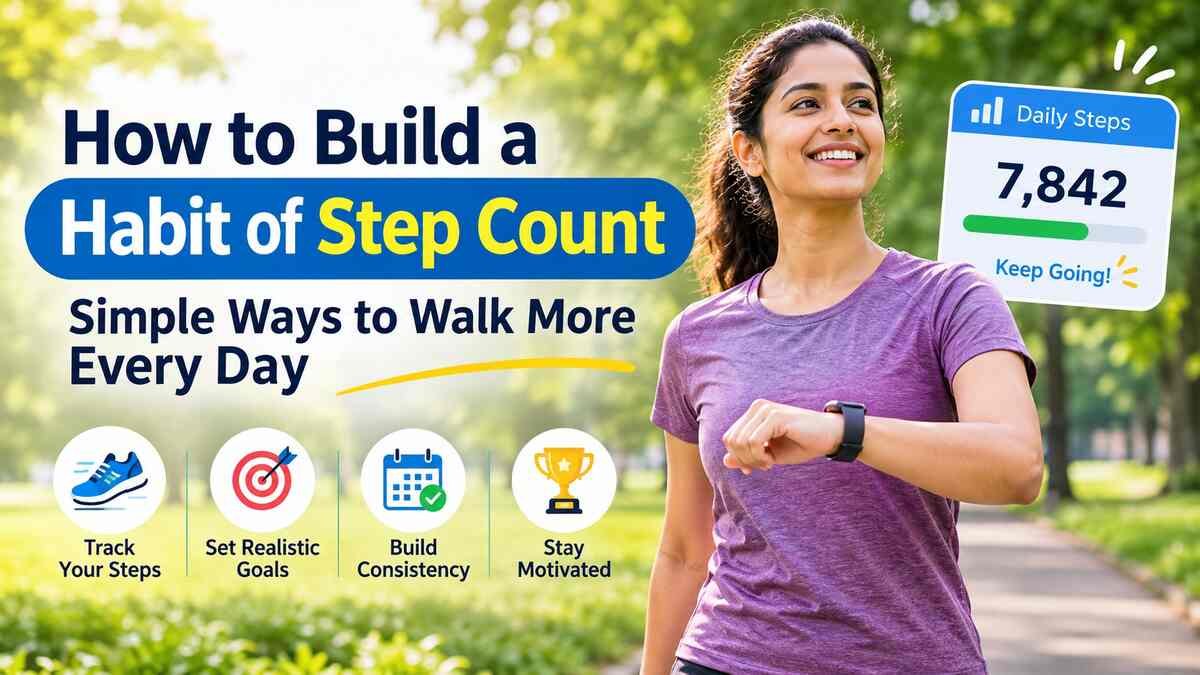

Many people want to be more active but struggle to find time for structured exercise. Long workdays, desk jobs, commutes, and screen time can leave very little room for movement. The good news is that you do not need a gym membership to start. Tracking your step count is a simple way to notice how much you move and to build walking into your daily routine.
The key is turning step tracking into a habit. Chasing a big number on your first day often backfires, while small and steady changes tend to last. This guide focuses less on hitting a particular target and more on consistency, realistic goals, and routines that fit your life.
Below, you will learn how to find your baseline, set achievable goals, use simple tracking tools, and stay motivated when progress slows down. If you want to understand the research behind daily steps first, see our articles on the benefits of daily step count and whether step count actually works.
Understanding Step Count and Why It Matters
Before building the habit, it helps to understand what you are measuring and why it can be useful.
What Is Step Count?
Step count is the number of steps you take over a period of time, usually a day. Smartphones, pedometers, fitness bands, and smartwatches estimate it using motion sensors.
Keep in mind that step count measures walking-related movement. It does not capture everything about your fitness, such as strength, balance, or flexibility.
Why Is Monitoring Your Step Count Useful?
Tracking steps can help you:
- Understand your everyday activity patterns
- See your progress more clearly
- Notice long stretches of sitting
- Make gradual improvements in daily movement
Regular physical activity is linked to better health, but step count is just one tool. It is also important to know that 10,000 steps is not a universal medical requirement. A meta-analysis in The Lancet Public Health noted there was little evidence behind that number, and the Physical Activity Guidelines for Americans focus on how much activity you do and how intense it is, not on a single step total.
Our guide to walking for health covers the broader benefits.
How to Start Tracking Your Daily Step Count
Starting is simpler than most people think. You do not need expensive equipment.
1. Check Your Current Daily Step Count
Begin by observing your normal activity. Track your steps for several ordinary days without trying to change anything. Look at the overall pattern rather than judging any single day.
Resist the urge to set an ambitious target right away. This baseline is what you will build from.
2. Choose a Step-Tracking Device
You have several options, and the best one is the one you will actually use:
- Smartphone health app: Free, convenient, and already in your pocket.
- Basic pedometer: Inexpensive and simple.
- Fitness band: Wearable and easy to check.
- Smartwatch: Offers extras such as reminders and activity summaries.
Consider comfort, cost, and convenience. All step counters are estimates, so accuracy varies a little between devices.
3. Identify When You Walk the Most and Least
Look at your daily pattern. Notice how much you move during your commute, household tasks, and breaks. Spot the long sitting stretches, since those are good places to add short walks.
4. Record Your Progress
Write your steps in a notebook, a spreadsheet, or an app, and review your weekly patterns. The CDC’s advice on building healthy habits includes tracking your progress, because it makes you more accountable. Focus on consistency, not daily perfection.
How to Set Realistic Step Count Goals
Good goals feel challenging but doable. Goals that are too big can create pressure and make you quit.
Start With Your Existing Activity Level
Someone who already walks often needs a different plan from someone who sits most of the day. Your baseline tells you where to begin. You can also explore our guide on how many steps a day you should walk for more context.
Increase Your Activity Gradually
The NIDDK advises starting slowly and increasing physical activity gradually to lower the chance of injury or burnout. A practical approach is to add a small amount, such as 500 to 1,000 steps to your usual daily average, then hold that level until it feels comfortable before adding more.
Adjust goals to your comfort, schedule, and abilities, and allow time for rest.
Make Your Goals Specific and Achievable
The SMART approach can help:
- Specific: Say exactly what you will do, such as a 10-minute walk after lunch.
- Measurable: Use your step counter to track it.
- Achievable: Choose something you can realistically do.
- Relevant: Tie it to your reason for moving more.
- Time-bound: Pick a review date, such as two weeks from now.
The NIDDK also suggests specific, trackable short-term goals, such as walking 30 minutes a day on three days this week, instead of a vague promise to be more active.
Remember That 10,000 Steps Is Not a Requirement
The 10,000-step number is a popular benchmark, not a rule. For many people, any appropriate increase in regular movement is a meaningful starting point.
7 Practical Ways to Build a Step Count Habit
This is the heart of the process. The CDC’s three steps for building a healthy habit are to make a plan, be accountable, and recognize your success. The ideas below put those steps into practice.
1. Connect Walking With an Existing Daily Habit
Attach walking to something you already do. Take a short walk after breakfast, after lunch, or after you finish a regular task. A familiar cue makes a new behavior easier to remember.
2. Break Walking Into Smaller Sessions
You do not need one long walk. Several short walks add up across the day. Use natural breaks, such as waiting for a meeting to start or finishing a phone call, to add movement. The CDC also notes that you can start with a few extra minutes of activity today, then add a few more tomorrow.
3. Take Walking Breaks During Long Sitting Periods
Stand up and move every so often. A quick lap around your home or office is enough. This helps you avoid sitting for unnecessarily long stretches, a pattern we describe in our article on what causes a sedentary lifestyle.
4. Make Walking Enjoyable
You are more likely to keep a habit you enjoy. Listen to music or a podcast where it is safe to do so, explore a pleasant route, or walk with friends or family. Choose comfortable, convenient places.
5. Use Reminders and Activity Notifications
Set phone reminders or use smartwatch movement alerts to prompt short walking breaks. Reminders help, but do not rely on them completely. The goal is to make walking feel automatic.
6. Track Your Progress and Celebrate Consistency
Review your daily and weekly patterns. Recognize small improvements, and celebrate sticking to the routine rather than reaching a specific number. The CDC suggests healthy rewards, such as time for a favorite hobby or relaxing.
7. Create a Backup Plan for Busy Days
Decide in advance what you will do when your day goes sideways. Pick an alternative walking time, or use indoor walking when the weather is bad. A missed day is not a failure. It is simply a day to adapt.
How to Make Step Counting Part of Your Daily Routine
The easiest habits are the ones that blend into your life instead of adding another chore.
Build a Morning Walking Routine
If mornings suit you, add a short walk to something you already do, such as after breakfast or before you start work. Keep it manageable so it feels easy to repeat. Our guide to the benefits of a morning walk has more ideas.
Incorporate More Movement During the Day
The CDC suggests walking during your lunch break and taking the stairs when you can. You can also walk for short, practical trips when it is safe, add movement to household chores, and take phone calls on foot. Walking meetings work well in some workplaces.
Develop an Evening Walking Routine
A relaxed walk after dinner can be a calm way to end the day, and it works well as a family activity. Choose a regular time or cue so the habit stays consistent.
Adjust Your Routine to Your Schedule
Students, office workers, remote workers, and busy parents all have different rhythms. A student might walk between classes, while a remote worker might take two short walks around meetings. Flexibility matters more than a rigid schedule.
Tools That Can Help You Track Your Steps
A basic method is enough to begin. You do not need to buy anything new.
Smartphone Step Counters
Most phones include a built-in health app that counts steps automatically. This is convenient and free, but you generally need to carry the phone for consistent tracking.
Pedometers
A pedometer is a small, simple device that clips to your waistband or shoe. It is inexpensive and easy to use.
Fitness Trackers and Smartwatches
These add features such as activity summaries and movement reminders. They are convenient, but their step counts are still estimates, and they can miss or add steps in some situations.
Paper-Based Tracking
If you prefer to skip technology, a simple daily log works. Write your estimated steps or the minutes you walked. A written log can make you more aware of your habits.
Common Challenges and How to Overcome Them
Every habit hits obstacles. Here are common ones and practical fixes.
| Challenge | Suggested solution |
|---|---|
| Forgetting to track steps | Use reminders or check your count at the same time each day |
| Busy schedule | Divide walking into shorter sessions |
| Bad weather | Find a safe indoor walking option |
| Losing motivation | Focus on consistency and your own progress |
| Device inconsistencies | Use the same device and method every day |
| Missing a planned walk | Resume your routine when you can, without guilt |
| Physical discomfort | Adjust your activity and seek professional advice if needed |
Habit formation takes time and varies between people. The CDC points out that it is normal to feel discouraged if you do not see results right away, and that picking yourself up and continuing can be the biggest success. One missed day should not undo an established routine, so adapt your approach rather than abandoning the habit.
Tips for Maintaining a Long-Term Step Count Habit
Motivation is high at the start and then tends to fade. These tips help you keep going.
Focus on Consistency Instead of Perfection
Regular movement matters more than any single day. Avoid putting too much pressure on your daily number.
Review Your Progress Regularly
Check your weekly patterns, notice what is working, and adjust your goals when life changes. A busy month may call for a lower goal, and that is okay.
Make Walking a Social Activity
Walk with a friend, family member, or neighbor, or join a community walking group. Social support makes it easier to show up.
Keep Your Routine Flexible
Adapt to weather, workload, and schedule changes. Respect your physical limits and allow time to rest. If you feel unwell or have chest pain, dizziness, or unusual shortness of breath, stop and seek medical advice.
Remember Why You Started
Revisit your reasons for moving more, such as having more energy, feeling less stiff, or spending time outdoors. Enjoying the habit is what keeps it going. For more routine-building ideas, browse our guide to healthy habits and the benefits of regular exercise.
Frequently Asked Questions About Step Count
1. What Is a Good Daily Step Count for Beginners?
It depends on your current activity level, age, health, and circumstances. A practical way to begin is to track your normal average for a few days and then add a modest amount, such as 500 to 1,000 steps. If you have a health condition, ask your healthcare provider about a safe starting point.
2. How Can I Increase My Step Count Naturally?
Add walking to what you already do. Take short walks after meals, use stairs when you can, walk during breaks, and add movement to chores and errands. CDC guidance on getting started with physical activity includes similar everyday ideas.
3. Is 10,000 Steps a Day Necessary?
No. Ten thousand steps is a popular goal, not a universal medical requirement. Research suggests meaningful benefits can occur at lower step counts, and the best goal depends on the individual.
4. Can I Build a Step Count Habit Without a Smartwatch?
Yes. You can use a smartphone app, a basic pedometer, or a paper log. The tool matters less than checking in consistently.
5. How Long Does It Take to Develop a Walking Habit?
There is no fixed timeline, and it differs for each person. Consistency matters more than a particular number of days, so focus on showing up regularly instead of counting down to a deadline.
6. What Should I Do if I Miss a Day of Walking?
Simply return to your normal routine the next day. Avoid trying to make up for it with an unusually long or intense walk, which can lead to soreness or burnout.
Conclusion: Start Building Your Step Count Habit Today
Tracking your step count can make everyday movement easier to notice, and a few simple steps can turn it into a habit. Start by learning your baseline, add small amounts of walking at convenient times, and keep your routine flexible.
Building this habit does not require expensive equipment or big lifestyle changes. What matters most is consistency, realistic expectations, and being kind to yourself on off days. Begin today by tracking your normal activity, and let your routine grow from there.
If you are new to exercise more broadly, our list of the best exercises for beginners can help you take the next step.
Sources
- 3 Steps to Building a Healthy Habit (CDC)
- Steps for Getting Started With Physical Activity (CDC)
- Tips for Starting Physical Activity (NIDDK)
- Tips to Keep Moving (NIDDK)
- The Physical Activity Guidelines for Americans, 2nd Edition (JAMA, via CDC Stacks)
- Daily steps and all-cause mortality: a meta-analysis of 15 international cohorts (The Lancet Public Health, 2022, PubMed)
Medical Disclaimer: This article is for general educational purposes only and is not a substitute for professional medical advice, diagnosis, or treatment. Activity needs and health conditions vary from person to person. Always talk with a qualified healthcare professional before starting or changing an exercise routine, especially if you have a medical condition, have been inactive, or have symptoms such as chest pain, dizziness, or shortness of breath. If you think you may have a medical emergency, seek care right away.