
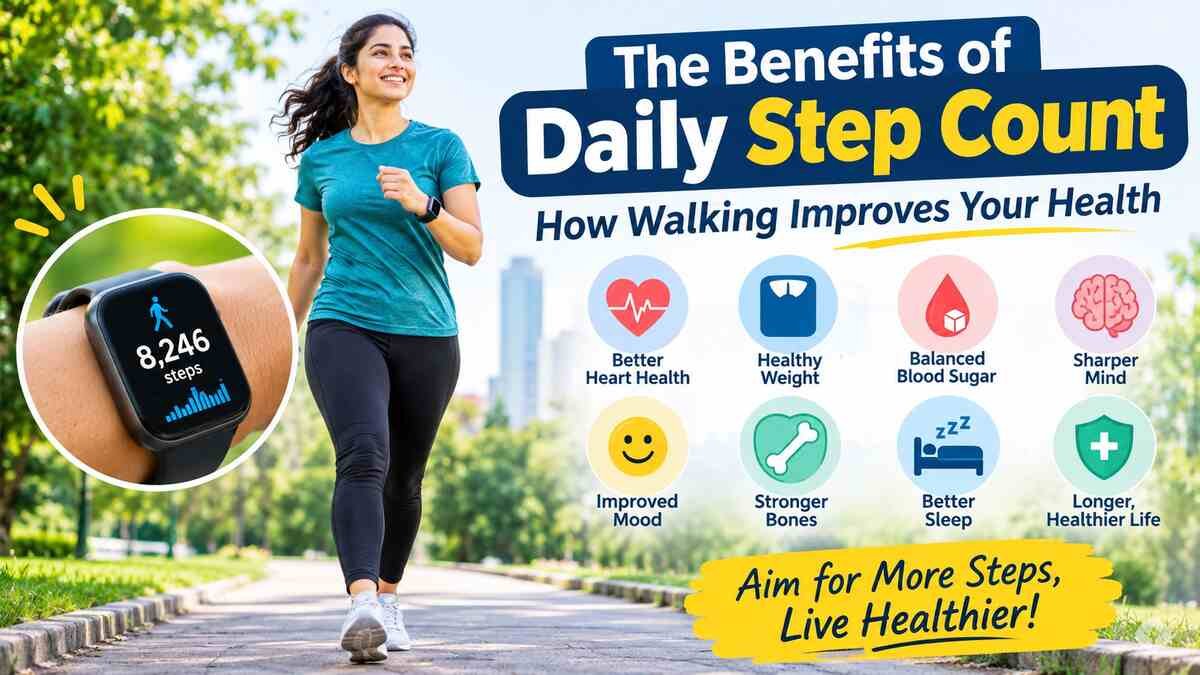

Walking is one of the simplest ways to stay active, and your daily step count is one of the easiest ways to see how much you are moving. You do not need a gym membership, special equipment, or a training plan. You only need a pair of comfortable shoes and a willingness to take a few more steps than yesterday.
Many of us spend long hours sitting at desks, driving, studying, or scrolling on our phones, which can leave very little room for everyday movement. Counting steps with a smartphone, smartwatch, or pedometer gives you a clear picture of how active your day really is. Regular walking is associated with better heart health, easier weight management, steadier blood sugar, improved mood, and better mobility as you age.
In this guide, you will learn what step count means, why tracking it can help, and 12 science-backed benefits of walking more. You will also find out how many steps you should aim for, whether 10,000 steps a day is really necessary, and practical ways to add steps to your day. For a broader look at the topic, see our guide to walking for health.
What Is Step Count and Why Does It Matter?
Your step count is the number of steps you take over a day. It is a simple measure of how much you move around, and it can be tracked with a smartphone, a fitness tracker, a smartwatch, or a basic pedometer.
Understanding Daily Step Count
Your daily step count adds up everything from walking around your home to commuting, shopping, and walking the dog. It also includes any intentional exercise, such as a brisk walk or a jog.
It helps to separate two kinds of movement. Incidental walking is the movement built into your day, like walking to a meeting or carrying groceries. Intentional exercise is planned activity done for fitness. Both count toward your steps, and both can matter for your health.
Why Tracking Your Steps Is Important
Tracking steps can be a helpful habit for several reasons:
- It shows your actual activity level, which is often different from what you assume.
- It encourages you to move throughout the day.
- It makes it easier to set realistic, measurable goals.
- It lets you see progress over time.
A step counter is a tool, not a test. If tracking starts to cause stress, it is fine to take a break from it.
Why Is Maintaining a Healthy Daily Step Count Important?
A healthy daily step count supports an active lifestyle, especially if your job or routine keeps you seated for hours. Walking breaks up long periods of sitting and encourages consistent physical activity. Our article on what causes a sedentary lifestyle explains how common inactivity has become.
Tracking steps can also reveal quiet stretches in your day when you barely move. That makes goals easier to measure and gives beginners a simple starting point. The CDC’s physical activity guidance emphasizes the message to move more and sit less.
Keep in mind that step count is only one measure of physical activity. It does not capture strength, flexibility, balance, or the intensity of your movement, so it is not a complete picture of your fitness or health.
12 Science-Backed Benefits of Increasing Your Daily Step Count
Much of the research on steps is observational, which means it shows associations rather than proof that walking directly causes each benefit. Individual results vary. Here are 12 potential benefits of walking more:
- Supports better heart health
- Helps with weight management
- Supports better blood sugar control
- Improves mental health and mood
- Supports healthy brain function
- Improves stamina and physical endurance
- Supports healthy bones and muscles
- May improve sleep quality
- Supports healthy aging and mobility
- Helps reduce the effects of a sedentary lifestyle
- Supports digestive health
- Encourages long-term healthy habits
1. Supports Better Heart Health
Walking is a form of aerobic activity that gets your heart pumping and improves circulation over time. Regular physical activity is associated with lower blood pressure and a lower risk of cardiovascular disease.
A 2023 meta-analysis in the European Journal of Preventive Cardiology pooled 17 cohort studies with nearly 227,000 participants. It found that higher daily step counts were associated with a lower risk of death from any cause and from cardiovascular disease. Because these were observational studies, they cannot prove cause and effect.
Walking supports heart health but does not replace medical care. If you have a heart condition, follow your healthcare team’s advice. You can read more in our guide to exercise and heart health.
2. Helps With Weight Management
Walking uses energy, so more steps increase the calories you burn in a day. Combined with a balanced diet, extra walking can support weight management over time.
The key is consistency. No particular step count guarantees weight loss, because results depend on diet, sleep, medical conditions, and many other factors. For more detail, see our articles on walking for weight loss and weight management.
3. Supports Better Blood Sugar Control
When your muscles are active, they use glucose (sugar) from your blood for energy. This is one reason regular movement is helpful for blood sugar control.
Some smaller studies suggest that a short walk after a meal may help reduce blood sugar rises after eating, although results vary. If you are managing diabetes or prediabetes, talk with your healthcare provider about the right activity plan for you. Learn more in our overview of blood sugar.
4. Improves Mental Health and Mood
Physical activity is linked to better mood and lower stress. Walking outdoors can add a calming change of scenery, and a steady pace can help clear your head.
Walking can be a helpful part of caring for your emotional well-being, but it is not a replacement for mental health treatment. If you are struggling, please reach out to a healthcare professional. Our guide on exercise and mental health has more.
5. Supports Healthy Brain Function
Regular physical activity is associated with better cognitive health, including attention, memory, and mental alertness. Many people also find a walk helps them think more clearly.
Researchers are still studying exactly how activity protects the brain over the long term. For now, walking is best viewed as one healthy habit that may support brain health, not a guarantee against memory problems.
6. Improves Stamina and Physical Endurance
The more you walk, the more your aerobic fitness tends to improve. Over time, everyday tasks such as climbing stairs or carrying bags can feel easier.
Brisk walking adds extra cardiovascular benefit because it raises your heart rate more than a slow stroll. Even so, you can start at any pace and build gradually.
7. Supports Healthy Bones and Muscles
Walking is a weight-bearing activity, which means your bones and muscles work against gravity. It helps maintain lower-body muscle function and supports mobility.
Walking alone is not enough for strong muscles and bones. The CDC advises adding muscle-strengthening activities on two or more days a week. If you are new to this, see our guide to strength training for beginners.
8. May Improve Sleep Quality
Regular daytime activity is associated with better sleep for many people. A walk, especially earlier in the day, may help you feel more ready for bed at night.
Responses differ from person to person, so do not be discouraged if you do not notice a change right away. Read more about this connection in our article on sleep and exercise.
9. Supports Healthy Aging and Mobility
Walking helps maintain balance, endurance, and the everyday movement that supports independence as you age. In the meta-analysis mentioned above, older adults also showed lower mortality risk at moderate step counts, although the numbers differed from younger adults.
Safety matters. Older adults should choose appropriate, safe routes and footwear. The Physical Activity Guidelines for Americans recommend that older adults include balance training along with aerobic and muscle-strengthening activity.
10. Helps Reduce the Effects of a Sedentary Lifestyle
Long periods of sitting are linked to poorer health. Short walking breaks, such as pacing during phone calls or taking a lap after lunch, can interrupt that sitting time.
A high step count may not completely cancel out the effects of sitting for most of the day, so it helps to move regularly throughout the day. For more on this topic, see our guide to living with a sedentary lifestyle.
11. Supports Digestive Health
Many people find that a gentle walk after a meal helps them feel less sluggish and supports normal digestion. The research here is limited, so it is best to treat this as a possible comfort benefit rather than a treatment.
Walking does not cure digestive conditions. If you have ongoing stomach or bowel symptoms, talk with a healthcare professional.
12. Encourages Long-Term Healthy Lifestyle Habits
Tracking steps can motivate you to move more, and small daily goals can grow into lasting habits. Consistent walking tends to be more useful than occasional bursts of intense exercise.
Walking pairs well with other healthy routines. For more ideas, browse our guide to healthy habits.
How Many Steps Should You Walk Every Day?
There is no single ideal step count for everyone. The right goal depends on your age, current activity level, fitness, and health conditions. Our article on how many steps a day you should walk goes deeper on this question.
Is 10,000 Steps a Day Really Necessary?
No. The 10,000-step target became popular as a memorable fitness goal rather than a universal medical requirement. Research suggests that meaningful benefits can start well below that number.
The 2023 meta-analysis found that the risk of death from any cause began to fall at around 4,000 steps per day, and the risk of cardiovascular death at around 2,300 steps per day. Each additional 1,000 steps was associated with a lower risk, and benefits continued to increase at higher counts. Remember that this was an observational analysis, and the comparison groups affect how the numbers should be read.
Recommended Step Count for Different Activity Levels
The table below offers general, practical starting points. These are not official medical recommendations.
| Activity level | Suggested daily goal |
|---|---|
| Mostly inactive beginners | Start with your current baseline, then add 500 to 1,000 steps |
| Lightly active individuals | Gradually increase your daily steps |
| Moderately active adults | Maintain or gradually increase your activity |
| Highly active individuals | Maintain a sustainable level of activity |
Older adults and people with chronic health conditions may need individualized goals. Check with your healthcare provider if you are unsure what is right for you.
How to Increase Your Daily Step Count Naturally
You can add steps without changing your whole routine. Try these strategies.
Start With Small and Realistic Goals
First, measure your current average for a few days. Then aim to add a modest number of steps rather than jumping straight to 10,000.
Take Short Walks After Meals
A 10 to 15 minute walk after a meal is an easy way to add steps, and it may help with blood sugar management and digestion for some people.
Choose Walking Instead of Driving for Short Distances
If your destination is close and the route is safe, walk. Parking a little farther away also adds steps.
Take Regular Breaks From Sitting
Stand up and walk for a few minutes every hour or so while working or studying. Even brief breaks add up over the day.
Use a Pedometer or Fitness Tracker
A tracker helps you see your progress and can motivate you to stay on track. Many smartphones already count steps for free.
Make Walking a Social Activity
Walk with friends, family, or pets. Company makes walking more enjoyable and easier to stick with. A morning stroll is one option, and our guide to the benefits of a morning walk has more ideas.
Common Mistakes to Avoid When Tracking Your Step Count
Trying to Reach 10,000 Steps Immediately
A sudden jump can cause sore feet, muscle aches, and burnout. Build up gradually so the habit lasts.
Ignoring Walking Quality
Steps are not the whole story. Pace and intensity matter too, and a brisk walk offers more cardiovascular benefit than a slow one.
Comparing Your Step Count With Others
Your best goal depends on your own health, age, and fitness. Compare yourself with your past self, not with your friends.
Ignoring Pain and Physical Limitations
Adjust your activity if something hurts. See a healthcare professional for persistent pain, dizziness, chest discomfort, or other concerning symptoms.
Is Walking Enough, or Should You Combine It With Other Exercises?
Walking is excellent, but a balanced routine includes more than steps. The CDC recommends that adults get at least 150 minutes of moderate-intensity aerobic activity per week, plus muscle-strengthening activities on at least two days a week. Older adults should also include balance activities, and flexibility and mobility work can round out a routine.
Not every step counts as moderate-intensity exercise. A casual stroll around the house adds to your step count, while a brisk walk that raises your heart rate counts toward your weekly aerobic minutes. For more ideas, see our guide to the benefits of exercise.
Frequently Asked Questions About Daily Step Count
1. What Are the Main Benefits of Daily Step Count?
Tracking steps encourages you to be more active. Regular walking is associated with better heart health, blood sugar management, mobility, and mood. These are general associations, and results vary between individuals.
2. Is 5,000 Steps a Day Enough?
For some people, especially those who are currently inactive, 5,000 steps is a useful starting point. A 2023 meta-analysis found benefits at counts below 5,000, and benefits generally rose with more steps. Aim to build up gradually if you are able.
3. What Happens if I Walk 10,000 Steps Every Day?
You may gain benefits for cardiovascular fitness, mobility, and overall activity. Results depend on your age, health, diet, and how you walk. Ten thousand steps is a popular goal, not a requirement.
4. Can Walking Every Day Help Lose Belly Fat?
Walking can add to your overall energy use and support weight management, but it cannot target fat in one area. For more on this, see our guide to how to lose belly fat.
5. Is It Better to Walk in the Morning or Evening?
The best time to walk is the one you can stick with. Morning and evening walks both add to your daily activity, so choose what fits your schedule and energy level.
Final Thoughts: Every Step Counts Toward Better Health
Increasing your daily step count is one of the most accessible ways to become more active. You do not need to walk 10,000 steps right away. Small increases in daily movement can make a meaningful difference, and consistency matters more than perfection.
Start where you are, add a few steps at a time, and build a walking habit that fits your life. If you have a health condition or concerns about starting, check with a healthcare professional first. For more ideas, explore our best exercises for beginners and other wellness resources on CollectedMed.
Sources
- The association between daily step count and all-cause and cardiovascular mortality: a meta-analysis (European Journal of Preventive Cardiology, 2023)
- Physical Activity Guidelines for Adults (CDC)
- Adding Physical Activity as an Adult (CDC)
- The Physical Activity Guidelines for Americans, 2nd Edition (JAMA, via CDC Stacks)
Medical Disclaimer: This article is for general educational purposes only and is not a substitute for professional medical advice, diagnosis, or treatment. Activity needs and health conditions vary from person to person. Always talk with a qualified healthcare professional before starting or changing an exercise routine, especially if you have a medical condition, have been inactive, or have symptoms such as chest pain, dizziness, or shortness of breath. If you think you may have a medical emergency, seek care right away.
2 thoughts on “The Benefits of Daily Step Count: How Walking Improves Your Health”
Comments are closed.