
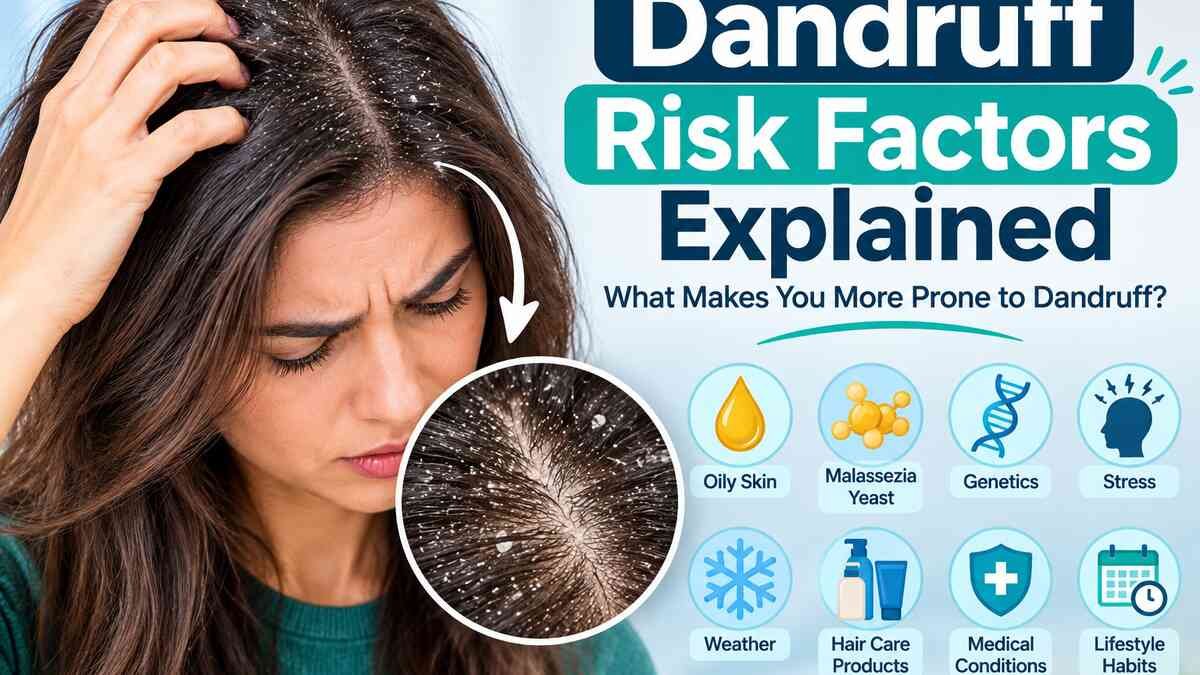
White or yellowish flakes on your shoulders, an itchy scalp that seems to act up at the worst moments, and a feeling that it keeps coming back. Dandruff is one of the most common scalp concerns, and it can be frustrating when you cannot tell why it keeps returning. Some people never deal with it, while others seem to battle flakes year after year.
The difference often comes down to risk factors. Dandruff does not have one single cause. It is linked to several interacting factors, including scalp oil, sensitivity to a yeast that lives on the skin, certain skin conditions, family history, stress, weather, and hair care habits. It is not simply a sign of poor hygiene.
Understanding these dandruff risk factors can help you recognize your own triggers and choose better scalp care habits. In this article, you will learn what dandruff is, 10 common risk factors, and who may be more likely to develop it. You will also find ways to lower your risk, how dandruff compares with other scalp conditions, when to see a dermatologist, and answers to common questions.
What Is Dandruff?
Dandruff is a common scalp condition that causes visible flaking of the skin, often with itching. Your scalp naturally sheds dead skin cells all the time, usually without notice. With dandruff, the flaking becomes more noticeable, and flakes may show on your hair and clothing.
The Mayo Clinic describes dandruff as a common condition that produces flaking and itching, and it is not contagious. Common symptoms include white or yellowish flakes, an itchy scalp, and occasional mild irritation.
Dandruff is closely related to seborrheic dermatitis, an inflammatory skin condition. Harvard Health describes dandruff as a mild form of seborrheic dermatitis. It also differs from an ordinary dry scalp, which tends to cause smaller, drier flakes and a tight feeling. Our guide to dry skin explains the difference.
For a broader overview, see our dandruff guide and our article on how common dandruff is.
What Are the Main Risk Factors for Dandruff?
Dandruff risk factors include oily skin, sensitivity to Malassezia yeast, certain skin conditions, stress, cold or dry weather, and irritation from hair care products. Age and some medical conditions may also influence susceptibility. These factors affect people differently, and dandruff is not simply a result of poor hygiene.
No single factor explains every case. Researchers are still studying the causes, which the American Academy of Dermatology (AAD) describes as complex. In general, the following may make someone more susceptible or lead to recurring symptoms:
- Oily skin and increased sebum production.
- Malassezia yeast sensitivity.
- Age and hormonal changes.
- Existing skin conditions.
- Stress and lifestyle factors.
- Weather and environmental conditions.
- Hair care products and scalp irritation.
- Certain medical conditions and medications.
A risk factor is not the same as a cause. It simply means your chances may be higher, or that your symptoms may be more likely to flare. The sections below explain each one.
10 Common Dandruff Risk Factors Explained
You may recognize several of these in your own life. Most people have more than one.
1. Oily Skin and Excess Scalp Oil
Your scalp has sebaceous glands that produce a natural oil called sebum. Some people produce more than others, and an oilier scalp can create an environment where flaking is more likely. Excess oil can interact with Malassezia yeast, which feeds on scalp oils.
Oily skin is also associated with seborrheic dermatitis. An oily scalp may contribute to recurring flakes, which is why regular cleansing often helps. Still, oil alone does not explain every case of dandruff.
2. Sensitivity to Malassezia Yeast
Malassezia is a yeast that lives naturally on the skin of most adults, including on the scalp. It uses the oils found there to grow. In some people, the skin reacts to it with irritation and inflammation, which may lead to flaking and itching.
Why some people react more strongly is not fully understood. Dandruff is not a fungal infection that you catch from another person. The yeast is a normal part of the scalp, and the reaction to it varies from person to person.
3. Age and Hormonal Changes
Dandruff often becomes more noticeable during adolescence. Hormonal changes in puberty can increase oil production, which may contribute to flaking. It is common in young adults and adults too, and symptoms can change as people get older.
Age alone does not decide whether you will develop dandruff. Many teenagers never have problems, and many older adults do.
4. Family History and Genetic Susceptibility
Dandruff and seborrheic dermatitis may run in some families. Inherited skin traits, such as oil production and skin barrier function, may influence susceptibility. This may explain why relatives sometimes share similar scalp concerns.
That said, dandruff does not follow a simple or predictable inheritance pattern. A family history may add to your risk, but it does not guarantee you will have it.
5. Existing Skin Conditions
Certain skin conditions can cause scalp flaking or make dandruff-like symptoms worse. These include:
- Seborrheic dermatitis.
- Psoriasis.
- Eczema (atopic dermatitis).
- Contact dermatitis.
- Other inflammatory skin conditions.
These conditions can look like dandruff but may need different treatments. If your symptoms do not respond to usual care, ask a healthcare professional to take a look.
6. Stress and Emotional Pressure
Psychological stress can affect skin health. Some people notice flare-ups during stressful periods, and stress may be linked to inflammation in conditions such as seborrheic dermatitis. Poor sleep and a hectic routine can also make symptoms harder to manage.
Stress is generally considered an aggravating factor, not a direct cause of dandruff. Our guides on how to reduce stress and how to improve sleep may help.
7. Cold Weather and Environmental Changes
Many people notice more dandruff in colder months. Cold, dry air and indoor heating can reduce humidity and dry out the scalp. Harvard Health notes that dandruff may improve in warmer months.
Hot, humid conditions can also affect the scalp by increasing sweat and oil. Seasonal changes affect people differently, and weather does not explain every case. See our article on what makes dandruff worse for more on triggers.
8. Hair Care Products and Scalp Irritation
Shampoos, conditioners, gels, sprays, and other styling products can irritate the scalp in some people. Fragrance and other ingredients may trigger contact dermatitis in sensitive individuals. Product buildup may also add to discomfort.
Harsh products used often can affect scalp comfort too. It helps to tell product irritation apart from dandruff itself. If a product causes burning, redness, or itching, stop using it and choose one that suits your scalp better.
9. Infrequent Hair Washing and Scalp Care Habits
Infrequent shampooing may let oil and dead skin cells build up, which can make flakes more visible. People with oily scalps may need to wash more often. Appropriate cleansing can help remove excess oil and flakes.
Overwashing with harsh products can irritate some scalps, so washing frequency should depend on your hair type and scalp. The AAD notes that infrequent shampooing can make dandruff more obvious. Dandruff is not proof of poor hygiene.
10. Certain Medical Conditions and Weakened Immune Function
Seborrheic dermatitis and dandruff may be more common or more severe in people with certain medical conditions. These include conditions that affect immune function, such as HIV, and some neurological conditions, such as Parkinson’s disease. Some medications and medical treatments may also affect the skin.
This does not mean everyone with these conditions will develop dandruff. If scalp symptoms are persistent, severe, or unusual, talk with a healthcare professional.
Who Is More Likely to Develop Dandruff?
Dandruff can affect anyone, but some groups may have a higher chance of noticing symptoms.
Teenagers and Young Adults
Puberty brings hormonal changes that can increase scalp oil production. This may contribute to dandruff in teens and young adults.
People With Oily Skin
Sebum, Malassezia yeast, and scalp flaking are closely connected. People with oilier scalps may notice flakes more often.
People With Sensitive or Inflammatory Skin
People with eczema, psoriasis, seborrheic dermatitis, or contact dermatitis may have scalp symptoms that look like dandruff or make it worse.
People Experiencing Chronic Stress
Ongoing stress may worsen existing symptoms in people who are susceptible. It does not affect everyone in the same way.
People With Certain Health Conditions
Some medical conditions and immune-related changes are linked with more frequent or severe seborrheic dermatitis. If you have one of these conditions and notice new scalp symptoms, mention it to your healthcare team.
Can You Reduce Your Risk of Dandruff?
You cannot change every risk factor, such as age or family history. You can still take steps that may help keep symptoms in check. Our guide on whether dandruff can be prevented goes into more detail.
- Wash your hair regularly, based on your scalp’s needs.
- Choose a shampoo that suits your scalp.
- Consider an anti-dandruff shampoo when needed.
- Avoid products that irritate your scalp.
- Manage stress and keep healthy sleep habits.
- Avoid scratching or rubbing your scalp roughly.
- Pay attention to seasonal changes.
- Seek medical advice if symptoms persist.
Common anti-dandruff shampoo ingredients include ketoconazole, selenium sulfide, zinc pyrithione (where available and permitted), coal tar, and salicylic acid. They work in different ways. The Mayo Clinic notes that some help kill or slow the fungus that may contribute to dandruff.
The right choice depends on your scalp condition. Follow the product directions, and seek professional advice if you do not see improvement. Our guides to dandruff treatment options and managing dandruff at home can help.
Dandruff Risk Factors vs. Other Causes of Scalp Flaking
Not every flaky scalp is dandruff. Several conditions can look alike, and symptoms can overlap:
- Dandruff: White or yellowish flakes and itching.
- Dry scalp: Small, dry flakes, tightness, or dryness.
- Seborrheic dermatitis: Greasy scales, redness, and inflammation.
- Scalp psoriasis: Thick, well-defined plaques with silvery scales.
- Contact dermatitis: Itching, redness, or irritation after exposure to a product.
A healthcare professional or dermatologist can help determine the underlying condition. Our guide to itchy scalp causes and treatments may also help you sort out possible reasons.
When Should You See a Dermatologist?
For most people, dandruff can be managed at home. Self-care may not be enough in some cases. Consider seeing a dermatologist if you have:
- Persistent dandruff despite using an appropriate shampoo.
- Severe or worsening itching.
- Significant redness or inflammation.
- Thick scales or plaques.
- Pain, swelling, or signs of infection.
- Hair loss along with scalp symptoms.
- Symptoms on other parts of the body.
It is better to get a professional evaluation than to assume every case of scalp flaking is ordinary dandruff. Our guide to hair loss offers more background if you notice thinning.
Frequently Asked Questions About Dandruff Risk Factors
What is the biggest risk factor for dandruff?
There is no single biggest risk factor for everyone. Scalp oil production and individual sensitivity to Malassezia yeast are important contributors. Other factors, such as skin conditions and stress, can also play a role.
Is dandruff caused by poor hygiene?
No. The AAD notes that this is a common misconception. Appropriate scalp cleansing can still help manage oil and flakes.
Can stress increase the risk of dandruff?
Stress may aggravate dandruff or seborrheic dermatitis symptoms in people who are susceptible. It is not considered a sole cause. Many people with stress never develop dandruff.
Does oily hair make dandruff worse?
It can for some people. Excess scalp oil may interact with Malassezia yeast and contribute to flaking. Oil does not explain every case.
Is dandruff genetic?
Family history and inherited skin traits may influence susceptibility. Dandruff does not follow a simple inheritance pattern, so having a relative with it does not guarantee you will too.
Can cold weather trigger dandruff?
Cold, dry conditions and indoor heating may aggravate scalp dryness or existing dandruff. Harvard Health notes that symptoms may ease in warmer months.
Can dandruff be a sign of another medical condition?
Scalp flaking can be associated with seborrheic dermatitis, psoriasis, eczema, and other conditions. Persistent or severe symptoms should be evaluated by a healthcare professional.
Final Thoughts on Dandruff Risk Factors
Dandruff can have several contributing risk factors. Oil production, Malassezia sensitivity, skin conditions, stress, and environmental changes may all play a part, and not everyone shares the same triggers.
Identifying your own risk factors can help you choose better scalp care habits. Persistent or severe symptoms deserve professional attention. Dandruff is common and manageable for many people, so there is no reason to feel embarrassed about it.
Sources
- American Academy of Dermatology. How to treat dandruff
- Mayo Clinic. Dandruff: Symptoms and causes
- Mayo Clinic. Dandruff: Diagnosis and treatment
- Harvard Health Publishing. Dandruff A to Z
- MedlinePlus. Dandruff, Cradle Cap, and Other Scalp Conditions
- NHS. Dandruff
Medical Disclaimer: This article is for general information and education only. It is not medical advice and does not replace care from a doctor or other qualified healthcare professional. Do not use it to diagnose or treat any condition. If you have severe, persistent, or unusual scalp symptoms, please talk with a dermatologist or your healthcare provider.