
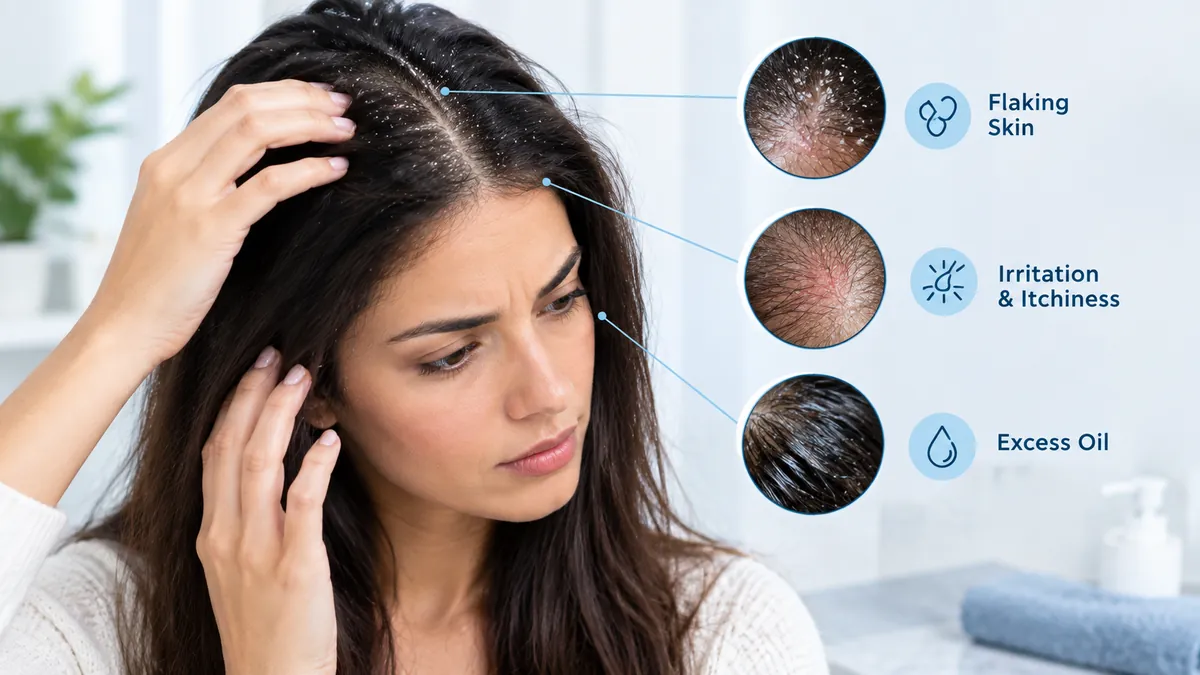

Why is my scalp itchy? It is one of the most common scalp questions, and the answer depends on the cause. An itchy scalp is a symptom, not a diagnosis, and many different conditions can produce it.
Common causes include dandruff, seborrheic dermatitis, dry or irritated skin, reactions to hair products, eczema, psoriasis, head lice, and fungal infections. Less often, itching comes from a nerve-related problem. The American Academy of Dermatology (AAD) lists several of these among the reasons a scalp may itch.
This guide explains the common causes of an itchy scalp, how symptoms differ, how causes are diagnosed, and which treatments and self-care measures may help. It also covers when to see a healthcare professional. It is general information and cannot tell you what is causing your symptoms.
What Does an Itchy Scalp Mean?
Itching of the skin is medically called pruritus. On the scalp, it can occur with or without visible skin changes. Some people have an itchy scalp with no rash at all, while others also notice flakes, redness, bumps, scaling, or crusting.
Paying attention to these accompanying signs can help a healthcare professional narrow down the cause. However, symptoms alone do not always point to a single diagnosis. Several scalp conditions look alike, so appearance is not a reliable way to diagnose yourself.
What Causes an Itchy Scalp?
An itchy scalp can result from scalp skin conditions, irritation, allergic reactions, parasites, infections, and, less commonly, nerve-related problems. The sections below describe the most frequently discussed causes.
Dandruff
Dandruff is a common cause of an itchy scalp. It typically causes white or grayish flakes along with itching, and it is often associated with seborrheic dermatitis. Symptoms may worsen during cold, dry weather or periods of stress, and the AAD notes that dandruff can cause both flaking and itching.
Dandruff is not caused by poor hygiene and is not contagious. For a full overview, see our guide to dandruff causes, symptoms, treatment, and prevention.
Seborrheic Dermatitis
Seborrheic dermatitis is an inflammatory skin condition that tends to affect oily areas of the body, including the scalp. It can cause itching, redness, and greasy or scaly patches. Dandruff is often considered a mild form of it, while seborrheic dermatitis can involve more inflammation and areas beyond the scalp, such as the eyebrows or sides of the nose.
The condition tends to come and go, so symptoms may recur even after they improve. Not every itchy or flaky scalp is seborrheic dermatitis, so a clinician can help confirm the cause if you are unsure. The AAD and MedlinePlus offer more detail.
Dry Scalp
Dry skin on the scalp can itch and produce small, dry flakes. Possible contributors include cold or dry weather, indoor heating, very hot water, washing too often, and harsh hair products.
Dry scalp and dandruff can look similar and may overlap. Dandruff flakes tend to be larger and may come with an oily scalp, while dry scalp flakes tend to be smaller and the scalp feels dry. The difference matters because the approaches can differ.
Hair Products and Contact Dermatitis
Shampoos, conditioners, hair dyes, fragrances, styling products, chemical relaxers, and other treatments can irritate the scalp. Some people also develop an allergic reaction to an ingredient. Both irritation and allergy fall under contact dermatitis.
If itching began soon after you started a new product, the product may be involved. Still, the exact cause can be hard to pin down without a professional assessment, especially if you use several products.
Eczema and Atopic Dermatitis
Eczema, including atopic dermatitis, can affect the scalp. It may cause itching, redness, and scaling, and the AAD notes that atopic dermatitis can involve the scalp. It often occurs alongside eczema on other parts of the body, though not always.
Treatment depends on the type and severity, so persistent scalp eczema is worth discussing with a healthcare professional.
Scalp Psoriasis
Scalp psoriasis can look like dandruff, which makes it easy to confuse. It may cause thick or silvery-white scaling, and the plaques can extend past the hairline. Itching can range from mild to intense.
Scratching or picking at scale can damage the scalp and hair and may lead to temporary hair loss. The National Institute of Arthritis and Musculoskeletal and Skin Diseases (NIAMS) provides general information about psoriasis.
Head Lice
An itchy scalp is a common symptom of head lice. Other clues include a tickling or crawling sensation and finding live lice or nits (eggs) attached to the hair near the scalp. The Centers for Disease Control and Prevention (CDC) provides detailed information.
Itching alone does not prove lice. Dandruff, eczema, and other conditions also cause scalp itching, so lice should be confirmed by finding them or their eggs.
Scalp Ringworm
Scalp ringworm (tinea capitis) is a fungal infection, not a worm. It can cause itching, scaling, inflammation, broken hairs, or patches of hair loss. It is more common in children.
This infection generally needs an accurate diagnosis and prescription treatment, so it should not be handled as ordinary dandruff. Itching alone does not mean you have a fungal infection.
Folliculitis
Folliculitis is inflammation of the hair follicles. On the scalp, it may cause itchy or tender red bumps or pustules (small pus-filled bumps). It can result from irritation, bacteria, or yeast, among other causes.
Mild cases may settle on their own, but symptoms that persist, worsen, or come with pain or spreading redness should be evaluated.
Scabies
Scabies, caused by tiny mites, produces intense itching, often worse at night. It usually affects areas other than the scalp, but the scalp can be involved in some cases, particularly in infants and some other groups. It is not a common explanation for an itchy scalp, but it needs medical treatment when present.
Nerve-Related Causes
Occasionally, an intensely itchy scalp with no rash or other visible skin changes is linked to a nerve problem. The AAD identifies nerve-related problems such as neuropathy as a possible cause. If scalp itching is persistent, intense, and unexplained, see a healthcare professional.
Itchy Scalp With Other Symptoms
Looking at what accompanies the itching can help you describe your symptoms to a clinician. These lists show possibilities, not diagnoses.
Itchy and Flaky Scalp
An itchy, flaky scalp may be associated with dandruff, seborrheic dermatitis, dry scalp, psoriasis, or eczema. Flakes alone cannot establish the cause, and a clinician may need to examine the scalp to tell these apart.
Itchy Scalp With Redness
Redness may occur with seborrheic dermatitis, eczema, psoriasis, contact dermatitis, or an infection. Redness can look different on darker skin tones, where it may appear as purple, brown, or gray patches, or be harder to see.
Itchy Scalp With Bumps
Bumps may be linked to folliculitis, contact reactions, insect bites, hives, or lice. Bumps that are painful, filled with pus, or spreading deserve medical attention.
Itchy Scalp With Hair Loss
Hair loss can occur with some scalp conditions, or from repeated scratching, inflammation, or infection. Ordinary itching does not directly cause permanent hair loss. Scalp psoriasis, for example, can cause temporary hair loss when scratching or removing scale damages the hair or scalp.
If you notice thinning, patches, or increased shedding, see our overview of hair loss causes and treatment and consider an evaluation.
Itchy Scalp Without Dandruff
Dandruff is only one possible cause. An itchy scalp without visible flakes may be linked to dry skin, product irritation, contact dermatitis, eczema, psoriasis, lice, infection, or, rarely, a nerve-related problem. Itching can also occur before any visible change appears.
Itchy Scalp vs. Dandruff
An itchy scalp is a symptom with many possible causes. Dandruff is one specific scalp condition that often causes itching. You can have an itchy scalp without dandruff.
| Feature | Itchy Scalp | Dandruff |
|---|---|---|
| What it is | A symptom | A scalp condition |
| Itching | May occur | Common |
| Flaking | May or may not occur | Common |
| Redness | May occur | Sometimes |
| Causes | Many possible causes | Often related to scalp oil, skin turnover, and seborrheic dermatitis |
| Treatment | Depends on the cause | Often involves dandruff shampoo and scalp care |
How Is the Cause of an Itchy Scalp Diagnosed?
Diagnosis usually starts with a conversation and an exam. Mayo Clinic notes that finding the cause of itching generally begins with a medical history and physical examination, with additional testing used when appropriate.
A healthcare professional may ask about:
- How long the itching has lasted and when it is worse
- Your hair and scalp-care routine
- Recent changes in shampoos, dyes, or styling products
- Other skin conditions, allergies, or family history
- Medications and other symptoms
- Whether others in your household are itchy
The clinician will examine your scalp, hair, and sometimes other areas of skin. Testing is not needed in every case. When infection or another condition is suspected, a scalp scraping or culture, hair sample, or skin biopsy may be considered. Patch testing may help identify an allergic reaction to a product.
How to Treat an Itchy Scalp
Treatment depends on the underlying cause, which is why identifying it matters. What helps one condition may do nothing for another. The summaries below are general and are not individualized treatment plans.
Treating Dandruff
Dandruff is often managed with regular washing and an over-the-counter medicated shampoo. Common active ingredients include ketoconazole, selenium sulfide, zinc pyrithione, salicylic acid, sulfur, and coal tar. The AAD describes how to use these products, and some need to stay on the scalp for several minutes before rinsing.
Follow the label, and see a dermatologist if symptoms persist. Our guide to dandruff treatment and prevention covers this in more depth.
Treating Seborrheic Dermatitis
Treatment often involves medicated shampoos and, sometimes, prescription antifungal or anti-inflammatory products. Because the condition tends to recur, some people use maintenance treatment. A dermatologist can recommend the right approach for your situation.
Treating Contact Dermatitis
Treatment generally involves identifying and avoiding the trigger, using gentle scalp care, and seeking medical treatment when symptoms are significant. Stopping a suspected product is a reasonable first step if your symptoms are mild, but see a professional for severe reactions, swelling, or blistering.
Treating Eczema
Scalp eczema treatment depends on severity. It may include gentle scalp care, avoiding triggers, and medicated treatments recommended or prescribed by a healthcare professional.
Treating Scalp Psoriasis
The AAD describes several approaches, including medicated shampoos, topical medications, scale-softening treatments, light therapy, and other therapies for appropriate patients. A dermatologist usually directs these treatments.
Treating Head Lice
Treatment focuses on eliminating lice, using products as directed, and following current guidance. Follow the product instructions or your clinician’s advice, and see the CDC’s head lice information for details.
Treating Scalp Ringworm
Scalp ringworm usually requires prescription oral antifungal medication, and a clinician should diagnose it. Treating it like dandruff may delay proper care.
How to Relieve an Itchy Scalp at Home
These measures may provide temporary comfort and reduce irritation. They do not treat an underlying condition, so persistent symptoms still need attention.
- Avoid scratching. Scratching can injure the skin, cause infection, and worsen itching.
- Use gentle products. Choose mild, fragrance-free shampoos and conditioners if your scalp is sensitive.
- Rinse thoroughly. Product residue can irritate the scalp.
- Avoid very hot water. Lukewarm water is gentler on dry or irritated skin.
- Stop suspected triggers. Pause a new product if itching started soon after you began using it.
- Follow medicated shampoo directions. Use the right frequency and leave-on time.
- Keep nails short. This can limit damage if you scratch during sleep.
- Try a cool compress. A clean, cool cloth may offer short-term relief.
Itching that disrupts sleep can be draining. Our guide on how to improve sleep may help, but also tell a clinician if nighttime itching persists.
How to Prevent an Itchy Scalp
Not every cause can be prevented, but some steps may reduce flare-ups:
- Keep a consistent scalp-care routine that suits your hair type
- Choose products suited to your scalp and avoid known irritants
- Rinse hair products thoroughly
- Treat dandruff or other diagnosed scalp conditions as directed
- Follow your medical treatment plan for recurring conditions
- Avoid sharing combs, brushes, hats, or pillows when lice or another infection is suspected
Stress may worsen some scalp conditions in some people. If you notice a link, see our tips on how to reduce stress.
When Should You See a Doctor for an Itchy Scalp?
Mayo Clinic advises seeing a healthcare professional for itching that is severe, persistent, unexplained, or paired with other concerning symptoms. Consider an evaluation if:
- Itching is severe or keeps you awake
- Symptoms continue despite reasonable self-care
- The cause is unclear
- The scalp is painful or significantly inflamed
- There are open sores, bleeding, crusting, or pus
- You have unexplained or significant hair loss
- You suspect a fungal infection
- You suspect lice and home treatment is unsuccessful or uncertain
- Symptoms keep returning
- Symptoms spread beyond the scalp
Can an Itchy Scalp Cause Hair Loss?
Itching on its own does not necessarily mean you will lose hair. However, repeated scratching can damage the scalp and hair, and some underlying scalp diseases can cause temporary or, in some cases, more significant hair loss.
Scalp infections and inflammatory conditions should be evaluated when hair loss appears. Our hair loss guide explains other causes and when to seek help.
Itchy Scalp in Children
Children can develop an itchy scalp from head lice, eczema, dry skin, or scalp infections such as ringworm. Head lice are common in school-age children, but itching alone does not confirm them.
Adult treatments and products are not always appropriate for children. Check with a pediatrician or other healthcare professional before treating a child, especially for suspected lice or ringworm. Seek medical advice promptly if there are patches of hair loss, scaling, sores, or if itching does not improve.
Frequently Asked Questions About Itchy Scalp
Why is my scalp itchy?
Many conditions can cause scalp itching, including dandruff, seborrheic dermatitis, dry skin, product reactions, eczema, psoriasis, lice, and infections. The cause often cannot be determined from itching alone. A healthcare professional can help if it persists. (AAD)
Why is my scalp itchy but I don’t have dandruff?
Dandruff is only one possible cause. Dry skin, product irritation, contact dermatitis, eczema, psoriasis, lice, infection, or a nerve-related problem can also cause an itchy scalp without obvious flakes.
What is the most common cause of an itchy scalp?
Dandruff and seborrheic dermatitis are among the most frequently cited causes, but this varies by person and age. Children are more likely to have lice, for example. No single cause applies to everyone.
Can dandruff cause an itchy scalp?
Yes. Itching is one of the most common dandruff symptoms, along with visible flakes. Medicated dandruff shampoos often help, and a dermatologist can advise if they do not. (AAD)
Can a dry scalp cause itching?
Yes. Dry skin can feel tight and itchy and may flake. Cold weather, hot water, frequent washing, and harsh products can contribute.
Can hair products cause an itchy scalp?
Yes. Ingredients in shampoos, dyes, relaxers, and styling products can cause irritation or an allergic reaction (contact dermatitis). A new product is a possible trigger if symptoms began soon after you started using it.
Can lice cause an itchy scalp?
Yes, itching is a common symptom of head lice. But itching alone does not confirm an infestation, because other conditions cause it too. Finding live lice or nits is the way to confirm. (CDC)
Can psoriasis cause an itchy scalp?
Yes. Scalp psoriasis can cause itching that ranges from mild to intense, along with thick, silvery-white scale. It can resemble dandruff, so diagnosis by a clinician is helpful. (NIAMS)
Can eczema cause an itchy scalp?
Yes. Eczema can affect the scalp and cause itching, redness, and scaling. Treatment depends on severity. (AAD)
Why does my scalp itch after washing my hair?
Possible reasons include product residue, hot water, dry skin, or sensitivity to a hair-care ingredient. Rinsing thoroughly, using lukewarm water, and trying gentler products may help. If it continues, ask a clinician.
How can I stop my scalp from itching?
Avoid scratching, use gentle products, rinse well, and avoid hot water for temporary relief. Treating the underlying cause is usually the most effective approach, so see a professional if itching persists.
What shampoo is best for an itchy scalp?
It depends on the cause. A medicated dandruff shampoo may help if dandruff is responsible, while a gentle, fragrance-free shampoo may suit a dry or sensitive scalp. No single product is best for everyone.
Can an itchy scalp cause hair loss?
Itching itself does not directly cause permanent hair loss. Heavy scratching, inflammation, or an underlying scalp condition can lead to shedding or broken hair. See a professional for significant or unexplained hair loss.
When should I see a dermatologist for an itchy scalp?
See one if itching is severe, lasts despite self-care, or comes with pain, sores, crusting, pus, spreading symptoms, or hair loss. Also seek care if you are unsure of the cause. (Mayo Clinic)
Sources
- American Academy of Dermatology. Itchy scalp: Causes and treatment
- American Academy of Dermatology. How to treat dandruff
- American Academy of Dermatology. Seborrheic dermatitis: Diagnosis and treatment
- MedlinePlus. Seborrheic dermatitis
- National Institute of Arthritis and Musculoskeletal and Skin Diseases. Psoriasis
- Centers for Disease Control and Prevention. About head lice
- Mayo Clinic. Itching: Causes
Medical Disclaimer
This article provides general educational information and is not a substitute for professional medical advice, diagnosis, or treatment. If you have persistent, severe, unexplained, or concerning scalp symptoms, consult a qualified healthcare professional.
Read our full Medical Disclaimer.
1 thought on “Why Is My Scalp Itchy? Common Causes and Treatments”
Comments are closed.