

Can acne be prevented? Not always. Hormones, genetics, and natural oil production all influence breakouts, and none of them are fully within your control. Still, consistent habits may help reduce how often breakouts occur and how severe they become.
This guide covers seven practical acne prevention tips: gentle cleansing, non-comedogenic products, leaving pimples alone, using evidence-based treatments when needed, balanced eating without unnecessary restrictions, managing sweat and friction, and supporting sleep and stress management. It also explains how hormonal acne fits in and when to see a dermatologist.
The goal is realistic: reducing breakouts and protecting your skin, not promising flawless skin. If you get acne despite doing everything right, that does not mean you did something wrong. This article offers general information, not individualized medical advice.
Understanding Acne and Why Breakouts Happen
Acne starts in the hair follicles. Each follicle is connected to an oil gland that makes sebum. When sebum and dead skin cells build up and clog a follicle, bacteria that normally live on the skin can multiply, and inflammation may follow. The Mayo Clinic names four main factors: excess oil production, clogged follicles, bacteria, and excess activity of hormones called androgens.
This process can produce blackheads, whiteheads, red bumps, pus-filled pimples, and deeper, painful lesions. The American Academy of Dermatology (AAD) lists whiteheads, blackheads, pimples, and nodules or cysts as the common acne lesions.
Hormonal shifts, family history, certain medicines, and some products can all contribute. Acne is not simply a result of poor hygiene; both the Mayo Clinic and the NHS state that it is not caused by dirty skin. To explore the biology further, read about what causes acne.
1. Wash Your Skin Gently and Consistently
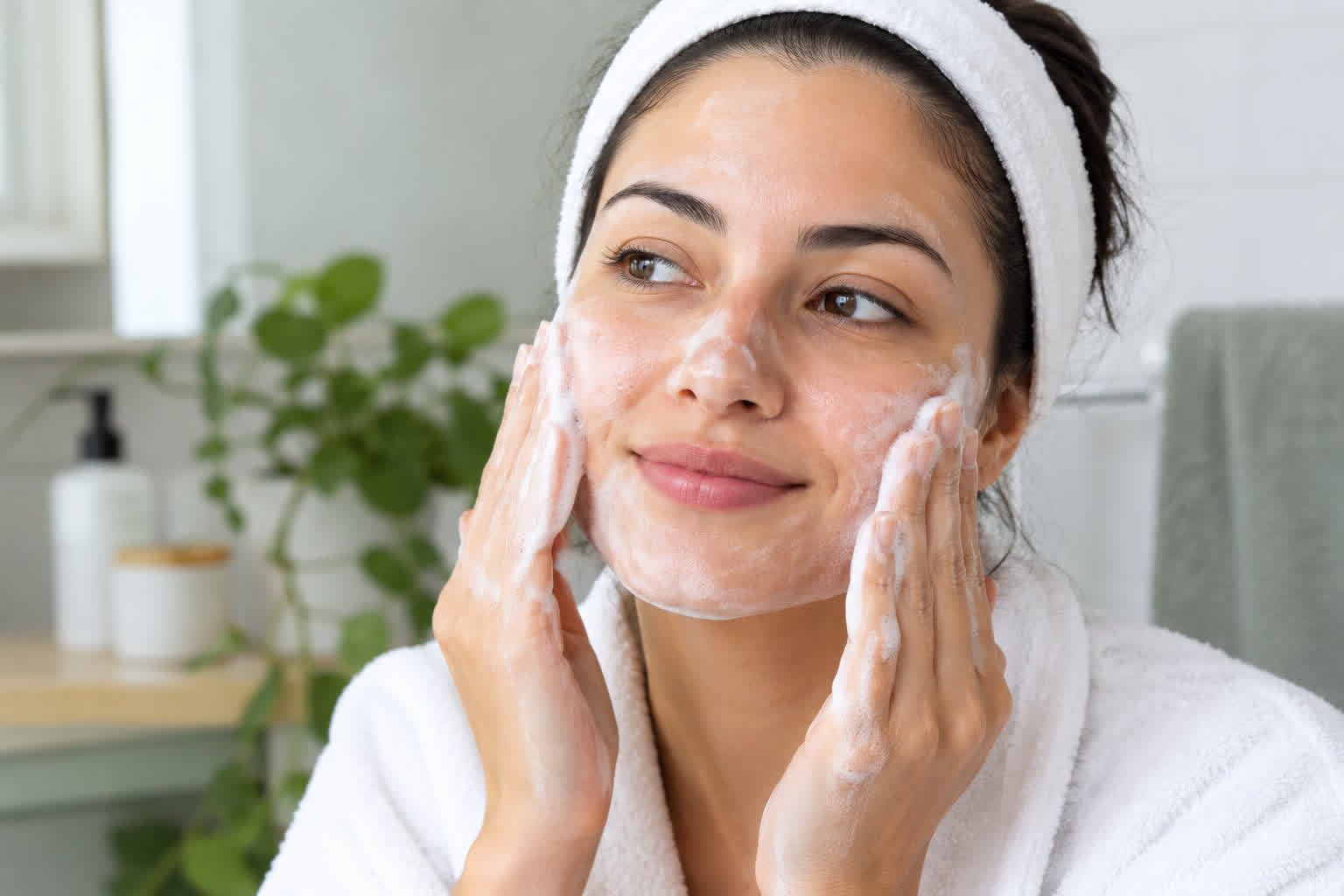
Gentle, regular cleansing is a foundation of acne prevention. The AAD’s skin care tips suggest washing twice a day and after heavy sweating. Use a mild, non-abrasive cleanser rather than harsh soaps. The NICE acne guideline similarly advises a gentle cleansing product twice daily on acne-prone skin.
More is not better. Scrubbing, harsh soaps, and frequent washing can irritate the skin and may make breakouts look and feel worse. Irritated, tight, or flaky skin can also be harder to treat, so if your skin feels dry, our guide to dry skin explains why dryness matters.
Removing makeup before bed is a simple habit that keeps pores from staying covered overnight. Use a gentle approach, and avoid rubbing hard.
Cleansing supports healthy skin, but it does not guarantee that acne will not appear. If you are building a routine from scratch, our guide to managing acne at home offers a step-by-step plan.
2. Choose Non-Comedogenic Skin Care and Makeup
Products labeled “non-comedogenic” are designed to be less likely to clog pores, and “oil-free” products do not contain added oils. The AAD advises checking labels for these terms on cleansers, moisturizers, sunscreens, and other products if you are prone to acne. Individual responses still vary, and a label does not guarantee a breakout-free result.
These choices matter for makeup and hair care products too, especially heavy formulations that touch the forehead or hairline. It is not true that every oil-based ingredient causes acne, so avoid assuming that one ingredient is always the culprit.
Moisturizer can be useful even if your skin is oily or acne-prone. A suitable moisturizer may help counter dryness and irritation from acne treatments. Choose one labeled non-comedogenic.
If a product seems to worsen your breakouts every time you use it, consider stopping it or reviewing it with a clinician. Introduce new products one at a time so you can tell what is helping or hurting. For more on how to match products to your skin and your treatment, see our acne treatment options guide and our advice on managing acne at home.
3. Avoid Picking, Popping, or Squeezing Pimples
It is tempting to squeeze a pimple, but picking can increase inflammation and may raise the risk of scarring and dark marks. The AAD explains why in its guidance on pimple popping and lists related habits that can worsen acne. It also notes that picking at whiteheads can lead to more whiteheads and to acne scars.
Hands-off alternatives work better. Treat blemishes with a suitable acne product instead of picking, and give treatments time to work. If a lesion is deep or painful, a dermatologist can discuss professional options rather than leaving you to deal with it yourself.
Keeping your hands away from your face when you can is a reasonable habit. However, touching the face is not the sole cause of acne, and acne is not contagious. Blaming yourself for every breakout is not helpful.
Learning to recognize your own pattern can also help you act early. Our guide to the early signs of acne describes what to look for. If you are unsure whether bumps are acne at all, see how acne is diagnosed.
4. Use Evidence-Based Acne Treatments When Needed
For many people, skin care alone is not enough, and appropriate treatment can help reduce new breakouts as well as clear existing ones. Common over-the-counter ingredients include benzoyl peroxide, salicylic acid, and adapalene, a topical retinoid. The AAD’s guidance on treating acne yourself explains how these products are used.
Which option fits depends on your acne type, skin sensitivity, age, and medical circumstances. A product that suits one person may irritate another. Read labels, follow directions, and introduce one new product at a time, starting gradually to limit dryness and irritation.
Irritation can occur, and results take time. Improvement often takes several weeks, so judge a new routine only after giving it a fair chance, unless it is causing significant irritation. Stopping and starting different products can make acne harder to control.
Topical retinoids need extra care around pregnancy. If you are pregnant, planning pregnancy, or breastfeeding, talk with a healthcare professional before using any acne treatment. The AAD explains acne treatment during pregnancy.
If over-the-counter care is not helping, prescription options are available. The AAD outlines how dermatologists treat acne, and our acne treatment options guide covers the range in more detail. Do not start, stop, or change prescription medicines without professional advice.
5. Follow a Balanced Diet Without Unnecessary Restrictions

The link between diet and acne is still being studied. Some research suggests that high-glycemic eating patterns may worsen acne in some people, and some studies have found an association with dairy, including cow’s milk. The AAD notes that more research is needed, and findings do not establish a universal trigger. Association is not the same as proven cause and effect.
A balanced pattern of vegetables, fruits, whole grains, protein, and healthy fats supports your overall health, and it is a sensible default. Our guide to what a balanced diet looks like is a useful starting point. You may also see advice about anti-inflammatory foods for general health, though they are not proven acne treatments.
If you want to see whether certain foods affect your skin, keep a simple diary and look for repeating patterns over time. Avoid cutting out entire food groups without a clear reason, particularly for children and teenagers, since restrictive eating can have its own risks.
No single food or supplement guarantees clear skin. Be cautious with claims that drinking more water, a detox plan, or a homemade remedy will prevent acne, because there is not enough evidence to support them. The Mayo Clinic also notes that chocolate and greasy foods have little to no effect on acne.
6. Manage Sweat, Friction, and Hair Products
Sweat, oil, and residue can sit on the skin after exercise. Cleansing or showering after heavy sweating may help, and the AAD addresses this in its advice on acne and workouts. Changing out of sweaty clothing soon after activity is also reasonable.
Friction can contribute as well. Tight equipment, helmets, headwear, chin straps, and backpack straps may rub against acne-prone skin and worsen breakouts, sometimes called acne mechanica. The AAD discusses this in its page on sports equipment and acne. Clean items that regularly touch your skin, such as phone screens, pillowcases, and helmets, and add a soft barrier layer when appropriate.
Hair products deserve attention too. Oily styling products and pomades can reach the forehead and hairline, so keep them away from your face and choose labeled non-comedogenic options. Wash your hair as often as your hair type needs, and pull long hair back from the face. If your scalp is itchy or irritated, see our guide to itchy scalp causes and treatments.
For a broader look at what influences acne, read about acne risk factors.
7. Support Healthy Sleep and Manage Stress
Stress does not cause acne on its own, but it may make existing acne worse in some people. The AAD lists stress among factors that may worsen breakouts, and the Mayo Clinic says the same. Stress affects individuals differently, and acne is never simply a sign that you are not coping well.
Sleep may matter too. The AAD also lists too little sleep among things that may worsen acne, although research is limited on exactly how. A regular sleep schedule supports overall health and makes it easier to keep up a skin routine. Our guide on how to improve sleep offers practical tips.
Practical habits include regular walking, physical activity you enjoy, a consistent bedtime routine, and time for relaxing activities. You can learn more about the benefits of exercise, and remember to cleanse gently after sweating.
These habits support general well-being, but they cannot independently prevent all acne. Treat them as one part of a broader plan, alongside skin care and, when needed, medical treatment.
Can Hormonal Acne Be Prevented?
Hormones influence acne throughout life. Androgens stimulate the oil glands, and hormone levels change with puberty, menstrual cycles, pregnancy, and menopause. The AAD notes that adult acne is more common in women and that fluctuating hormones play a role, and the NHS notes that some women get flare-ups around their periods.
Because these shifts are largely outside your control, hormonal acne cannot always be prevented. A consistent skin routine may help manage breakouts, but it may not stop them entirely. Tracking your cycle and skin for a few months can reveal whether a pattern repeats.
Persistent acne, or acne alongside irregular periods or increased facial hair, may warrant medical assessment. These symptoms do not establish a diagnosis on their own, and only a healthcare professional can evaluate them. To learn more, read about acne symptoms in women.
When Should You See a Dermatologist for Acne?

You do not need to wait until acne is severe to ask for help. The AAD explains when to see a dermatologist, and professional advice is appropriate if acne is persistent, deep, painful, or widespread, or if it keeps worsening despite appropriate care.
Early treatment may help reduce the risk of lasting scars. The NICE guideline lists acne that is leading to scarring, or causing persistent pigment changes, among reasons to consider referral to a specialist. Seeking help is also reasonable when acne affects your confidence or emotional well-being, and effective treatment is available.
A dermatologist can identify the type of acne, check whether another condition is involved, and recommend suitable treatment. To know what to expect, read about how acne is diagnosed, and explore acne treatment options before your visit.
Frequently Asked Questions About Acne Prevention
Can acne be prevented completely?
Not always. Hormones, genetics, and oil production play important roles that skin care cannot fully control. Gentle skin care and appropriate treatment may reduce how often breakouts occur and how severe they become, according to the AAD.
What is the best way to prevent acne breakouts?
A consistent routine usually works best: gentle cleansing, non-comedogenic products, avoiding picking, and suitable acne treatments when needed. Individual results vary, so be patient and adjust with guidance from a healthcare professional if needed.
Does washing your face more often prevent acne?
Washing twice daily and after heavy sweating is generally enough, as the AAD suggests. Washing more often or scrubbing hard can irritate the skin and may worsen breakouts.
Can diet cause acne?
Some research links high-glycemic diets and possibly cow’s milk with acne in certain people, but the AAD says more evidence is needed. Triggers vary, and no single food explains every case.
How can I prevent hormonal acne?
Skin care alone cannot always prevent hormonal acne. A consistent routine may help, while persistent breakouts may need assessment and treatment from a healthcare professional. See acne symptoms in women for more.
How long does it take to see results from acne prevention?
Improvement usually takes several weeks, and some treatments take longer to show full results. Follow product directions, and seek advice if you have irritation or acne that does not improve. The AAD’s guidance on treating acne covers what to expect.
When should I see a dermatologist for acne?
Seek professional assessment for deep or painful lesions, persistent breakouts, scarring, or acne that affects emotional well-being. Early treatment may help limit long-term skin changes. The AAD offers guidance on when to go.
Conclusion: Build Habits That Help Reduce Breakouts
The seven strategies here are gentle cleansing, non-comedogenic products, leaving pimples alone, evidence-based treatment, balanced eating, managing sweat and friction, and supporting sleep and stress management. Together they may help reduce acne breakouts, though no routine can guarantee clear skin.
Acne is common and is not a sign of poor hygiene. Aim for consistency, and seek professional care when breakouts are persistent, painful, or leaving scars. The goal is to reduce breakouts and protect your skin health, not to promise an acne-free future.
Sources
- American Academy of Dermatology. Acne: Signs and symptoms
- American Academy of Dermatology. Acne: Who gets and causes
- American Academy of Dermatology. Dermatologist’s tips for managing acne
- American Academy of Dermatology. Adult acne
- American Academy of Dermatology. Acne: Makeup, Hair care products, and Moisturizer
- American Academy of Dermatology. Pimple popping and Habits that can worsen acne
- American Academy of Dermatology. DIY acne treatment and When to see a dermatologist
- American Academy of Dermatology. Acne: Diagnosis and treatment and Acne treatment during pregnancy
- American Academy of Dermatology. Acne: Diet, Workouts, and Sports equipment
- National Institute for Health and Care Excellence (NICE). Acne vulgaris: management (NG198)
- NHS. Acne: Causes
- Mayo Clinic. Acne: Symptoms and causes
Medical Disclaimer: This article is for general educational purposes and is not a substitute for professional medical advice, diagnosis, or treatment. Acne has many causes, and no routine can guarantee that breakouts will not occur. Talk with a doctor, dermatologist, or pharmacist before starting, changing, or stopping any treatment or medicine, especially if your acne is severe, painful, or leaving scars, or if you are pregnant, planning pregnancy, breastfeeding, or have other health conditions.