
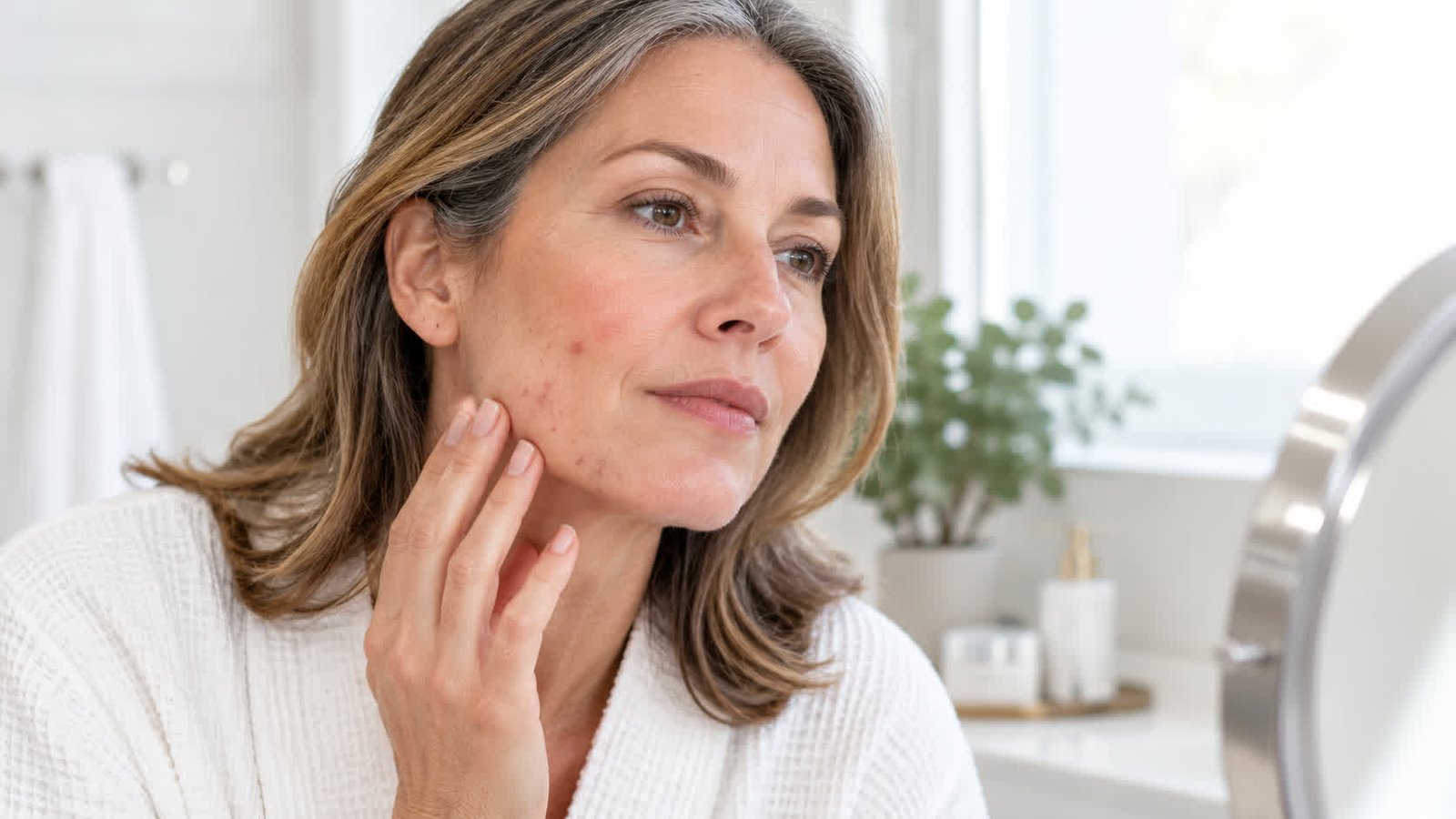
Can you really get acne in your 50s? Yes. Acne can continue from earlier adulthood, return after years of clear skin, or appear for the first time in midlife. The American Academy of Dermatology (AAD) notes that acne affects people well beyond their teenage years, and it is a common reason adults seek skin care.
Several factors may play a part, including hormonal shifts, certain medications, stress, skin-care products, and family history. Mature skin adds another layer, because it often becomes drier and more sensitive with age. That means treatments that worked in your 20s or 30s may not suit your skin now.
This guide explains what acne looks like after 50, walks through seven common contributing factors, and outlines practical ways to manage breakouts. You will also learn when to see a dermatologist. The good news is that effective treatments exist, and a clinician can help you find an approach that fits your skin and your health.
What Does Acne Look Like After 50?
Acne after 50 can include the same lesions seen at any age. These are whiteheads, blackheads, red inflamed pimples, and deeper, tender lumps. Breakouts often appear around the chin, jawline, and lower face, but they can also affect the forehead, cheeks, chest, and back.
Mature skin may also be dry, thin, or easily irritated. This can make acne harder to treat, since strong products may cause redness, flaking, or stinging. If you want a refresher on how breakouts begin, see our guide to the early signs of acne.
Some skin conditions can look like acne. Rosacea causes persistent facial redness and bumps (NHS: Rosacea), folliculitis is inflammation of hair follicles (Mayo Clinic), and perioral dermatitis causes small bumps around the mouth. These conditions can need different treatment. Learn more about how acne is diagnosed if you are unsure what you are seeing.
7 Common Causes of Acne in Your 50s
Acne often has more than one contributing factor, and not every factor applies to every person. Some of the items below may be underlying contributors, while others may aggravate breakouts in susceptible skin. To understand the basics first, read what causes acne.
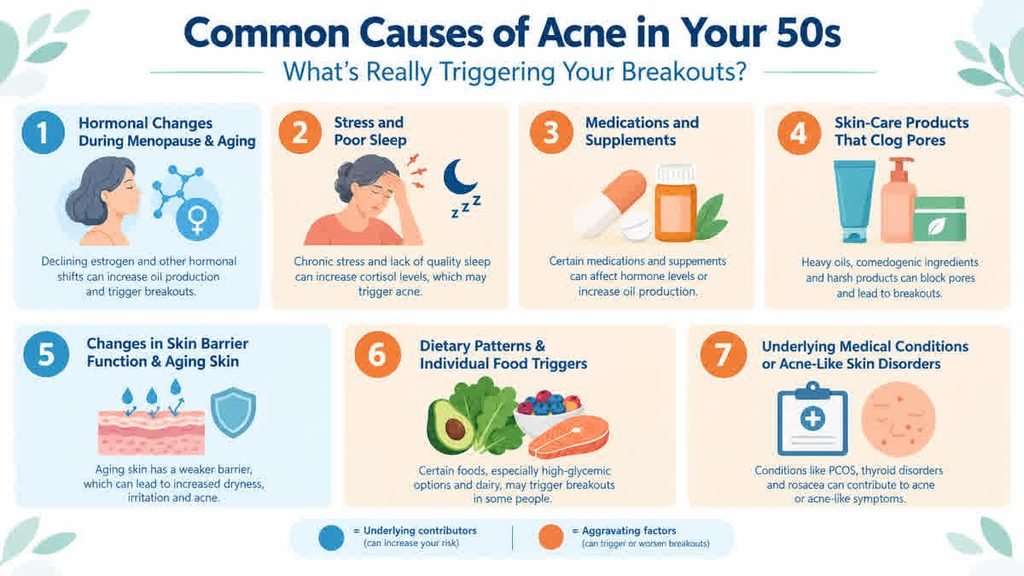
1. Hormonal Changes During Menopause and Aging
Hormones influence how much oil the skin produces. During perimenopause and menopause, estrogen levels fall, and the relative influence of androgens (hormones such as testosterone) may increase. In some women, this shift may contribute to oil production, clogged pores, and breakouts, often around the chin and jawline. You can read more about the transition in the NHS menopause overview.
Not every breakout in later life is hormonal, however. Hormonal signaling also continues to influence oil glands in men, but acne should not automatically be blamed on normal aging.
Because new or persistent acne can have several causes, an individualized assessment is helpful. Do not start hormone therapy or change a prescribed medicine solely to treat acne. For symptom patterns, see our guides on acne symptoms in women and acne symptoms in men, and compare them with acne in your 30s.
2. Stress and Poor Sleep
Stress may aggravate existing acne through hormonal signaling and inflammatory processes. Poor sleep can also make it harder to keep up a consistent skin-care routine. Neither is considered a proven direct cause of every breakout.
Midlife can bring work pressure, caregiving, health changes, and disrupted sleep, all of which can affect daily habits. Small steps may help, such as keeping a regular sleep schedule, taking relaxing walks, and using simple stress-management techniques.
These habits support overall well-being and complement acne treatment rather than replace it. You may find habits that support better sleep and the benefits of exercise useful.
3. Medications and Supplements
Some medicines can cause acne-like eruptions or make existing acne worse. Depending on the medication, examples may include corticosteroids, testosterone or other androgen-related treatments, and certain other prescription drugs. Not all medicines, vitamins, or supplements cause acne.
Supplements and hormonal products should be mentioned during a medical review, since they can be easy to overlook. A few steps can make that conversation more productive:
- Keep a list of prescription medicines, over-the-counter products, and supplements.
- Note when breakouts began in relation to any change.
- Ask your prescribing clinician whether a medicine could be contributing.
Never stop or adjust a prescribed medicine without professional guidance. For related considerations, see the common acne risk factors.
4. Skin-Care Products That Clog Pores
Certain moisturizers, foundations, sunscreens, facial oils, and hair products can contribute to clogged pores in susceptible people. Products labeled non-comedogenic or non-acnegenic are formulated to be less likely to clog pores, although labels are not a guarantee for every person.
Mature skin often needs both acne management and moisture support. Harsh scrubs, frequent cleansing, and using several strong acne ingredients at once can irritate the skin and make matters worse.
If you are reviewing your products, our guides on ways to help prevent acne and how to manage acne at home offer practical starting points.
5. Changes in Skin Barrier Function and Aging Skin
With age, skin can become drier and more sensitive. Dryness does not directly cause acne, but irritation from aggressive cleansers, exfoliants, or acne treatments can leave skin uncomfortable and harder to treat.
It can be hard to tell acne from irritation-related bumps, since both can look red and rough. If your skin feels tight, stings, or flakes after a new product, irritation is a possible explanation.
Use a gentle cleanser and a suitable moisturizer, and introduce active ingredients gradually. Our guide to dry or irritated skin explains how to support comfort while you treat breakouts.
6. Dietary Patterns and Individual Food Triggers
Some research suggests that high-glycemic eating patterns may contribute to acne in certain people. The relationship between dairy and acne is still being studied. Responses to food vary, so the evidence does not support saying that one food causes acne in everyone.
A balanced eating pattern that includes vegetables, fruits, whole grains, adequate protein, and healthy fats supports overall health. Restrictive diets, unnecessary supplements, and claims that detoxes or gut cleanses cure acne are not supported by strong evidence.
If you suspect a food is linked to your skin, talk with a healthcare professional about a nutritionally adequate approach. See our guides on a balanced eating pattern and the Mediterranean diet for general ideas.
7. Underlying Medical Conditions or Acne-Like Skin Disorders
Sudden, persistent, or unusual breakouts sometimes deserve evaluation for an underlying medical issue or for a condition that only resembles acne. In women, new acne together with increased facial hair, thinning scalp hair, or other signs of androgen excess may warrant assessment for a hormonal problem. Our guide to hair loss covers related concerns.
Rosacea, folliculitis, and perioral dermatitis can all resemble acne and may need different treatment. This does not mean that new acne after 50 signals a serious illness. Most cases are not dangerous, but they are worth checking when something seems off.
Seek professional assessment for sudden onset, deep or painful lesions, scarring, or other unexplained symptoms. A clinician can explain how acne is diagnosed and rule out other causes.
How to Manage Acne in Your 50s
The best approach depends on the type of acne, how sensitive your skin is, your medical history, and any medicines you take. The information below is general and is not individualized advice.
Build a Gentle, Consistent Skin-Care Routine
A simple routine is often easier to keep and less irritating. In the morning, cleanse gently without abrasive scrubbing, then apply a moisturizer suited to your skin’s needs. Finish with a broad-spectrum sunscreen of SPF 30 or higher, since some acne treatments can increase sun sensitivity.
Choose non-comedogenic products where possible, and avoid picking or squeezing blemishes. In the evening, cleanse gently again and moisturize. More products do not necessarily mean better results. For step-by-step guidance, see how to manage acne at home.
Choose Acne Treatments Carefully
Several ingredients are commonly used for acne, according to the AAD and NHS:
| Ingredient | Main purpose |
|---|---|
| Benzoyl peroxide | Helps reduce acne-causing bacteria and inflammatory lesions |
| Salicylic acid | Helps unclog pores and may benefit blackheads and whiteheads |
| Topical retinoids | Help prevent clogged pores and treat acne, but can cause irritation and dryness |
| Azelaic acid | May help manage acne and post-acne discoloration |
Introduce products gradually and follow the label directions. Because skin sensitivity and other medical considerations affect which options are suitable, ask for professional advice if your skin is very dry, irritated, or not improving.
For deeper, persistent, or scarring acne, a dermatologist may recommend prescription treatments tailored to you. Explore the available acne treatment options for more detail.
Review Possible Triggers With a Healthcare Professional
Record when breakouts occur, recent skin-care changes, and any medication or supplement changes. A short diary can help a clinician spot patterns.
Hormonal treatments, oral medicines, and other prescription options are not appropriate for everyone. A professional should weigh their benefits and risks for you individually.
Support Skin Health With Everyday Habits
Balanced nutrition, adequate sleep, physical activity, and stress management support your overall health. Think of them as supportive habits, not stand-alone acne cures.
A varied diet is generally better than a restrictive plan. No particular food, probiotic, antioxidant, or supplement has been shown to reliably clear acne.
Be Patient and Track Progress
Acne treatments generally need consistent use over several weeks. Some people notice improvement after six to eight weeks, and fuller results may take longer.
Review your routine with a clinician if irritation develops or nothing seems to be working. Painful lesions, scarring, and unusual new breakouts should not be left untreated just because a product needs more time.
When Should You See a Dermatologist About Acne After 50?
See a dermatologist or another qualified clinician if any of the following apply:
- Breakouts appear suddenly for the first time in later adulthood.
- Lesions are deep, painful, persistent, or leaving scars.
- Over-the-counter treatments have not helped after a consistent trial.
- Your skin is increasingly irritated, or the diagnosis is uncertain.
- Acne appears alongside unexplained hormonal symptoms or other health changes.
A dermatologist can tell acne apart from other skin disorders, review possible triggers, and recommend suitable treatment. Depending on what they find, further medical evaluation may be appropriate. The AAD provides additional guidance on when to see a dermatologist.
This is not a reason for alarm. Acne alone rarely points to a serious problem, but getting a clear answer can save you months of trial and error. Our guide to acne treatment options describes what a clinician may discuss with you.
Frequently Asked Questions About Acne in Your 50s
Is It Normal to Get Acne in Your 50s?
Yes. Acne can continue from earlier adulthood or begin later in life. Hormonal changes, medications, skin-care products, and other factors may contribute, according to the Mayo Clinic.
Can Menopause Cause Acne?
Hormonal changes during menopause may contribute to acne in some women. Not every breakout is hormonal, though, and persistent or new symptoms may need medical evaluation.
How Can I Get Rid of Acne in My 50s?
Start with gentle skin care and suitable acne treatments. A dermatologist can recommend additional options based on the type and severity of your acne and your medical history. No single approach clears acne for everyone.
Does Dry Skin Cause Acne?
Dry skin does not directly cause acne, but irritation and unsuitable products can aggravate the skin. A gentle cleanser and an appropriate moisturizer can help keep your skin comfortable while you treat breakouts.
How Long Does Acne Treatment Take to Work?
Many treatments need six to eight weeks before improvement becomes noticeable (NHS). Some cases take several months or need a change in treatment under professional guidance.
When Should New Acne After 50 Be Checked by a Doctor?
Seek evaluation for sudden, persistent, painful, or scarring breakouts, especially if they occur alongside other unexplained symptoms.
Take a Consistent, Individualized Approach to Acne in Your 50s
Acne in later adulthood can have several contributing factors, including hormonal changes, stress, medications, skin-care products, and underlying conditions. Identifying possible triggers, using a gentle routine, and choosing evidence-based treatments suited to your skin can help you manage breakouts. Persistent or unusual acne deserves attention, and a dermatologist can help find the cause and build a treatment plan. Clearer skin is possible at any age, and understanding what may be driving your acne is the first step toward managing it safely and effectively.
Sources
- American Academy of Dermatology Association. Acne: Overview, symptoms, causes, and treatment
- NHS. Acne
- NHS. Rosacea
- NHS. Menopause
- Mayo Clinic. Acne: Symptoms and causes
- Mayo Clinic. Folliculitis: Symptoms and causes
Medical Disclaimer: This article is for general educational purposes only and is not medical advice. It cannot diagnose or treat any condition. Always talk with a qualified healthcare professional about your symptoms or before starting or changing any treatment, including hormone therapy or prescription medicines. If you have severe pain, rapidly spreading redness, fever, or feel very unwell, seek urgent medical care.