
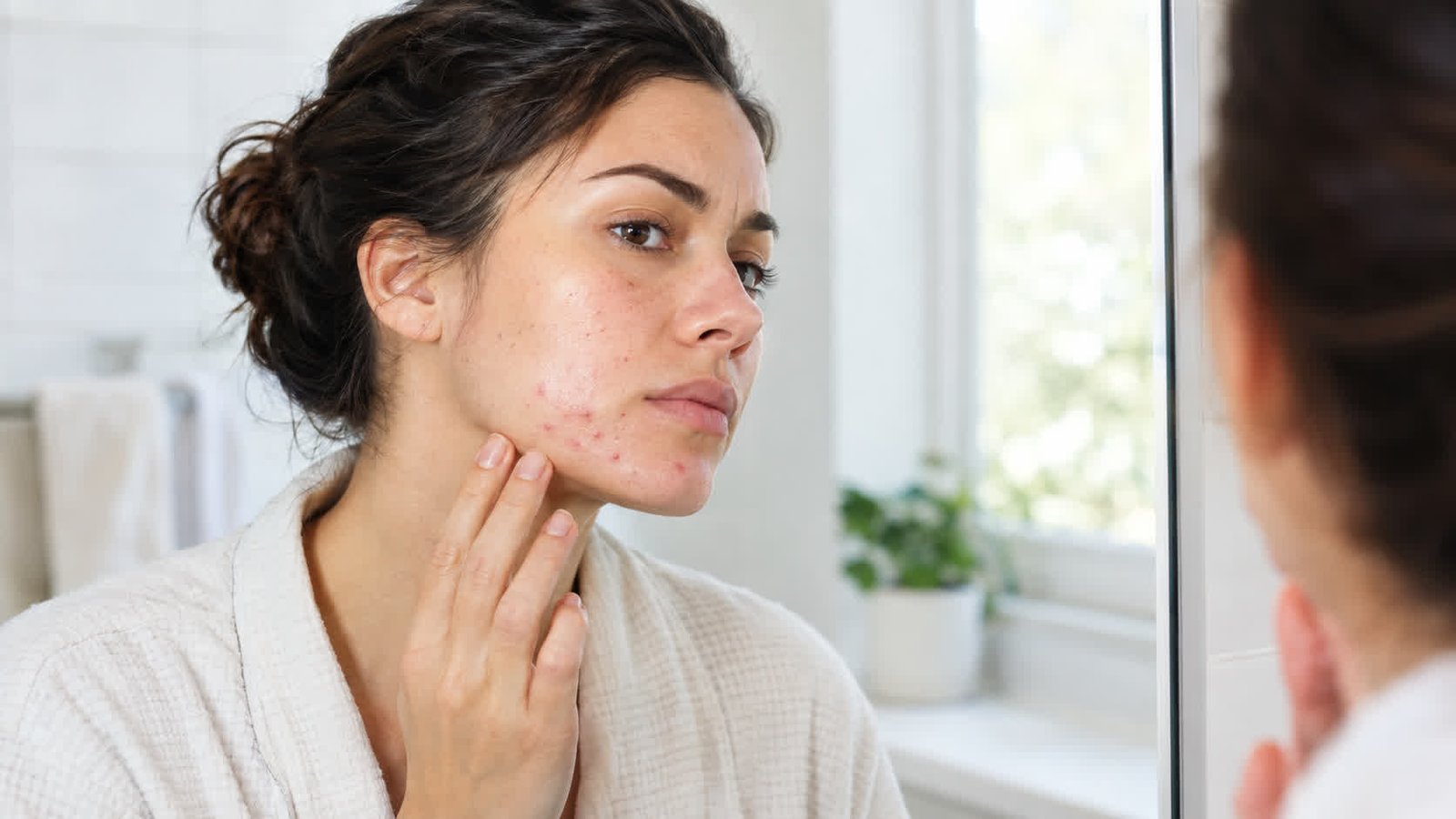

Acne is one of the most common skin conditions, and it does not always end with the teenage years. Many women notice persistent or recurring breakouts in their 20s, 30s, 40s, and beyond. The American Academy of Dermatology (AAD) reports that adult acne is more common in women than in men, and that hormonal fluctuations may play a role.
Acne can look very different from one person to the next. Some women have mostly clogged pores, while others develop red, swollen pimples or deep, painful lumps, and the appearance can vary across skin tones. This guide explains seven acne symptoms in women that deserve attention, what each one may look like, and when professional evaluation may help. If you are only starting to notice changes, our guide to the early signs of acne is a helpful companion.
One important note before you begin: symptoms alone cannot identify the exact cause of acne or confirm a hormonal condition. Having breakouts does not mean something is wrong with your health or your habits, and acne is not a sign of poor hygiene. The aim here is recognition, context, and clear next steps.
What Is Acne and Why Does It Develop in Women?
Acne is a skin condition that affects the hair follicles and their oil glands. It can appear on the face, and also on the chest, back, and shoulders. It is common, treatable, and not a personal failing.
How clogged pores, oil, and inflammation contribute to acne
Each hair follicle is connected to an oil gland that produces sebum, the skin’s natural oil. When sebum and dead skin cells build up inside a follicle, they can form a plug known as a comedone, which appears as a blackhead or a whitehead. Bacteria that normally live on the skin can multiply inside a plugged follicle, and the body’s inflammatory response may produce red, swollen, or painful lesions.
The Mayo Clinic describes four main factors: excess oil production, follicles clogged by oil and dead skin cells, bacteria, and excess activity of hormones called androgens. Because several processes interact, acne rarely has one single cause.
Why acne can continue into adulthood
Acne often begins in the teen years, and the NHS notes that it frequently clears by a person’s mid-20s. For some women, however, acne continues into adulthood or returns after a clear period. Others develop it for the first time as adults.
The AAD calls this “adult-onset acne” and says it is most common among women going through menopause. Not all adult acne is hormonal, so it is best to avoid assuming a single explanation.
How hormones, genetics, and skin-care products may influence breakouts
Androgens stimulate the oil glands, and hormone levels shift during the menstrual cycle, pregnancy, perimenopause, and menopause. These changes may influence breakouts in some women, but hormones do not explain every case. Family history can also affect how likely you are to develop acne, and some heavy cosmetics, hair products, or medicines may contribute.
For a deeper look at what raises the chance of breakouts, see our guide to acne risk factors and our overview of what causes acne.
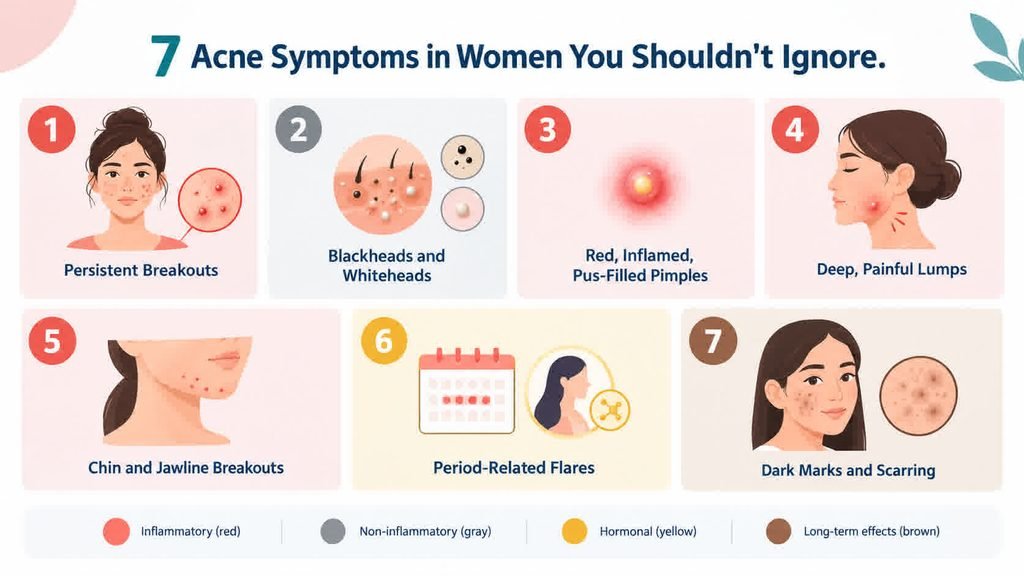
7 Acne Symptoms in Women You Shouldn’t Ignore
These seven signs are patterns that may occur with acne, not a checklist that every woman will experience. Some people have mostly clogged pores, while others develop inflamed or deep lesions. Location and timing can offer clues, but they cannot confirm a hormonal disorder on their own.
The AAD lists whiteheads, blackheads, pimples, and deep nodules or cysts as the common acne lesions. Other conditions, including rosacea and folliculitis, can look similar to acne and may need different care, so an accurate diagnosis matters.
1. Persistent Breakouts That Keep Returning
Pimples that keep reappearing, or that never seem to clear completely, are one of the most common reasons women look for help. You may notice one cluster healing just as another begins. This pattern is often described as persistent or recurrent acne.
Recurring acne can have many contributing factors, including hormonal shifts, family history, and products that do not suit your skin. It is also true that acne treatments usually take several weeks to show results, so a new routine needs time before you judge it, unless it causes irritation. The AAD’s guidance on treating acne yourself explains how to approach over-the-counter care.
Why it matters: persistent breakouts often respond better to a consistent treatment plan than to frequent product changes. If acne keeps coming back despite appropriate care, a dermatologist or other healthcare professional can help you build a plan that fits your skin.
2. Blackheads and Whiteheads
Blackheads and whiteheads are called comedones. Whiteheads are closed plugged pores that look like small, flesh-colored or white bumps. Blackheads are open plugged pores whose surface looks dark.
Blackheads are not simply dirt. Both the Mayo Clinic and the NHS state that acne is not caused by dirty skin, and scrubbing harder will not clear them. Aggressive scrubbing can irritate the skin and may make breakouts look worse.
Squeezing is also best avoided. The AAD notes that picking at whiteheads can lead to more whiteheads and to acne scars, so treating them with an acne product is generally recommended. Stubborn clogged pores may be eligible for professional options, which a dermatologist can discuss with you.
3. Red, Inflamed, or Pus-Filled Pimples
When a plugged follicle becomes inflamed, it may form a papule, which is a small, red, tender bump, or a pustule, which has a visible pus-filled tip. These lesions can feel sore, and they may look more pink, brown, or purple depending on your skin tone.
Inflammation can contribute to discomfort and to marks that linger after a pimple heals. For mild inflammatory acne, the AAD suggests acne products that contain benzoyl peroxide or salicylic acid, used as directed. Starting gradually can help limit dryness and irritation.
Why it matters: if many inflamed pimples appear at once, if they spread, or if they do not respond to appropriate care, it is reasonable to ask a clinician to confirm that the problem is acne and not a similar skin condition.
4. Deep, Painful Lumps Under the Skin
Some breakouts form deep within the skin. Acne nodules are firm, tender lumps that can feel hard to the touch. Cysts are similar, but they contain pus and tend to feel softer. The AAD describes both as deep and painful.
These lesions deserve medical assessment because they can scar. The AAD says nodules and cysts often cause permanent scars when they heal, and that people with this type of acne need a dermatologist’s help to treat it. Over-the-counter products alone are unlikely to be enough.
Picking or squeezing deep lesions can worsen inflammation and increase the chance of scarring. If you notice painful lumps that last for weeks or keep coming back, an early appointment can make treatment more effective.
5. Breakouts Around the Chin and Jawline
Many women notice breakouts concentrated on the lower face, especially around the chin and jawline. This distribution can occur with hormonal acne, which is why it is often discussed in adult women.
However, location is not diagnostic. Breakouts in this area can also be linked to products that touch the lower face, friction from phones or masks, or other contributors, and acne in any area can have hormonal influences. A pattern is a clue, not a conclusion.
If chin and jawline breakouts are deep, painful, or paired with other possible hormonal symptoms, such as irregular periods, it is worth talking with a healthcare professional. You can read more about contributing factors in our guide to acne risk factors.
6. Acne That Flares Around Menstrual Periods
Some women notice that acne worsens in the days before or during their period. The NHS lists hormonal changes around periods among the possible triggers of flare-ups. Hormonal fluctuations can affect oil production, which may contribute to breakouts in some people.
A predictable monthly pattern is common and does not by itself mean there is a disorder. Keeping a simple record for two or three cycles, noting when breakouts appear, what products you use, and any changes in routine, can reveal useful patterns. A record can suggest associations, but it cannot prove cause and effect.
Bring your notes to an appointment if breakouts are severe or hard to control. They can help a clinician choose among treatment options, including some that address hormonal influences.
7. Dark Marks, Uneven Skin Texture, or Acne Scars
Acne can leave more than active breakouts behind. Two different outcomes are worth telling apart. Flat dark spots, sometimes called post-inflammatory hyperpigmentation, can remain after a pimple clears, and they may be more noticeable on deeper skin tones. The AAD says these spots can last a long time but will eventually clear on their own.
Scars are different. They involve a change in skin structure, which may look like pits, depressions, or raised areas. The AAD notes that a breakout can leave a permanent scar.
Because scarring tends to follow inflammation and picking, treating acne early and avoiding squeezing may help reduce the risk. If you already have scars or marks, a dermatologist can explain which options may help your specific type.
When Should Women Seek Medical Advice for Acne?
You do not need to wait until acne is severe to ask for help. The AAD’s guidance on when to see a dermatologist describes situations where professional care can make a difference.
Painful, deep, or scarring acne
Deep nodules, cyst-like lesions, and breakouts that leave scars or lasting marks warrant professional assessment. These forms of acne are less likely to respond to self-care alone, and early treatment may help limit lasting skin changes.
Acne that does not improve with appropriate care
If you have used a gentle routine and suitable over-the-counter products as directed, and acne has not improved after several weeks, a dermatologist or other healthcare professional can reassess. Acne that keeps worsening, or that begins suddenly in adulthood, is also worth discussing.
Breakouts that affect your confidence or emotional well-being are a valid reason to seek care. Acne can affect self-esteem, and effective treatment is available.
Acne accompanied by other possible hormonal symptoms
Acne that appears alongside irregular periods, increased facial or body hair, or thinning hair on the scalp may warrant evaluation for a hormonal condition such as polycystic ovary syndrome (PCOS). The NHS lists irregular periods, excess hair growth, and acne among common PCOS symptoms.
These symptoms do not establish a diagnosis on their own, and many women with acne do not have PCOS. Only a healthcare professional can evaluate the cause. If scalp hair thinning is part of your concern, our guide to hair loss offers more background.
What Can Make Acne Symptoms Worse?
Several everyday factors may aggravate existing breakouts. Knowing them can help you adjust what you can, without blaming yourself for what you cannot.
Picking, squeezing, or aggressively scrubbing the skin
Picking and squeezing can increase inflammation and the risk of scarring. Harsh scrubs, frequent washing, and layering many strong products can also irritate the skin. The AAD explains habits that can worsen acne and offers advice on pimple popping.
Skin-care and hair-care products that clog pores
Heavy cosmetics and oily hair products that touch the forehead or hairline may contribute to clogged pores in some people. The AAD recommends checking labels for terms such as “non-comedogenic” or “oil-free,” which are less likely to cause acne. Individual responses still vary, and a label does not guarantee a result.
Hormonal fluctuations, stress, and certain medicines
Hormonal changes can influence breakouts. Stress does not cause acne, but both the AAD and the Mayo Clinic say it may worsen existing acne. Learning to reduce stress and getting enough rest, as described in our guide on how to improve sleep, supports overall health, though neither is a substitute for treatment.
Some medicines can trigger or worsen acne, including corticosteroids, testosterone, and lithium, according to the Mayo Clinic. If you suspect a medicine is affecting your skin, talk with the clinician who prescribed it before making any change. Do not stop a prescribed medicine on your own.
Diet research is mixed. Some studies link high-glycemic eating patterns to acne, but the AAD notes that more research is needed, and food changes alone are unlikely to clear acne. A balanced diet supports general health without unnecessary restrictions.
How Can Women Manage Acne Symptoms?
Treatment depends on the type and severity of acne, your skin’s sensitivity, and your individual circumstances. What follows is general information, not individualized advice.
Build a gentle, consistent skin-care routine
The AAD’s skin care tips suggest washing the face twice a day and after heavy sweating, using a mild cleanser. A non-comedogenic moisturizer can help if products leave skin tight or flaky; our guide to dry skin explains why dryness and irritation matter. For a practical routine, see how to manage acne at home.
Understand over-the-counter and prescription treatment options
Common over-the-counter ingredients include benzoyl peroxide, salicylic acid, and adapalene, a topical retinoid. For persistent, severe, or scarring acne, a dermatologist can discuss prescription options, which may include topical or oral medicines. The AAD outlines how dermatologists treat acne.
If you are pregnant, planning pregnancy, or breastfeeding, tell your clinician before starting any acne treatment, because some are not recommended. The AAD explains acne treatment during pregnancy.
Allow time for treatment and seek help if acne persists
Improvement often takes several weeks, so a new treatment needs time to work. Introduce one product at a time and follow the directions. If acne is not improving, causes scarring, or is hard to live with, ask a dermatologist or healthcare professional for help.
Frequently Asked Questions About Acne in Women
What are the first signs of acne in women?
Early signs often include clogged pores, small bumps, blackheads, whiteheads, or a few developing pimples. Skin may also feel rough or look more congested before larger breakouts appear. Learn more in our guide to the early signs of acne.
What does hormonal acne look like in women?
“Hormonal acne” is a common phrase rather than a formal diagnosis. It often describes recurring inflammatory breakouts, sometimes around the chin and jawline. Location alone cannot confirm a hormonal cause, so a healthcare professional can help sort out your pattern.
Why does acne flare up before a period?
Hormonal fluctuations before a period can affect oil production, which may contribute to breakouts in some women. The NHS notes that some women see flare-ups around their periods. Tracking your cycle and skin for a few months can show whether the pattern repeats.
Can women develop acne as adults?
Yes. Acne can continue from the teen years or appear for the first time in adulthood, and the AAD reports that women get adult acne more often than men. Hormonal changes, certain products, and some medicines may contribute, though not every case has a clear cause.
Can acne cause permanent scars?
Some acne can. Deep nodules and cysts often leave permanent scars, and picking may raise the risk. Flat dark spots are different and typically fade on their own over time, as the AAD explains. Early treatment of inflamed acne may help limit scarring.
When should women see a dermatologist for acne?
Consider seeing a dermatologist if acne is deep or painful, leaves scars or lasting marks, does not improve with appropriate care, or affects your emotional well-being. The AAD provides guidance on when to seek professional help.
Can acne be a sign of PCOS?
Acne can occur with PCOS, especially alongside irregular periods or excess facial or body hair, according to the NHS. Acne alone does not establish the condition, and only a healthcare professional can evaluate whether PCOS is involved.
The Bottom Line
The seven signs covered here are persistent breakouts, blackheads and whiteheads, inflamed pimples, deep painful lumps, chin and jawline breakouts, menstrual-cycle flare-ups, and dark marks or scars. They are patterns that may occur with acne, and none of them proves a hormonal disorder on its own.
Persistent or painful acne is treatable. Consider professional evaluation if breakouts are severe, leave scars, or occur alongside other symptoms such as irregular periods or increased facial hair. Your skin is not a personal failing, and help is available.
Sources
- American Academy of Dermatology. Acne: Signs and symptoms
- American Academy of Dermatology. Adult acne
- American Academy of Dermatology. How to treat different types of acne
- American Academy of Dermatology. When to see a dermatologist
- American Academy of Dermatology. Acne: Who gets and causes
- American Academy of Dermatology. Acne: Diet
- American Academy of Dermatology. Dermatologist’s tips for managing acne
- American Academy of Dermatology. Habits that can worsen acne and Pimple popping
- American Academy of Dermatology. Acne: Diagnosis and treatment
- American Academy of Dermatology. Acne treatment during pregnancy
- American Academy of Dermatology. DIY acne treatment
- Mayo Clinic. Acne: Symptoms and causes
- NHS. Acne and Acne: Causes
- NHS. Polycystic ovary syndrome (PCOS): Symptoms
Medical Disclaimer: This article is for general educational purposes and is not a substitute for professional medical advice, diagnosis, or treatment. Acne has many possible causes, and symptoms alone cannot confirm a hormonal condition or any other diagnosis. Talk with a doctor, dermatologist, or pharmacist before starting, changing, or stopping any treatment or medicine, especially if your acne is severe, painful, or leaving scars, or if you are pregnant, breastfeeding, or have other health conditions. If you think you may have a medical emergency, call 911 or your local emergency number.