
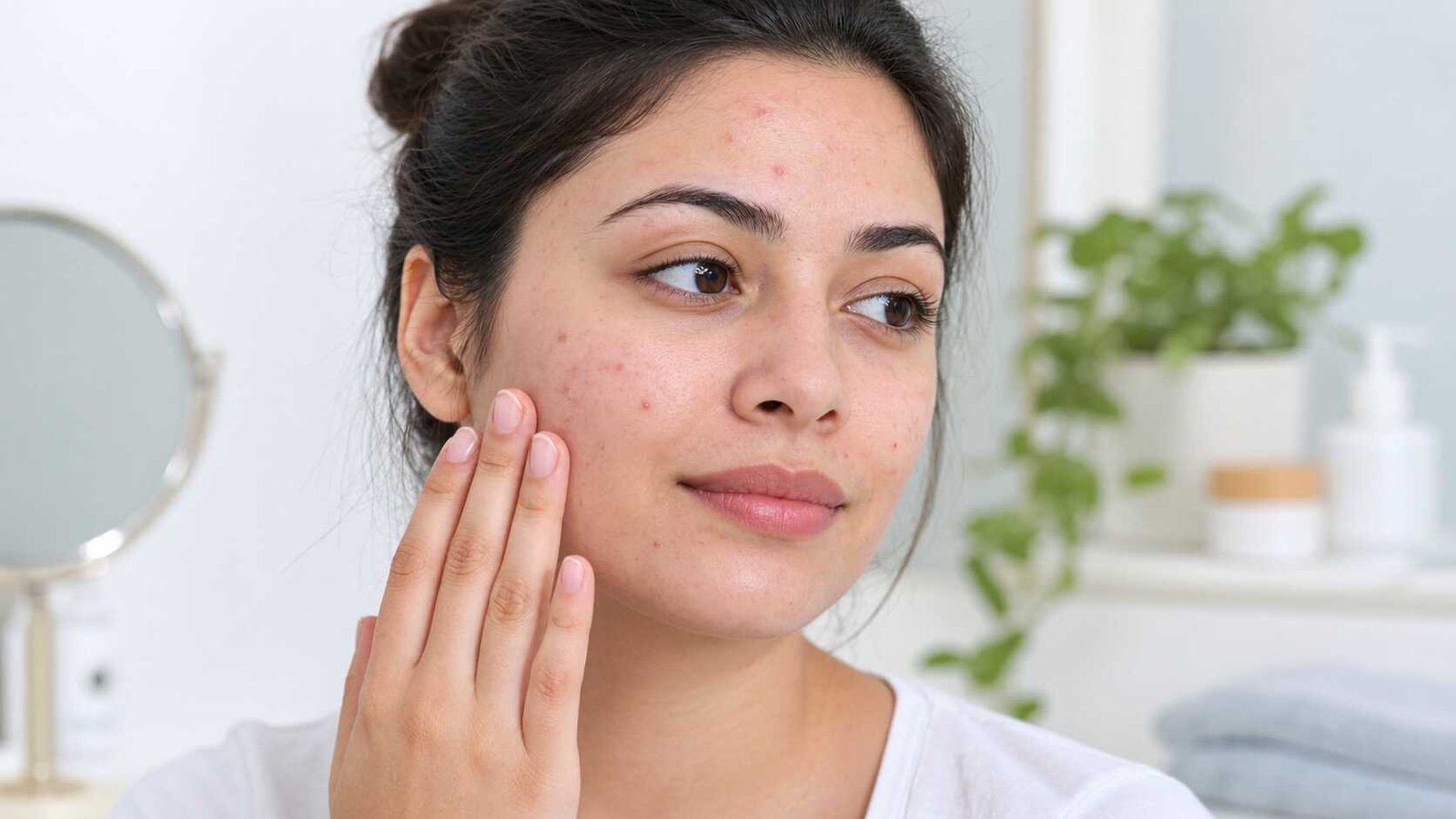

You notice tiny bumps along your forehead, a few blackheads around your nose, or a pimple that keeps coming back in the same spot on your chin. It is easy to brush these off, but they may be the first signs of acne. Acne is a very common skin condition that develops when hair follicles become clogged and, in some cases, inflamed. It affects teenagers and adults alike.
In this guide, you will learn seven early signs of acne, from shiny, oily-looking skin to deeper bumps that feel tender under the surface. You will also see how acne develops, what can contribute to it, and which first steps are generally considered gentle and reasonable. Recognizing acne early may help you choose suitable care sooner and reduce the risk of long-lasting inflammation or scarring.
Keep in mind that not every bump on the skin is acne, and symptoms look different from person to person. Rosacea, folliculitis, and other skin conditions can resemble acne, so this article is meant to help you recognize common patterns, not to diagnose your skin. If you are unsure what you are seeing, a dermatologist can help.
What Is Acne and How Does It Start?
Before looking at the warning signs, it helps to understand what is happening inside the skin. Acne does not appear overnight. It usually builds gradually, and the earliest changes are often small enough to miss.
How clogged pores lead to acne
Every pore is the opening of a hair follicle, and each follicle is connected to an oil gland. These glands make sebum, a natural oil that keeps skin soft. When extra sebum mixes with dead skin cells, the follicle can become blocked, and the plug that forms is called a comedone.
If the blocked follicle stays closed beneath the skin, it may appear as a whitehead. If it opens at the surface, it may look like a blackhead. When inflammation develops inside the follicle, the result can be a red bump or a pus-filled pimple, as described in the American Academy of Dermatology (AAD) overview of acne signs and symptoms.
Who can develop acne?
Acne is most common during puberty, when hormone changes increase oil production. However, it is not limited to the teen years. Many adults develop new or persistent breakouts in their 20s, 30s, 40s, and beyond.
Hormonal shifts, family history, and individual skin characteristics all influence who gets acne and how severe it becomes. Two people can follow the same skincare routine and have very different results, which is why comparing your skin with someone else’s is rarely helpful.
Where does acne usually appear?
Acne most often shows up on the face, including the forehead, nose, cheeks, chin, and jawline. It can also develop on the chest, shoulders, and back, where there are many oil glands. The pattern varies from person to person, and some people notice breakouts in only one area.
If you want a deeper look at why breakouts form, see our guide to the common causes of acne. For now, the goal is simply to learn what early acne can look like.
7 Early Signs of Acne You Should Know
The seven signs below are not a checklist, and you do not need to have all of them. Some people notice only one or two for months, while others move quickly from clogged pores to inflamed pimples. Pay attention to patterns that keep repeating rather than a single isolated bump.
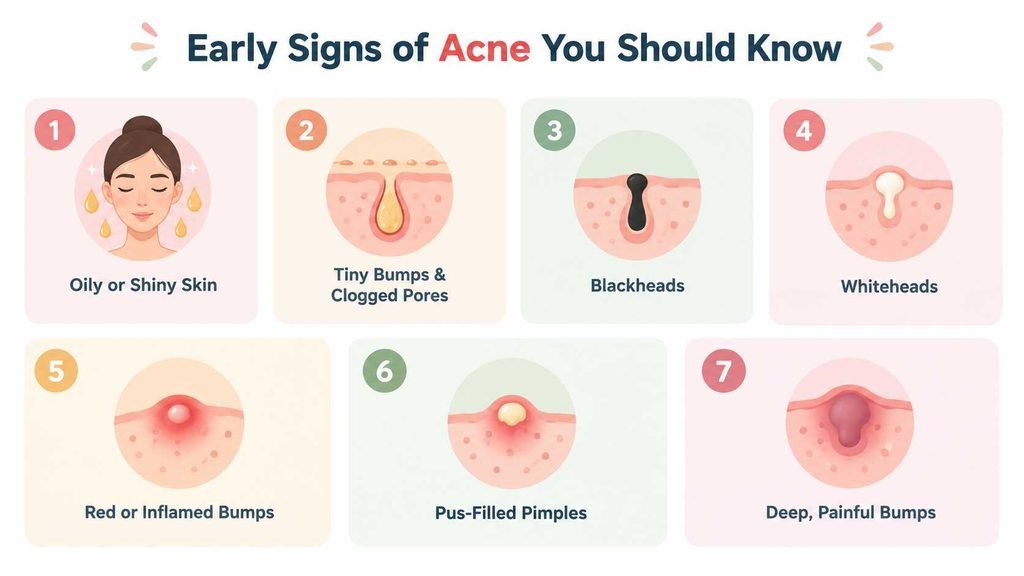
1. Excessively Oily or Shiny Skin
Skin that looks shiny soon after washing, especially across the forehead, nose, and chin, can be a clue that your oil glands are very active. Extra sebum can contribute to clogged pores, which is the starting point for most acne. This is why oily skin and acne often appear together.
That said, oily skin by itself does not mean you have acne. Many people have shiny skin without ever developing a breakout. Think of oiliness as a possible risk factor, not a diagnosis.
Heavy creams, thick makeup, or products that do not suit your skin may also add to congestion in some people. If you notice more bumps after starting a new product, it may be worth pausing it to see whether your skin settles.
What to do next: Wash your face with a gentle cleanser, generally twice a day and after heavy sweating, as the AAD advises in its acne skin care tips. Avoid scrubbing hard or washing again and again, because that can irritate your skin and may make breakouts worse.
2. Tiny Bumps and Clogged Pores
One of the earliest changes many people notice is texture. Your skin may feel slightly rough or uneven, with small, skin-colored bumps that are easier to feel than to see. These are often closed comedones, which are blocked follicles that have not yet become inflamed.
This early stage is sometimes called comedonal acne. It may stay mild for a long time, or it may be the first step toward more noticeable breakouts. The forehead, cheeks, and chin are common places to find these bumps.
Because tiny bumps can have several causes, including irritation from products, heat, or other skin conditions, appearance alone does not confirm acne. If the bumps are persistent and mostly confined to areas where you also get blackheads or pimples, acne becomes a more likely explanation.
What to do next: Resist the urge to pick at the bumps or use harsh scrubs to “clear” them. A steady, gentle at-home acne care routine is usually a better starting point than aggressive exfoliation.
3. Blackheads Around the Nose, Forehead, or Chin
Blackheads are small, dark spots inside visible pores. They are open comedones, meaning the clogged follicle is open to the surface. They tend to cluster around the nose, forehead, and chin, but they can appear anywhere acne can.
The dark color is often mistaken for dirt, but blackheads are not caused by poor washing. The darkening is generally attributed to the material in the pore reacting with air at the surface. Scrubbing harder will not remove them and can leave the skin red and sore.
Blackheads are a recognized form of acne, even when the skin around them looks calm and shows no redness. They may appear on their own, or alongside whiteheads and inflamed pimples.
What to do next: Avoid squeezing blackheads or using pore strips and scrubs repeatedly, since these habits can irritate the skin. If blackheads are your main concern, an over-the-counter product containing salicylic acid or a retinoid such as adapalene is often discussed as an option, and a pharmacist or dermatologist can help you choose.
4. Whiteheads That Keep Returning
Whiteheads are small, raised bumps that look white or skin-colored. They form when oil and dead skin cells block the follicle opening and the surface closes over the plug. Unlike pimples, they usually are not red or painful.
A single whitehead is common and may clear on its own. Whiteheads that keep coming back in the same area, however, may point to ongoing comedonal acne. Consistent congestion often means the underlying cause, such as hormones or an unsuitable product, has not changed.
Skin care habits can play a role. Products that clog pores, skipping your routine for long stretches, or switching products too often may all contribute to persistent congestion in some people.
What to do next: Look for skin care and makeup labeled “non-comedogenic,” and keep your routine simple and consistent. Our overview of treatment options for blackheads and whiteheads explains how common over-the-counter and prescription approaches compare.
5. Small Red or Inflamed Bumps
When a clogged follicle becomes inflamed, it can turn into a papule. Papules are small, raised, often red or pink bumps that may feel tender. They do not have a visible white or yellow center.
Inflammation is what separates these bumps from plain blackheads and whiteheads. Your skin may look more irritated, and the affected area may feel warm or sore to the touch. Touching, squeezing, or rubbing the area can make the inflammation worse.
Redness and bumps can also occur with other conditions, including rosacea and folliculitis. For that reason, the way a bump looks is not always enough to identify acne. Rosacea, for example, often involves persistent facial redness and flushing, while folliculitis is an infection or irritation of hair follicles that can occur in many places on the body.
What to do next: Begin with gentle skin care, and consider an appropriate acne treatment if the bumps persist. The AAD notes that many acne treatments take several weeks to show results, so give a product time to work unless it is causing significant irritation.
6. Pus-Filled Pimples or Small White-Tipped Bumps
Pustules are inflamed pimples that contain pus. They usually look like raised, red bumps with a white or yellowish center. Many people think of these when they picture a typical pimple.
A pustule differs from a whitehead because it is inflamed. A whitehead is a closed, non-inflamed plug, while a pustule is surrounded by redness and swelling. Pus-filled pimples are an established sign of inflammatory acne, although they are not necessarily the first sign a person notices.
Squeezing pustules is tempting but risky. It can push material deeper into the skin, increase inflammation, raise the risk of infection, and make dark marks or scars more likely. The AAD explains why in its guidance on why dermatologists advise against popping pimples.
What to do next: Leave pimples alone, use suitable acne care, and watch whether breakouts are becoming more frequent or spreading to new areas. A change in pattern is worth mentioning to a healthcare professional.
7. Tender, Painful, or Deep Bumps Under the Skin
Some acne lesions form deeper in the skin and feel firm, tender, or painful. These are called nodules and cysts. They may look like large red bumps, or they may be felt more than seen, with little visible change on the surface.
Deep lesions can last for weeks and carry a greater risk of scarring than surface pimples. They are also less likely to respond to over-the-counter products alone. Squeezing them or repeatedly trying home remedies can damage the skin and worsen scarring.
It is useful to separate early warning signs from signs that acne may be progressing. Blackheads and whiteheads are generally considered non-inflammatory lesions, papules and pustules are inflammatory lesions, and nodules and cysts are deeper and potentially painful. The AAD describes these differences in its guide to how to treat different types of acne.
What to do next: If you have deep, painful, or recurring lesions, consider seeing a dermatologist promptly rather than waiting for the acne to become widespread. Earlier professional care may help limit scarring.
What Causes Acne to Develop?
Acne is influenced by several factors, and they do not affect everyone equally. In most cases, a combination of causes works together, which is why a single “fix” rarely works for everyone.
Hormonal Changes
Hormones can increase oil production and make follicles more likely to clog. This is why acne often begins in puberty and may flare during certain times of the menstrual cycle, during pregnancy, or with other hormonal changes. Some people notice that breakouts cluster around the jawline and chin.
If persistent acne comes with irregular periods, unusual facial or body hair growth, or other changes, it may be worth discussing with a healthcare professional. These symptoms can sometimes be linked to an underlying hormonal condition, and a medical evaluation can help sort that out.
Genetics and Family History
Acne tends to run in families. If your parents or siblings had acne, particularly severe acne, you may be more likely to develop it too. Genetics may also influence how inflamed your breakouts become and how likely they are to leave marks.
Family history is not destiny, and it does not mean your skin will follow the same course. It is simply one more piece of context to share with a dermatologist.
Skincare Products and Irritation
Pore-clogging products, harsh cleansers, over-exfoliation, and frequent picking can all irritate the skin and contribute to breakouts. Acne is not the result of poor hygiene, and washing more often does not clear it. Overwashing and scrubbing can in fact make skin more irritated and dry, and dryness can complicate acne care.
If your skin feels tight or flaky, see our guide to caring for dry, acne-prone skin.
Diet, Stress, and Lifestyle Factors
Research on diet and acne is still evolving. Some studies suggest that high-glycemic diets, and possibly certain dairy products, may be linked with acne in some people, but the evidence is mixed and does not apply to everyone. The AAD discusses what is known in its overview of diet and acne.
Stress may also play a role for some people, although it is rarely the only cause. No single food, supplement, detox, or gut-health product has been shown to cure acne. A balanced diet supports overall health, but it should not be treated as a replacement for acne care when you need it. For broader habits that support your skin and general well-being, see our guide to healthy lifestyle habits.
What to Do When You Notice the Early Signs of Acne
Starting early does not mean doing more. For most people, the best first steps are simple, gentle, and consistent.
Build a Gentle Skincare Routine
A basic routine includes a gentle cleanser, a non-comedogenic moisturizer, and a broad-spectrum sunscreen with SPF 30 or higher. The AAD recommends using your fingertips rather than a washcloth or scrub, rinsing with lukewarm water, and patting your skin dry. It also advises moisturizing, since many acne treatments can cause dryness; you can read more in its guidance on sun protection and sunscreen.
Washing repeatedly or scrubbing hard can irritate acne-prone skin and may worsen breakouts. A calm, predictable routine usually works better than frequent changes.
Consider Appropriate Acne Treatments
Several over-the-counter ingredients are commonly used for mild acne, including benzoyl peroxide, salicylic acid, and adapalene (a topical retinoid). Which one is appropriate depends on your type of acne, how severe it is, how well your skin tolerates it, and your personal circumstances. You can read more about acne treatment options on CollectedMed.
Avoid starting several strong active ingredients at once, because combining them can cause redness, peeling, and burning. Introduce one product at a time, and be patient. The AAD notes that acne treatments generally take about six to eight weeks to show improvement, so overnight results are not realistic. The AAD’s treatment guidance explains what to expect.
Retinoids, including adapalene, should not be used during pregnancy or when trying to conceive without medical guidance. If you are pregnant, breastfeeding, or planning a pregnancy, talk with a healthcare professional about suitable alternatives. The AAD outlines acne care during pregnancy in its page on treating acne while pregnant.
Avoid Picking and Track Breakouts
Try not to squeeze, pick, or repeatedly touch your breakouts. Introduce new products gradually, one at a time, so you can tell what helps and what irritates. Keeping brief notes about when breakouts appear can reveal patterns, such as flares before your period or after switching products.
For a more detailed routine, including daily steps and common mistakes, read our guide on how to manage acne at home.
When Should You See a Dermatologist?
Self-care is a reasonable starting point for mild acne, but it is not always enough. Consider making an appointment if you notice any of the following:
- Deep, painful, or cyst-like lesions
- Acne that is getting worse or spreading
- Breakouts that leave scars or persistent dark marks
- No meaningful improvement after using an appropriate treatment consistently for about six to eight weeks
- Acne along with symptoms that may suggest a hormonal condition, such as irregular periods or excess hair growth
- Acne that significantly affects your confidence, social life, or emotional well-being
A dermatologist can confirm whether your bumps are acne, rule out look-alike conditions, and recommend prescription treatments or other options suited to you. The AAD recommends professional assessment for severe or persistent acne and for breakouts that may be something else, as described in its article on whether stubborn acne is really acne.
Emotional well-being matters too. Acne can affect how people feel about themselves, and seeking help for that reason is completely valid. This article provides general educational information and cannot replace an individual diagnosis.
Frequently Asked Questions About the Early Signs of Acne
What is usually the first sign of acne?
There is no universal first sign. Some people first notice clogged pores, blackheads, or whiteheads, while others notice inflamed pimples before anything else. The AAD’s overview of acne symptoms lists the main lesion types.
Can acne start as tiny bumps?
Yes. Small, skin-colored bumps can be closed comedones, one of the early forms of acne. However, other skin conditions can look similar, so persistent or unusual bumps are worth showing to a healthcare professional.
How can you tell if a bump is acne or something else?
Acne commonly includes blackheads or whiteheads along with red or pus-filled pimples, usually on the face, chest, or back. Itching, burning, an unusual rash, or very uniform bumps may point to another condition, such as folliculitis or rosacea. If you are not sure, a dermatologist can examine your skin and tell you what it is.
Can you stop acne before it gets worse?
Gentle skin care and appropriate early treatment can help control breakouts for many people. Prevention is not guaranteed, though, because hormones and genetics play a role that skin care cannot fully change. If acne is spreading or painful, professional care is a better step than trying more products on your own.
How long does early acne take to clear?
It varies from person to person. Many acne treatments need about six to eight weeks of consistent use before improvement is noticeable, according to the AAD. Some people need longer or a different approach, so check in with a healthcare professional if you see no change.
Conclusion
Early acne can show up as oily skin, tiny bumps, blackheads, recurring whiteheads, red bumps, pus-filled pimples, or deep, tender lesions under the skin. Oily skin alone does not mean you have acne, but blackheads, whiteheads, inflamed pimples, and deeper painful lesions are all recognized forms of it.
If you notice these signs, start with a gentle routine, avoid picking, and give any new product time to work. See a dermatologist if your acne is persistent, painful, or leaving scars. For a step-by-step plan, read our guide on how to manage acne at home.
Sources
- American Academy of Dermatology. Acne: Signs and symptoms
- American Academy of Dermatology. How to treat different types of acne
- American Academy of Dermatology. Acne: Diagnosis and treatment
- American Academy of Dermatology. Acne skin care tips
- American Academy of Dermatology. Why you should not pop pimples
- American Academy of Dermatology. Diet and acne
- American Academy of Dermatology. Treating acne during pregnancy
- American Academy of Dermatology. Is that stubborn acne really acne?
- American Academy of Dermatology. Sun protection: shade, clothing, and sunscreen
Medical Disclaimer
This article is for general educational purposes and does not replace professional medical advice, diagnosis, or treatment. Many skin conditions look like acne, so only a healthcare professional can tell you what is causing your breakouts. Acne treatments can cause side effects, and some are not safe during pregnancy or breastfeeding. Talk with a doctor, dermatologist, or pharmacist before starting, changing, or stopping any treatment, especially if you have severe, painful, or scarring acne, or other health conditions.
2 thoughts on “What Are the Early Signs of Acne? 7 Warning Signs to Know”
Comments are closed.