
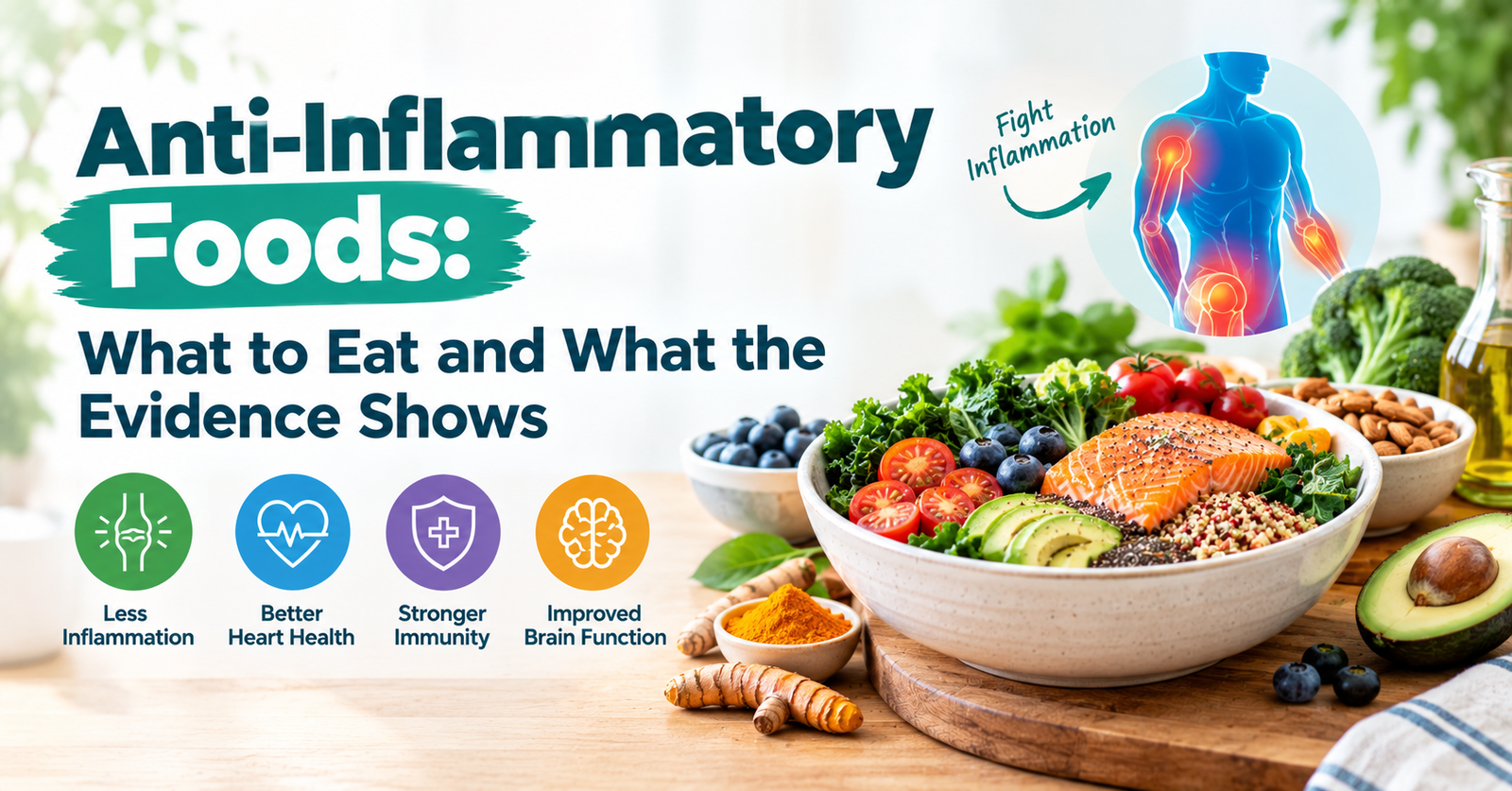

The foods you eat regularly can influence your overall nutritional health and may affect certain processes involved in inflammation. Anti-inflammatory foods commonly include colorful fruits and vegetables, fatty fish, legumes, whole grains, nuts, seeds, and olive oil. Rather than relying on one so-called superfood, research increasingly points to the importance of overall dietary patterns and sustainable eating habits.
Inflammation is a normal part of the body’s immune response, and short-term inflammation helps us heal. Persistent, low-grade inflammation is a different matter, and it is an active area of medical and nutrition research. Scientists are still working out how much diet contributes, which foods matter most, and how to measure the effects in real life.
This guide takes a practical, evidence-based look at the question. You will learn what inflammation is, how food may influence it, which foods are worth eating more often, which to limit, and what the research does and does not show. No food can eliminate inflammation or replace medical care, but a balanced diet built around plants, fish, and healthy fats is a reasonable place to start.
What Is Inflammation?
Inflammation is the body’s way of responding to harm. Before we talk about food, it helps to understand what the process is meant to do and what happens when it does not switch off.
Acute Inflammation Is a Normal Protective Response
When you sprain an ankle or catch an infection, your immune system sends cells and signaling molecules to the affected area. This produces the familiar signs of acute inflammation: redness, warmth, swelling, and pain. The Cleveland Clinic describes acute inflammation as sudden and temporary, usually lasting from a few hours to a few days.
This short-term response is often part of healing. The goal of eating well is not to suppress it.
What Is Chronic Inflammation?
Chronic inflammation persists for months or years. Researchers have linked it to conditions such as cardiovascular disease, type 2 diabetes, and some autoimmune disorders, although the exact mechanisms are not fully established. The Harvard T.H. Chan School of Public Health notes that low-grade inflammation is associated with inactivity, stress, and calorie-rich diets.
Chronic inflammation has many possible causes, including underlying disease, lifestyle factors, and environmental exposures. It does not look the same in every person, and diet alone does not determine anyone’s risk. Persistent or unexplained symptoms, such as ongoing pain, swelling, or fatigue, deserve a proper medical assessment.
Can You Tell Whether You Have Inflammation?
Chronic low-grade inflammation often causes no obvious symptoms. When it is medically appropriate, a clinician may order a blood test for C-reactive protein (CRP), a protein the liver makes in response to inflammation. The Mayo Clinic points out that the test does not show the cause of inflammation, that levels fluctuate over time, and that results must be interpreted in context.
For that reason, do not try to interpret CRP on your own. Learn more about common health issues and the role of preventive health screening if you have questions about your own risk.
How Can Food Influence Inflammation?
Food does not act on inflammation like a medicine. Instead, nutrients and plant compounds may influence several biological processes that interact with the immune system. Much of what we know comes from laboratory studies, observational research, and a smaller number of clinical trials.
Antioxidants and Plant Compounds
Polyphenols are found in berries, tea, olive oil, and many other plant foods, while carotenoids give color to vegetables such as carrots, tomatoes, and leafy greens. Antioxidants help protect cells against oxidative damage, which is closely connected to inflammatory processes.
There is an important caveat. Antioxidant activity measured in a laboratory does not prove a benefit in people, and a high antioxidant score alone does not establish that a food improves health outcomes.
Omega-3 Fatty Acids
Omega-3 fatty acids come in three main forms. EPA and DHA are found in fatty fish, while ALA comes from plant foods such as walnuts, chia seeds, and flaxseeds. According to the NIH Office of Dietary Supplements, getting EPA and DHA from food (and supplements, if you take them) is the practical way to raise body levels of these two fats.
These fatty acids are not interchangeable in all biological functions. You can read more about omega-3 fatty acids on CollectedMed.
Fiber and the Gut Microbiome
Dietary fiber supports bowel function and provides fuel for beneficial gut microorganisms. In turn, these microbes produce metabolites, including short-chain fatty acids, that researchers are studying for their roles in immune and metabolic health. This is one reason gut health comes up so often in discussions of inflammation.
Foods rich in fiber include legumes, whole grains, vegetables, fruits, nuts, and seeds. See this list of high-fiber foods for digestive health for ideas.
Why the Overall Dietary Pattern Matters
Food combinations, substitutions, and long-term habits tend to matter more than any single nutrient. Harvard Health notes that anti-inflammatory eating works best when you focus on an overall healthy diet instead of singling out individual “good” and “bad” foods. Overall nutritional adequacy, calorie balance, and variety all play a part.
Best Anti-Inflammatory Foods to Eat
The foods below are grouped by category to make them easier to scan. For each one, the focus is on the most relevant nutrients, how strong the evidence is, and how to use it in everyday meals.
1. Fatty Fish
Salmon, sardines, mackerel, herring, and trout are among the best food sources of EPA and DHA. These omega-3 fatty acids have established roles in regulating inflammation, and fish is a staple of heart-healthy eating patterns. However, findings about eating fish do not automatically show that fish treats an inflammatory disease, and results vary by clinical outcome.
Harvard Health suggests at least two servings of fatty fish per week as part of an inflammation-conscious diet. Learn more about fatty fish and their nutrients.
Practical tip: Bake, grill, or steam fish and serve it with vegetables and whole grains.
2. Berries and Other Colorful Fruits
Blueberries, strawberries, raspberries, cherries, oranges, apples, and grapes provide vitamin C, fiber, and polyphenols such as anthocyanins. Whole fruit also delivers its natural sugars alongside fiber, which makes it a better choice than juice or sweetened fruit products. Some studies suggest berry polyphenols may affect selected inflammatory markers, but findings are not uniform.
For more ideas, see these foods high in vitamin C and this list of antioxidant-rich foods.
Practical tip: Add berries to oatmeal, eat an apple as a snack, or include citrus fruit with breakfast.
3. Leafy Green Vegetables and Cruciferous Vegetables
Spinach, kale, collard greens, broccoli, and Brussels sprouts offer folate, vitamin K, vitamin C, fiber, and carotenoids. Cruciferous vegetables also contain glucosinolates, which the body can convert into biologically active compounds. Most of the research on these compounds comes from laboratory studies, so the strongest takeaway is simply that vegetables of many kinds add up to a nutrient-rich pattern.
You can read about the health benefits of leafy green vegetables in more detail.
Practical tip: Add leafy greens to soups, serve steamed broccoli as a side, or stir spinach into eggs and lentil dishes.
4. Extra-Virgin Olive Oil
Extra-virgin olive oil is a source of monounsaturated fat and phenolic compounds, including oleocanthal. It is a useful replacement for some saturated-fat-rich fats and is a cornerstone of the Mediterranean diet. Its phenolic compounds are not equivalent to prescription anti-inflammatory medicines, and olive oil works best as part of an overall balanced pattern.
Practical tip: Use olive oil in salad dressings, vegetable dishes, and bean-based meals.
5. Nuts and Seeds
Walnuts, almonds, chia seeds, flaxseeds, and other unsalted nuts and seeds contribute unsaturated fats, fiber, minerals, and plant compounds. Walnuts, chia seeds, and flaxseeds are plant sources of ALA, though the NIH notes that the body converts only a small amount of ALA into EPA and DHA. Nuts and seeds are calorie-dense, so small portions go a long way, and people with allergies should avoid them.
See these nutrient-dense foods for more ideas.
Practical tip: Sprinkle ground flaxseed over oatmeal or add a small handful of nuts to a snack.
6. Beans, Lentils, and Other Legumes
Chickpeas, kidney beans, black beans, peas, and lentils provide fiber, plant protein, folate, and minerals. Their fiber feeds beneficial gut microorganisms, and legumes add variety to meals that might otherwise rely on processed meat. If you are new to legumes, introduce them gradually to reduce gas and bloating.
Explore the best prebiotic foods and more high-fiber foods to see how legumes fit in.
Practical tip: Add lentils to soups, prepare chickpea curries, or replace some processed meat with beans in familiar recipes.
7. Whole Grains
Oats, barley, brown rice, and whole-wheat foods provide fiber, B vitamins, and minerals. Oats and barley contain beta-glucan, a type of soluble fiber that supports digestive health. Choosing whole grains more often than refined alternatives is a simple way to increase fiber and improve overall nutrient intake.
For more everyday choices, browse this overview of healthy foods.
Practical tip: Choose oatmeal for breakfast or use barley and brown rice in grain bowls.
8. Herbs, Spices, and Tea
Turmeric contains curcumin, ginger contains gingerols, garlic contains sulfur compounds, and green tea contains polyphenols called catechins. Laboratory findings and supplement trials do not necessarily translate into equivalent benefits from normal culinary amounts. The National Center for Complementary and Integrative Health notes that it is challenging to compare the available evidence on turmeric, and it advises caution about its use in pregnancy.
Concentrated supplements can cause side effects or interact with medicines. Liver injury has been reported with concentrated green tea extracts, although NCCIH reports no safety concerns for adults who drink green tea as a beverage (it does contain caffeine).
Practical tip: Add ginger to soups, turmeric to lentil dishes, garlic to vegetables, or unsweetened green tea to your routine.
9. Fermented Foods
Plain yogurt with live cultures, kefir, and some fermented vegetables can add live microbes to your diet. Fermented foods vary widely in their microbial content and nutrition, and evidence that a specific food directly lowers systemic inflammation remains variable. One small randomized trial from Stanford, which we discuss in the evidence section below, found interesting effects, but it needs confirmation.
Learn more about probiotic-rich foods and the difference between probiotics and prebiotics.
Practical tip: Choose plain yogurt with live cultures, or add fermented vegetables to meals when appropriate for you.
Foods and Dietary Patterns to Limit
The goal is to improve your overall dietary pattern, not to label every food as “inflammatory.” Harvard Health’s quick-start guide suggests eating fewer foods that come from packages and more that come from the ground. Substitution works better than fear-based rules.
Ultra-Processed Foods
Sugary snacks, packaged pastries, and some ready-to-eat meals are examples of ultra-processed foods that tend to be low in fiber and high in added sugar, sodium, or saturated fat. Researchers are examining how these foods relate to inflammatory biomarkers, as in this scoping review. Processing alone does not make a food unhealthy; nutritional composition and the rest of the diet matter. Canned beans and frozen vegetables, for example, are processed but nutritious.
Added Sugars and Sugar-Sweetened Drinks
Soft drinks, sweetened beverages, and frequent high-sugar snacks add calories with little nutrition. Reducing excessive added sugar improves overall dietary quality and leaves more room for nutrient-dense foods.
Refined Grains and Low-Fiber Food Choices
Replacing some refined grains with whole grains increases fiber and nutrient intake. This does not mean that white rice or white bread directly causes inflammation in every person. It simply means that whole grains usually offer more nutritional value.
Processed Meat and Excessive Saturated Fat
Frequent processed meat consumption and diets high in saturated fat may be less favorable than patterns that emphasize legumes, fish, nuts, seeds, and unsaturated oils. Harvard Health lists processed and cured meats among the foods to limit.
Excessive Alcohol
Excessive alcohol intake can harm health. Research on moderate drinking is mixed, and Harvard Health advises that nondrinkers should not start drinking for health reasons. If you do drink, keep your intake modest.
Key takeaway: Replacing sugary drinks with water, or adding beans to a meal, is more practical than eliminating every food you think might be inflammatory. For a model of this approach, see the Mediterranean diet.
What Does the Scientific Evidence Show?
Evidence about dietary patterns, individual foods, and clinical treatment varies in strength. Keeping those categories separate is the best way to read headlines about inflammation and diet.
Evidence for the Mediterranean Diet
The Mediterranean diet emphasizes vegetables, fruit, legumes, whole grains, nuts, olive oil, and fish. The Harvard T.H. Chan School of Public Health reports that a randomized trial in people at high cardiovascular risk found Mediterranean-style eating significantly decreased several inflammation markers compared with a low-fat diet.
A systematic review and meta-analysis in older adults found that closer adherence was associated with lower CRP. However, heterogeneity was high, most included studies were cross-sectional, and results for other inflammatory markers were mixed. Findings vary by population, study design, and outcome. A lower marker does not automatically mean a specific clinical benefit.
Evidence for Individual Foods
- Fatty fish: Omega-3 fatty acids have established biological roles in regulating inflammation, but evidence varies by clinical outcome.
- Berries: Polyphenols are biologically active, and some studies suggest effects on selected markers, but findings are not uniform.
- Olive oil and nuts: These foods are associated with beneficial dietary patterns and have been studied for cardiometabolic health and inflammatory markers.
- Whole grains and legumes: Their fiber and broader nutritional profiles make them useful components of healthy patterns.
- Fermented foods: In a 10-week randomized trial of 36 healthy adults, a fermented-food diet increased gut microbial diversity and was linked to decreases in 19 inflammatory proteins. The researchers described it as proof-of-concept, and it is unknown whether the effects hold in other groups.
- Turmeric and ginger: Preliminary and clinical research exists, but findings from concentrated supplements should not be generalized to ordinary food portions. For ginger, NCCIH says it has been studied mostly for nausea, and it is also promoted for osteoarthritis and other conditions.
Evidence on dietary patterns and specific diseases is still emerging. For example, the Harvard T.H. Chan review describes a small randomized crossover trial in rheumatoid arthritis that reported lower disease activity on an anti-inflammatory diet, but it also notes that there are no standardized dietary guidelines for that condition.
What Are the Limitations of the Evidence?
- Observational studies can identify associations but cannot always establish cause and effect.
- Biomarkers such as CRP are useful research outcomes but are not the only measures of health, and they fluctuate.
- Studies differ in dosage, duration, participant characteristics, and the foods being tested.
- Individual foods rarely produce the same effects as a complete dietary pattern.
The bottom line: The strongest practical message is to prioritize a balanced, plant-rich dietary pattern instead of relying on a single food, spice, or supplement.
How to Build an Anti-Inflammatory Diet
You do not need a restrictive meal plan. The following approach is flexible and can be adapted to your preferences, budget, culture, and health needs.
Build Meals Around a Variety of Whole Foods
Combine vegetables, fruit, whole grains, legumes, appropriate protein sources, and unsaturated fats. A simple rhythm might be oatmeal with berries for breakfast, a leafy green salad with beans and seeds for lunch, and fish or tofu with vegetables for dinner. If you want a broader framework, read about what is a healthy diet.
Make Simple Food Swaps
Small changes are easier to sustain:
- Replace some refined-grain breakfasts with oatmeal.
- Add fruit to breakfast instead of a sugary snack.
- Include beans or lentils in soups, curries, or salads.
- Use olive oil instead of some saturated-fat-rich cooking fats.
- Choose fish regularly if suitable and accessible.
- Add an extra serving of vegetables to lunch or dinner.
Follow a Flexible Weekly Eating Pattern
Aim for a variety of plant foods across the week, with fish, legumes, whole grains, nuts, and seeds included according to your preferences, availability, and dietary requirements. You do not have to hit every food group daily. Browse the healthiest foods to eat every day for inspiration.
Consider the Rest of Your Lifestyle
Food is only one factor. Physical activity, adequate sleep, avoiding smoking, stress management, and appropriate medical care all contribute to overall health. Read about the benefits of exercise, how to improve sleep, and building a healthy lifestyle.
If you have a diagnosed condition, take medications, or have food allergies, talk with your doctor or a registered dietitian before making major changes.
Frequently Asked Questions About Anti-Inflammatory Foods
What Are the Best Anti-Inflammatory Foods?
Fatty fish, berries, leafy greens, legumes, whole grains, nuts, seeds, and olive oil are useful options within a balanced dietary pattern. No single food is universally the best. Variety matters more than any one ingredient.
What Foods Should You Avoid on an Anti-Inflammatory Diet?
Many people benefit from limiting excessive added sugars, frequent processed meats, and foods that contribute little nutrition. Harvard Health lists ultra-processed foods, sugary drinks, refined grains, and processed meats among foods to limit. Avoiding all processed foods or entire food groups is generally unnecessary.
Can Anti-Inflammatory Foods Help With Joint Pain?
A healthy dietary pattern may support overall health, but the evidence for treating joint pain with individual foods is limited and variable. Food is not a substitute for evaluation or treatment. Persistent joint pain, swelling, or stiffness warrants medical assessment.
How Long Does an Anti-Inflammatory Diet Take to Work?
There is no universal timeline. Dietary changes may influence some measurable outcomes over time, but results depend on the individual, the dietary pattern, any underlying condition, and which outcome is measured. Changes in lab markers and in how you feel do not necessarily happen together.
Is the Mediterranean Diet an Anti-Inflammatory Diet?
The Mediterranean diet is among the best-studied dietary patterns linked with favorable changes in certain inflammatory markers, as the Harvard T.H. Chan School of Public Health review describes. It is a practical model, not a guaranteed treatment for inflammation.
Can Supplements Replace Anti-Inflammatory Foods?
No. Supplements cannot replace a varied, balanced diet, and high-dose products may carry risks or interact with medications. The NIH Office of Dietary Supplements notes, for example, that omega-3 supplements may interact with medications. Talk with a qualified healthcare professional before using supplements to manage a health condition.
Conclusion: Focus on the Overall Eating Pattern
Inflammation is a normal immune response, but persistent inflammation can be associated with health problems. Anti-inflammatory foods provide nutrients and plant compounds that support overall health, and a pattern rich in vegetables, fruits, legumes, whole grains, nuts, seeds, and healthy fats is a practical starting point.
The evidence is stronger for some dietary patterns than for individual foods or supplements, and food should complement, not replace, appropriate medical care. Begin with one manageable change, such as adding beans to lunch, eating one more serving of vegetables, or choosing whole grains more often.
Sources
- Harvard T.H. Chan School of Public Health. Diet Review: Anti-Inflammatory Diet
- Harvard Health Publishing. Quick-Start Guide to an Anti-Inflammation Diet
- Harvard Health Publishing. Foods you should eat to help fight inflammation
- Harvard Health Publishing. Fighting inflammation with food
- Harvard Health Publishing. The (almost) last word on alcohol and health
- Cleveland Clinic. Inflammation
- Mayo Clinic. C-reactive protein test
- National Institutes of Health, Office of Dietary Supplements. Omega-3 Fatty Acids: Fact Sheet for Consumers
- National Center for Complementary and Integrative Health. Turmeric, Ginger, and Green Tea
- Stanford Medicine. Fermented-food diet increases microbiome diversity, lowers inflammation
- Systematic review and meta-analysis of Mediterranean diet adherence and inflammation in older adults. PubMed Central
- Ultra-Processed Food Consumption and Systemic Inflammatory Biomarkers: A Scoping Review. PubMed
Medical Disclaimer: This article is for general educational purposes only and is not medical advice. It does not diagnose, treat, or prevent any condition, and it cannot replace guidance from a qualified healthcare professional. Talk with your doctor or a registered dietitian before making major changes to your diet, especially if you have a health condition, food allergy, or take medication. If you have persistent symptoms or think you may have a medical problem, seek professional care promptly.
6 thoughts on “Anti-Inflammatory Foods: What to Eat and What the Evidence Shows”
Comments are closed.