
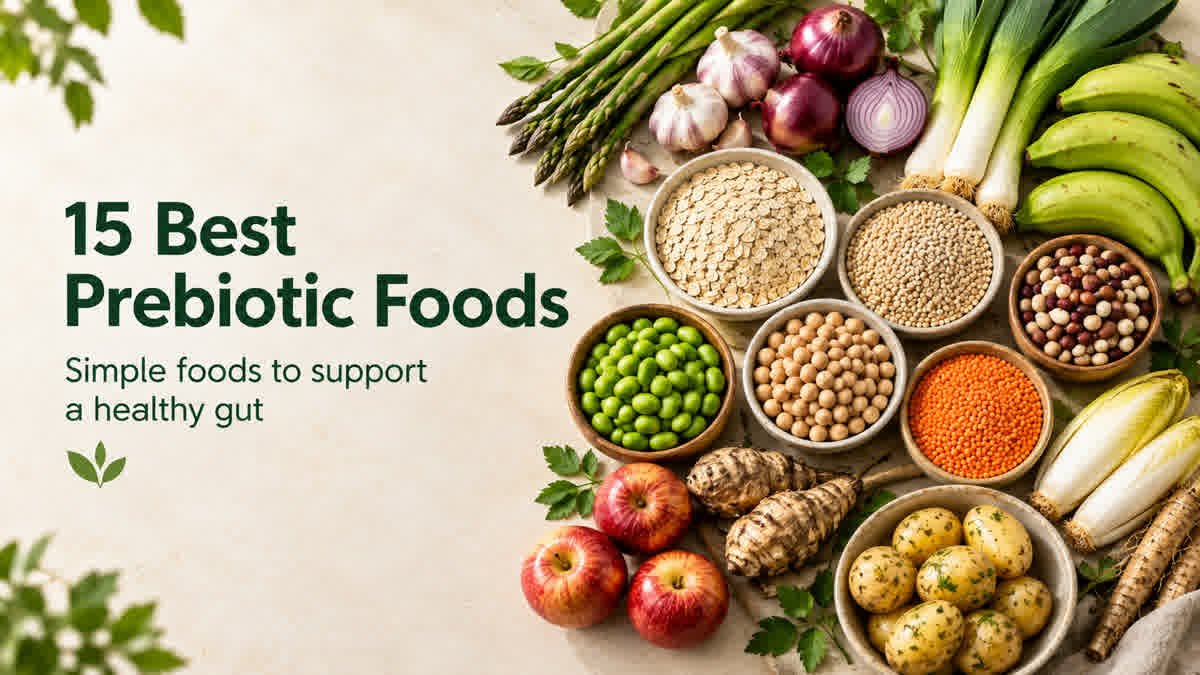

Prebiotic foods contain fibers and other substances that the microorganisms in your gut can use as fuel. They are found in many everyday ingredients, including onions, garlic, oats, beans, and bananas. Because they are part of ordinary meals, they offer a practical way to think about digestive health through food.
Gut health depends on your overall dietary pattern, how well you tolerate certain foods, and other lifestyle factors such as sleep, activity, and medications. No single food can guarantee a healthy gut. The goal is to eat a variety of plant foods and to make changes at a pace your digestive system can handle.
This guide explains what prebiotics are and how they differ from probiotics, then walks through 15 foods that can contribute prebiotic fibers. You will also find potential benefits, easy ways to add these foods to your meals, and who should be careful. It is general information, not individual medical advice, and it pairs well with our guide on how to improve gut health.
What Are Prebiotic Foods?
Prebiotics are substrates that host microorganisms selectively use, and that provide a health benefit, as defined by the International Scientific Association for Probiotics and Prebiotics (ISAPP). In practice, most prebiotics are types of fiber that resist digestion in the small intestine and reach the large intestine, where gut microbes ferment them.
Important prebiotic components include inulin, fructooligosaccharides (FOS), galactooligosaccharides (GOS), and some forms of resistant starch. They occur naturally in vegetables, legumes, fruits, and whole grains. Not every kind of dietary fiber meets the scientific definition of a prebiotic, so the foods below are described as potential sources.
The Harvard T.H. Chan School of Public Health notes that a diet with a variety of fiber-containing foods supports digestive health. For that reason, eating diverse plants is usually more useful than hunting for one supposedly perfect food.
Prebiotics vs. Probiotics: What’s the Difference?
The two terms sound similar but mean different things:
- Prebiotics provide substrates that certain gut microorganisms can use.
- Probiotics are live microorganisms that provide a health benefit when consumed in adequate amounts.
Some foods provide prebiotic components, while others contain live cultures, so the terms are not interchangeable. Eating both types may fit into a varied diet, but not every fermented food is a proven probiotic. To learn more, read our guides on probiotic-rich foods and understanding probiotics.
15 Best Prebiotic Foods to Support a Healthy Gut
Foods vary in their fiber composition, and the best choices depend on availability, preferences, and tolerance. This list is an editorial selection, not a scientific ranking. Chicory root and Jerusalem artichokes are especially concentrated sources of inulin, while oats, apples, legumes, and potatoes contribute different kinds of fermentable fibers. Effects vary by food and by person.
1. Garlic
Garlic contains inulin-type fructans that gut microbes can use. It is usually eaten in small amounts, so its contribution is modest, but it adds up across meals. Cook it into soups, lentil dishes, vegetable sautés, and sauces. Garlic can trigger symptoms in some people with sensitive digestion.
2. Onions
Onions are a source of fructans and one of the most versatile everyday ingredients. Add them to cooked vegetables, soups, curries, and bean dishes. Larger portions may cause gas or bloating in sensitive individuals.
3. Asparagus
Asparagus provides inulin and dietary fiber. Roast or steam it, or chop it into grain dishes and omelets. It is one helpful option among many, not an essential gut-health food.
4. Leeks
Leeks contain fructan fibers and have a milder flavor than raw onions. Add well-cooked leeks to soups, stews, and vegetable dishes. They are related to onions and garlic, but that does not mean all three are equally well tolerated.
5. Green Bananas
Less ripe bananas contain more resistant starch than fully ripe ones, and the amount changes as the fruit ripens. Some people slice green bananas into cooked dishes, while others simply choose bananas that are still slightly firm. Eat them in whatever way suits your taste.
6. Oats
Oats provide beta-glucan and other fibers that contribute to a fiber-rich eating pattern. Enjoy them as oatmeal, overnight oats, or mixed with yogurt and fruit. Not every type of oat fiber meets every technical definition of a prebiotic.
7. Barley
Barley is rich in beta-glucan fiber, which may play a role in gut microbial activity. Use it in soups, grain bowls, or mixed with vegetables. Barley contains gluten, so it is not suitable for people who must strictly avoid gluten.
8. Lentils
Lentils supply fermentable carbohydrates, fiber, and plant protein. Make lentil soup or dal, or serve them over rice with vegetables. If legumes are new to you, increase portions gradually.
9. Chickpeas
Chickpeas provide fiber and galactooligosaccharides. Use them in curries, salads, hummus, or roasted as a snack. Rinsing canned chickpeas and starting with a comfortable serving can help some people.
10. Beans
Kidney beans, black beans, and other common varieties provide fermentable carbohydrates, fiber, and resistant starch. Use them in soups, curries, and grain dishes. Cook dried beans thoroughly, because undercooked kidney beans can make you ill.
11. Apples
Apples provide pectin, a fermentable soluble fiber. Eat washed apples with the skin on when appropriate. Apples are a helpful addition to a varied diet rather than a concentrated prebiotic source.
12. Chicory Root
Chicory root is a concentrated natural source of inulin. It is used in some fiber ingredients and coffee alternatives. Concentrated inulin can cause discomfort in some people, and it is not necessary for everyone.
13. Jerusalem Artichokes
Jerusalem artichokes, also called sunchokes, contain inulin. Roast them or add small portions to vegetable dishes where available. Their high content of fermentable fiber may be uncomfortable for some people, so start with a small serving.
14. Soybeans
Soybeans contain galactooligosaccharides, which can serve as substrates for gut microorganisms. Eat properly cooked soybeans or edamame, where available. Soy milk, tofu, and other soy foods are useful in a balanced diet, but their fiber content differs, so not every soy product is a rich prebiotic source.
15. Cooked and Cooled Potatoes
Some forms of resistant starch develop when cooked potatoes cool. Chilled cooked potatoes in a potato salad or a cold grain bowl are examples. The amount varies with the potato type, preparation, and storage. Never eat raw potatoes, and refrigerate cooked ones promptly.
Health Benefits of Prebiotic Foods
The research on prebiotics is promising but still developing. The benefits below are described cautiously, and results vary by food, fiber type, and person.
Supporting a Diverse Gut Microbiome
Certain fermentable fibers can help selected beneficial microbes grow or become more active. That does not mean prebiotics automatically increase every helpful species. The gut microbiome is also shaped by medications, age, and environment, so diet is one of many influences.
Supporting Regular Bowel Movements
Dietary fiber helps stool consistency and regularity, depending on the type of fiber, how much fluid you drink, and your individual response. Our guide to high-fiber foods for digestive health offers more detail.
Producing Short-Chain Fatty Acids
When gut microbes ferment some fibers, they produce short-chain fatty acids, including acetate, propionate, and butyrate. These compounds are involved in intestinal and metabolic processes. Research is ongoing, and this does not mean prebiotic foods prevent a specific disease.
Contributing to Overall Nutritional Health
Most prebiotic-containing foods also supply vitamins, minerals, and other nutrients. Their benefits depend on the whole food and your overall diet, not just their prebiotic properties. You can read more about healthy foods and what makes up a balanced diet.
How to Add More Prebiotic Foods to Your Daily Diet
Start With Foods You Already Eat
Small tweaks to familiar meals are the easiest way to begin:
- Add oats to breakfast.
- Include lentils, chickpeas, or beans at lunch or dinner.
- Use garlic, onions, and other vegetables in familiar recipes.
- Choose fruit or whole grains as convenient additions to meals.
Increase Fiber Gradually
A sudden jump in fermentable fiber can cause gas, bloating, or abdominal discomfort. Add one new food at a time, drink enough fluids, and adjust based on how you feel.
Focus on Variety, Not a Single Superfood
You do not need to eat all 15 foods every day. Rotate vegetables, fruits, legumes, and whole grains across the week. Our lists of healthy foods to eat every day and our guide to a healthy diet can help. A varied, plant-rich eating pattern such as the Mediterranean diet naturally includes many prebiotic foods.
Potential Side Effects and Who Should Be Careful
Fermentation produces gas, so a quick increase in prebiotic foods can cause bloating, flatulence, or discomfort. This usually settles as you adjust, although some people remain sensitive.
People with irritable bowel syndrome (IBS) may react to foods that contain fructans and other fermentable carbohydrates. The NIDDK describes how diet can affect IBS symptoms. Monash University, which developed the low-FODMAP approach, offers information on these carbohydrates, but restrictive diets are best followed with professional guidance.
Tolerance varies. A food that bothers one person may be fine for another. Concentrated prebiotic supplements are not automatically better than foods, and many people can get relevant fibers from ordinary meals.
See a healthcare professional if you have persistent digestive symptoms, unexplained weight loss, blood in the stool, or a prescribed diet. You can also read about common digestive problems for more background. Avoid cutting out whole food groups without advice.
Frequently Asked Questions About Prebiotic Foods
What are the best prebiotic foods to eat every day?
There is no single best food for everyone. Onions, garlic, oats, legumes, bananas, and other fiber-containing plant foods are practical options, depending on availability and tolerance.
Are bananas prebiotic?
Bananas contain fiber, and greener bananas generally have more resistant starch than ripe ones. The amount and type of fiber change as the fruit ripens.
What is the difference between prebiotics and probiotics?
Prebiotics are substrates that gut microbes use, while probiotics are live microorganisms that provide a health benefit in adequate amounts. The NIH Office of Dietary Supplements explains probiotics in detail.
Can prebiotic foods cause bloating?
Yes. Fermentation can produce gas, and some people are more sensitive to particular fibers. Gradually changing your intake and choosing foods you tolerate well may help.
Do I need a prebiotic supplement?
Many people can get relevant fibers from ordinary foods. Supplements may have a role in specific circumstances, but suitability and product choice depend on individual needs, so ask a healthcare professional.
How long does it take for prebiotic foods to improve gut health?
Responses vary, and there is no universal timeline. Changes in bowel habits may show up sooner than measurable changes in the gut microbiome. Persistent symptoms deserve medical review rather than waiting.
Conclusion
Prebiotic foods supply different types of fiber and related substances that gut microorganisms can use. Garlic, onions, oats, legumes, bananas, and other plant foods can all contribute to a varied eating pattern.
Gradual changes, individual tolerance, and a balanced diet matter more than any single food or supplement. To keep building healthy habits, explore our guide to improving gut health.
Sources
- International Scientific Association for Probiotics and Prebiotics (ISAPP)
- Harvard T.H. Chan School of Public Health: The Nutrition Source, Fiber
- NIDDK: Eating, Diet, and Nutrition for Irritable Bowel Syndrome
- Monash University FODMAP
- NIH Office of Dietary Supplements: Probiotics Fact Sheet for Health Professionals
Medical Disclaimer: This article is for educational purposes only and is not a substitute for professional medical advice, diagnosis, or treatment. Always talk with a doctor, registered dietitian, or other qualified healthcare provider before making major changes to your diet or starting a supplement, especially if you have a digestive condition. If you think you are having a medical emergency, call 911 or your local emergency number right away.