
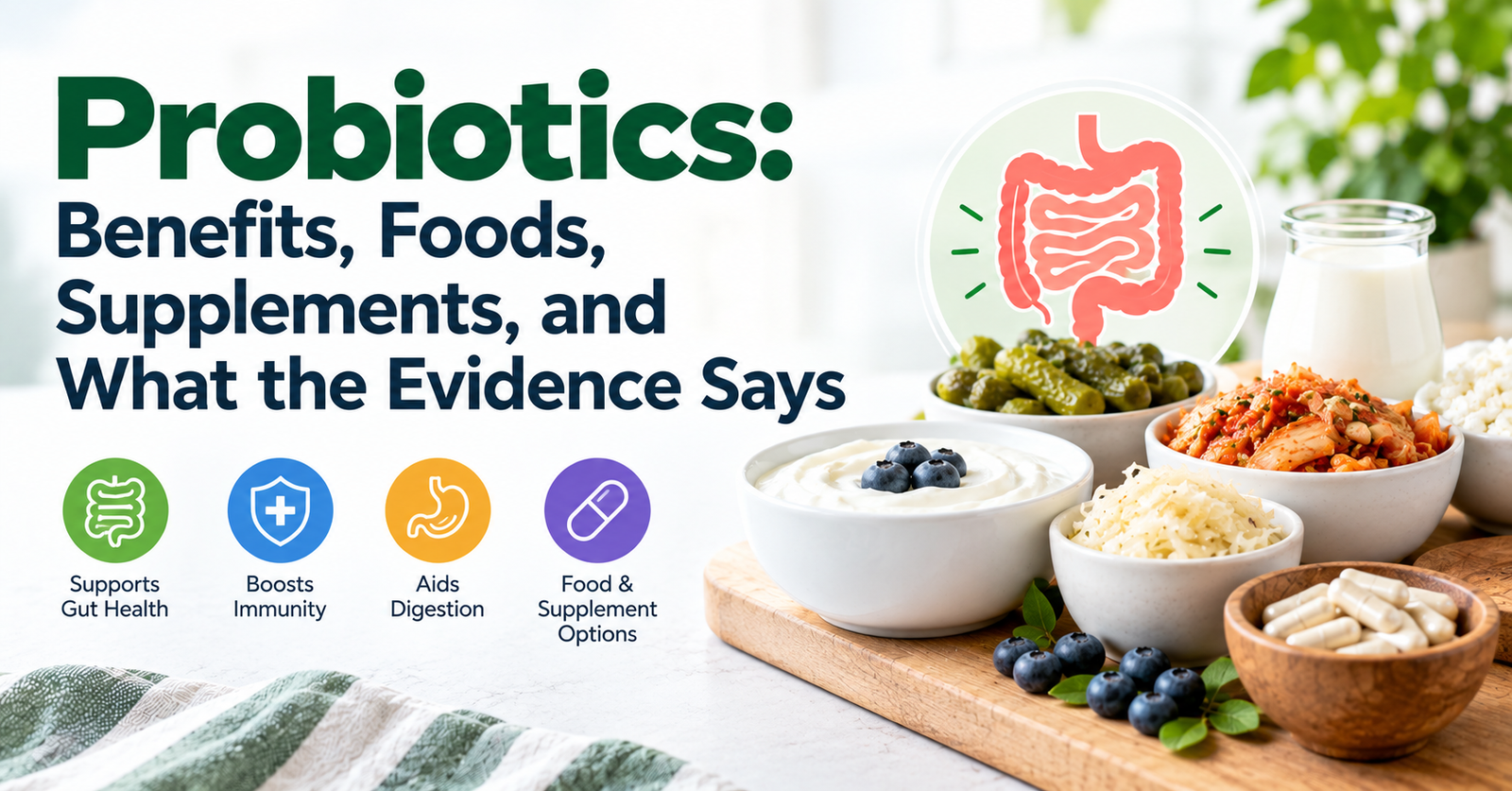

Probiotics show up everywhere: yogurt cups, gummies, capsules, and even sodas. Marketers promise better digestion, stronger immunity, and more. So what do probiotics actually do, and which claims hold up?
This guide explains what probiotics are, where the evidence is strong, and where it falls short. You will also find the best probiotic foods, tips for choosing a supplement, and safety guidance. Digestive complaints rank among the most common health issues, so it helps to separate science from hype.
What Are Probiotics?
Scientists define probiotics as live microorganisms that, when given in adequate amounts, provide a health benefit. An expert panel from the International Scientific Association for Probiotics and Prebiotics (ISAPP) set that definition in a 2014 consensus statement. Most probiotics are bacteria, but some are yeasts, according to the NIH Office of Dietary Supplements.
Two words in that definition matter: live and benefit. A product needs living microbes, and it needs proof of a health benefit. The NIH notes that not every food or supplement labeled “probiotic” has proven benefits.
Probiotics, Prebiotics, Synbiotics, and Fermented Foods
These terms often get mixed up. The ISAPP definitions help clear them up.
| Term | What it means | Example |
|---|---|---|
| Probiotic | Live microbes with a demonstrated health benefit | A specific strain of Lactobacillus |
| Prebiotic | A substrate that beneficial gut microbes use as food | Inulin |
| Synbiotic | A mix of live microbes and a substrate they use | A supplement with both |
| Fermented food | Food made through microbial growth; may not contain proven probiotics | Sauerkraut |
Why Strain Matters
Probiotic effects depend on the strain, not just the species. ISAPP explains that you need the genus, species, and strain to know what you are getting. One strain may help with one problem and do nothing for another. That is why broad claims about “probiotics” often mislead.
What the Evidence Says: Benefits by Condition
Research on probiotics is large but uneven. The best results come from specific strains used for specific problems. This table summarizes the current picture.
| Use | What the evidence suggests |
|---|---|
| Preventing antibiotic-associated diarrhea | Some benefit, strain-specific |
| Preventing C. difficile infection | AGA suggests certain probiotics for adults and children on antibiotics |
| Preterm, low-birth-weight infants | Specific strains lower the risk of a serious gut illness, but only under hospital care |
| Pouchitis | AGA suggests a specific combination |
| Irritable bowel syndrome (IBS) | ACG suggests against using probiotics for overall symptoms |
| Crohn’s disease and ulcerative colitis | AGA recommends use only in clinical trials |
| Acid reflux | Early, low-quality evidence |
Antibiotic-Related Diarrhea
Antibiotics can disturb your gut bacteria, and diarrhea often follows. The National Center for Complementary and Integrative Health (NCCIH) says probiotics show promise for preventing antibiotic-associated diarrhea, including diarrhea from Clostridioides difficile.
C. difficile is a bacterial infection that can cause severe diarrhea after antibiotics. A Cochrane review found moderate-certainty evidence that probiotics help prevent it, especially when the baseline risk is above 5%. The American Gastroenterological Association (AGA) suggests certain probiotics for adults and children who take antibiotics. It recommends probiotics for treating an existing infection only in clinical trials.
Irritable Bowel Syndrome
IBS is common, and many people try probiotics. Still, the American College of Gastroenterology (ACG) guideline suggests against probiotics for overall IBS symptoms. NCCIH reports that the recommendation is conditional and rests on very low-quality evidence. Some strains may help some people, but benefits are not proven, and products differ.
Our overview of common digestive problems explains how IBS differs from other conditions.
Crohn’s Disease and Ulcerative Colitis
The AGA found too little evidence to recommend probiotics for these inflammatory bowel diseases outside clinical trials. The guideline chair advised people taking probiotics for these conditions to consider stopping and to talk with their doctor. Supplements can be costly, and the evidence cannot confirm benefit or lack of harm.
Acid Reflux and Upper Gut Symptoms
Some people wonder whether probiotics ease reflux. A systematic review of 13 studies found that most comparisons reported symptom benefits. The studies varied in quality, and the authors work for a nutrition company. They called for larger, better trials.
So probiotics are not a proven reflux treatment. Our guide on how to manage acid reflux at home covers proven steps, and our article on acid reflux risk factors explains what raises your odds. Reflux often starts early, so see acid reflux in your 30s. New symptoms later in life need a check, as acid reflux in your 50s explains.
Immunity, Mood, Weight, and Other Claims
NCCIH says strong evidence for most other uses is lacking. It lists some evidence for acute diarrhea, antibiotic-associated diarrhea, and eczema in infants. Claims about weight loss, mood, or immunity remain unproven, so approach them with caution. If weight is your goal, our overview of weight loss trends in 2026 can help you choose sustainable methods.
Probiotic Foods
Food is the easiest place to start. Fermented foods carry live microbes and often add nutrients too.
What Research Shows About Fermented Foods
A Stanford trial randomized 36 healthy adults to a high-fermented-food diet or a high-fiber diet for 10 weeks. The fermented-food group had more diverse gut microbes and lower levels of 19 inflammatory proteins, according to the Stanford Medicine report. The trial was small and short, so treat it as encouraging, not conclusive.
Fermented foods are not automatically probiotics. The NIH says yogurt may contain proven probiotic microorganisms. Many cheeses, kimchi, kombucha, sauerkraut, miso, and pickles contain live cultures but do not typically contain proven probiotic strains. The ISAPP consensus on fermented foods draws the same line.
Common Probiotic and Fermented Foods
| Food | Live cultures? | Tip |
|---|---|---|
| Yogurt | Often, if labeled “live and active cultures” | Choose plain, low-sugar versions |
| Kefir | Yes, in most products | Try plain kefir in smoothies |
| Kimchi and sauerkraut | Yes, if refrigerated and unpasteurized | Watch the sodium |
| Kombucha | Often | Check sugar and caffeine |
| Miso and tempeh | Yes, but cooking heat kills microbes | Add miso after cooking |
| Aged cheese | Sometimes | Not a reliable source |
Our article on whether yogurt is good for health covers yogurt in depth. Kefir and tempeh also supply protein, as our guide to high-protein foods explains.
Probiotic Supplements
Supplements offer higher doses of specific strains. They also cost more and vary widely in quality.
Do You Need One?
Most healthy people do not. NCCIH notes that strong evidence for most uses is lacking. Food can supply live microbes at lower cost. A supplement makes the most sense when a doctor recommends a specific strain for a specific problem.
How to Choose a Supplement
Use this checklist:
- Match the strain to your goal. Look for strains studied for your condition.
- Check the label for genus, species, and strain. ISAPP says you need all three.
- Look for CFU through the end of shelf life. CFU means colony-forming units, the count of live cells. The NIH advises avoiding labels that give counts only at manufacture.
- Do not chase huge numbers. Many products contain 1 to 10 billion CFU. Higher counts are not necessarily more effective, the NIH notes.
- Remember the regulatory limits. The FDA has not approved any health claims for probiotics.
- Store the product as directed. Heat can kill live cells.
Strains With the Best Evidence
Strain matters most for antibiotic-related diarrhea. A review of guideline evidence notes that a Canadian health agency strongly recommended Lactobacillus rhamnosus GG and Saccharomyces boulardii for preventing antibiotic-associated diarrhea in children. Ask your doctor or pharmacist which product fits your situation.
Side Effects
Studies suggest probiotics usually cause few side effects. Some people notice mild gas or bloating at first. Serious problems are rare but more likely in people with underlying illness.
Safety: Who Should Talk to a Doctor First
Probiotics suit most people, but some groups need medical advice first. ISAPP advises talking to a doctor if you have an immune disorder, a serious underlying illness, or short bowel syndrome. Ask before you give them to a young infant.
Premature infants need special caution. In 2023, the FDA warned health care providers that premature infants given probiotics face a risk of severe, potentially fatal infections, NCCIH reports. Hospital teams decide on probiotics for these babies. Parents should never start them on their own.
Long-term safety data remain limited. Discuss any daily supplement with your healthcare provider.
Supporting Your Gut Every Day
Probiotics are one tool among many. Everyday habits often matter more.
- Eat plenty of fiber. Fiber-rich foods feed your gut bacteria. Our guide to high-fiber foods for digestive health offers 20 choices.
- Eat a varied diet. Our guide to what makes a healthy diet shows how to build balanced meals.
- Plan meals carefully if you fast. If you follow intermittent fasting, make sure your eating window includes fiber and fermented foods.
- Take antibiotics only when prescribed. Ask your doctor about probiotics if you need a course.
- Try gentle soothers. Some people sip ginger tea for an upset stomach. Ginger is not a probiotic, and our article on whether ginger is good for health explains the evidence.
When to See a Doctor
Do not use probiotics to treat serious symptoms on your own. See a doctor if you have:
- Severe or watery diarrhea during or after antibiotics
- Blood in your stool, or black, tarry stools
- Unplanned weight loss
- Fever with digestive symptoms
- Persistent belly pain. Our guide on what abdominal pain feels like can help you describe it.
- Heartburn that keeps returning. Our guide on how acid reflux is diagnosed explains next steps.
Frequently Asked Questions
Are probiotics safe to take every day?
Most healthy adults tolerate them well. Long-term safety data are limited, and people with weakened immune systems or serious illness face higher risk. Ask your doctor first.
Which foods have the most probiotics?
Yogurt with live cultures and kefir are reliable choices. Refrigerated kimchi and sauerkraut also carry live microbes. Not all fermented foods contain proven probiotic strains.
Should I take probiotics with antibiotics?
The AGA suggests certain probiotics for preventing C. difficile infection in adults and children on antibiotics. Strain matters, so ask your doctor or pharmacist which product to use.
Can probiotics help with bloating or IBS?
The evidence does not support probiotics as a class for IBS. Some people notice benefits from specific products. Talk with your doctor before you rely on them.
Key Takeaways
- Probiotics are live microbes that provide a proven health benefit, and effects depend on the strain.
- The best evidence supports certain strains for preventing antibiotic-related and C. difficile diarrhea.
- Guidelines do not support probiotics for IBS, Crohn’s disease, or ulcerative colitis outside clinical trials.
- Evidence for reflux, mood, weight, and immunity remains early or lacking.
- Fermented foods offer an easy, low-cost start, though not all contain proven probiotics.
- Choose supplements by strain and CFU at end of shelf life, and check with a doctor if you are ill or immunocompromised.
- Premature infants need medical supervision for any probiotic.
Probiotics work best as one part of a healthy routine, not a shortcut. Pair them with fiber, varied meals, movement, and good sleep. Our guide on how to live a healthy lifestyle shows how the pieces fit together.
This article offers general education and does not replace personal medical advice. Talk with a qualified healthcare professional before you start a probiotic, especially if you are ill, pregnant, immunocompromised, or caring for an infant.
Read our full Medical Disclaimer.
References
- Hill C, Guarner F, Reid G, et al. The International Scientific Association for Probiotics and Prebiotics Consensus Statement on the Scope and Appropriate Use of the Term Probiotic. Nat Rev Gastroenterol Hepatol. 2014;11:506-514.
- ISAPP. A Roundup of the ISAPP Consensus Definitions: Probiotics, Prebiotics, Synbiotics, Postbiotics and Fermented Foods.
- ISAPP. Deciphering a Probiotic Label.
- Marco ML, Sanders ME, Gänzle M, et al. The International Scientific Association for Probiotics and Prebiotics (ISAPP) Consensus Statement on Fermented Foods. Nat Rev Gastroenterol Hepatol. 2021.
- NIH Office of Dietary Supplements. Probiotics: Fact Sheet for Health Professionals.
- National Center for Complementary and Integrative Health. Probiotics: Usefulness and Safety.
- National Center for Complementary and Integrative Health. 5 Things To Know About Probiotics.
- National Center for Complementary and Integrative Health. Irritable Bowel Syndrome and Complementary Health Approaches: What the Science Says.
- Lacy BE, Pimentel M, Brenner DM, et al. ACG Clinical Guideline: Management of Irritable Bowel Syndrome. Am J Gastroenterol. 2021;116(1):17-44.
- Su GL, Ko CW, Bercik P, et al. AGA Clinical Practice Guidelines on the Role of Probiotics in the Management of Gastrointestinal Disorders. Gastroenterology. 2020.
- American Gastroenterological Association. AGA Does Not Recommend the Use of Probiotics for Most Digestive Conditions.
- Goldenberg JZ, Yap C, Lytvyn L, et al. Probiotics for the Prevention of Clostridium difficile-Associated Diarrhea in Adults and Children. Cochrane Database Syst Rev. 2017;12:CD006095.
- Cheng J, Ouwehand AC. Gastroesophageal Reflux Disease and Probiotics: A Systematic Review. Nutrients. 2020;12(1):132.
- Wastyk HC, Fragiadakis GK, Perelman D, et al. Gut-Microbiota-Targeted Diets Modulate Human Immune Status. Cell. 2021;184(16):4137-4153.
- Stanford Medicine. Fermented-Food Diet Increases Microbiome Diversity, Decreases Inflammatory Proteins, Study Finds.
- Probiotics for the Prevention of Antibiotic-Associated Diarrhea. PubMed Central.
5 thoughts on “Probiotics: Benefits, Foods, Supplements, and What the Evidence Says”
Comments are closed.