
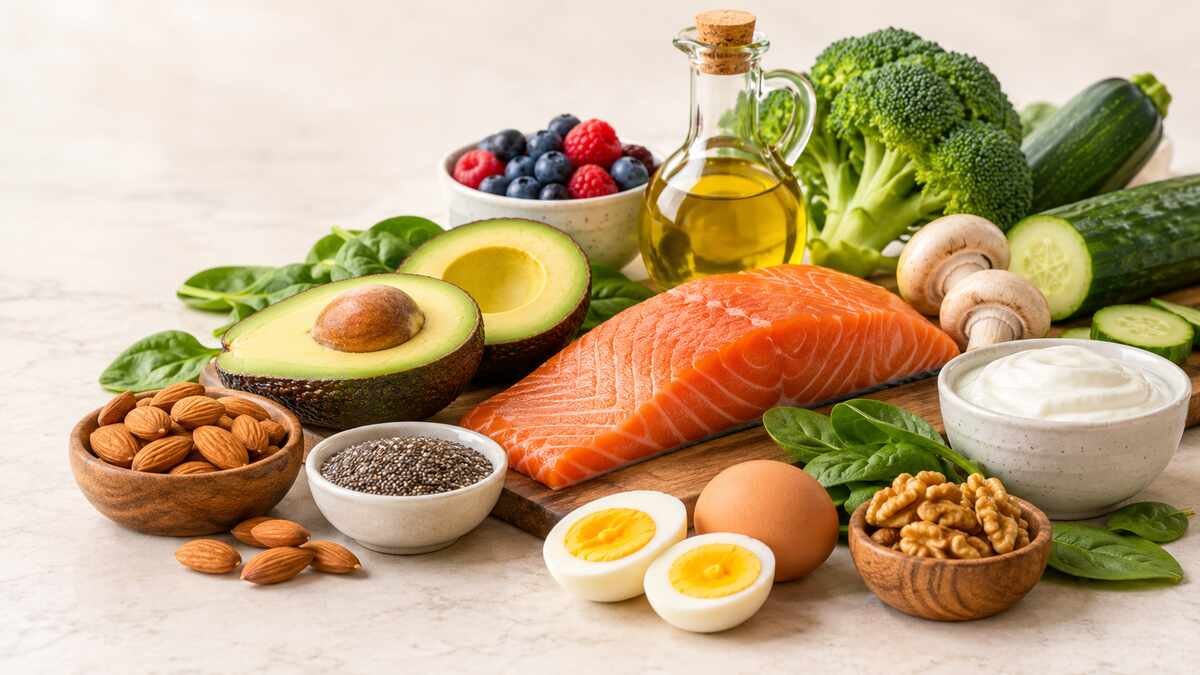

Understanding what to eat on the keto diet starts with learning how this dietary pattern changes the balance of carbohydrates, fats, and protein. Although the ketogenic diet is widely discussed for its potential health applications, its nutritional restrictions and suitability vary from person to person. Different versions exist, and food choices can differ quite a bit between them.
That is why food composition and food quality matter. Two people can both be “on keto” and eat very different diets, one built around olive oil, fish, and vegetables, the other around processed meats and packaged “keto” snacks. Nutritional adequacy and individual health needs should guide any dietary choice, not a food list alone.
This guide explains the food categories commonly associated with ketogenic eating, what they contribute nutritionally, and which foods are often limited. It is educational, not a meal plan, and it does not recommend that anyone start keto. For broader background, see our keto diet for beginners guide and our article on whether the keto diet is safe long term.
What Is the Keto Diet?
The keto diet is a low-carbohydrate, high-fat eating pattern designed to shift the body’s main fuel source. Knowing the basics makes the food categories later in this guide easier to understand.
Understanding the Ketogenic Diet
A ketogenic diet is very low in carbohydrates, high in fat, and moderate in protein. Healthdirect Australia describes it as a low-carbohydrate, high-fat diet that has benefits as a medical treatment for certain groups of people.
It differs from other low-carbohydrate patterns. Many low-carb diets allow more carbohydrate and may not produce ketosis. The Harvard T.H. Chan School of Public Health notes that there is no single standard ketogenic diet with a fixed ratio of carbohydrate, protein, and fat, and that food lists can vary and even conflict depending on the source.
How Does Ketosis Work?
The body normally uses glucose from carbohydrates as a primary energy source. When carbohydrate availability drops substantially, the liver produces ketones from fat, and tissues including the brain can use them for energy. This metabolic state is called nutritional ketosis.
Nutritional ketosis is different from diabetic ketoacidosis, a dangerous medical emergency. UCLA Health explains the distinction, which is especially important for people with diabetes.
Why Do People Follow the Keto Diet?
The ketogenic diet has an established clinical role in certain types of epilepsy, particularly drug-resistant epilepsy in children. HealthyChildren.org notes that children on this therapy are followed by a medical team and that it is not something to try on your own.
Outside of epilepsy, interest in keto comes largely from nutrition and metabolic health conversations. Popularity does not mean it benefits everyone, and it should not be presented as a universal approach to healthy eating.
Understanding Nutrition in the Keto Diet
Keto changes the proportions of the three main macronutrients. Understanding each one helps explain why some foods fit the pattern and others do not.
The Role of Carbohydrates
Carbohydrates are an important energy source. They are found in fruits, grains, vegetables, legumes, and dairy, and they often come packaged with fiber, vitamins, and minerals.
Traditional ketogenic approaches restrict carbohydrates substantially because higher intake makes it harder to maintain ketosis. That restriction is a feature of the diet’s design, not a statement that carbohydrate-containing foods are unhealthy.
The Importance of Dietary Fats
Fat supplies concentrated energy and helps the body absorb fat-soluble vitamins. Unsaturated fats, found in foods such as olive oil, avocados, nuts, and fatty fish, are generally associated with better cardiovascular health. Saturated fats, found in foods such as fatty meat, butter, and cream, can raise LDL cholesterol in many people.
Fat quality matters on any diet, and it matters even more when fat makes up most of your calories. Our guide to healthy fats explains the differences in more detail.
Why Protein Matters
Protein supports tissue maintenance, growth, and many normal body functions. It comes from both animal sources, such as eggs, fish, and poultry, and plant sources, such as tofu, legumes, nuts, and seeds.
Protein needs vary by age, activity level, and health status. Children, teens, older adults, and people with certain medical conditions may all have different requirements. See our list of high-protein foods for examples.
Food Categories Commonly Included in the Keto Diet
The categories below describe foods commonly associated with ketogenic eating. UChicago Medicine lists fatty fish, eggs, dairy, meat, butter, oils, nuts, seeds, and low-carbohydrate vegetables among them. Listing a food here does not mean it is necessary or that everyone should eat it.
Protein-Rich Foods
Protein sources commonly featured include eggs, fish and seafood, poultry, meat, and plant-based options such as tofu. These foods provide essential amino acids along with nutrients such as iron, zinc, B vitamins, and, in the case of fish, omega-3 fats.
Variety and minimal processing matter. Harvard Health Publishing cautions that a ketogenic diet can be heavy on red meat and other fatty, processed, and salty foods, which are generally considered less healthy. Relying heavily on processed meats such as bacon and sausage is not a nutritionally balanced approach. Learn more in our guides to eggs and fatty fish.
Sources of Dietary Fats
Common fat sources include avocados, olive oil, nuts, seeds, fatty fish, and other plant oils. The Harvard T.H. Chan School of Public Health notes that the diet can be modified to emphasize foods lower in saturated fat, such as olive oil, avocado, nuts, seeds, and fatty fish.
This distinction matters for heart health. Fat quality is not interchangeable, and a high-fat diet is not automatically a healthy one. Read more about avocado and olive oil.
Non-Starchy Vegetables
Vegetables frequently associated with ketogenic eating include broccoli, cauliflower, spinach, cucumber, bell peppers, zucchini, lettuce, and mushrooms. They contribute fiber, vitamins, minerals, and beneficial plant compounds while contributing relatively little carbohydrate.
They also help address one of the diet’s main nutritional gaps. Our guides to cruciferous vegetables, vegetables high in vitamin C, and raw vs. cooked vegetables can help you get more from them.
Dairy Products and Alternatives
Plain yogurt, cheese, and unsweetened plant-based milk alternatives are often included. Their nutritional profiles vary widely. Some products are higher in protein and calcium, while others are high in saturated fat, sodium, or added sugar.
Reading labels helps. Flavored yogurts and sweetened plant beverages can contain significant added sugar. See our guide to yogurt health benefits for more on dairy choices.
Nuts and Seeds
Almonds, walnuts, chia seeds, flaxseeds, pumpkin seeds, and sunflower seeds are common choices. They contribute fiber, unsaturated fats, minerals such as magnesium, and plant protein.
Portions matter because nuts and seeds are energy dense. Explore our guides to nuts and chia seeds for more detail.
Fruits and Other Plant Foods
Some ketogenic approaches include selected fruits, such as berries, in limited amounts. Fruit provides vitamins, minerals, fiber, and beneficial plant compounds, and it is not unhealthy. Berries are often chosen because they contain less carbohydrate than many other fruits.
Limiting fruit is a feature of the diet’s structure, not evidence that fruit harms health. See our guide to blueberries as one example.
Foods Commonly Limited in Traditional Keto Diets
Traditional ketogenic approaches commonly limit bread and other grain-based foods, rice and pasta, potatoes and other starchy vegetables, beans and lentils, many fruits, and sugar-sweetened beverages and sweets. The reason is carbohydrate content, which can make maintaining nutritional ketosis harder.
That does not mean these foods are unhealthy. Whole grains provide fiber and micronutrients, fruits supply vitamins and antioxidants, legumes offer plant protein and fiber, and starchy vegetables provide energy and valuable nutrients. Our guides to legumes and starchy vs. non-starchy vegetables explain their roles.
A food’s carbohydrate content does not determine whether it is healthy. Sweets and sugary drinks are generally best limited on any diet, but whole carbohydrate foods can be part of a nutritious pattern.
Nutritional Considerations When Evaluating Keto Foods
A food list is only part of the picture. These considerations help you judge the overall quality of any ketogenic eating pattern.
Getting Enough Dietary Fiber
Fiber supports digestive health and regular bowel movements. Vegetables, nuts, seeds, and other plant foods supply fiber on keto, but restricting grains, legumes, and fruit can make adequate intake harder.
Constipation is among the more commonly reported side effects. Our guide to high-fiber foods for digestive health offers useful context.
Choosing Better Sources of Dietary Fat
Unsaturated fats are generally preferred, and excessive saturated fat can be a concern for cholesterol and heart health. Dietary variety and overall nutritional quality matter more than any one food.
Individual cholesterol responses differ, so people who follow a high-fat diet may benefit from medical monitoring, especially if they have existing heart or lipid conditions.
Understanding Vitamins and Minerals
Potassium, magnesium, calcium, and other micronutrients are essential for muscles, nerves, bones, and heart function. The Harvard T.H. Chan School of Public Health notes that nutrient deficiencies may arise if a variety of recommended foods are not included.
Adequacy should be evaluated rather than assumed, ideally with a registered dietitian. Our guide to nutrient-dense foods can help you think about variety.
Maintaining Overall Dietary Balance
A healthy eating pattern should provide enough energy, protein, fiber, and micronutrients to support normal growth, development, and daily activity. A balanced diet usually does this without eliminating whole food groups.
Potential Benefits and Limitations of the Keto Diet
The keto diet has real clinical uses, but evidence for broader claims is more limited.
Potential Clinical Applications
Medically supervised ketogenic therapy has an established role in certain epilepsy cases. Research has also explored metabolic applications. Harvard Health Publishing notes that it has been shown to improve blood sugar control in people with type 2 diabetes, at least in the short term, but that long-term research is lacking.
Clinical results do not automatically apply to everyone. The Harvard T.H. Chan School of Public Health points out that most weight loss studies were small, short term (12 weeks or less), and often lacked control groups. Differences compared with conventional diets at one year were not significant.
Potential Limitations
Common limitations include restricted food variety, possible inadequate fiber and micronutrient intake, digestive side effects, and changes in blood lipids in some people. Many people also find it difficult to maintain. The Harvard T.H. Chan School of Public Health notes that eliminating several food groups and unpleasant symptoms may make adherence difficult.
Long-term safety and effectiveness depend on individual circumstances, and evidence differs across medical conditions and intended uses. For deeper discussion, see our article on long-term keto safety.
Who Should Be Careful With the Keto Diet?
Some groups should talk with a healthcare professional before considering any ketogenic diet.
- Children and teenagers. They have specific nutritional needs for growth and development. Ketogenic therapy for epilepsy is a specialized treatment that requires medical supervision, and teens should not start keto on their own.
- Pregnant and breastfeeding individuals. Nutritional needs change, and restrictive diets require individualized advice.
- People with kidney, liver, pancreatic, or other relevant conditions. UChicago Medicine notes that keto is not considered safe for people with conditions involving the pancreas, liver, thyroid, or gallbladder.
- People taking medications that affect blood glucose or metabolism. Doses may need adjusting, and some drug combinations carry serious risks.
- People with a history of disordered eating. UChicago Medicine notes that strict diets like keto could contribute to social isolation or disordered eating.
A medically prescribed ketogenic diet is different from self-directed restrictive dieting. A doctor and registered dietitian should be involved before considering a therapeutic version.
Common Mistakes and Misconceptions About Keto Foods
Several misunderstandings come up often.
- “All high-fat foods are healthy.” Fat quality matters, and many high-fat foods are also high in saturated fat or heavily processed.
- “More fat is always better.” Eating more fat does not automatically improve nutritional outcomes.
- Overlooking fiber. Fiber can fall quickly when grains, legumes, and fruit are limited.
- “All carbohydrates are unhealthy.” Many carbohydrate-containing foods are nutrient-rich.
- “Keto suits everyone.” It does not, as the groups above show.
- “Keto-friendly labels guarantee quality.” UChicago Medicine notes that keto-branded products are costly and unnecessary. A label says little about overall nutrition.
Frequently Asked Questions About the Keto Diet
What is the keto diet?
The keto diet is a very low-carbohydrate, high-fat eating pattern that shifts the body toward producing ketones for fuel. It began as a medical therapy for epilepsy, as Healthdirect explains.
What foods are commonly associated with the ketogenic diet?
Common foods include eggs, fish, poultry, meat, avocados, olive oil, nuts, seeds, non-starchy vegetables, and some dairy. Choices vary by version of the diet, and food quality matters.
What vegetables are included in traditional keto diets?
Non-starchy vegetables such as broccoli, cauliflower, spinach, cucumber, bell peppers, zucchini, lettuce, and mushrooms are typical. Starchy vegetables such as potatoes are usually limited.
Can fruit be part of a ketogenic diet?
Some versions include small amounts of lower-carbohydrate fruits such as berries. Fruit is nutritious, and limiting it is a feature of the diet’s design, not a sign that fruit is unhealthy.
Why does the keto diet limit carbohydrates?
Carbohydrates raise blood glucose and make it harder for the body to produce ketones. Restricting them is how the diet aims to maintain ketosis, as the Harvard T.H. Chan School of Public Health describes.
Is the keto diet healthy for everyone?
No. Age, medical conditions, medications, and nutritional needs all affect suitability, and long-term evidence is limited. A healthcare professional can help you decide whether it fits your situation.
Can teenagers follow a ketogenic diet?
Teens should not follow a ketogenic diet on their own because growth and development require adequate nutrition. When used for epilepsy, it is a medical treatment supervised by a specialist team, as HealthyChildren.org explains.
Is medical supervision necessary for therapeutic ketogenic diets?
Yes. Therapeutic ketogenic diets need monitoring by a doctor and registered dietitian to protect nutrition, growth, and overall health, particularly in children and people with medical conditions.
Conclusion
The ketogenic diet is a specific low-carbohydrate, high-fat dietary pattern, and its food choices differ from conventional balanced eating. Nutritional quality matters more than labeling a food keto-friendly, and restrictive diets are not suitable for everyone.
If you are curious about the keto diet, individual nutritional needs should guide your decisions. Seek reliable nutrition information, and talk with a qualified healthcare professional or registered dietitian before making major changes to how you eat.
Sources
- Healthdirect Australia: Ketogenic diet
- Harvard T.H. Chan School of Public Health: Diet Review, Ketogenic Diet for Weight Loss
- Harvard Health Publishing: Ketogenic diet, Is the ultimate low-carb diet good for you?
- UChicago Medicine: Ketogenic diet, What are the risks?
- HealthyChildren.org: Ketogenic Diet, Treating Children’s Seizures with Food
- UCLA Health: Ketosis and ketoacidosis sound similar, but not the same thing
Medical Disclaimer: This article is for general educational purposes only and is not medical advice. It does not diagnose, treat, or replace guidance from a doctor, registered dietitian, or other qualified healthcare professional who knows your health history. Talk with a healthcare professional before changing your diet, especially if you have a medical condition, take medication, are pregnant or breastfeeding, or are making dietary decisions for a child or teen.