
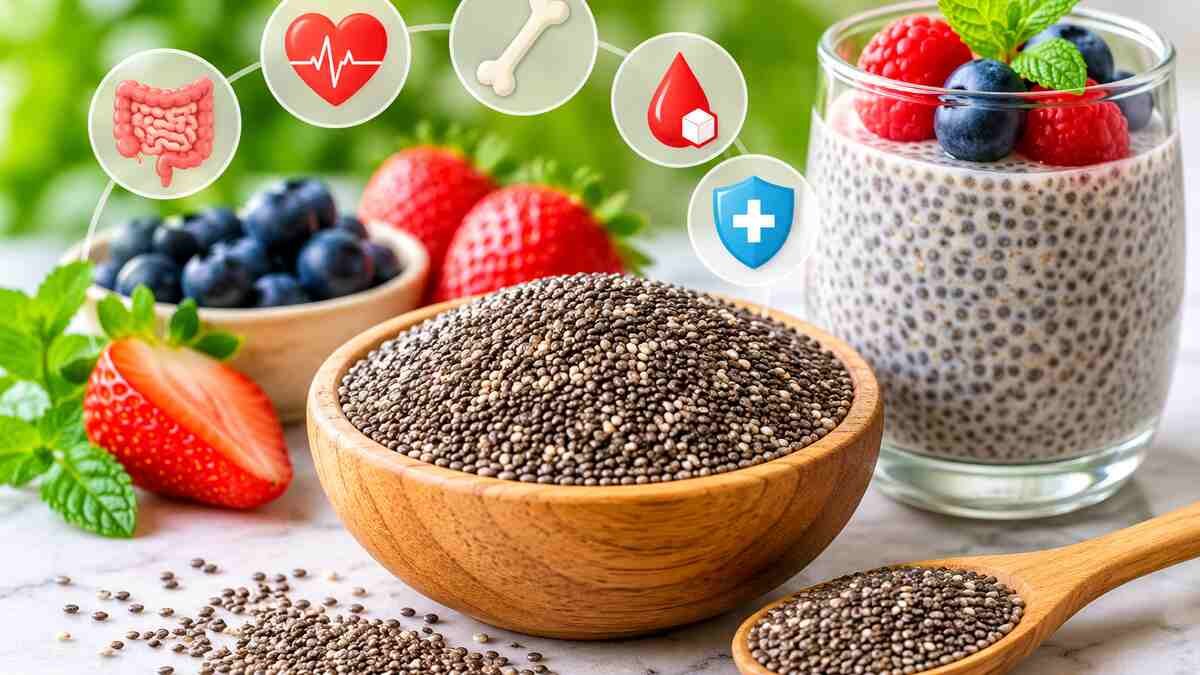

Tiny, mild in flavor, and easy to stir into almost anything, chia seeds have become a staple in pantries across the country. They show up in puddings, smoothies, oatmeal, and even drinks. Part of their popularity comes from a nutrition profile that packs a lot into a small serving.
Chia seeds provide dietary fiber, plant-based omega-3 fatty acids, protein, and several minerals. These nutrients may support digestion, heart-conscious eating, and overall nutrition when chia seeds are part of a varied diet. Still, not every claim you see online has strong clinical evidence behind it.
This guide covers what chia seeds are, what they contain, and 10 potential benefits, with honest notes on how strong the research is. You will also learn how to eat them safely, how much is reasonable, and what precautions matter. For more ideas, browse our list of nutrient-dense foods.
What Are Chia Seeds?
Chia seeds are the edible seeds of Salvia hispanica, a flowering plant in the mint family. The plant is native to Mexico and Central America, where the seeds were a traditional food for centuries. Harvard Health notes that they were a staple for the Aztecs and Mayans.
Today, chia seeds are sold whole, milled, and in many packaged foods. They have a nutty, mild taste and a distinctive habit: when they get wet, they swell and form a gel.
Black vs. White Chia Seeds
Both black and white chia seeds are widely available. According to the Harvard T.H. Chan School of Public Health, there is no meaningful nutritional difference between them. Color alone does not make one variety better than the other.
Why Are Chia Seeds Considered Nutrient-Dense?
A small serving delivers fiber, unsaturated fats, plant protein, and minerals for relatively few calories. That nutrient-to-calorie ratio is why people call them nutrient-dense.
You will often see chia seeds labeled a “superfood.” That word is a marketing term, not a scientific category. Chia seeds are a nutritious food, but they are not a cure-all.
Chia Seeds Nutrition Facts
The nutrition profile below is the foundation for most of the benefits discussed later.
Nutritional Value of Chia Seeds
| Nutrient | Approximate amount (1 ounce, or 28 g) |
|---|---|
| Calories | 140 |
| Protein | 4 g |
| Dietary fiber | 11 g |
| Total fat | 9 g |
| Unsaturated fat | 7 g |
| Calcium | 18% DV |
| Omega-3 fatty acid (ALA) | Approximately 5 g |
Approximate values for about 2 tablespoons. Values vary by product and database. Source: Harvard T.H. Chan School of Public Health and USDA FoodData Central.
Dietary Fiber
Chia seeds contain both soluble and insoluble fiber. The Harvard Chan School describes the fiber as mainly soluble fiber and mucilage, which is the substance behind the gel-like texture of soaked seeds. MedlinePlus also lists chia seeds as a good source of insoluble fiber.
Fiber supports regular bowel movements and adds bulk to meals. Our guide to high-fiber foods for digestive health shows other ways to reach your daily goal.
Plant-Based Omega-3 Fatty Acids
Chia seeds supply alpha-linolenic acid (ALA), an essential omega-3 fat the body cannot make on its own. ALA is different from EPA and DHA, the long-chain omega-3s found mainly in fatty fish and seafood. The body converts only a small share of ALA into EPA and DHA, so plant sources and seafood are not interchangeable.
Read more in our overview of omega-3 fatty acids and our guide to healthy fats.
Protein and Essential Minerals
Chia seeds provide plant protein, and the Harvard Chan School notes that it includes all nine essential amino acids. They also contain calcium, magnesium, phosphorus, iron, and zinc. These minerals help with normal body functions such as muscle and nerve activity and bone structure.
A small serving contributes to your daily intake, but chia seeds are not a complete solution to any nutrient shortfall. Diet variety still matters.
10 Potential Health Benefits of Chia Seeds
Chia seeds contain nutrients linked with several aspects of health. However, the strength of the evidence differs from one benefit to the next. A 2018 systematic review of human trials found that most pooled results showed no significant differences, and the quality of the evidence was low or very low. Memorial Sloan Kettering also notes that chia may have nutritional benefits, but evidence on specific clinical benefits is very limited.
Keep that context in mind as you read the list.
1. Supports Digestive Health
The fiber in chia seeds contributes to normal bowel function. Insoluble fiber adds stool bulk, while soluble fiber absorbs water and forms a gel when seeds are soaked. Together, they may help support regular bowel movements.
Increase intake gradually and drink enough fluids to limit gas and bloating. Our article on natural remedies for constipation covers other fiber-rich foods and daily habits.
2. Provides Plant-Based Omega-3 Fatty Acids
Chia seeds are an easy way to add ALA to meals, which is especially useful for people who eat little or no fish. ALA plays a role in normal cell function. It is not a substitute for EPA and DHA, so a varied diet is still the best approach.
3. May Support Heart Health
Chia seeds offer fiber and unsaturated fats, two features of a heart-conscious eating pattern. Fiber intake is also tied to cholesterol management in general. Our list of heart-healthy foods shows how chia seeds can fit alongside other choices.
The trial evidence is mixed. A 2024 meta-analysis of 10 randomized trials in overweight adults found no significant changes in cholesterol or triglycerides after chia supplementation. It did find a small drop in systolic blood pressure, with a smaller, non-significant change in diastolic pressure.
Chia seeds should not be viewed as a treatment for high cholesterol or high blood pressure. They also do not replace prescribed medication.
4. May Help Support Healthy Blood Sugar Responses
When chia seeds absorb water, they form a gel that can slow digestion. Fiber-containing foods can also make meals more balanced. Because of this, researchers have studied chia seeds and glucose responses.
The results are limited and inconsistent. The 2018 review reported a lower after-meal blood glucose only in a subgroup analysis at higher doses, while the 2024 meta-analysis found no significant change in fasting glucose or HbA1c. Chia seeds do not treat diabetes. If you manage blood sugar, our diabetes diet guide offers a broader framework.
5. Supports Bone Health
Chia seeds contain calcium, magnesium, and phosphorus, minerals involved in normal bone structure. They can add to your daily intake, particularly in plant-based diets.
They are not a standalone strategy for preventing osteoporosis. Pair them with other calcium-rich foods, adequate vitamin D, and physical activity.
6. May Promote Fullness and Satiety
Chia seeds soak up liquid and swell, which may contribute to a feeling of fullness. Adding them to yogurt, oatmeal, or smoothies can make a meal more satisfying.
Feeling full does not guarantee weight loss. Memorial Sloan Kettering notes that small studies suggest chia may add to feelings of fullness, but it did not appear to affect weight loss.
7. Provides Plant-Based Protein
Chia seeds offer protein with all nine essential amino acids. They pair well with beans, lentils, nuts, and soy foods in plant-forward meals.
A single serving provides only a few grams of protein, so it should not be your only protein source.
8. Contains Antioxidant Compounds
Chia seeds contain polyphenols and other plant compounds with antioxidant activity. In laboratory research, antioxidants can help limit oxidative damage to cells. That does not mean the same effect has been proven in people.
Consider antioxidant claims a promising area of study, not a guaranteed health outcome. For more on this topic, see our guide to anti-inflammatory foods. The 2024 meta-analysis did find a lower level of C-reactive protein, an inflammation marker, but these were short trials in a specific group.
9. Contributes to Overall Nutrient Intake
Adding chia seeds to everyday meals can increase your intake of fiber, minerals, protein, and unsaturated fats. Small additions like this can improve the variety and quality of a diet over time.
10. Offers a Convenient Plant-Based Food Option
Chia seeds fit vegetarian, vegan, dairy-free, and plant-forward eating patterns. They need no cooking and store well. They are naturally gluten-free, although cross-contamination can happen during processing, so people with celiac disease should look for certified gluten-free products.
Evidence note: A 2025 umbrella review of meta-analyses concluded that chia supplementation may offer modest benefits for blood pressure, lipids, inflammation, and central obesity. It also stressed that the certainty of the evidence ranged from moderate to low and that effects were uncertain. In short, the nutrition is well established, while disease-related benefits need more research.
How Chia Seeds Support Overall Wellness
Chia Seeds and a Fiber-Rich Diet
Many adults fall short on fiber. Chia seeds can help close that gap when they join fruits, vegetables, legumes, and whole grains. A tablespoon or two goes a long way.
Chia Seeds and Plant-Based Nutrition
For people who eat few animal foods, chia seeds add ALA and several minerals. They make a useful part of a plant-based plan, alongside other seeds, nuts, and legumes. Our guide to the health benefits of nuts is a good companion read.
Why the Overall Diet Matters
Chia seeds work best as one piece of a varied eating pattern. No single ingredient supplies every nutrient you need. A balanced diet, regular movement, good sleep, and routine medical care shape long-term health far more than any one food.
How to Eat Chia Seeds
Chia seeds are mild and blend into many dishes. Here are some easy ways to use them.
Add Chia Seeds to Breakfast
Stir them into oatmeal, overnight oats, yogurt, or whole-grain cereal. They also blend well into breakfast smoothies. The moisture in these foods helps the seeds soften.
Make Chia Seed Pudding
Mix chia seeds with milk or a fortified plant-based milk and let them sit until they thicken into a pudding-like texture. Top with fresh fruit or nuts for added flavor and nutrients. Soaking usually takes at least 10 to 15 minutes, and many people leave the mixture in the refrigerator overnight.
Add Them to Smoothies and Drinks
Soaked chia seeds can go into smoothies and other suitable drinks. They absorb liquid and thicken the texture over time. If you make chia water ahead of time, keep it refrigerated and use it within a few days.
Use Chia Seeds in Everyday Recipes
Sprinkle them on salads, stir them into soups, or add them to homemade bread and pancakes. The Harvard Chan School notes that chia seeds can be eaten whole because their surface breaks down easily in moisture, unlike flaxseeds. You do not need to grind them.
How Much Chia Seeds Should You Eat?
No medically prescribed daily amount exists for chia seeds. Recipes and nutrition guides commonly use about 1 to 2 tablespoons per serving. That is a practical range, not a target.
If you are not used to high-fiber foods, start with a smaller amount and increase slowly. Drink plenty of fluids and include other fiber sources too. Eating very large amounts is not recommended, and more is not necessarily better.
Potential Side Effects and Precautions
Chia seeds are nutritious, but they do not suit everyone in every form or amount.
Bloating and Digestive Discomfort
The high fiber content may cause gas, bloating, or abdominal discomfort, especially if you increase intake suddenly. A gradual approach and enough fluids usually help. Our guide on how to improve gut health has more on supporting digestion.
Choking and Swallowing Risks
Dry chia seeds absorb liquid and expand. Memorial Sloan Kettering advises never eating dry chia seeds on their own and describes a case report of seeds that expanded in a man’s throat and needed emergency removal. The Harvard Chan School also recommends eating seeds that are already soaked or mixed into a moist food, such as oatmeal or yogurt.
Take extra care if you have trouble swallowing or a digestive condition that affects the esophagus. Ask your healthcare professional before using chia seeds.
Allergic Reactions
Seed allergies are uncommon, but case reports of reactions to chia exist. Stop eating them and seek medical care if you notice symptoms such as hives, swelling, or trouble breathing.
Medication Considerations
Memorial Sloan Kettering lists blood pressure medication as a reason for caution. If you take medicines for blood pressure or blood sugar, talk with your healthcare professional before making large dietary changes or using concentrated chia products. Ordinary food portions do not automatically cause an interaction.
Chia Seeds vs. Flaxseeds
Chia and flax are both popular sources of fiber and ALA. Here is how they compare.
| Feature | Chia seeds | Flaxseeds |
|---|---|---|
| Omega-3 | Rich in ALA | Rich in ALA |
| Fiber | High | High |
| Protein | Plant-based protein | Plant-based protein |
| Preparation | Can be eaten whole | Ground flaxseed is easier to digest |
| Texture | Forms a gel when soaked | Nutty texture when ground |
Which Is Better for Everyday Nutrition?
Both offer valuable nutrients, and neither is clearly superior. Chia seeds are convenient because you can use them whole. Flaxseeds are usually ground so your body can access their nutrients. You can include both in a balanced diet.
Frequently Asked Questions
What are the main health benefits of chia seeds?
Chia seeds provide fiber, plant-based omega-3 fatty acids, protein, and minerals. They can support digestion and add to a balanced diet. Evidence for specific disease-related benefits is still limited, as noted in a 2018 systematic review.
Is it good to eat chia seeds every day?
Chia seeds can be part of a regular, balanced diet. Their fiber and nutrients make them a useful addition. Increase your intake gradually, soak or mix them into moist foods, and drink enough fluids.
Can chia seeds help with weight management?
Their fiber may add to a feeling of fullness, which can make meals more satisfying. However, chia seeds have not been shown to cause weight loss on their own. Memorial Sloan Kettering notes that a clinical trial found no effect on weight loss.
Are chia seeds good for gut health?
Their dietary fiber supports digestive function and regular bowel movements. Adding them slowly can reduce bloating and other digestive discomfort. Pair them with plenty of water and other high-fiber foods.
Should chia seeds be soaked before eating?
Soaking is a safe, practical way to let the seeds absorb liquid and form a gel. You can also mix them into moist foods such as yogurt or oatmeal. The Harvard Chan School advises against eating dry chia seeds by themselves.
Are black or white chia seeds healthier?
Both varieties have essentially the same nutrition. Neither color is considered superior for everyday use. Choose the one you prefer in color and price.
Conclusion
Chia seeds are a nutrient-dense food. Their fiber, ALA omega-3 fatty acids, plant protein, and minerals make them a valuable addition to a balanced diet. They are also versatile, affordable, and easy to use.
At the same time, their health benefits should not be exaggerated. Research on specific outcomes such as cholesterol, blood sugar, and weight is still limited and often mixed. Use chia seeds in suitable forms and amounts, keep your overall diet varied, and explore more healthy foods to include in your diet. Talk with a healthcare professional or registered dietitian if you have a medical condition or take medication.
Sources
- Harvard T.H. Chan School of Public Health. Chia Seeds: The Nutrition Source.
- Harvard Health Publishing. Chia seed benefits: What you need to know.
- MedlinePlus. Healthy food trends: Chia seeds.
- Teoh SL, Lai NM, Vanichkulpitak P, et al. Clinical evidence on dietary supplementation with chia seed (Salvia hispanica L.): a systematic review and meta-analysis. Nutrition Reviews. 2018.
- Karimi M, Pirzad S, Shirsalimi N, et al. Effects of chia seed supplementation on cardiometabolic health in overweight subjects: a systematic review and meta-analysis of RCTs. Nutrition & Metabolism. 2024.
- A Critical Review of the Health Benefits Associated with Chia Seeds (Salvia hispanica L.). Plant Foods for Human Nutrition. 2025.
- Memorial Sloan Kettering Cancer Center. Chia: Purported Benefits, Side Effects & More.
- Academy of Nutrition and Dietetics. What Are Chia Seeds?
- U.S. Department of Agriculture. FoodData Central: Seeds, chia seeds, dried.
Medical Disclaimer: This article is for general educational purposes only and is not a substitute for professional medical advice, diagnosis, or treatment. Nutrition needs vary from person to person. Talk with your doctor or a registered dietitian before making major changes to your diet, especially if you have a medical condition, trouble swallowing, a food allergy, or take medication.
2 thoughts on “Chia Seeds Health Benefits: Nutrition, Uses, and What Science Says”
Comments are closed.