
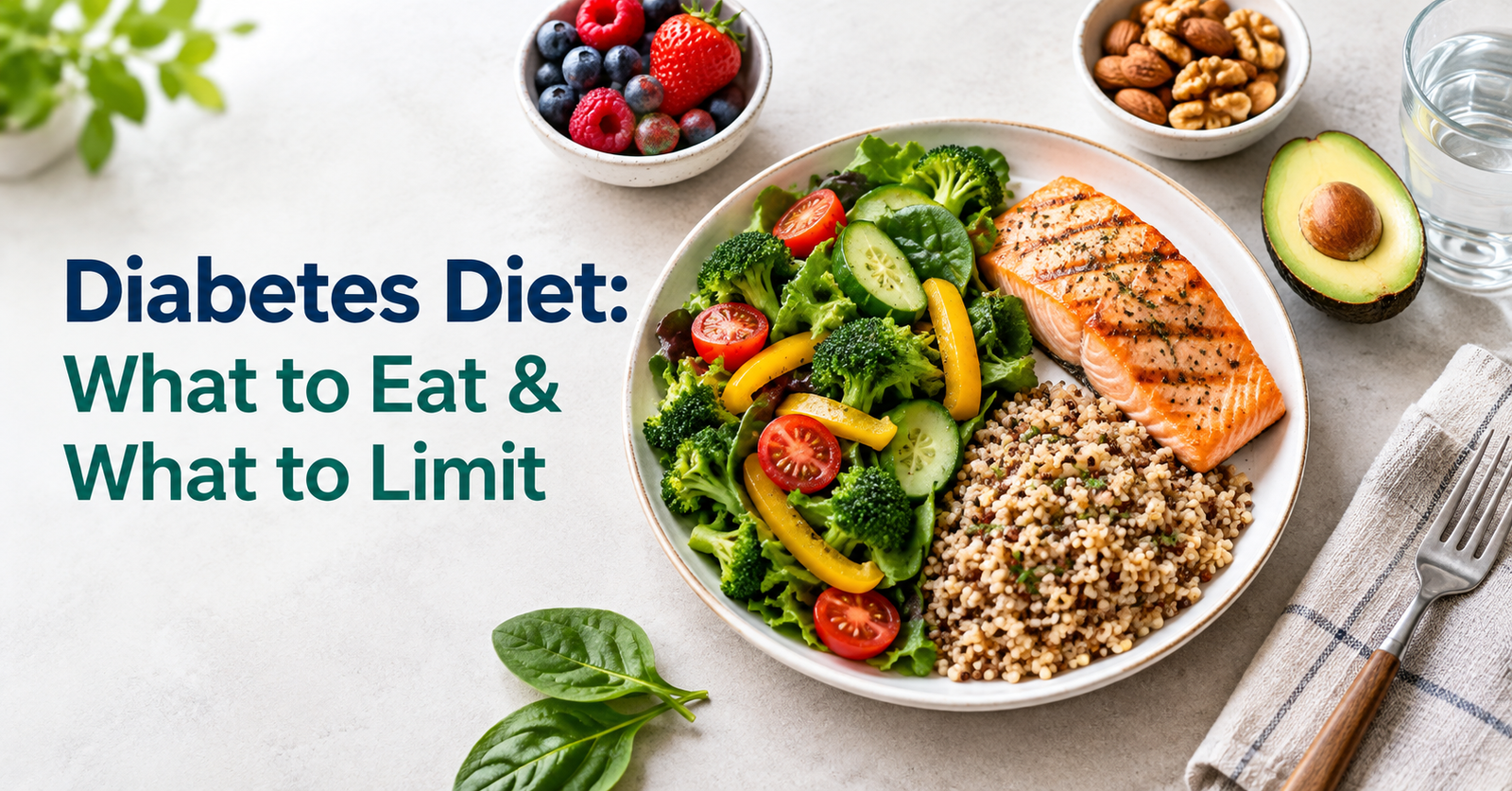

Hearing “you have diabetes” can make food feel complicated overnight. But a diabetes diet isn’t a strict list of banned foods. It’s a way of eating that pays closer attention to carbohydrates, portions, and balance.
This guide covers what a diabetes diet actually means. It also covers which foods to build meals around, which to limit, and how to plan meals using simple tools like the diabetes plate method.
What Is a Diabetes Diet?
There’s no single “diabetes diet” that fits everyone. Someone managing type 2 diabetes through lifestyle changes may eat differently than someone with type 1 diabetes who takes insulin at every meal.
Even so, most diabetes-friendly eating patterns share a few core ideas:
- Portion awareness. How much you eat matters as much as what you eat.
- Carbohydrate awareness. Carbs affect blood sugar more than any other nutrient.
- Fiber-rich foods. Vegetables, legumes, and whole grains slow digestion.
- Balanced protein and healthy fats. These help you feel full with less effect on blood glucose.
- Fewer added sugars and refined foods. Not eliminated, just limited.
According to the Mayo Clinic, a diabetes diet simply means eating a variety of healthy foods in moderate amounts on a fairly regular schedule. The CDC and NIDDK both stress that the best plan is one built with your care team, based on your own nutrition needs, schedule, and food preferences.
How Does Diet Affect Blood Sugar?
Not every nutrient affects blood glucose the same way. Carbohydrates have the biggest, most direct effect.
Carbohydrates and Blood Sugar
Carbs are found in bread, rice, pasta, fruit, milk, and sweets. Your body breaks them down into glucose, which enters your bloodstream. Insulin then helps move that glucose into your cells.
Not all carbs behave the same way:
- Refined carbs (white bread, white rice, sugary cereal) digest quickly. They can cause a fast rise in blood sugar.
- Fiber-rich carbs (vegetables, legumes, whole grains) digest more slowly. They produce a gentler rise.
Pairing carbs with protein, fat, or fiber can also slow how fast glucose enters your bloodstream. The American Diabetes Association notes this is one reason whole-grain toast with peanut butter affects blood sugar differently than toast alone.
For more on how blood sugar regulation can go wrong before diabetes develops, see our guide to insulin resistance.
Why Portion Size Matters
It’s easy to underestimate portions. This is especially true with carb-heavy foods like rice, pasta, and bread.
A larger portion means more carbohydrate and more calories, even if the food itself is “healthy.” A few practical strategies:
- Use measuring cups occasionally to recalibrate your eye for portions.
- Fill up on non-starchy vegetables first.
- Read the serving size on Nutrition Facts labels. Packages often hold more than one serving.
What Foods Should You Eat on a Diabetes Diet?
Think of this as a foundation to build meals around, not a restrictive checklist.
Non-Starchy Vegetables
Spinach, broccoli, cauliflower, green beans, bell peppers, cucumber, tomatoes, and other leafy greens are low in carbs. They’re high in fiber, vitamins, and minerals. They can fill a large part of your plate without a major impact on blood sugar.
Lean Protein
Fish, skinless chicken, eggs, tofu, beans, and lentils help you feel full. They have minimal direct effect on blood glucose. For practical ideas, see our guide to high-protein foods.
High-Fiber Carbohydrates
Oats, barley, quinoa, brown rice, whole-grain bread, beans, and lentils are still carbohydrate sources. But their fiber slows digestion and moderates the blood sugar response, compared with refined versions of the same foods. Learn more in our guide to high-fiber foods for digestive health.
Whole Fruits
Apples, berries, oranges, pears, and peaches can fit into a diabetes-friendly diet. Whole fruit contains fiber that slows sugar absorption. Fruit juice is different — it usually has little to no fiber and can raise blood glucose faster.
Healthy Fats
Avocado, nuts, seeds, olive oil, and fatty fish support heart health. This matters more for people with diabetes, who face higher cardiovascular risk. Fats are calorie-dense, though, so portions still count.
Lower-Sugar Dairy or Alternatives
Plain Greek yogurt, unsweetened yogurt, low-fat milk, and unsweetened fortified plant milks offer protein and calcium. They skip the added sugar found in flavored versions.
What Foods Should You Limit With Diabetes?
None of these foods are strictly forbidden. But eating them often, or in large amounts, can make blood sugar harder to manage.
| Category | Examples | Why it matters |
|---|---|---|
| Sugary drinks | Soda, sweetened tea, energy drinks, fruit drinks | Fast-digesting sugar with little nutrition |
| Refined grains | White bread, white rice, regular pasta | Less fiber, faster blood sugar rise |
| Added-sugar foods | Cookies, cakes, candy, sweetened desserts | Adds up quickly in carbs and calories |
| Highly processed foods | Packaged snacks, ready-to-eat meals | Often high in sodium, sugar, and refined carbs |
| Fried / high-saturated-fat foods | Fried foods, fatty cuts of meat | Raises cardiovascular risk |
The CDC recommends building meals around whole foods while cutting back on added sugars and refined grains. This lines up with the Cleveland Clinic’s guidance to limit ultra-processed foods and saturated fat. Cardiovascular risk is also a concern for people managing metabolic syndrome alongside diabetes.
The Diabetes Plate Method
One simple tool doesn’t require counting a single gram. The American Diabetes Association’s plate method uses a standard 9-inch plate, divided like this:
| Plate Section | Food |
|---|---|
| ½ plate | Non-starchy vegetables |
| ¼ plate | Lean protein |
| ¼ plate | Quality carbohydrate |
Add a glass of water or another zero-calorie drink. That’s a balanced meal, with no weighing or measuring needed.
Use this as a starting framework, not a rigid rule. Some meals — chili, stir-fry, casserole — don’t divide neatly into sections. Aim for the same proportions across the day instead.
How Many Carbs Should You Eat With Diabetes?
There’s no single carb number that works for everyone. Your needs depend on your medications, whether you use insulin, your activity level, and your personal health goals.
Some people benefit from carbohydrate counting. This especially helps those on insulin who need to match doses to meals. Others do better with consistent carb intake meal to meal, without formal counting.
If you take insulin or a medication that can cause low blood sugar, ask your care team for an individualized carb target. The NIDDK notes that some fruits, beans, and starchy vegetables carry more carbs than others, so it helps to keep that in mind while planning meals.
Diabetes-Friendly Breakfast Ideas
- Oatmeal topped with berries and a small handful of nuts
- Eggs with vegetables and a slice of whole-grain toast
- Plain Greek yogurt with berries and seeds
- Vegetable omelet with avocado
- Overnight oats made with unsweetened yogurt
Watch for hidden added sugar in flavored cereal, flavored yogurt, syrup, and sweetened breakfast drinks. These can add up fast before your morning even starts.
Diabetes-Friendly Lunch and Dinner Ideas
Lunch ideas:
- Grilled chicken salad with a small portion of whole grains
- Lentil and vegetable soup
- Tuna or chicken wrap in a whole-grain tortilla
- Brown rice bowl with vegetables and tofu
Dinner ideas:
- Grilled salmon with broccoli and quinoa
- Chicken with roasted vegetables and brown rice
- Lentils with vegetables and a small serving of whole grains
- Tofu stir-fry with non-starchy vegetables
The pattern repeats: a protein source, a fiber-rich carb, and plenty of vegetables at nearly every meal.
Healthy Snacks for People With Diabetes
- A small handful of unsalted nuts
- Plain Greek yogurt
- An apple with nut butter
- Vegetables with hummus
- A boiled egg
- Berries with plain yogurt
Snack needs vary from person to person. If you take medication that can lower blood sugar, ask your care team about the best timing for snacks.
What About Fruit, Rice, Bread, and Potatoes?
These questions come up constantly, so here are direct answers.
Can you eat fruit with diabetes? Yes. Whole fruit fits into a balanced diet. Watch portion size, and pair it with protein or fat when you can.
Can you eat rice with diabetes? Yes. Portion size, the type of rice, and what else is on your plate all matter.
Can you eat bread with diabetes? Whole-grain, higher-fiber bread fits more easily than heavily refined white bread.
Can you eat potatoes with diabetes? Potatoes are a carbohydrate food. Portion size and the rest of the meal matter more than avoiding potatoes altogether.
None of these foods need full elimination. The focus should stay on portions and overall balance, not an all-or-nothing approach.
Drinks to Choose and Limit
Choose more often:
- Water
- Sparkling water without added sugar
- Unsweetened tea
- Unsweetened coffee
Limit:
- Regular soda
- Sweetened tea
- Sugary coffee drinks
- Energy drinks
- Sweetened fruit beverages
MedlinePlus, a National Library of Medicine resource, recommends drinks with little or no added sugar, such as water, low-fat milk, and unsweetened coffee or tea.
Tips for Planning a Diabetes-Friendly Diet
- Build meals around non-starchy vegetables first.
- Watch carbohydrate portions rather than eliminating carbs.
- Choose high-fiber carb sources over refined ones.
- Include a protein source with most meals.
- Choose whole fruit over fruit juice.
- Swap sugary drinks for water or unsweetened options.
- Get in the habit of reading Nutrition Facts labels.
- Plan meals a few days ahead to avoid last-minute processed choices.
- Pay attention to portion sizes, especially for carb-dense foods.
- Work with a registered dietitian for a plan tailored to you.
Diet is only one piece of the picture. Movement, sleep, and stress also influence blood sugar. See our guides on the benefits of exercise, how to improve sleep, and how to reduce stress for more.
Common Diabetes Diet Mistakes to Avoid
- Trying to eliminate all carbohydrates instead of managing portions
- Skipping meals without medical guidance, which can cause blood sugar swings
- Drinking fruit juice in place of eating whole fruit
- Ignoring portion sizes because a food is labeled “healthy”
- Assuming “sugar-free” means unlimited — these products can still contain carbs
- Relying heavily on packaged “diabetic” foods instead of whole foods
- Forgetting that beverages count toward carb and calorie intake
- Copying someone else’s carb target instead of getting individualized guidance
Is There One Best Diet for Diabetes?
Several eating patterns can support diabetes management. These include plate-method-based eating, carb counting, and styles like the Mediterranean diet. No single menu works best for everyone.
The right approach for you should:
- Support your blood glucose goals
- Provide adequate nutrition
- Fit your cultural food preferences and budget
- Be realistic to follow long term
- Work alongside your medications and activity level
- Be adjustable with guidance from a healthcare professional
For general healthy-eating basics alongside diabetes-specific changes, see our overviews of what is a balanced diet and what is a healthy diet.
When to Talk With a Doctor or Dietitian
Reach out to your care team if you:
- Have recently been diagnosed with diabetes or prediabetes
- Take insulin or other glucose-lowering medications
- Experience frequent low or high blood sugar
- Have kidney disease or another condition that affects diet
- Are pregnant
- Want an individualized carbohydrate target
- Struggle to keep blood glucose within your recommended range
A registered dietitian or certified diabetes educator can build a plan around your medications, labs, and lifestyle. A general article can’t replace that. If you’re unsure whether symptoms you’re noticing relate to blood sugar, see our overviews of diabetes symptoms and what is diabetes.
Frequently Asked Questions
What is the best diet for diabetes? There isn’t one best diet for everyone. Patterns built around vegetables, lean protein, high-fiber carbs, and controlled portions — like the diabetes plate method — tend to work well and adapt to personal preferences.
What foods should diabetics eat every day? Non-starchy vegetables, a lean protein source, and high-fiber carbohydrates make good daily building blocks. Add plenty of water.
What foods should people with diabetes avoid? Rather than avoiding specific foods entirely, most guidance focuses on limiting sugary drinks, refined grains, added-sugar foods, and highly processed items.
Can people with diabetes eat rice? Yes, in reasonable portions. Pair it with vegetables and protein when you can. Brown rice offers more fiber than white rice.
Can people with diabetes eat fruit? Yes. Whole fruit, in normal portions, fits into a diabetes-friendly diet.
Can I eat bread if I have diabetes? Yes, especially whole-grain varieties with more fiber than white bread.
What should I eat for breakfast if I have diabetes? Try eggs with vegetables, oatmeal with berries and nuts, or plain Greek yogurt with fruit. Each combines protein, fiber, and a moderate amount of carbohydrate.
Are bananas bad for diabetes? No. A banana, like other whole fruits, can fit into a balanced meal or snack when portioned appropriately.
Is oatmeal good for diabetes? Plain oatmeal is a high-fiber carbohydrate. It digests more slowly than refined cereal. Portion size and added sugar — like syrup or sweetened toppings — still matter.
What drinks are best for people with diabetes? Water, sparkling water, and unsweetened tea or coffee are good default choices. They don’t add extra carbohydrate load.
Final Takeaway
A diabetes diet doesn’t mean giving up the foods you love. The focus is balance: appropriate portions, quality carbohydrates, plenty of vegetables, enough protein and fiber, and less reliance on added sugar and highly refined foods.
Needs vary based on medications, activity, and other health conditions. It’s worth discussing your specific plan with a doctor or registered dietitian, rather than following a one-size-fits-all list.
This article is for general educational purposes and isn’t a substitute for personalized medical or nutritional advice. Talk with your doctor or a registered dietitian before making significant changes to your diet, especially if you take insulin or other diabetes medications.
Sources:
- Centers for Disease Control and Prevention (CDC) — Diabetes Healthy Eating: Carbohydrates and Starchy Foods
- National Institute of Diabetes and Digestive and Kidney Diseases (NIDDK, NIH) — Diet, Eating, and Physical Activity
- American Diabetes Association — Understanding Carbs and Carb Counting
- American Diabetes Association — Create Your Plate
- Mayo Clinic — Diabetes Diet: Create Your Healthy-Eating Plan
- MedlinePlus (National Library of Medicine, NIH) — Diabetic Diet
- Cleveland Clinic — Planning Healthy Meals with Diabetes
6 thoughts on “Diabetes Diet: What to Eat & What to Limit”
Comments are closed.