
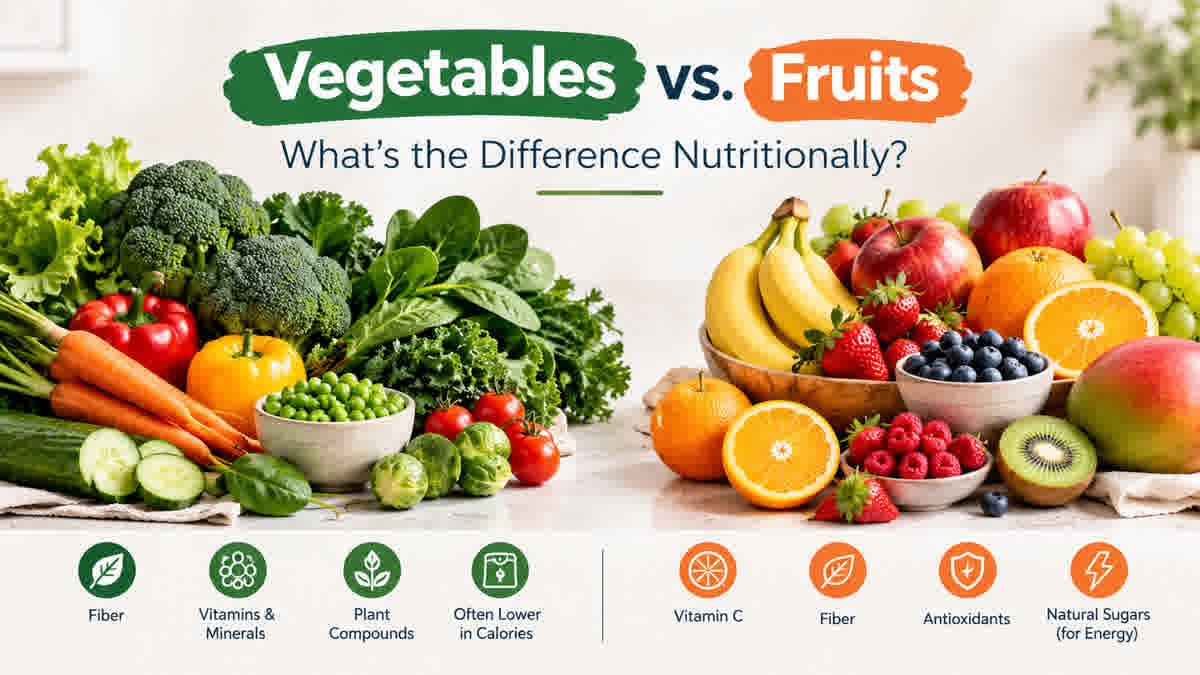

Neither vegetables nor fruits are universally healthier. Non-starchy vegetables usually provide fewer calories and less natural sugar per serving, while many fruits are rich in vitamin C, potassium, and fiber. Both groups supply vitamins, minerals, fiber, and plant compounds, and they work best together.
The question of vegetables vs. fruits comes up often because the two groups look different on a nutrition label. Fruits tend to taste sweeter and contain more natural sugar, while vegetables are often savory and lower in calories. Those differences matter less than you might expect, since each group offers nutrients the other does not.
This guide explains how fruits and vegetables are defined, compares their nutrition, and answers common questions about sugar, fiber, and calories. You will also find a comparison chart, practical tips for eating both, and answers to frequently asked questions. This article is general information, not personal medical advice.
What Is the Difference Between Fruits and Vegetables?
The answer depends on whether you ask a botanist or a cook. Both definitions are valid, but they are used for different purposes.
Botanical definition. Botanically, a fruit is the part of a flowering plant that develops from a flower’s ovary and usually contains seeds. By this definition, tomatoes, cucumbers, bell peppers, eggplants, squash, and avocados are all fruits.
Culinary definition. In the kitchen, fruits are generally sweet or tart and eaten as snacks, desserts, or breakfast foods. Vegetables are usually savory and served with meals. That is why tomatoes and cucumbers are treated as vegetables on most plates, even though they are botanical fruits.
Other edible plant parts. Vegetables include many parts of a plant: leaves (spinach, lettuce), stems (celery, asparagus), roots (carrots, beets), flowers (broccoli, cauliflower), and tubers (potatoes). Botany does not have a single category called “vegetable,” so the term is mostly practical.
Nutrition guidance follows the culinary approach. The USDA’s MyPlate places tomatoes, peppers, and cucumbers in the vegetable group, for example. For nutrition, what matters is the nutrient profile of the food, not its botanical label.
Vegetables vs. Fruits: Nutritional Comparison
Typical patterns differ between the two groups, but there is a lot of overlap. The nutrient profile of a specific food matters more than the category.
Calories and energy. Many non-starchy vegetables, such as spinach, broccoli, and cucumbers, have fewer calories per typical serving. Starchy vegetables like potatoes and corn have more. Fruits generally fall somewhere in between, and some, like bananas and mangoes, have more calories than berries or melon.
Carbohydrates and natural sugars. Many fruits contain more naturally occurring sugar than non-starchy vegetables. Both groups supply carbohydrate, and starchy vegetables can contain a lot of it.
Dietary fiber. Both groups can provide meaningful fiber. Whole fruits, especially with edible skins, and many vegetables are good sources. Our guide to high-fiber foods lists more.
Vitamins. Citrus fruits, guava, kiwi, and berries are rich in vitamin C. So are vegetables like bell peppers and broccoli. Carrots, pumpkin, and dark leafy greens supply carotenoids, which the body can convert to vitamin A, and leafy greens also provide folate and vitamin K. See our guides to foods high in vitamin C and leafy greens.
Minerals. Both groups provide minerals such as potassium and magnesium, with amounts varying by food. Bananas and melons are known potassium sources, but so are potatoes and leafy greens.
Antioxidants and phytonutrients. Plants contain many compounds that give them color and flavor. Different colors often reflect different compounds, which is one reason variety matters. The Harvard T.H. Chan School of Public Health explains why a mix of colors and types is useful.
No single nutrient profile applies to all fruits or all vegetables. Check data for the specific food and serving size, such as in USDA FoodData Central, instead of relying on broad claims.
Health Benefits of Vegetables
Eating a variety of vegetables supports health in several ways. These are benefits of a vegetable-rich eating pattern, not guarantees from any single food.
Digestive health. Fiber supports normal bowel function and feeds beneficial gut microbes. Our guide to vegetables for gut health covers specific choices.
Heart health. A diet rich in vegetables can contribute to overall cardiovascular health, particularly when it replaces foods high in saturated fat, sodium, or refined carbohydrates.
Micronutrient intake. Leafy greens, cruciferous vegetables, and orange vegetables each offer different vitamins and minerals. Spinach provides folate, broccoli provides vitamin C, and carrots and pumpkin provide carotenoids. Our article on cruciferous vegetables explains more about broccoli and its relatives.
Meal balance. Vegetables add volume, texture, and variety to meals, which can make them more satisfying. They can help fill your plate without adding many calories.
For a broader look at why vegetables matter, see our article on the benefits of eating vegetables. No single vegetable prevents or treats a disease, and benefits come from the overall pattern.
Health Benefits of Fruits
Fruit contributes to a balanced diet in its own ways.
Vitamin and mineral intake. Oranges and guava are rich in vitamin C, bananas provide potassium, and melons provide water along with several vitamins. Different fruits offer different nutrients, so variety helps.
Fiber. Whole fruits, especially when you eat the edible skin, can help increase fiber intake. Apples, pears, and berries are common examples.
Plant compounds. Berries, grapes, cherries, and other colorful fruits contain varied phytonutrients. Our article on kiwi health benefits is one example of a nutrient-rich fruit.
Convenient snacks. Whole fruit is a practical alternative to many highly processed snacks. It needs little preparation and travels well.
Whole fruit is generally a better choice than juice most of the time. Juice usually provides less fiber and is easier to drink in large amounts. The USDA’s MyPlate guidance on fruits recommends making most of your fruit intake whole fruit, not juice.
Fruits vs. Vegetables: Which Has More Sugar, Fiber, and Calories?
The short answers depend on which foods you compare.
Sugar. Many fruits contain more natural sugar than non-starchy vegetables, though the amount varies widely. A cup of berries has much less sugar than a cup of grapes. Carrots and beets are vegetables with more natural sugar than most.
Fiber. Both groups contain fiber. Compare specific foods and realistic portions, since a cup of raspberries or broccoli can each supply a good amount.
Calories. Non-starchy vegetables are often lower in calories per serving. Fruits and starchy vegetables vary, so there is no simple rule.
Satiety. Whole fruits and vegetables can both contribute to satisfying meals and snacks, partly because of their fiber and water content.
Naturally occurring sugar in whole fruit is not the same as added sugar in sweetened products. Whole fruit comes packaged with fiber, water, and nutrients, and it should not be labeled unhealthy because it contains natural sugar. People managing blood sugar can still include whole fruit, in portions that fit their plan. Our guide to the diabetes diet offers more on this.
Fruit vs. Vegetable Nutrition Chart
The table below compares familiar foods using approximate values per 100 grams of raw food, drawn from USDA FoodData Central. Using the same weight for each makes the comparison fair, though a typical serving may be larger or smaller.
| Food (raw, 100 g) | Calories | Sugars | Fiber | Vitamin C |
|---|---|---|---|---|
| Apple, with skin | About 52 | About 10 g | About 2.4 g | About 5 mg |
| Banana | About 89 | About 12 g | About 2.6 g | About 9 mg |
| Orange | About 47 | About 9 g | About 2.4 g | About 53 mg |
| Strawberries | About 32 | About 5 g | About 2 g | About 59 mg |
| Spinach | About 23 | Under 1 g | About 2.2 g | About 28 mg |
| Broccoli | About 34 | About 2 g | About 2.6 g | About 89 mg |
| Carrots | About 41 | About 5 g | About 2.8 g | About 6 mg |
| Red bell pepper | About 31 | About 4 g | About 2.1 g | About 128 mg |
| White potato, with skin | About 75 | About 1 g | About 2 g | About 20 mg |
Notice the overlap. Strawberries and broccoli both provide a lot of vitamin C, and apples and spinach have similar fiber. Bell peppers beat oranges for vitamin C. Values are approximate and vary by variety and ripeness.
Should You Eat More Fruits or Vegetables?
Most people benefit from eating both. Federal guidelines recommend that adults eat about 1½ to 2 cups of fruit and 2 to 3 cups of vegetables per day, depending on age and sex, as the CDC summarizes. Few adults meet these amounts. A CDC report found that only about 12% met the fruit recommendation and 10% met the vegetable recommendation.
These habits can make it easier:
- Add vegetables to lunch and dinner.
- Choose whole fruit for snacks or breakfast.
- Rotate colors and types through the week.
- Use fresh, frozen, or canned options with little or no added sugar or excess sodium.
- Consider cultural food preferences, availability, budget, and convenience.
Our guides to frozen vegetables and how to eat more vegetables offer practical ideas. If your needs are unusual, such as with kidney disease or a prescribed diet, ask a healthcare professional or registered dietitian for tailored advice.
Frequently Asked Questions
Are vegetables healthier than fruits?
Neither is universally healthier. Non-starchy vegetables often provide fewer calories per serving, while many fruits supply vitamin C, fiber, and other nutrients. Eating a variety of both provides a wider range of nutrients.
Which has more sugar, fruits or vegetables?
Many fruits contain more natural sugar than non-starchy vegetables, but amounts vary by food and serving size. Whole fruit also provides fiber, water, and plant compounds. Natural sugar in whole fruit is not the same as added sugar.
Do fruits or vegetables contain more fiber?
Both can be good sources, and it depends on the food and portion. For example, raspberries, pears, broccoli, and peas are all fiber-rich. Check USDA FoodData Central for specific foods.
Can fruit replace vegetables?
Not completely. Fruits and vegetables provide different mixes of nutrients, such as folate and vitamin K from leafy greens. Aim for both, as the CDC notes in its guidance on intake.
Are tomatoes fruits or vegetables?
Both, depending on the definition. Botanically, tomatoes are fruits because they develop from a flower’s ovary and contain seeds. In cooking and in nutrition guidance, they are treated as vegetables.
Is whole fruit healthier than fruit juice?
Whole fruit is generally the better choice because it contains more fiber and is harder to overeat. Juice can still fit into a diet in small amounts. MyPlate advises making most fruit whole fruit.
Conclusion: Make Room for Both
Vegetables and fruits differ in sugar, calories, and the vitamins they emphasize, but neither group is automatically superior. Non-starchy vegetables are often lower in calories, and many fruits provide vitamin C and potassium, with plenty of overlap. A varied diet that includes both gives you the widest range of nutrients.
Choose whole fruits and a mix of vegetables you enjoy, and build balanced meals around them. Fresh, frozen, and canned options without added sugar or salt all work. For more help, see our guide to what makes a balanced diet.
Sources
- U.S. Department of Agriculture: MyPlate, Vegetables
- U.S. Department of Agriculture: MyPlate, Fruits
- Centers for Disease Control and Prevention: MMWR, Fruit and Vegetable Intake Among Adults
- Harvard T.H. Chan School of Public Health: The Nutrition Source, Vegetables and Fruits
- U.S. Department of Agriculture: FoodData Central
Medical Disclaimer: This article is for educational purposes only and is not a substitute for professional medical advice, diagnosis, or treatment. Always talk with a doctor, registered dietitian, or other qualified healthcare provider before changing your diet, starting a supplement, or if you have questions about your health. If you think you are having a medical emergency, call 911 or your local emergency number right away.
1 thought on “Vegetables vs. Fruits: What’s the Difference Nutritionally?”
Comments are closed.