
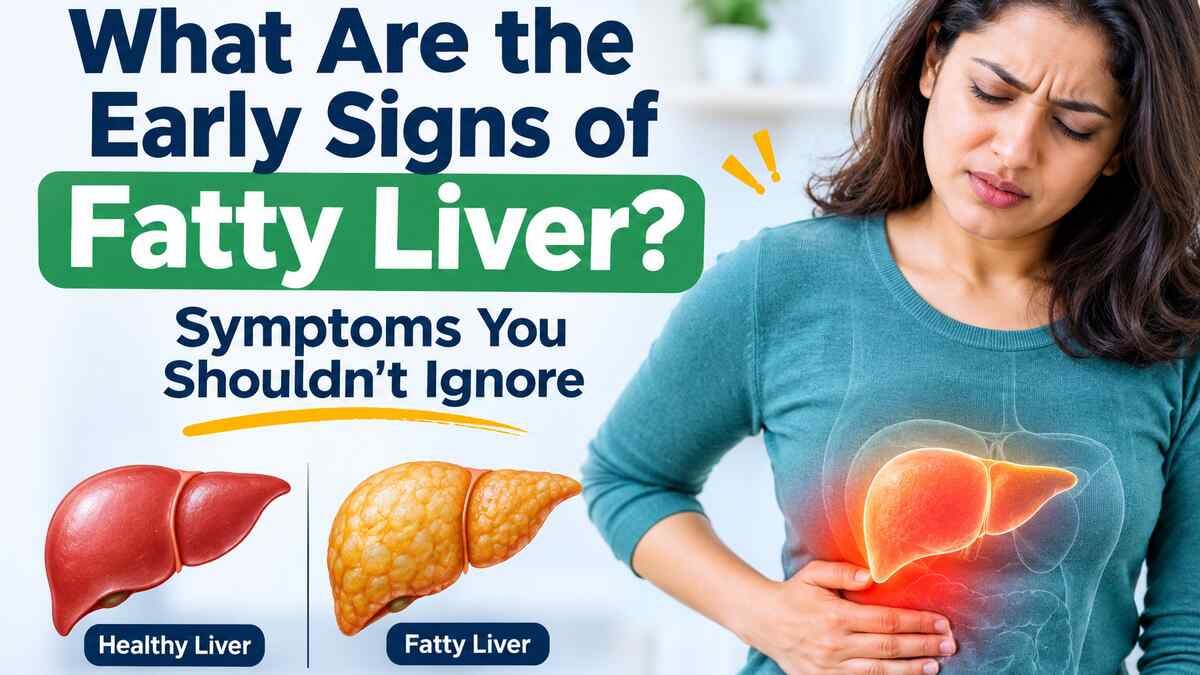

Fatty liver often has no noticeable early symptoms. However, some people may experience persistent fatigue or mild discomfort in the upper-right abdomen. Because these symptoms have many possible causes, blood tests and imaging are usually needed to identify fatty liver.
Fatty liver disease is a condition in which excess fat builds up in liver cells. It often develops silently, and many people learn they have it only after a routine blood test or an abdominal scan done for another reason. This is why knowing your risk factors can matter as much as watching for symptoms.
This guide explains the possible early signs, the less obvious warning signs, who is at higher risk, how doctors diagnose fatty liver, and when to seek care. It is general information, not a way to diagnose yourself.
What Is Fatty Liver Disease?
Fatty liver disease, also called hepatic steatosis, means that fat has accumulated inside liver cells. The liver plays a central role in metabolism. It processes nutrients, stores energy, and helps manage the fats and sugars in your blood.
A small amount of fat in the liver is normal. Fatty liver is diagnosed when the fat content is higher than expected. Read more about how common fatty liver is and about its causes.
How Does Fat Build Up in the Liver?
The liver takes in fats from the blood, makes some of its own, burns some for energy, and ships the rest out to the body. Fat builds up when this balance tips, for example when insulin resistance increases the amount of fat reaching and produced in the liver.
In some people, the excess fat triggers inflammation and injury to liver cells. This does not happen to everyone with fatty liver.
Types of Fatty Liver Disease
The most common type is metabolic dysfunction-associated steatotic liver disease (MASLD), formerly known as nonalcoholic fatty liver disease (NAFLD). Its more active form, metabolic dysfunction-associated steatohepatitis (MASH), was formerly called NASH. MASH involves inflammation and liver cell injury along with fat.
Alcohol-associated liver disease is another type. Alcohol is not the only cause of fatty liver, and many people have it without heavy drinking.
What Are the Early Signs of Fatty Liver?
According to NIDDK, fatty liver is usually a silent disease with few or no symptoms. When symptoms do appear, they tend to be vague. None of the signs below can confirm fatty liver on its own.
1. Persistent Fatigue and Low Energy
Some people with fatty liver feel unusually tired during the day, even after enough sleep. They may find it harder to keep up with normal activities. Why fatigue occurs is not fully understood, and it is not present in everyone.
Fatigue is also very common in people without liver disease. Poor sleep, stress, anemia, thyroid problems, depression, and diabetes can all cause it, so fatigue alone cannot point to the liver. See our guide on what causes fatigue.
2. Discomfort in the Upper-Right Abdomen
Some people notice mild discomfort beneath the right rib cage. It may feel like fullness, pressure, or an occasional dull ache. In some cases, a slightly enlarged liver may contribute.
This kind of discomfort is also linked to many digestive and gallbladder problems. Learn more about what causes abdominal pain.
3. Feeling Generally Unwell
A vague sense of being unwell, with low energy or general discomfort, is sometimes reported. These feelings are nonspecific and have countless other explanations. They should prompt a conversation with a doctor if they persist, not a conclusion about your liver.
4. No Noticeable Symptoms in the Early Stages
This is the most common situation. Many people have fatty liver without knowing it, and the condition is often found through routine blood tests or imaging.
In short: you can have fatty liver and feel completely fine. The absence of symptoms does not mean the liver is healthy, which is why testing is based on risk factors rather than symptoms alone.
Less Obvious Warning Signs of Fatty Liver
The findings below are not reliable early signs of fatty liver. They can, however, point to metabolic risk or, in some cases, more advanced liver disease. Treat them as reasons to talk with a healthcare professional, not as a diagnosis.
Darkened Skin Patches
Dark, velvety patches of skin, usually on the neck, armpits, or other skin folds, are called acanthosis nigricans. They are associated with insulin resistance, which is closely linked to fatty liver. The patches do not confirm fatty liver, but they are worth mentioning to a doctor.
Increased Abdominal Fat
Extra fat around the waist is associated with metabolic dysfunction and insulin resistance. It is a risk factor for fatty liver, not proof of it.
Unexplained Changes in Health
Elevated blood sugar, abnormal cholesterol or triglycerides, and high blood pressure often accompany fatty liver. These findings, sometimes picked up on routine labs, raise the likelihood that fatty liver is present. See blood sugar levels and high cholesterol for background.
What Are the Risk Factors for Fatty Liver?
Risk factors help doctors decide who should be checked, even without symptoms. NIDDK lists obesity (especially with a large waist), high blood pressure, abnormal blood fats, type 2 diabetes, and metabolic syndrome among the main ones. For more, see our guide to fatty liver risk factors.
Overweight and Obesity
Excess body fat, particularly around the abdomen, is associated with fat accumulation in the liver.
Type 2 Diabetes and Insulin Resistance
Insulin resistance can increase liver fat, which is why people with type 2 diabetes or metabolic syndrome are more likely to have it.
High Cholesterol and Triglycerides
Abnormal blood fats often occur alongside fatty liver and reflect shared metabolic problems.
Poor Diet and Physical Inactivity
Frequent sugary drinks, many highly processed foods, long-term unhealthy eating habits, and low physical activity can contribute. Fatty liver can also occur in people who are not overweight, so a normal weight does not rule it out.
How Is Fatty Liver Diagnosed?
Because symptoms are unreliable, diagnosis relies on tests and a medical evaluation. NIDDK explains that doctors use blood tests, imaging tests, and sometimes a liver biopsy.
Blood Tests
Doctors often check liver enzymes such as ALT (alanine aminotransferase) and AST (aspartate aminotransferase). Routine results can also be used to calculate scores such as FIB-4, which help identify or rule out advanced scarring.
Normal enzyme levels do not always rule out fatty liver, and blood tests alone cannot tell simple fatty liver from MASH.
Abdominal Ultrasound
Ultrasound uses sound waves to create images of the liver and can show fat buildup. It is painless and does not use radiation.
FibroScan and Other Imaging Tests
Elastography measures liver stiffness, which may signal fibrosis. Types include vibration-controlled transient elastography (FibroScan), shear wave elastography, and magnetic resonance elastography (a special MRI). A liver biopsy is the only test that can prove MASH, and it is generally reserved for cases where other results suggest more advanced disease.
Medical History and Physical Examination
Your doctor will ask about weight, waist size, diabetes and cholesterol history, alcohol use, medications, and other possible causes of liver disease. This helps rule out other conditions that can look similar.
What Happens If Fatty Liver Progresses?
Progression is possible but not inevitable. Many people never develop advanced disease. A simplified pathway looks like this.
Stage 1: Simple Fat Accumulation
Fat builds up in liver cells. There are usually no symptoms, and it often does not cause significant damage.
Stage 2: Liver Inflammation (MASH)
Fat is joined by inflammation and liver cell injury. Some people with MASH develop progressive liver damage.
Stage 3: Liver Fibrosis
Scar tissue begins to form. Fibrosis can progress if the underlying damage continues, which is why doctors try to identify it early.
Stage 4: Cirrhosis
Extensive scarring develops, liver function can become impaired, and serious complications may occur.
When Should You See a Doctor?
Talk with a healthcare professional if you have any of the following:
- Persistent, unexplained fatigue
- Recurring discomfort in the upper-right abdomen
- Type 2 diabetes, prediabetes, or metabolic syndrome
- Obesity or other significant metabolic risk factors
- Repeatedly abnormal liver blood test results
Seek urgent medical attention for yellowing of the skin or eyes (jaundice), significant abdominal swelling, vomiting blood or passing black, tarry stools, or new confusion or unusual drowsiness. These can signal serious liver complications or another urgent condition. Call 911 or go to the nearest emergency department.
Can You Prevent or Manage Fatty Liver?
Sustainable lifestyle habits are the foundation of management. Results vary, and your care plan should be individualized. For more detail, see fatty liver treatment options and how to manage fatty liver at home.
Maintain a Healthy Weight
NIDDK notes that weight loss can reduce liver fat, and in some people inflammation and scarring. Gradual, sustainable loss is generally preferred, and your doctor can advise on what is right for you. See weight management.
Choose a Balanced Diet
Focus on vegetables, fruits, whole grains, legumes, healthy fats, and lean proteins, as in the Mediterranean diet. Limit sugary beverages and highly processed foods. Avoid unproven liver detox products and supplements.
Exercise Regularly
Walking, cycling, swimming, and other moderate activities support metabolic health. Start at a comfortable level. Explore the benefits of exercise and walking for health.
Manage Diabetes and Cholesterol
Monitoring and treating blood sugar, blood pressure, and cholesterol with medical guidance protects both the liver and the heart.
Avoid Excessive Alcohol
Alcohol can contribute to liver damage. If you have fatty liver, discuss alcohol use with your healthcare professional.
Frequently Asked Questions About Fatty Liver
What is the first sign of fatty liver?
Often there is none. When symptoms occur, fatigue and mild upper-right abdominal discomfort are possible, but both are nonspecific.
Can you have fatty liver without symptoms?
Yes. Many people have fatty liver without any noticeable symptoms, especially in early stages, as NIDDK describes.
Does fatty liver cause stomach pain?
Some people feel mild discomfort in the upper-right abdomen. Stomach pain has many other possible causes, so persistent pain should be evaluated by a doctor.
How do I know if I have fatty liver?
Only testing can tell. A healthcare professional may recommend blood tests, ultrasound, or other assessments based on your risk factors and history.
Can fatty liver go away on its own?
Liver fat may decrease with sustainable improvements in metabolic health and lifestyle, but results vary from person to person. No timeline can be promised, and ongoing follow-up is important.
Is fatty liver dangerous?
Simple fatty liver may remain stable for years. Some people develop inflammation, fibrosis, or cirrhosis, which is why monitoring matters. See Mayo Clinic’s overview.
Can thin people get fatty liver?
Yes. Fatty liver can occur in people who are not overweight, often related to insulin resistance, genetics, or abdominal fat distribution.
Can a blood test detect fatty liver?
Blood tests can show liver enzyme abnormalities and help assess liver health, but they cannot confirm or rule out fatty liver by themselves. Imaging is usually needed as well.
Final Thoughts
Fatty liver frequently develops without obvious early symptoms. Fatigue and upper-right abdominal discomfort are possible, but they are nonspecific and have many other causes. Knowing your risk factors and getting appropriate testing matter more than watching for signs.
If you have risk factors or concerns, talk with a healthcare professional. Early evaluation and sustainable lifestyle changes can help support long-term liver health.
Sources
- National Institute of Diabetes and Digestive and Kidney Diseases (NIDDK). Symptoms & Causes of NAFLD & NASH
- National Institute of Diabetes and Digestive and Kidney Diseases (NIDDK). Diagnosis of NAFLD & NASH
- National Institute of Diabetes and Digestive and Kidney Diseases (NIDDK). Nonalcoholic Fatty Liver Disease & NASH
- National Institute of Diabetes and Digestive and Kidney Diseases (NIDDK). Treatment for NAFLD & NASH
- Mayo Clinic. Nonalcoholic fatty liver disease: Symptoms and causes
Medical Disclaimer: This article is for general educational purposes only and is not medical advice. It does not diagnose, treat, or replace care from a qualified healthcare professional. Symptoms alone cannot confirm fatty liver, so please talk with your doctor about your own health and testing. If you have yellowing of the skin or eyes, significant abdominal swelling, vomiting blood, black stools, or confusion, seek urgent medical care.