

You get your blood test results back, see that your cholesterol is high, and immediately wonder: how high is too high? Do I have symptoms? What caused it? And what should I actually do next?
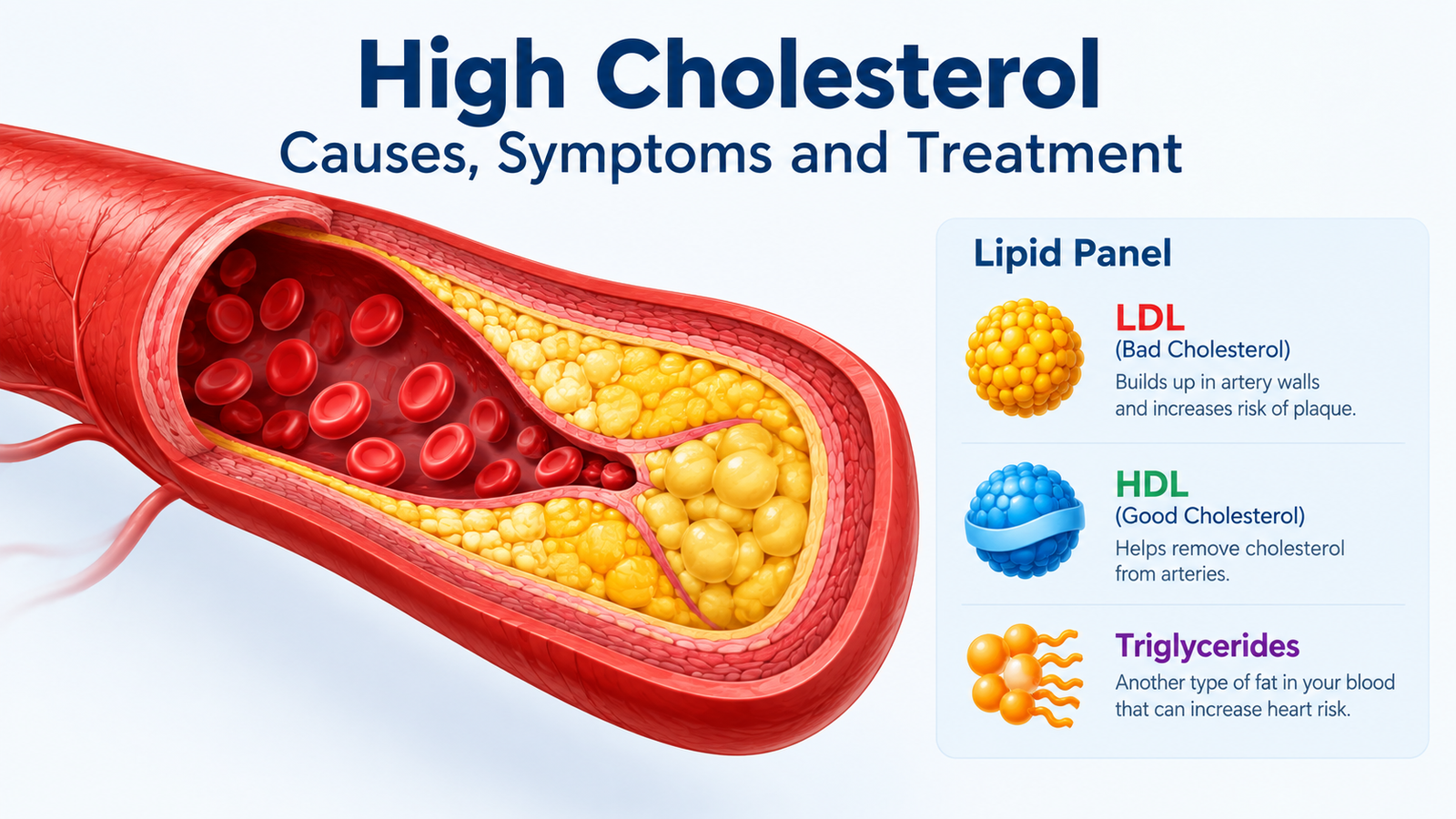
High cholesterol means that certain cholesterol or lipid levels in your blood are above a healthy range, or otherwise contribute to your overall cardiovascular risk. Elevated LDL cholesterol matters most, because LDL contributes to plaque buildup in the arteries.
Here’s the key thing to understand up front: high cholesterol usually causes no symptoms. A blood test is generally the only way to detect it. This article walks through what cholesterol actually is, what your numbers mean, why it matters, and what you can do about it — including how a major 2026 clinical guideline has updated the way doctors assess and manage cholesterol risk.
Important: This article is for general information only and is not a substitute for professional medical advice, diagnosis, or treatment. Talk with your healthcare provider about what your cholesterol numbers mean for you.
What Is High Cholesterol?
What Is Cholesterol?
Cholesterol is a waxy, fat-like substance found in your blood and in every cell in your body. Your body needs cholesterol for essential functions — building healthy cells, producing hormones, and making vitamin D and substances that help digest food.
Why Does Your Body Need Cholesterol?
Cholesterol isn’t simply “bad.” Your body makes all the cholesterol it needs on its own, mostly in the liver. The rest comes from food, particularly meat and dairy products. Problems arise not because cholesterol exists in your body, but because too much of certain types can build up in your blood and start depositing in your artery walls.
Cholesterol travels through the bloodstream attached to proteins. This combination of protein and cholesterol is called a lipoprotein, and the type of lipoprotein determines whether that cholesterol helps or harms your cardiovascular health.
LDL vs. HDL: What’s the Difference?
Two types of lipoproteins carry cholesterol to and from your cells: low-density lipoprotein (LDL) and high-density lipoprotein (HDL). A blood test measures how much of each is in your blood.
What Is LDL Cholesterol?
LDL is often called “bad” cholesterol because it contributes to fatty buildup in the arteries, a process called atherosclerosis. This narrows the arteries and raises the risk of heart attack, stroke, and peripheral artery disease. LDL carries cholesterol particles throughout the body, and when there’s too much of it, it deposits in artery walls and makes them harder and narrower over time.
When a genetic condition causes high cholesterol, the underlying problem is usually that the body has trouble clearing LDL cholesterol from the blood or breaking it down in the liver.
What Is HDL Cholesterol?
HDL is commonly called “good” cholesterol because it helps carry LDL cholesterol away from the arteries and back to the liver, where it’s broken down and removed from the body. A healthy HDL level may help protect against heart attack and stroke.
That said, HDL doesn’t eliminate LDL cholesterol entirely — only a fraction of blood cholesterol is carried by HDL. Higher HDL is generally favorable, but it isn’t a treatment target in itself, and a high HDL number doesn’t cancel out the risk from high LDL.
What Are Triglycerides?
Triglycerides are the most common type of fat in the body, and they aren’t technically a type of cholesterol — they’re a separate blood lipid that stores excess energy from your diet. A high triglyceride level combined with high LDL or low HDL is linked with fatty buildups in the artery walls, which raises the risk of heart attack and stroke.
What Are the Symptoms of High Cholesterol?
High cholesterol usually doesn’t cause noticeable symptoms. Most people don’t know they have it until a routine blood test reveals it. This is exactly why cholesterol is sometimes called a “silent” risk factor — you can feel completely fine while plaque quietly builds up in your arteries.
Can High Cholesterol Cause Chest Pain?
High cholesterol itself typically doesn’t cause chest pain. However, over years, elevated LDL cholesterol can contribute to atherosclerosis, which narrows the arteries that feed the heart. That narrowing can eventually cause chest pain, also known as angina, along with other symptoms of coronary artery disease. In other words, the chest pain comes from the complication of long-term high cholesterol, not from the cholesterol level itself.
Are There Signs of Extremely High Cholesterol?
In rare cases — usually tied to inherited conditions like familial hypercholesterolemia — very high cholesterol can produce visible physical signs, such as:
- Xanthomas — yellowish, fatty deposits that can appear on the skin, tendons, or joints
- Xanthelasma — fatty deposits around the eyelids
- Corneal arcus — a pale ring around the cornea of the eye
These findings are uncommon and shouldn’t be treated as a reliable way to detect ordinary high cholesterol. The only dependable way to know your levels is a blood test.
What Causes High Cholesterol?
Lifestyle factors within your control are the most common cause of high cholesterol. But genetics, certain medical conditions, and some medications can also play a role.
Diet
Eating a diet high in saturated fat and trans fats can raise cholesterol levels. Saturated fats are found in fatty cuts of meat and full-fat dairy products, while trans fats sometimes show up in packaged snacks or desserts.
Lack of Physical Activity
Regular exercise helps boost HDL (“good”) cholesterol. A sedentary lifestyle works against you in the opposite direction.
Excess Weight
Obesity is a complex condition involving excess body fat, and it’s associated with less favorable cholesterol levels and overall cardiovascular risk.
Smoking
Cigarette smoking can lower HDL cholesterol levels, removing some of the protective effect that “good” cholesterol offers.
Genetics
High cholesterol can be inherited. Familial hypercholesterolemia (FH) is a genetic condition in which the body has trouble removing LDL cholesterol from the blood, leading to very high levels from a young age — sometimes even in childhood.
Medical Conditions
Several health conditions can contribute to high cholesterol, including:
- Diabetes
- Chronic kidney disease
- Chronic liver disease
- HIV/AIDS
- Hypothyroidism
- Lupus
- Overweight and obesity
- Sleep apnea
Medications
Some medications taken for other health conditions can worsen cholesterol levels, including certain treatments for acne, cancer, high blood pressure, HIV/AIDS, irregular heartbeats, and organ transplants. Never stop a prescribed medication without talking to your healthcare provider first.
What Are the Risk Factors for High Cholesterol?
Causes and risk factors overlap, but risk factors are the broader set of things that make high cholesterol more likely:
- Eating habits high in saturated or trans fat
- Obesity
- Lack of exercise
- Smoking
- Heavy alcohol use
- Increasing age (the liver becomes less efficient at clearing LDL cholesterol over time, and high cholesterol becomes more common after age 40)
- Family history of high cholesterol or early heart disease
- Certain medical conditions and medications, as noted above
Many of these are modifiable. Managing weight, eating more heart-healthy foods, and staying active can meaningfully shift your risk over time.
What Do Your Cholesterol Numbers Mean?
A cholesterol blood test, called a lipid panel or lipid profile, usually reports four main numbers. In general, you’ll need to fast (no food or liquids other than water) for about 9 to 12 hours before the test, though some tests don’t require fasting — follow your healthcare provider’s instructions.
Total Cholesterol
This is the overall amount of cholesterol in your blood. It’s a useful starting point, but it shouldn’t be interpreted on its own, since it doesn’t distinguish between LDL, HDL, and triglycerides.
LDL Cholesterol
LDL is central to cardiovascular risk assessment. Generally speaking, lower is better, and your ideal target depends heavily on your personal risk profile rather than a single universal cutoff.
HDL Cholesterol
Higher HDL levels are generally favorable, but as noted above, HDL isn’t itself a treatment target — it’s one piece of the overall risk picture your healthcare provider considers.
Triglycerides
Elevated triglycerides, especially alongside high LDL or low HDL, point toward increased cardiovascular risk and sometimes reflect diet, weight, alcohol intake, or blood sugar issues such as prediabetes or insulin resistance.
Non-HDL Cholesterol
Non-HDL cholesterol is calculated by subtracting HDL from total cholesterol. It captures all the “bad,” atherogenic types of cholesterol in one number and is increasingly used alongside LDL to guide treatment decisions.
Other Tests Your Clinician May Consider
The 2026 ACC/AHA guideline on the management of dyslipidemia — which replaces the 2018 guideline on blood cholesterol — expands attention to a few additional measures for people who need a more refined risk picture:
- Lipoprotein(a), or Lp(a): The guideline recommends measuring Lp(a) at least once in a lifetime to identify people at higher inherited cardiovascular risk. Levels at or above 125 nmol/L (50 mg/dL) are considered a risk-enhancing factor, associated with roughly 1.4 times the usual cardiovascular risk, while levels at or above 250 nmol/L (100 mg/dL) are associated with about double the risk.
- Apolipoprotein B, or ApoB: ApoB testing can help refine risk assessment once LDL and non-HDL goals are met, particularly for people with elevated triglycerides above 200 mg/dL, diabetes, or a low achieved LDL below 70 mg/dL. It can uncover residual risk that a standard lipid panel might miss.
- Coronary artery calcium (CAC) scoring: For men 40 and older and women 45 and older, CAC scoring can help reclassify cardiovascular risk and guide LDL and non-HDL treatment goals.
Not everyone needs these additional tests — they’re generally reserved for situations where the standard lipid panel doesn’t give a clear enough picture of someone’s risk.
What Is Considered High Cholesterol?
There’s no single number that applies equally to everyone. What counts as “high” depends on your LDL, HDL, triglycerides, non-HDL cholesterol, age, whether you have diabetes or existing cardiovascular disease, family history, and your overall calculated cardiovascular risk. The 2026 guideline reinforces this individualized approach rather than treating one cholesterol number in isolation.
Here’s a general reference table, using the ranges Mayo Clinic outlines:
| Test | Range | What It Generally Means |
|---|---|---|
| Total cholesterol | Below 200 mg/dL | Desirable |
| 200–239 mg/dL | Borderline high | |
| 240 mg/dL and above | High | |
| LDL cholesterol | Below 70 mg/dL | Desirable to optimal for people with, or at high risk of, cardiovascular disease; some people benefit from goals below 55 mg/dL |
| Below 100 mg/dL | Optimal for healthy people without cardiovascular disease | |
| 100–129 mg/dL | Near optimal to high, depending on existing disease | |
| 130–159 mg/dL | Borderline high to high, depending on existing disease | |
| 160–189 mg/dL | High to very high, depending on existing disease | |
| 190 mg/dL and above | Very high | |
| HDL cholesterol | Below 40 mg/dL (men) / below 50 mg/dL (women) | Low |
| 40–59 mg/dL (men) / 50–59 mg/dL (women) | Better | |
| 60 mg/dL and above | Best | |
| Triglycerides | Below 150 mg/dL | Desirable |
| 150–199 mg/dL | Borderline high | |
| 200–499 mg/dL | High | |
| 500 mg/dL and above | Very high |
Editorial note: These ranges are general reference points, not individualized medical advice. Your own healthy target depends on your personal risk factors — always discuss your specific numbers with your healthcare provider.
Why Is High Cholesterol a Problem?
The mechanism works like this: cholesterol and other substances accumulate in artery walls as plaque, plaque buildup narrows or stiffens the arteries over time, and narrowed arteries reduce blood flow. This gradual process is called atherosclerosis.
Cholesterol isn’t suddenly “blocking your artery” the moment a single lab result comes back high. Rather, prolonged exposure to elevated LDL and other atherogenic lipoproteins contributes to plaque formation over months and years — which is part of why the 2026 guideline emphasizes addressing dyslipidemia earlier in life, rather than waiting until cardiovascular risk becomes obvious.
Can High Cholesterol Cause Heart Disease?
Yes. High cholesterol is a well-established contributor to several serious cardiovascular conditions:
- Coronary artery disease and angina: Narrowed arteries feeding the heart can cause chest pain and other symptoms of heart disease.
- Heart attack: If a plaque tears or ruptures, a blood clot can form and block blood flow to part of the heart. This is a medical emergency requiring immediate treatment. Learn more about heart attack symptoms and when to call 911.
- Stroke: A blood clot that blocks blood flow to part of the brain causes a stroke, another emergency requiring immediate treatment.
- Peripheral artery disease: Narrowed arteries elsewhere in the body can reduce blood flow to the limbs, increasing the risk of peripheral artery disease.
How to Lower High Cholesterol
The good news is that many of the same lifestyle changes that help prevent high cholesterol can also help lower it once you have it.
Eat a Heart-Healthy Diet
Focus on plant-based foods — fruits, vegetables, whole grains, beans, and legumes. Add sources of healthy fat such as fatty or oily fish, nuts, olive oil, and canola oil. Limit added sugar and sodium. For more ideas, see CollectedMed’s guides to heart-healthy foods and the Mediterranean diet.
Reduce Saturated and Trans Fats
Fatty cuts of meat and full-fat dairy are common sources of saturated fat, while trans fats sometimes hide in packaged snacks and desserts. Swapping these out for unsaturated fats is one of the most consistently recommended dietary changes for cholesterol management.
Exercise Regularly
Aim to work up toward at least 30 minutes of exercise most days of the week. Physical activity helps raise HDL cholesterol. Talk with your healthcare provider before starting a new exercise routine if you aren’t already active — see CollectedMed’s overview of the benefits of exercise for more.
Maintain a Healthy Weight
Losing excess weight can help lower cholesterol, but this is about long-term, sustainable weight management rather than quick fixes or shame-based goals.
Don’t Smoke
If you smoke, ask your healthcare team for help quitting. Quitting can help raise HDL cholesterol over time.
Limit Alcohol Where Appropriate
Heavy alcohol use can raise total cholesterol. General guidance suggests limiting alcohol to up to one drink a day for women and up to two drinks a day for men, or avoiding it altogether — but alcohol isn’t a cholesterol-lowering strategy in itself.
Manage Stress and Prioritize Sleep
Activities like exercise and meditation can help with stress management, and getting roughly 7 to 9 hours of sleep a night supports overall cardiovascular health. See CollectedMed’s guide on how to improve sleep for practical tips.
What Foods Can Help Lower Cholesterol?
Foods High in Soluble Fiber
Soluble fiber can help reduce the absorption of cholesterol into your bloodstream. Good sources include:
- Oats
- Barley
- Beans and lentils
- Certain fruits, such as apples and citrus
For more fiber-rich options, see CollectedMed’s guide to high-fiber foods for digestive health.
Foods Rich in Unsaturated Fats
Swapping saturated fats for unsaturated ones is a key strategy. Consider:
- Nuts
- Seeds
- Avocado
- Olive oil and canola oil
- Fatty or oily fish
Foods to Limit
- Foods high in saturated fat, such as fatty cuts of meat and full-fat dairy
- Trans fats, sometimes found in packaged snacks and desserts
- Highly processed foods
- Excess refined carbohydrates and added sugar, particularly if your triglycerides are elevated
There’s no single “cholesterol diet” that fits everyone — your healthcare provider or a registered dietitian can help tailor an approach to your specific numbers and preferences.
Do You Need Medication for High Cholesterol?
Whether you need medication depends on your overall cardiovascular risk, your cholesterol levels, existing disease, age, diabetes status, family history, and other individual factors — not on a single number in isolation.
The 2026 ACC/AHA guideline continues to identify statins as first-line pharmacologic therapy when lipid-lowering medication is indicated for primary prevention, with several other medication classes available for specific situations.
Statins
Statins block a substance the liver needs to make cholesterol, which causes the liver to produce less cholesterol and remove more of it from the blood. Common statins include atorvastatin, rosuvastatin, simvastatin, pravastatin, and others. Possible side effects include muscle pain and, rarely, muscle damage or increased blood sugar — your healthcare provider may recommend periodic liver function tests while you’re on one.
Other Cholesterol-Lowering Medications
The following medications may also be used, depending on individual circumstances:
- Ezetimibe, a cholesterol absorption inhibitor, reduces how much cholesterol your intestine absorbs from food and is sometimes prescribed alongside a statin.
- Bempedoic acid works similarly to statins and may be used if statins cause side effects; it’s also available combined with ezetimibe.
- Bile acid sequestrants, such as cholestyramine and colesevelam, prompt the liver to use more cholesterol to make bile acids, lowering blood cholesterol as a result.
- PCSK9 inhibitors, including alirocumab, evolocumab, and inclisiran, help the liver absorb more LDL cholesterol from the blood. They’re often reserved for people with genetic conditions causing very high LDL, or those whose cholesterol remains high despite statins.
- Fibrates, niacin, and omega-3 fatty acids are sometimes used specifically for elevated triglycerides, often alongside a statin.
Can Lifestyle Changes Replace Medication?
Some people can substantially improve their lipid profile through diet, exercise, and weight management alone. But for people whose cardiovascular risk or LDL levels are high enough to warrant it, lifestyle changes generally work best alongside medication rather than as a full replacement. This is a conversation to have directly with your healthcare provider, since the right balance is different for everyone.
When Should You Talk to a Doctor About High Cholesterol?
Consider reaching out to a healthcare provider if:
- Your cholesterol test result comes back abnormal
- You have a strong family history of early heart disease
- Your LDL is very high (190 mg/dL or above)
- You have diabetes
- You already have cardiovascular disease
- You’ve been prescribed cholesterol medication and have questions or side effects
- Your numbers remain elevated despite consistent lifestyle changes
Most adults get cholesterol checked every 4 to 6 years, though people with high blood pressure, diabetes, a family history of high cholesterol or heart disease, or those taking cholesterol-lowering medication may need more frequent testing. The American Heart Association recommends children be screened once between ages 9 and 11, with a follow-up screening between ages 17 and 21 — earlier screening may be appropriate if a child has a family history of high cholesterol or heart disease, or conditions like diabetes or obesity.
Why Risk Assessment Matters
Cholesterol management isn’t simply “your number is high, so take a pill.” Clinicians weigh lipid levels together with age, medical history, diabetes status, smoking, blood pressure, existing cardiovascular disease, family history, and other risk-enhancing factors.
The 2026 guideline formalizes this with what it calls the “CPR” model for adults ages 30 to 79:
- Calculate 10-year cardiovascular risk using the newer PREVENT-ASCVD equations, which replace the older Pooled Cohort Equations.
- Personalize that estimate by factoring in things the equation doesn’t directly capture.
- Reclassify and reassess treatment recommendations, using selective coronary artery calcium testing when appropriate.
Under this model, LDL-lowering therapy may be considered for adults with a 10-year risk estimate of 3% to under 5% (borderline risk), and is generally recommended as a discussion point for those in the 5% to under 10% range (intermediate risk), after weighing the individual’s full picture with their clinician.
For people who already have established cardiovascular disease, the 2026 guideline sets a goal of LDL below 55 mg/dL and non-HDL below 85 mg/dL for those at very high risk — a more aggressive target than many people may have heard about previously. For adults ages 40 to 75 with diabetes, chronic kidney disease (stage 3 or 4), or HIV, LDL-lowering therapy is recommended regardless of the LDL number itself, given the elevated baseline risk these conditions carry.
High Cholesterol in Younger Adults
It’s tempting to assume cholesterol doesn’t matter until later in life, but lifetime exposure to elevated LDL adds up. The 2026 guideline places new emphasis on earlier attention to dyslipidemia, noting that young adults with LDL-C at or above 160 mg/dL, or a strong family history of premature cardiovascular disease, may warrant closer attention and, in some cases, earlier treatment consideration — even before their short-term risk score looks concerning.
Familial Hypercholesterolemia
Familial hypercholesterolemia (FH) is an inherited condition that causes very high LDL cholesterol from an early age, sometimes evident even in childhood. Because it’s genetic, it doesn’t respond to diet and exercise alone the way typical high cholesterol often does, and it substantially raises the risk of early heart disease if left untreated.
Key points about FH:
- It’s passed down through families, so a diagnosis in one person often means close relatives should also be screened.
- Very high LDL levels — sometimes 190 mg/dL or above even in younger people — are a red flag.
- Early diagnosis matters because treatment, often started sooner and more aggressively than for typical high cholesterol, can meaningfully reduce lifetime cardiovascular risk.
- If you have a family history of very high cholesterol or heart attacks at a young age, ask your healthcare provider whether FH screening makes sense for you and your family.
High Cholesterol vs. High Triglycerides
These two are related but not identical. High cholesterol generally refers to abnormalities involving cholesterol-carrying lipoproteins, especially LDL. High triglycerides involve a different type of blood fat entirely — one that stores excess dietary energy.
It’s possible to have any combination of:
- High LDL
- High triglycerides
- Low HDL
- Several of these at once
Having multiple lipid abnormalities together tends to compound cardiovascular risk rather than simply adding it up separately, which is part of why a full lipid panel — not just one number — matters for getting an accurate risk picture.
Frequently Asked Questions
What is high cholesterol?
High cholesterol means certain lipids in your blood — especially LDL cholesterol — are elevated enough to contribute to plaque buildup in the arteries and raise cardiovascular risk. It’s diagnosed with a blood test, not by symptoms.
What are the symptoms of high cholesterol?
High cholesterol usually has no symptoms at all. Most people find out through a routine blood test. Symptoms tend to appear only once high cholesterol has led to a complication, such as chest pain, heart attack, or stroke.
What causes high cholesterol?
Common causes include a diet high in saturated or trans fat, lack of exercise, excess weight, smoking, genetics, certain medical conditions like diabetes or hypothyroidism, and some medications.
What level of cholesterol is considered high?
Total cholesterol of 240 mg/dL or above is generally considered high, but what counts as “high” for LDL, HDL, and triglycerides depends on your individual risk factors, age, and health history — there’s no single cutoff for everyone.
Is high cholesterol dangerous?
Yes, over time. Left unmanaged, high cholesterol contributes to atherosclerosis, which raises the risk of heart attack, stroke, coronary artery disease, and peripheral artery disease.
Can you lower cholesterol naturally?
Many people can meaningfully improve their cholesterol through diet, exercise, weight management, and quitting smoking. Whether that’s enough on its own depends on your starting numbers and overall cardiovascular risk.
What foods should you avoid if you have high cholesterol?
Limit foods high in saturated fat (fatty meats, full-fat dairy), trans fats (some packaged snacks and desserts), highly processed foods, and excess added sugar or refined carbohydrates, especially if triglycerides are elevated.
What foods help lower cholesterol?
Foods rich in soluble fiber (oats, beans, lentils) and unsaturated fats (nuts, olive oil, avocado, fatty fish) can help improve your cholesterol profile as part of an overall heart-healthy diet.
Does high cholesterol cause chest pain?
Not directly. High cholesterol itself doesn’t cause chest pain, but over years it can lead to atherosclerosis and coronary artery disease, which can cause chest pain (angina).
How long does it take to lower cholesterol?
Meaningful changes from diet and exercise can sometimes show up within a few months, though timelines vary by individual. Medication, when needed, often lowers LDL more quickly, but ongoing monitoring is important either way.
Can high cholesterol be reversed?
Cholesterol levels can often be substantially improved with sustained lifestyle changes and, when appropriate, medication. “Reversed” is a strong word — the goal is typically getting your numbers into a healthier range and keeping them there long-term.
Do I need medication for high cholesterol?
That depends on your overall cardiovascular risk, not just your cholesterol number. Some people manage successfully with lifestyle changes alone, while others need medication such as a statin. This is a decision to make with your healthcare provider.
What is the difference between LDL and HDL?
LDL (“bad” cholesterol) contributes to plaque buildup in the arteries, while HDL (“good” cholesterol) helps carry excess cholesterol back to the liver for removal. Lower LDL and higher HDL are both generally favorable.
How often should cholesterol be checked?
Most adults are screened every 4 to 6 years. People with risk factors such as high blood pressure, diabetes, a family history of high cholesterol, or those taking cholesterol medication typically need more frequent checks.
Related Reading on CollectedMed
- What Is Heart Health?
- Heart Disease
- High Blood Pressure
- Heart Attack Symptoms
- Chest Pain
- Heart-Healthy Foods
- Mediterranean Diet
- High-Fiber Foods for Digestive Health
- What Is Diabetes?
- Prediabetes
- Insulin Resistance
- Benefits of Exercise
- Weight Management
- How to Reduce Stress
- How to Improve Sleep
How We Reviewed This Article
This article draws on publicly available guidance from the American Heart Association, the American College of Cardiology, the Centers for Disease Control and Prevention, and Mayo Clinic, including the 2026 ACC/AHA/AACVPR/ABC/ACPM/ADA/AGS/APhA/ASPC/NLA/PCNA Guideline on the Management of Dyslipidemia, which replaces the 2018 guideline on blood cholesterol. Medical claims are linked to their original source at the point they are made. This content is intended for general education and does not replace personalized medical advice.
Read our full Medical Disclaimer.
Sources
- American Heart Association. HDL (Good), LDL (Bad) Cholesterol and Triglycerides.
- Centers for Disease Control and Prevention. High Cholesterol Facts.
- Centers for Disease Control and Prevention. Cholesterol.
- Mayo Clinic. High Cholesterol – Symptoms and Causes.
- Mayo Clinic. High Cholesterol – Diagnosis and Treatment.
- American College of Cardiology / American Heart Association. 2026 Guideline on the Management of Dyslipidemia — Top Things to Know.
7 thoughts on “What Is High Cholesterol? Causes, Symptoms & What to Do”
Comments are closed.