


Many people notice unpleasant breath at some point, whether after waking up, after a garlicky dinner, or during a stretch of busy days with little water. Bad breath is a common oral health concern that can affect people of all ages. Fewer people know why it happens or when it may need professional attention.
Often, bad breath is temporary. Morning breath, certain foods, and dry mouth can all cause short-lived odor. Persistent bad breath, known medically as halitosis, may be linked to plaque, a coated tongue, gum disease, tooth decay, or sometimes conditions outside the mouth.
Knowing how common bad breath is can help you tell the difference between an occasional nuisance and a problem worth checking. This article covers seven facts about how widespread bad breath is, what usually causes it, who is at higher risk, how it can affect daily life, and what helps. It is general information, not a diagnosis, and you are not alone if you have wondered about your own breath.
What Is Bad Breath?
Bad breath, or halitosis, is an unpleasant odor that comes from the mouth when you breathe or speak. Some odor is temporary, such as the smell left after eating onions. Persistent bad breath is odor that keeps returning or does not go away with ordinary cleaning.
In most cases, the smell develops when bacteria in the mouth break down food debris, proteins, and other material. This process can release odor-producing compounds, including volatile sulfur compounds. The back of the tongue, the spaces between teeth, the gum line, and the areas around dental appliances are common places for this material to collect.
Saliva helps wash these substances away. When saliva flow drops, odor-causing material can build up more easily. If you want a deeper look at common causes of bad breath, our companion guide covers them in detail.
It is important to remember that bad breath alone cannot diagnose a particular disease. It is a symptom with many possible causes, and most of them are manageable once identified.
1. Bad Breath Is More Common Than Many People Realize
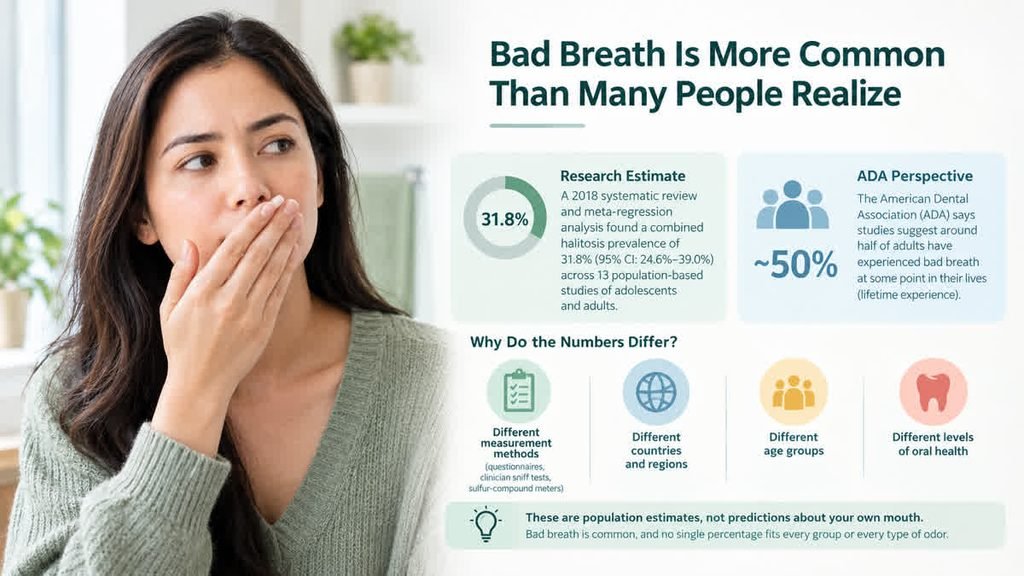
Bad breath is widely reported, but there is no single number that describes everyone. Estimates depend on whether researchers measure occasional odor, persistent halitosis, self-reported symptoms, or odor detected during a clinical examination. The population studied, the age group, and the definition used all matter.
A 2018 systematic review and meta-regression analysis pooled 13 population-based studies of adolescents and adults. It estimated a combined halitosis prevalence of 31.8%, with a 95% confidence interval of 24.6% to 39.0%. The authors also reported high variation between studies.
The American Dental Association (ADA) offers a different kind of figure. Its consumer resource says studies suggest that around half of adults have experienced bad breath at some point in their lives, according to its bad breath guide. That number describes lifetime experience, so it should not be treated as the same measure as the pooled estimate above.
Why do the numbers differ? Researchers use different methods, such as questionnaires, clinician sniff tests, and sulfur-compound meters. Studies also include different countries, age groups, and levels of oral health.
These are population estimates, not predictions about your own mouth. Instead of saying that exactly one in three people currently has persistent bad breath, it is more accurate to say that bad breath is common, and that no single percentage fits every group or every type of odor.
2. Bad Breath Can Be Temporary or Persistent
Not every episode of unpleasant breath signals a health problem. Many causes are short-lived and harmless.
- Morning breath: Saliva production typically decreases during sleep, which can allow odor to build up overnight.
- Food-related odor: Garlic, onions, and some other strongly flavored foods can temporarily affect breath.
- Dry mouth: Dehydration, mouth breathing, or certain medicines can reduce saliva and contribute to odor.
- Persistent halitosis: Repeated or ongoing odor may be associated with tongue coating, gum disease, tooth decay, or other oral health concerns.
Brushing or using a mint can hide odor for a short time without addressing the reason it started. That is why a quick fix may seem to work at first and then fail by afternoon.
How long the odor lasts does not identify its cause on its own. The pattern, other symptoms, your oral health history, and a dental examination all help. If you want to learn what to watch for, read about the early signs of bad breath.
3. Most Cases Start in the Mouth
Oral health is central to understanding bad breath. Bacteria in the mouth break down food particles and proteins, producing volatile sulfur compounds and other substances with an unpleasant smell. These bacteria thrive in places that are hard to clean.
The back of the tongue is a common source because its surface can trap bacteria and debris. Plaque buildup, gum inflammation, periodontal (gum) disease, and untreated tooth decay may also contribute to persistent odor. Food trapped between teeth or around dental appliances can add to the problem, and dry mouth reduces saliva’s natural cleansing action.
Research supports this oral focus. A 2022 systematic review in Oral Diseases reported that 80% to 90% of halitosis is caused by intraoral factors, with coated tongue, periodontal disease, and poor oral hygiene named as principal contributors. That figure reflects the evidence reviewed, and it does not mean the mouth is the source for every individual.
Other causes exist, though they are less common. Certain nose or throat conditions and, less often, medical conditions outside the mouth can play a role. Estimates for these non-oral cases vary: the same review put them at 10% to 20%, while an expert consensus review estimated about 5% to 10%.
For a closer look at the full list of triggers, see what causes bad breath.
4. Certain Habits and Health Conditions Can Increase the Risk
Bad breath often has more than one contributing factor. A risk factor makes odor more likely, but it is not the same as a confirmed cause.
Habits and conditions that may raise the likelihood include:
- Inconsistent oral hygiene: Skipping brushing, cleaning between teeth, or tongue cleaning allows plaque and debris to build up.
- Smoking and other tobacco use: Tobacco can affect breath and raises the risk of gum disease. A meta-analysis of studies in smokers and nonsmokers found that current smokers were more likely to have halitosis, even though they were less likely to report it.
- Dry mouth: Dehydration, mouth breathing, or medication side effects can lower saliva flow.
- Dietary triggers: Strongly scented foods and drinks can cause temporary odor.
- Gum disease and tooth decay: These are among the most important oral causes of persistent odor.
- Other conditions: Some nasal, sinus, throat, or other medical conditions may contribute.
If you suspect that a medicine is drying your mouth, do not stop taking it on your own. Ask your doctor or pharmacist about possible side effects and alternatives.
You can explore the risk factors for bad breath in more depth. Food choices matter too, and a balanced diet supports overall health, though it will not fix an underlying dental problem.
Digestive explanations are often overstated. Most persistent cases have an oral source, so it is better to rule out dental causes first.
5. Bad Breath Can Affect Confidence and Social Well-Being
Bad breath is not just a physical concern. Some people worry about talking closely with others, meeting new people, or joining social events. This worry is understandable, and it does not mean something is wrong with you personally.
Uncertainty is part of the challenge. It is hard to judge your own breath, and people may worry more than the situation requires, or may not notice a real issue. Because self-assessment is unreliable, an objective evaluation can be more helpful than guessing.
A dental professional can examine your mouth, identify a likely cause, and recommend treatment. Many dentists hear this concern often, so there is no need to feel embarrassed about raising it.
Not everyone with bad breath experiences social difficulties, and other people are not always noticing it. Treating the issue as a health topic, rather than a personal flaw, makes it easier to take the next step. If worry about breath is affecting your daily life, share that with your dentist or doctor too. Small steps toward a healthy lifestyle can support your overall well-being as you address it.
6. Good Oral Hygiene Can Often Help Reduce Bad Breath
Because most cases begin in the mouth, a consistent routine can help with many common causes. The ADA identifies oral bacteria, dry mouth, gum disease, and food as important contributors and recommends hygiene measures in its bad breath guidance.
Steps that are commonly recommended include:
- Brush twice daily with fluoride toothpaste.
- Clean between your teeth daily with floss or a suitable interdental cleaner.
- Gently clean your tongue as part of your routine.
- Drink water regularly, and address persistent dry mouth with a healthcare professional.
- Clean dentures, retainers, and other removable appliances as directed.
- Avoid tobacco, and keep up with routine dental checkups.
Mouthwash can be an add-on, but it should not replace brushing and cleaning between teeth. Some products can dry or irritate the mouth, so follow the label and ask your dentist if you are unsure.
It also helps to know that persistent odor may need treatment of the underlying issue, such as gum disease or tooth decay. For step-by-step routines, see our guide to ways to manage bad breath at home. If symptoms continue, our article on treatment options for bad breath explains what professional care may involve.
7. Persistent Bad Breath Should Not Be Ignored
Home care helps many people, but it does not solve every case. Make a dental appointment if bad breath continues despite consistent oral hygiene.
A dentist can check your teeth, gums, tongue, and dental appliances, and look for signs of dry mouth or infection. Depending on the findings, they may recommend a professional cleaning, treatment for gum disease or tooth decay, or further evaluation. If no dental cause is found, a healthcare professional may look at possible non-dental causes.
Seek professional advice sooner if bad breath comes with any of the following:
- Bleeding or swollen gums
- Tooth pain
- Persistent dry mouth
- Recurring mouth sores
Bad breath by itself does not prove a serious illness. The goal is to find and treat the cause rather than cover up the odor. You should not try to diagnose yourself based on breath odor. Urgent or severe symptoms, such as trouble breathing, high fever, or severe pain, should be assessed on their own terms rather than assumed to come from halitosis.
If you also have ongoing nasal, throat, or digestive symptoms, speak with a doctor. You can read more about common digestive problems to understand when those symptoms may deserve attention. For more on next steps, see how to get rid of bad breath.

How to Reduce Bad Breath Day to Day
The seven facts above lead to a simple routine you can follow without expensive products. These habits can reduce common sources of odor, though they cannot treat every cause.
- Morning: Brush with fluoride toothpaste and gently clean your tongue.
- Throughout the day: Drink water regularly and avoid letting your mouth stay dry for long periods.
- After meals: Rinse with water if brushing is not practical, and remove food debris from between your teeth as part of your daily cleaning.
- Evening: Brush before bed and clean between your teeth.
- Regularly: Attend dental checkups, and ask for advice about persistent odor instead of relying on mints or mouthwash alone.
Consistency matters more than switching products often. If you want a fuller plan, our guide on how to get rid of bad breath at home walks through each step. Readers with continuing symptoms may need a dental examination.
Frequently Asked Questions
Is bad breath common?
Yes. Research suggests bad breath is a widespread concern, although prevalence estimates vary by the population studied and how odor is measured. Temporary breath odor is not the same as persistent halitosis. See the 2018 prevalence review for details.
What percentage of people have bad breath?
A 2018 systematic review estimated a pooled prevalence of 31.8% across the studies it included. The ADA notes that around half of adults have experienced bad breath at some point. These figures measure different things and should not be treated as interchangeable.
What is the most common cause of bad breath?
Many cases originate in the mouth. Tongue coating, oral bacteria, gum disease, tooth decay, food debris, and dry mouth can all contribute. A dental professional can help determine which factors apply to you.
Is morning breath normal?
Morning breath is common because saliva production generally decreases during sleep. The resulting dryness can let odor-producing substances build up. Odor that lasts throughout the day may need further assessment.
Can bad breath be a sign of a health problem?
Sometimes. Oral conditions such as gum disease and tooth decay are important causes, and certain nasal, sinus, throat, or other medical conditions may also contribute. Bad breath alone does not establish a diagnosis. The Mayo Clinic lists common causes and when to seek care.
When should I see a dentist about bad breath?
Arrange a dental appointment if the problem continues despite regular brushing, tongue cleaning, and cleaning between your teeth. Seek advice sooner if it occurs with tooth pain, bleeding gums, swelling, or other concerning symptoms.
Conclusion
Bad breath is common, but prevalence figures vary depending on how it is defined and measured. Occasional odor is different from persistent halitosis. Many cases are linked to oral bacteria, tongue coating, gum disease, dental problems, or dry mouth, and consistent oral hygiene and regular dental care can often help.
Persistent symptoms deserve professional assessment, especially when they come with other oral health concerns. If you are worried about ongoing bad breath, schedule a dental checkup to identify the cause and talk through appropriate treatment.
Sources
- Silva MF, et al. Estimated prevalence of halitosis: a systematic review and meta-regression analysis. Clin Oral Investig. 2018 (PubMed)
- Aetiology and associations of halitosis: A systematic review. Oral Dis. (PubMed)
- The Underestimated Problem of Intra-Oral Halitosis in Dental Practice: An Expert Consensus Review. Clin Cosmet Investig Dent. (Dove Medical Press)
- Smoking and halitosis: review and meta-analysis (PubMed Central)
- American Dental Association : Bad Breath
- Mayo Clinic: Bad breath, symptoms and causes
Medical Disclaimer: This article is for general education only and is not a substitute for professional medical or dental advice, diagnosis, or treatment. Talk with your dentist or doctor about your own health, especially if you have ongoing symptoms. Do not ignore professional advice or delay care because of something you read here. If you think you may be having a medical emergency, call 911 or your local emergency number.
1 thought on “How Common Is Bad Breath? 7 Facts You Should Know”
Comments are closed.