


Bad breath can be embarrassing, especially when it continues even after brushing your teeth. While certain foods and morning dryness can temporarily affect your breath, persistent odor may signal an oral health problem or another condition that needs attention. The good news is that bad breath is common, and many causes can be addressed with the right care.
Bad breath, medically known as halitosis, can be temporary or ongoing. Garlic at lunch or a dry mouth after sleep usually passes with basic care. Recurring bad breath is different, and it may be linked to oral hygiene, dental disease, dry mouth, throat problems, or, less often, other medical conditions.
This guide explains seven common causes of bad breath, how to recognize them, and what may help. It also covers when bad breath may point to a health problem and when to see a dentist or doctor. Most causes are not emergencies, but persistent symptoms deserve attention so the real source can be found and treated.
What Is Bad Breath (Halitosis)?
Halitosis is the medical term for unpleasant breath. Occasional mouth odor is normal, and almost everyone has it at some point. Persistent halitosis keeps returning or does not improve with routine oral care.
The odor usually develops when bacteria in the mouth break down food debris, dead cells, and other organic material. This process releases smelly gases, including sulfur-containing compounds, as Mayo Clinic explains. The tongue, teeth, gums, and the spaces between teeth can all hold bacteria that contribute to odor.
Saliva helps wash away debris and keeps the mouth’s environment balanced. When saliva drops or plaque builds up, odor-producing bacteria can multiply. The American Dental Association (ADA) also notes that bad breath often starts in the mouth.
If bad breath keeps returning, understanding its possible cause is the first step toward managing it effectively.
7 Common Causes of Bad Breath
The causes below are possibilities, not diagnoses. More than one can be involved at the same time, and a dentist or doctor can help work out which apply to you.
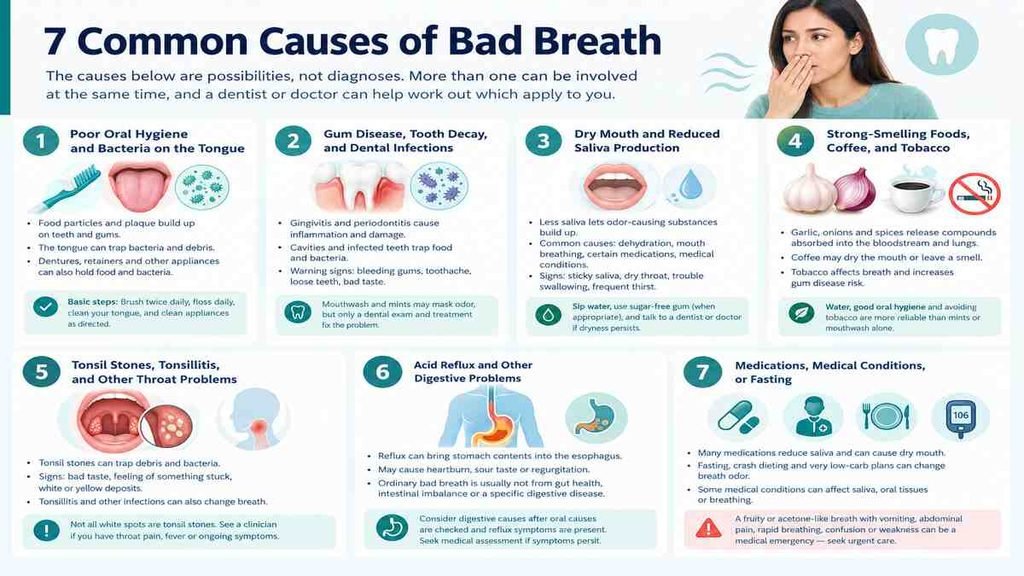
1. Poor Oral Hygiene and Bacteria on the Tongue
Inadequate cleaning is one of the most common reasons for unpleasant breath. Food particles left between teeth and along the gumline can break down and produce odor. Plaque builds up when it is not removed regularly.
The tongue deserves special attention. Its uneven surface, especially toward the back, can trap bacteria and debris even when your teeth are clean. Brushing teeth alone may not remove all the odor-causing material.
Dentures, retainers, and other oral appliances can also hold food and bacteria if they are not cleaned properly. The usual basics help most people:
- Brush twice daily for about two minutes with fluoride toothpaste.
- Clean between your teeth once a day with floss or interdental brushes.
- Gently clean your tongue.
- Clean dentures and appliances as directed.
If your breath improves with consistent cleaning but keeps returning, check whether every surface and appliance is being cleaned well. Our guide on how to get rid of bad breath covers these steps in more detail.
2. Gum Disease, Tooth Decay, and Dental Infections
Persistent bad breath can be a sign of a dental problem that needs professional treatment. Gingivitis and periodontitis cause inflammation and damage to the tissues that support the teeth. Cavities and infected teeth can trap food and bacteria, which adds to odor.
The National Institute of Dental and Craniofacial Research (NIDCR) lists persistent bad breath among the symptoms of gum disease. Other possible warning signs include:
- Bleeding or swollen gums
- Toothache or tenderness
- Loose teeth
- A persistent unpleasant taste
Mouthwash and mints cannot treat tooth decay or advanced gum disease. They may cover the smell briefly, but the problem underneath keeps going. A dental exam, professional cleaning, and treatment matched to the diagnosis are the way forward.
When dental problems are ruled out, the next place to look may be the mouth’s natural moisture levels.
3. Dry Mouth and Reduced Saliva Production
Saliva washes away food particles and helps keep the mouth in balance. When saliva production falls, odor-causing substances can accumulate. This is partly why many people have morning breath, since saliva slows during sleep.
Dry mouth can result from dehydration, mouth breathing, certain medications, and some medical conditions (NIDCR). Signs include:
- Sticky or thick-feeling saliva
- A dry throat
- Difficulty swallowing
- Frequent thirst
Sipping water through the day and using sugar-free gum when appropriate may help. Medicines used for conditions such as high blood pressure or depression can contribute to dry mouth. Do not stop or change a prescribed medication without professional advice. If dryness is persistent, talk with a dentist or doctor.
4. Strong-Smelling Foods, Coffee, and Tobacco
Diet and lifestyle can temporarily change breath. Garlic, onions, and some spices release odor-producing compounds that can be absorbed into the bloodstream and exhaled from the lungs, so brushing does not fully remove them (Mayo Clinic).
Coffee and some other drinks may dry the mouth or leave a lingering smell. Tobacco can affect breath and increases the risk of gum disease. These factors do not explain every case of persistent halitosis, and not every strong-smelling food causes lasting bad breath.
Mints and cosmetic mouthwashes may mask odor for a short time without addressing its source. Drinking water, keeping up with oral hygiene, and avoiding tobacco are more reliable steps. A balanced diet supports your overall health, though diet alone does not cure bad breath.
5. Tonsil Stones, Tonsillitis, and Other Throat Problems
The tonsils and throat can sometimes contribute to bad breath, even when dental hygiene is good. Tonsil stones are small deposits that can form in the pockets of the tonsils. They may contain trapped debris and bacteria that produce an unpleasant smell.
Possible signs include a persistent bad taste, a feeling that something is stuck in the throat, or visible white or yellow deposits. Tonsillitis and other throat infections may also change breath.
Not all white spots on the tonsils are tonsil stones, and you should not try aggressive removal that could injure the tissue. See a clinician if you have throat pain, fever, recurring tonsil problems, or symptoms that do not go away.
6. Acid Reflux and Other Digestive Problems
Digestive conditions can sometimes contribute to bad breath, but most persistent halitosis starts in the mouth. In gastroesophageal reflux disease (GERD), stomach contents flow back into the esophagus. Associated symptoms can include heartburn, a sour-tasting fluid, or regurgitation, and in some people reflux may add to an unpleasant taste or odor.
Ordinary bad breath should not automatically be blamed on poor gut health, an intestinal imbalance, or a specific digestive disease. Digestive causes make more sense to consider when oral causes have been checked and reflux symptoms are present. Persistent reflux symptoms deserve medical assessment.
To learn more, see our guides on what causes acid reflux and common digestive problems. General advice on gut health may also be of interest, though it is not a proven treatment for halitosis.
7. Medications, Medical Conditions, or Fasting
When routine oral care does not fix bad breath, medications, reduced saliva, dietary restriction, or an underlying medical condition may be worth considering. Many medicines reduce saliva and lead to dry mouth, which can add to odor.
Fasting, crash dieting, and very low-carbohydrate eating plans can also change breath odor in some people, as Mayo Clinic notes. Some medical conditions can affect saliva, oral tissues, or breathing.
An unusual breath odor alone cannot reliably diagnose diabetes, kidney disease, liver disease, or another systemic condition. The right evaluation depends on your symptoms, medical history, medications, and an oral exam. If persistent bad breath comes with other unexplained health changes, ask a professional to take a look.
One exception is important. A fruity or acetone-like breath odor with vomiting, abdominal pain, deep or rapid breathing, confusion, or marked weakness can signal a medical emergency, particularly in someone with diabetes. Seek emergency care right away in that situation.
When Can Bad Breath Signal an Underlying Health Problem?
Most bad breath is caused by manageable, common issues, and it is rarely an emergency. Still, some patterns suggest that further evaluation could help:
- Persistent bad breath with bleeding gums, tooth pain, swelling, or loose teeth
- Recurring dry mouth, trouble swallowing, or a lasting change in taste
- Bad breath alongside ongoing reflux, throat symptoms, or other unexplained symptoms
A dentist may be able to find an oral cause, while a doctor can assess suspected medication-related or other medical causes. Odor alone is not enough to diagnose a disease, so try not to jump to conclusions.
How to Get Rid of Bad Breath
The right fix depends on the cause, but a few habits help many people. For a full step-by-step guide, see our article on how to get rid of bad breath.
Improve Your Daily Oral Hygiene
- Brush twice daily for about two minutes with fluoride toothpaste.
- Clean between your teeth daily with floss or interdental brushes.
- Gently clean your tongue.
- Clean dentures and removable appliances as directed.
- Keep up with routine dental visits.
The ADA offers more guidance on brushing and cleaning between your teeth.
Manage Dry Mouth
- Drink water regularly.
- Consider sugar-free gum if it is appropriate for you.
- Discuss persistent dry mouth or medication side effects with a dentist or doctor.
- Avoid tobacco and limit things that worsen dryness.
Choose Mouthwash Carefully
Cosmetic mouthwashes mainly mask odor for a short time. Some therapeutic products are made to help control odor-causing bacteria and may offer longer-lasting effects. Mouthwash does not replace brushing, cleaning between teeth, or dental treatment.
Follow the product instructions, and seek professional advice if symptoms continue. The NHS guidance on bad breath offers further self-care tips.
When Should You See a Dentist or Doctor?

Self-care is not always enough. Make a dental appointment if:
- Bad breath continues for a few weeks despite consistent oral hygiene.
- Your gums are swollen, tender, or bleeding.
- You have tooth pain, a suspected cavity, or loose adult teeth.
- Dentures cause problems, or oral symptoms keep coming back.
See a doctor if persistent bad breath comes with unexplained symptoms that suggest a non-dental cause. You do not need extensive testing for every case of bad breath, and a dental exam is often a sensible first step.
Seek emergency care for facial or neck swelling with trouble breathing or swallowing. Seek it as well for the symptoms of possible diabetic ketoacidosis described above.
Frequently Asked Questions About Bad Breath
What Is the Most Common Cause of Bad Breath?
Odor that starts in the mouth is the most common. It is often tied to bacteria on the tongue, food debris, plaque, and gum problems. The exact cause varies from person to person (MedlinePlus).
Why Do I Have Bad Breath Even After Brushing?
Tongue coating, debris between teeth, dry mouth, gum disease, and dental problems can all cause odor after brushing. Review your full routine, and get a dental assessment if the problem persists.
Can Stomach Problems Cause Bad Breath?
Reflux and certain other digestive conditions can contribute in some cases. Most persistent bad breath still comes from the mouth, so digestive causes should not be assumed without evidence.
How Can I Get Rid of Bad Breath Permanently?
Lasting improvement depends on finding and treating the cause. Regular brushing, tongue cleaning, cleaning between teeth, staying hydrated, and professional treatment when needed can all help. No method guarantees that bad breath will never return.
When Is Bad Breath a Sign of Something Serious?
Bad breath alone rarely points to a serious diagnosis. Have persistent symptoms checked if they come with dental pain, swelling, or unexplained health changes. Emergency symptoms, such as trouble breathing or swallowing, need immediate care.
Conclusion
Bad breath may result from poor oral hygiene, gum disease, dry mouth, food choices, throat conditions, reflux, or medication-related and other medical factors. Start with consistent oral care, and avoid relying only on mints or cosmetic mouthwash. If bad breath continues, ask a dentist or doctor to help identify the cause and the right treatment. Understanding what causes bad breath is the first step toward fresher breath, healthier teeth and gums, and greater confidence in your daily life.
You can build on these habits with healthy lifestyle habits that support your overall well-being.
Sources
- American Dental Association. Bad breath (Journal of the American Dental Association)
- American Dental Association. Toothbrushes
- American Dental Association. Floss
- National Institute of Dental and Craniofacial Research. Gum disease
- National Institute of Dental and Craniofacial Research. Dry mouth
- NHS. Bad breath
- Mayo Clinic. Bad breath: Symptoms and causes
- MedlinePlus. Bad breath
Medical Disclaimer: This article is for general educational purposes and does not replace professional dental or medical advice, diagnosis, or treatment. Persistent bad breath can have many causes, and only a dentist or doctor can find out what is causing yours. Talk with a dentist, doctor, or pharmacist before starting or changing any treatment. Seek emergency care for facial or neck swelling with trouble breathing or swallowing, or for fruity-smelling breath with vomiting, rapid breathing, or confusion.
5 thoughts on “What Causes Bad Breath? 7 Reasons You Shouldn’t Ignore”
Comments are closed.