
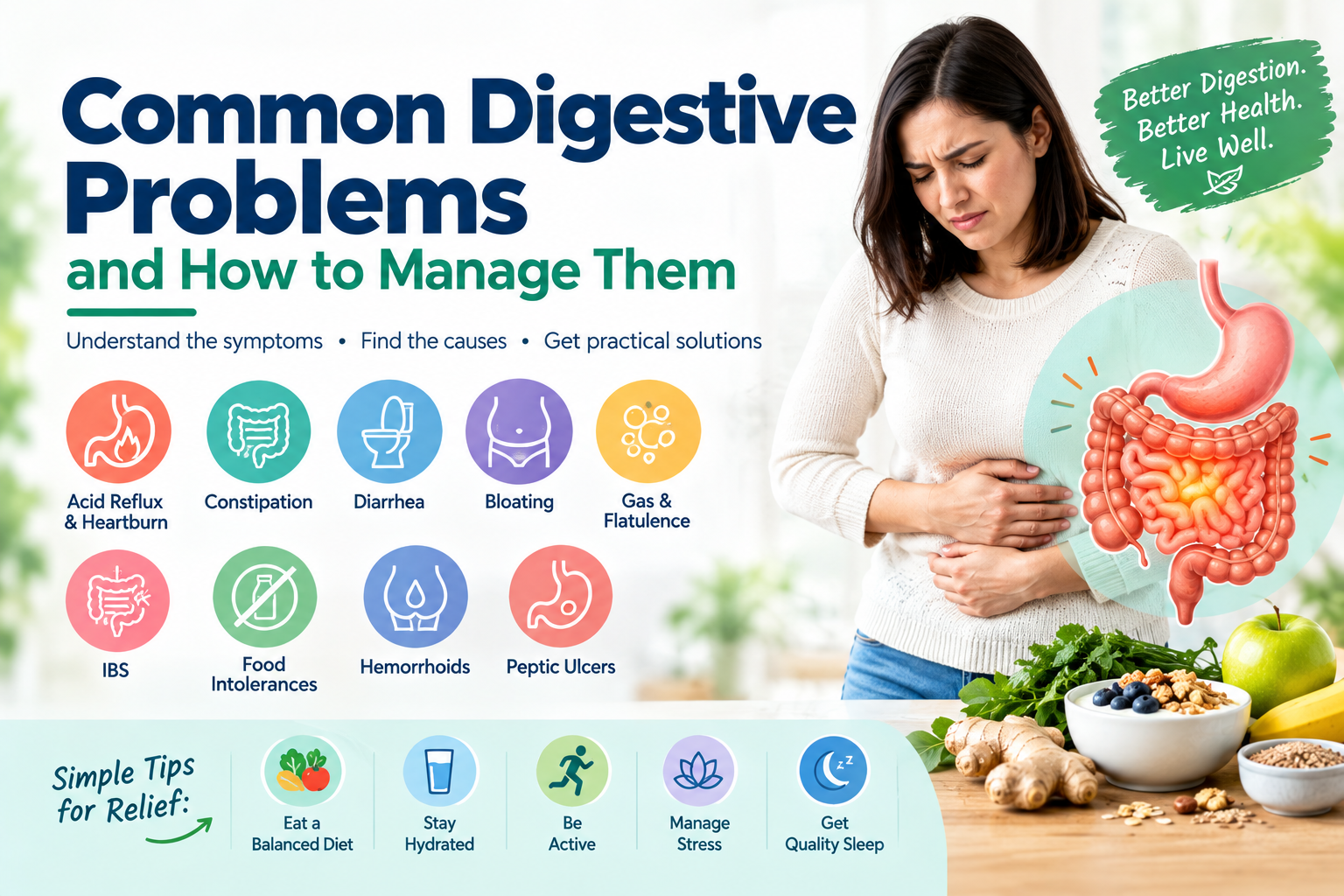

Almost everyone deals with a digestive complaint at some point. Heartburn after a big meal, bloating that won’t quit, or a stretch of constipation that makes no sense given your diet. Most of these problems are common, manageable, and not a sign of anything serious.
Some, though, are chronic conditions that need ongoing management, and a few are warning signs worth taking seriously. This guide walks through the most common digestive problems, what causes them, and what actually helps — plus the signs that mean it’s time to see a doctor.
Quick answer
- The most common digestive complaints are acid reflux, gas and bloating, constipation, diarrhea, and irritable bowel syndrome (IBS).
- Most digestive discomfort responds well to diet, timing, and lifestyle changes before medication is needed.
- Chronic or worsening symptoms, blood in the stool, unintentional weight loss, or pain that wakes you up all warrant medical evaluation.
- Tracking your symptoms — what you ate, when it started, how long it lasted — makes diagnosis faster and more accurate.
- Many digestive problems overlap in symptoms, so getting an accurate diagnosis matters more than guessing and self-treating indefinitely.
Acid reflux and GERD
Acid reflux happens when stomach acid flows backward into the esophagus, the tube connecting your throat to your stomach. Occasional reflux is extremely common and usually harmless.
When reflux becomes GERD
When reflux happens more than twice a week, doctors call it gastroesophageal reflux disease, or GERD. Left unmanaged, GERD can irritate the esophageal lining over time and lead to complications.
The main symptom is heartburn: a burning sensation behind the breastbone, often after eating or when lying down. Some people also experience regurgitation, a sour taste, or a chronic cough.
What helps
Common, evidence-backed strategies include:
- Eating smaller meals
- Avoiding lying down for at least three hours after eating
- Cutting back on caffeine, alcohol, and fatty or spicy foods
- Elevating the head of your bed
- Losing weight if you’re carrying extra weight around your midsection
Reflux triggers and risk factors also shift somewhat with age. If you’re noticing new or worsening symptoms at a particular life stage, our guides to acid reflux in your 30s and acid reflux in your 50s explain what commonly changes and why.
A note on home remedies
Some people reach for ginger to settle their stomach, and it’s a reasonable instinct for general digestive discomfort. But ginger and reflux specifically have a complicated relationship — it can sometimes help and sometimes make heartburn worse. Our detailed breakdown of ginger and acid reflux covers why, along with safer ways to test your tolerance. For ginger’s broader health picture beyond reflux, see our full guide on whether ginger is good for your health.
Gas and bloating
Gas is a normal byproduct of digestion. Everyone produces it, and most of the time it’s simply uncomfortable rather than a sign of a problem.
Common causes
Bloating and excess gas usually trace back to one of a few things:
- Swallowing air while eating quickly or talking while chewing
- Carbonated drinks
- High-fiber foods like beans, broccoli, and cabbage
- Difficulty digesting certain carbohydrates
- An underlying condition like lactose intolerance or IBS
Managing gas and bloating
Eating more slowly, cutting back on carbonated drinks, and identifying specific trigger foods usually make the biggest difference. If bloating is severe, persistent, or comes with pain, it’s worth ruling out a more specific cause rather than assuming it’s ordinary gas.
Our guide to what abdominal pain feels like can help you describe bloating-related discomfort more precisely, which is useful if you end up discussing it with a doctor.
Constipation
Constipation means having fewer than three bowel movements a week, or stools that are hard, dry, or difficult to pass. It’s one of the most common digestive complaints in the United States, affecting roughly 16 out of every 100 adults, and about a third of adults over 60.
Who’s more likely to get constipated
Certain groups face a higher risk, including:
- Women, especially during pregnancy or after childbirth
- Older adults
- People who eat little fiber
- People on certain medications
- People with underlying gastrointestinal conditions
What actually helps
Constipation usually responds to a few straightforward changes:
- Gradually increasing fiber intake
- Drinking more water
- Staying physically active
- Setting aside unhurried, regular bathroom time
- Reviewing medications that might be contributing, with a doctor’s input
Constipation isn’t a disease on its own. It’s often a symptom of something else, from diet to an underlying condition, so persistent constipation that doesn’t improve with these steps is worth discussing with a doctor.
Diarrhea
Diarrhea means passing loose, watery stools three or more times a day, or more often than what’s typical for you. Most cases are acute, meaning they resolve within a week without needing medical treatment.
Acute versus chronic diarrhea
Diarrhea falls into three categories based on how long it lasts:
| Type | Duration | Typical cause |
|---|---|---|
| Acute | Under 2 weeks | Viral or bacterial infection, food-related |
| Persistent | 2–4 weeks | Ongoing infection or intolerance |
| Chronic | 4+ weeks | IBS, IBD, celiac disease, or other condition |
Chronic diarrhea is less common but more likely to signal an underlying condition like IBS, inflammatory bowel disease, or celiac disease.
Managing diarrhea safely
For most acute cases, the priority is staying hydrated and replacing lost electrolytes. Over-the-counter medications can help, but they’re not always appropriate, particularly if a bacterial infection is the cause.
See a doctor if diarrhea lasts more than a couple of days, comes with a high fever, includes blood, or if you’re pregnant, over 65, or have a weakened immune system. These groups face a higher risk of complications from dehydration.
Irritable bowel syndrome (IBS)
IBS is one of the most common chronic digestive conditions, and also one of the most misunderstood. It causes repeated abdominal pain along with changes in bowel habits, without any visible damage to the digestive tract.
What IBS actually involves
Doctors now classify IBS as a disorder of gut-brain interaction. That means the way the brain and gut communicate affects gut sensitivity and how the bowel muscles contract, even though standard tests don’t show structural damage.
Symptoms typically include cramping tied to bowel movements, bloating that builds through the day, and flares that last days or weeks, separated by calmer stretches. Common triggers include stress, certain foods, and hormonal changes.
Diagnosis matters
IBS is a real diagnosis, but it’s one doctors reach after ruling out other causes, not one to self-assign because symptoms seem to fit. Red flags like rectal bleeding, unintentional weight loss, or new symptoms after age 50 point toward something else and need evaluation first.
If your abdominal discomfort follows a pattern you haven’t quite pinned down, tracking it can speed up an accurate diagnosis. Our guide to abdominal pain that comes and goes explains how different patterns — colicky, episodic, cyclical, or flaring — point toward different causes.
Lactose intolerance
Lactose intolerance happens when your body doesn’t produce enough lactase, the enzyme needed to break down lactose, the sugar in milk and dairy products. It’s extremely common worldwide, though rates vary significantly by ancestry.
Symptoms and timing
Symptoms usually show up within a few hours of consuming dairy and include:
- Bloating
- Gas
- Diarrhea
- Abdominal pain
- Nausea
Most people with lactose intolerance can still tolerate small amounts of dairy. The issue is usually a threshold problem, not an all-or-nothing one.
Living with lactose intolerance
Fermented dairy products, including yogurt, tend to be better tolerated than milk, since fermentation breaks down some of the lactose. Lactase supplements taken before eating dairy are another common, effective option. If you avoid dairy altogether, pay attention to calcium and vitamin D intake, since dairy is a major source of both.
Peptic ulcers and gastritis
Gastritis is inflammation of the stomach lining, and a peptic ulcer is an open sore that can form in the stomach or the upper part of the small intestine. Both can cause similar symptoms: burning or gnawing pain in the upper abdomen, often related to meals.
What causes them
The two leading causes are infection with H. pylori bacteria and regular use of NSAIDs, a category of pain relievers that includes ibuprofen and aspirin. Both can irritate or damage the stomach lining over time.
Notably, many people with ulcers have no symptoms at all until a complication develops, which is part of why persistent upper-abdominal discomfort deserves proper evaluation rather than long-term self-treatment with antacids.
Treatment approach
Treatment depends on the cause. H. pylori infections require antibiotics, while NSAID-related ulcers usually improve once the medication is stopped or switched, under a doctor’s guidance. Acid-reducing medications are commonly used alongside these treatments to allow healing.
Gallstones
Gallstones are hardened deposits that form in the gallbladder, a small organ that stores bile for digestion. Many people have gallstones without ever knowing it, since they often cause no symptoms.
When gallstones cause problems
When a gallstone blocks a bile duct, it can cause sudden, severe pain in the upper right abdomen, sometimes spreading to the back or shoulder blade. This is known as biliary colic, and despite the name, the pain is usually constant rather than wave-like, often lasting one to five hours.
Risk factors include being female, older age, obesity, and rapid weight loss, which can affect how the gallbladder empties. If you’re planning any significant weight loss effort, it’s worth choosing a gradual, well-supported approach rather than a rapid one, partly for this reason. Our overview of 2026 weight loss trends covers current evidence-based strategies worth considering.
What to do about gallstone symptoms
Occasional, mild gallstone attacks don’t always need immediate treatment, but recurring attacks, fever, or jaundice alongside the pain need prompt medical attention. Surgery to remove the gallbladder is common for people with recurrent symptoms.
Inflammatory bowel disease (IBD)
IBD is an umbrella term covering Crohn’s disease and ulcerative colitis, two chronic conditions that cause inflammation in the digestive tract. Unlike IBS, IBD involves real, visible tissue damage.
How IBD differs from IBS
Both conditions can flare and settle, which is part of why IBD is sometimes mistaken for IBS, occasionally for years. The features that set IBD apart include blood in the stool, persistent diarrhea, unintentional weight loss, fever, fatigue, and pain that wakes you up at night.
A simple stool test for a marker called fecal calprotectin can help distinguish inflammation from a functional disorder like IBS. It’s worth asking a doctor about if your symptoms include any of the features above.
Managing IBD
IBD requires ongoing medical management, typically involving medication to control inflammation and reduce flares. Diet can help manage symptoms, but it doesn’t replace medical treatment the way it often can for milder digestive issues.
When digestive symptoms need medical attention
Most digestive discomfort is manageable at home with time and simple changes. But certain signs mean it’s time to stop self-treating and see a doctor.
Red flags to watch for
Seek medical care if you experience:
- Blood in your stool or vomit
- Black, tarry stools
- Unintentional weight loss
- Persistent vomiting
- Difficulty or pain swallowing
- Pain that wakes you from sleep
- A fever alongside abdominal pain
- Symptoms that keep getting more frequent or severe
- New symptoms starting after age 50
Why tracking your symptoms helps
Many digestive conditions share overlapping symptoms, which makes an accurate description genuinely valuable. Noting when symptoms started, what triggers them, how long they last, and what makes them better or worse gives a doctor far more to work with than a vague description after the fact.
If you’re dealing with pain that doesn’t fit a clear pattern yet, our guides on abdominal pain that comes and goes and what abdominal pain feels like can help you organize what you’re noticing before your appointment.
Frequently asked questions
What is the most common digestive problem? Acid reflux and constipation are among the most frequently reported digestive complaints, though gas and bloating are so common they’re often not reported at all. IBS is the most common chronic digestive condition diagnosed after other causes are ruled out.
How do I know if my stomach pain is serious? Pain that’s mild, occasional, and clearly tied to a specific food or meal is usually not urgent. Pain that’s severe, persistent, accompanied by fever or bleeding, or that wakes you from sleep needs medical evaluation.
Can stress cause digestive problems? Yes. Stress genuinely affects gut motility and sensitivity through the gut-brain connection, and it’s a well-documented trigger for IBS flares in particular. That said, stress doesn’t cause bleeding, fever, or weight loss, so those symptoms point toward a different cause.
Is it normal to have digestive issues every day? Occasional digestive discomfort is normal. Daily symptoms — whether that’s reflux, bloating, or irregular bowel habits — usually point to something worth identifying and addressing, rather than something to simply live with indefinitely.
Should I try an elimination diet on my own? Removing one suspected trigger food at a time for a couple of weeks is a reasonable way to test a theory. Broader elimination diets, like low-FODMAP, work best with guidance from a dietitian, since they’re restrictive and designed to be temporary.
When should I see a gastroenterologist instead of my regular doctor? If symptoms persist despite basic treatment, if you have red flag symptoms, or if your doctor recommends further testing like an endoscopy or colonoscopy, a gastroenterologist is the right next step.
Sources
- National Institute of Diabetes and Digestive and Kidney Diseases (NIDDK). Definition & Facts for Constipation
- NIDDK. Definition & Facts for Diarrhea
- NIDDK. Definition & Facts for Irritable Bowel Syndrome
- NIDDK. Acid Reflux (GER & GERD) in Adults — Definition & Facts
- NIDDK. Lactose Intolerance — Definition & Facts, Symptoms & Causes
- NIDDK. Definition & Facts for Gastritis & Gastropathy
- NIDDK. Gallstones — Definition & Facts
- NIDDK. Symptoms & Causes of Gas in the Digestive Tract
- NHS Inform. Gallstones
- Cleveland Clinic. Peptic Ulcer Disease
Medical disclaimer
This article is for general information and education. It is not medical advice and cannot diagnose any digestive condition. If you have persistent, severe, or worsening digestive symptoms, see a qualified healthcare provider.
Read our full Medical Disclaimer.
29 thoughts on “Common Digestive Problems and How to Manage Them”
Comments are closed.