
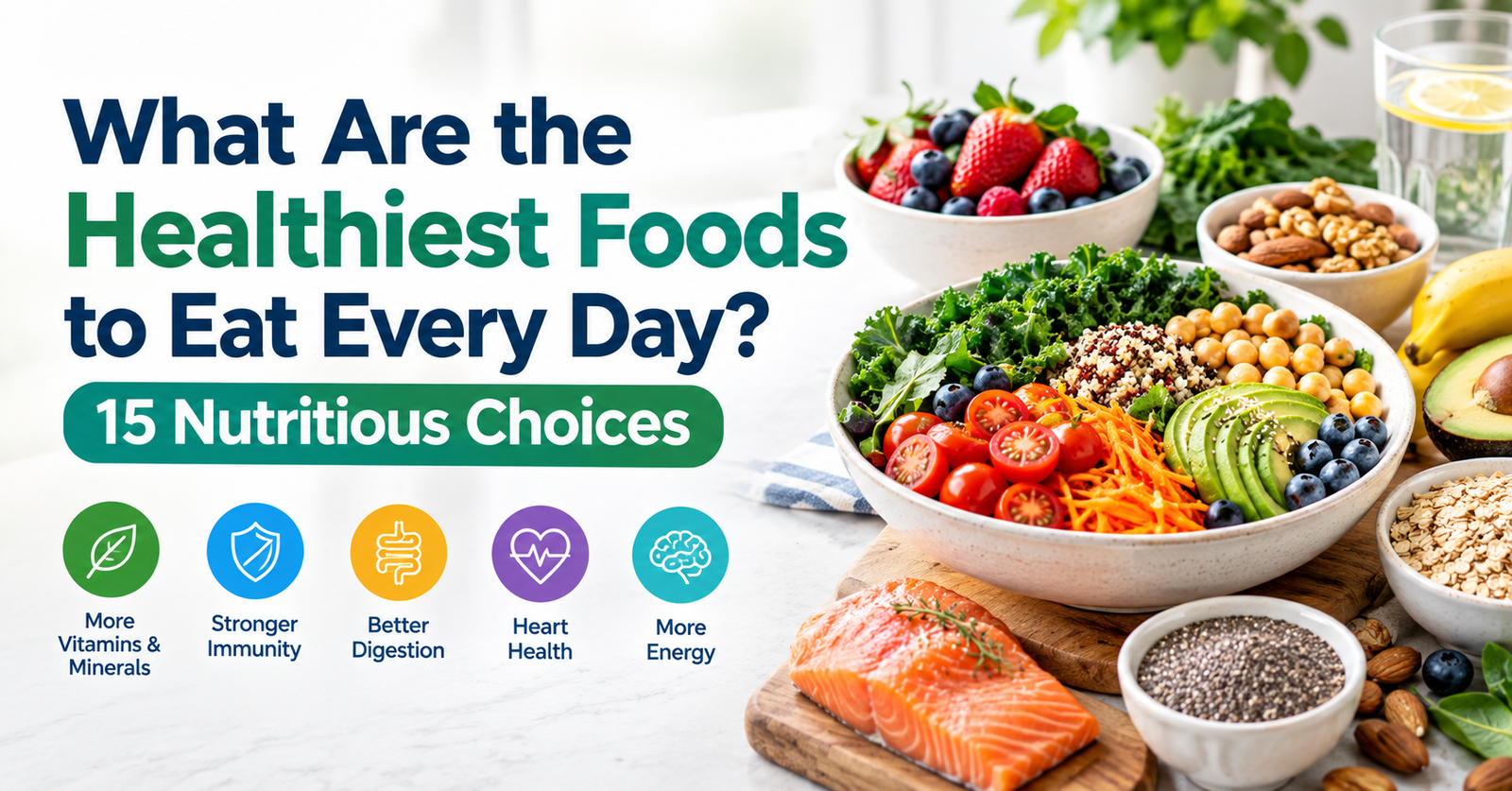

No single food can carry your whole diet. The World Health Organization is clear about this. A healthy diet comes from balance, variety, and moderation, not from one “superfood” doing all the work.
That said, some foods pack in far more nutrients per bite than others. This guide covers 15 of the most nutrient-dense choices worth building into your regular rotation, along with the bigger picture of what actually makes a diet healthy.
What Makes a Food “Healthy,” According to the Evidence
Before diving into specific foods, it helps to understand the framework health organizations actually use.
WHO’s Core Guidance
The World Health Organization recommends eating a combination of different foods, including fruits, vegetables, legumes, nuts, and whole grains. Adults should aim for at least 400 grams, roughly five servings, of fruits and vegetables every day.
WHO also recommends limiting fat to less than 30% of total calories, capping added sugar at less than 10% of calories, and keeping salt under 5 grams a day.
Why Variety Matters More Than Any Single Food
No single food provides every nutrient your body needs. Eating a wide range of foods, especially plants, is what actually delivers the fiber, vitamins, minerals, and protective compounds your body relies on.
If you’re working on building better habits overall, our guide to how to live a healthy lifestyle covers how diet fits alongside sleep, movement, and stress management.
Leafy Greens
Spinach, kale, and other leafy greens are among the most nutrient-dense foods available.
What They Offer
Leafy greens are rich in vitamins A, C, and K, along with folate and fiber. They’re also very low in calories, so they add volume and nutrients without much energy cost.
How to Add Them Daily
Toss a handful into a smoothie, swap them into sandwiches instead of lettuce, or sauté them as a quick side dish.
Berries
Blueberries, strawberries, and raspberries are consistently ranked among the most antioxidant-rich fruits.
What They Offer
Berries are high in fiber and vitamin C, and they contain plant compounds called anthocyanins, which give them their color and are linked to reduced inflammation.
How to Add Them Daily
Add a handful to oatmeal or yogurt, or eat them plain as a snack. Frozen berries retain most of their nutrients and cost less than fresh.
Fatty Fish
Salmon, mackerel, sardines, and similar fish stand out for their omega-3 content.
What They Offer
The American Heart Association recommends eating two servings of fatty fish per week for heart health. Omega-3 fatty acids in these fish help reduce triglycerides, ease inflammation, and slow plaque buildup in arteries.
How to Add Them Daily
You won’t eat fish every single day, but working it into 2 or more meals a week meets current recommendations. Canned salmon or sardines are affordable, shelf-stable options.
Legumes
Beans, lentils, and chickpeas offer a rare combination of plant protein and fiber in one food.
What They Offer
Legumes are a core part of WHO’s dietary recommendations, alongside whole grains and nuts. They’re also naturally low in fat and a good source of iron and folate.
How to Add Them Daily
Add lentils to soups, blend chickpeas into hummus, or use black beans in place of some meat in tacos or bowls.
Nuts and Seeds
Almonds, walnuts, chia seeds, and flaxseed are small but nutritionally dense.
What They Offer
Nuts and seeds provide unsaturated fats, protein, and fiber. Walnuts and flaxseed specifically contain ALA, a plant-based omega-3 fatty acid.
How to Add Them Daily
A small handful as a snack, or sprinkled over oatmeal or salad, is enough to add meaningful nutrition without excess calories.
Whole Grains
Oats, quinoa, brown rice, and whole wheat products belong in daily meals rather than occasional ones.
The Evidence Behind Whole Grains
Research shows that daily consumption of about 50 grams of whole grains is associated with a 25% lower risk of type 2 diabetes, a 20% reduction in cardiovascular mortality, and roughly a 15% drop in overall mortality.
How to Add Them Daily
Swap white rice for brown rice or quinoa, choose whole-grain bread, and start the day with oatmeal instead of refined cereal.
Cruciferous Vegetables
Broccoli, cauliflower, and Brussels sprouts belong to a vegetable family linked to several health benefits.
What They Offer
These vegetables are rich in fiber, vitamin C, and plant compounds called glucosinolates, which are being studied for their role in reducing cancer risk.
How to Add Them Daily
Roast them with olive oil, add them to stir-fries, or shred raw cabbage into slaws.
Sweet Potatoes
Sweet potatoes offer more nutrition per bite than many other starchy vegetables.
What They Offer
They’re an excellent source of vitamin A, along with fiber and potassium. Unlike some refined carbohydrates, they digest more slowly, which helps steady blood sugar.
How to Add Them Daily
Roast them as a side, mash them as a potato substitute, or add cubes to grain bowls.
Eggs
Eggs remain one of the most nutrient-dense, affordable protein sources available.
What They Offer
A single egg provides high-quality protein along with choline, vitamin D, and several B vitamins. Current nutrition guidance no longer treats dietary cholesterol from eggs as a major concern for most healthy adults.
How to Add Them Daily
Eggs work for any meal, not just breakfast. Hard-boiled eggs also make a convenient, portable snack.
Yogurt and Fermented Dairy
Plain yogurt, kefir, and other fermented dairy products support digestion in ways many other foods don’t.
What They Offer
These foods contain live cultures that support a healthy gut microbiome, along with protein and calcium. Choosing plain, unsweetened versions avoids the added sugar found in flavored varieties.
How to Add Them Daily
Use plain yogurt as a base for smoothies, or top it with berries and a small amount of honey instead of buying pre-sweetened versions.
Avocado
Avocado stands out among fruits for its fat content, which is mostly the healthy, unsaturated kind.
What They Offer
Avocados provide monounsaturated fat, fiber, and potassium, a combination linked to better heart health markers.
How to Add Them Daily
Spread it on whole-grain toast, add it to salads, or blend it into smoothies for creaminess without dairy.
Olive Oil
Extra virgin olive oil is a defining feature of some of the most well-studied healthy eating patterns.
What They Offer
Olive oil is rich in monounsaturated fat and plant compounds with anti-inflammatory properties. It’s a cornerstone of the Mediterranean diet, one of the most extensively researched eating patterns for heart health.
How to Add Them Daily
Use it as your primary cooking oil and for salad dressings, in place of butter or highly processed oils.
Garlic
Garlic adds more than flavor to a dish.
What They Offer
Garlic contains sulfur compounds that have been studied for potential cardiovascular and immune benefits, particularly when eaten regularly over time.
How to Add Them Daily
Cooking with fresh garlic regularly, rather than relying only on garlic powder, provides more of these active compounds.
Citrus Fruits
Oranges, grapefruit, and lemons are reliable sources of vitamin C and fiber.
What They Offer
Citrus fruits support immune function and skin health through vitamin C, and their fiber content helps slow sugar absorption compared to juice alone.
How to Add Them Daily
Eat the whole fruit rather than juice when possible, since juicing removes most of the fiber.
Water (and Why It Belongs on This List)
Water isn’t a food, but no list of daily health habits is complete without it.
Why It Matters
Proper hydration supports digestion, concentration, and nearly every bodily function. Reaching for water instead of sugary drinks also reduces added sugar intake without any real effort.
How to Turn This List Into an Actual Daily Pattern
Knowing which foods are nutrient-dense doesn’t automatically translate into better eating. A few practical strategies help close that gap.
Build Meals Around Plants First
Fill half your plate with vegetables and fruit, then add whole grains and a protein source. This simple structure naturally incorporates several items from this list without much extra planning.
Don’t Aim for Perfection Every Day
A healthy diet is measured over weeks and months, not any single meal. Missing a day of leafy greens or fish doesn’t undo your overall pattern.
Watch for Foods That Work Against You
Ultra-processed foods high in added sugar, salt, and unhealthy fats crowd out the nutrient-dense choices covered here. WHO specifically flags these as major contributors to noncommunicable diseases like heart disease, diabetes, and certain cancers.
Connect Diet to Your Broader Health Picture
Diet doesn’t operate in isolation. If you’re managing a specific condition, some of these foods interact with it directly. For example, certain foods and habits raise the risk of acid reflux, while others can help prevent symptoms from developing in the first place. If reflux already affects your daily life, our guide to managing acid reflux at home covers dietary adjustments in more depth, and how acid reflux is diagnosed explains when symptoms warrant medical evaluation rather than diet changes alone.
Diet-related conditions also shift by life stage. Our guides to acid reflux in your 30s and acid reflux in your 50s both touch on how eating patterns interact with age-related changes.
Consider Your Overall Health Context
Diet is one piece of a much bigger picture. Our overview of the most common health issues shows how nutrition-related conditions rank alongside other widespread health concerns, and our roundup of weight loss trends covers how food choices factor into sustainable weight management.
A Few Specific Health Angles Worth Knowing
Some foods deserve a closer look for particular health goals or concerns.
Digestive Health
Fiber-rich foods like legumes, whole grains, and vegetables support regular digestion and a healthy gut microbiome. If you experience ongoing digestive symptoms, our guide to common digestive problems covers when diet changes are enough and when it’s time to see a doctor. Understanding what abdominal pain feels like can also help you connect specific foods to specific symptoms.
Natural Ingredients With a Track Record
Certain everyday ingredients, like ginger, have a longer history of use for digestive comfort than most people realize. Our article on ginger’s health benefits looks at what the evidence actually supports.
Frequently Asked Questions
What is the single healthiest food to eat every day?
No single food covers every nutritional need on its own. Leafy greens, berries, fatty fish, and legumes all rank highly for nutrient density, but WHO and most major health organizations emphasize variety over any one “best” food.
How many fruits and vegetables should I eat per day?
WHO recommends at least 400 grams, or roughly five servings, of fruits and vegetables daily. This doesn’t include starchy vegetables like potatoes, which are counted separately.
Are eggs healthy to eat every day?
For most healthy adults, yes. Current nutrition guidance has moved away from strict limits on daily egg consumption, since dietary cholesterol has a smaller effect on blood cholesterol than once believed for most people.
Is it better to eat whole grains or refined grains?
Whole grains consistently outperform refined grains in research, with regular consumption linked to lower rates of type 2 diabetes, cardiovascular disease, and overall mortality. Refined grains lack much of the fiber and nutrients found in the whole grain version.
Can I get enough nutrients without eating fish?
Yes, though it takes more intentional planning. Plant-based omega-3 sources like walnuts, flaxseed, and chia seeds provide ALA, though the conversion to the more active forms found in fish is limited. A fish oil supplement is an option worth discussing with a doctor if fish isn’t part of your diet.
How much added sugar is considered healthy?
WHO recommends limiting added sugar to less than 10% of total daily calories, with additional benefits below 5%. For most adults, that works out to roughly 25 grams, or about 6 teaspoons, per day.
Do frozen fruits and vegetables count as healthy as fresh ones?
Yes, in most cases. Frozen produce is typically picked and frozen at peak ripeness, which preserves most nutrients. It’s a practical, often more affordable way to meet daily fruit and vegetable targets.
The Bottom Line
The healthiest daily diet isn’t built around a single miracle food. It’s built around consistent variety: plenty of vegetables and fruit, whole grains, legumes, nuts, and a mix of protein sources like fish, eggs, and fermented dairy.
Use this list as a starting toolkit, not a rigid checklist. Rotate through these foods regularly, keep ultra-processed options to a minimum, and let variety, not perfection, guide your daily choices.
Sources
- World Health Organization. Healthy Diet
- World Health Organization. WHO Guideline: Carbohydrate Intake for Adults and Children
- American Heart Association. Fish and Omega-3 Fatty Acids
- Harvard Health Publishing. The Story on Fish and Heart Health
- Whole Grain Initiative. Factsheet: Consumption of Whole Grains
Related Reading
- How to Live a Healthy Lifestyle
- Most Common Health Issues: An Overview
- Common Digestive Problems: Causes and What They Mean
- What Does Abdominal Pain Feel Like?
- Is Ginger Good for Health?
- Weight Loss Trends for 2026
- Acid Reflux Risk Factors: What Raises Your GERD Risk
- Can Acid Reflux Be Prevented?
Medical Disclaimer
This article is for general information and education. It is not personalized nutrition or medical advice. If you have specific health conditions or dietary needs, talk to a doctor or registered dietitian before making major changes to your diet.
Read our full Medical Disclaimer.
11 thoughts on “What Are the Healthiest Foods to Eat Every Day? 15 Nutritious Choices”
Comments are closed.