
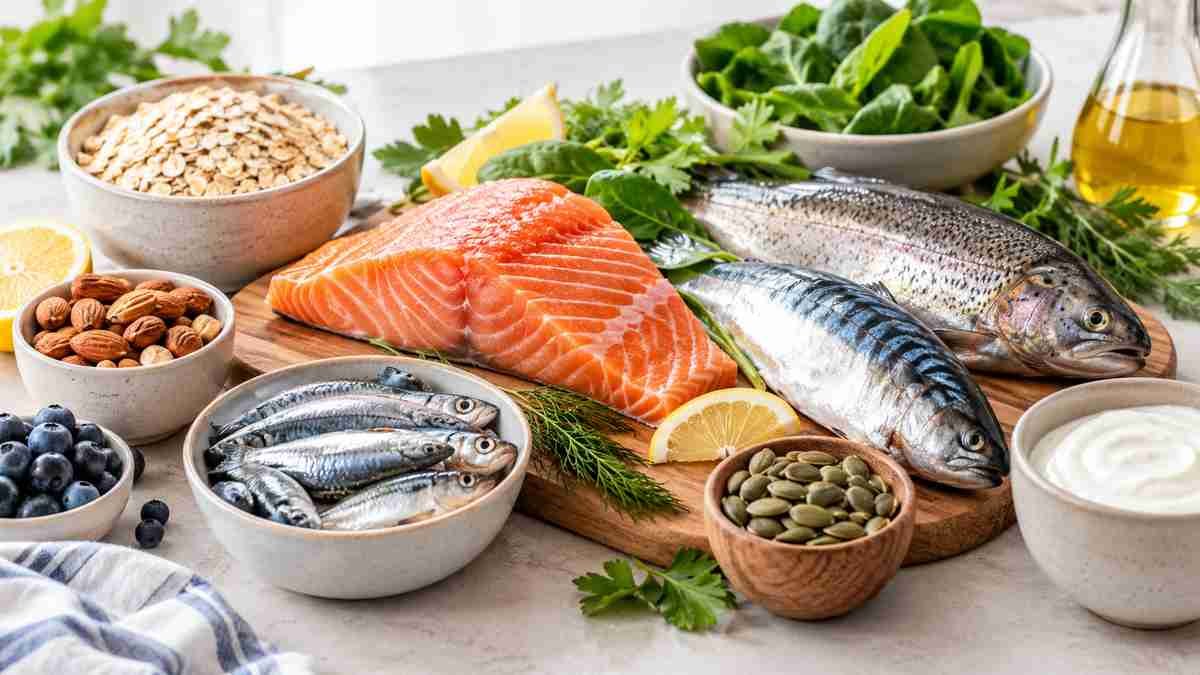

Fatty fish are fish that naturally contain relatively higher amounts of fat, particularly omega-3 fatty acids like EPA and DHA. Salmon, sardines, mackerel, herring, trout, anchovies, and some types of tuna all fall into this category.
Being “fatty” doesn’t make these fish unhealthy. Most of the fat in oily fish is unsaturated, including the omega-3s that have drawn so much research attention. Fish also delivers high-quality protein, vitamin B12, vitamin D, selenium, and iodine, among other nutrients.
This guide covers what makes fatty fish nutritious, the health benefits backed by evidence, the best types to eat, how much to include in your diet, and how to navigate mercury concerns without overcomplicating things.
What Is Fatty Fish?
Fatty fish, sometimes called oily fish, refers to fish that naturally contain relatively higher amounts of fat, particularly the omega-3 fatty acids EPA and DHA. Common examples include:
- Salmon
- Sardines
- Mackerel
- Herring
- Trout
- Anchovies
- Some types of tuna
“Fatty” doesn’t mean unhealthy here. The fat in most oily fish is predominantly unsaturated, including the omega-3s that make these fish nutritionally distinct from leaner white fish. Beyond fat, the FDA and EPA note that fish also provides protein, vitamin B12, vitamin D, selenium, and iodine. Our broader guide to what a healthy diet looks like covers how fish fits into a well-rounded eating pattern.
Fatty Fish Nutrition: What Makes It So Nutritious?
Fatty fish earns its reputation through a combination of nutrients that work together, not any single standout compound.
Omega-3 Fatty Acids
EPA (eicosapentaenoic acid) and DHA (docosahexaenoic acid) are the two main omega-3 fatty acids found in fish. According to the NIH Office of Dietary Supplements, these fats play roles in heart, brain, and eye function, and because your body can’t make them efficiently on its own, fatty fish is one of the most direct dietary sources. Our dedicated guide to omega-3 fatty acids covers how these fats function in more depth.
High-Quality Protein
Fish provides complete protein, meaning it contains all the essential amino acids your body needs but can’t produce on its own. This supports muscle maintenance, tissue repair, and overall metabolic function. Our guide to high-protein foods covers other sources worth including in your diet.
Vitamins and Minerals
Fatty fish also supplies:
- Vitamin D
- Vitamin B12
- Selenium
- Iodine
- Choline
- Zinc
The EPA and FDA note that fish and seafood provide a combination of protein, healthy fats, vitamins, and minerals that’s difficult to replicate with a single food.
7 Health Benefits of Fatty Fish
1. Supports Heart Health
The FDA and EPA state that strong evidence shows eating fish, as part of a healthy eating pattern, may have heart health benefits. This doesn’t mean fatty fish prevents or treats heart disease on its own. It’s one part of a broader pattern that includes diet, activity, and other factors covered in our guide to heart-healthy foods and our overview of cardiovascular disease.
2. Provides Brain-Supportive Nutrients
DHA is a major structural component of the brain, and fatty fish also supplies EPA, vitamin B12, and choline, all of which are involved in brain development and function. This doesn’t mean eating salmon directly “boosts intelligence.” It means these nutrients support normal brain structure and function as part of an overall healthy diet.
3. Supports Eye Health
DHA is also concentrated in the retina, and omega-3 fatty acids are involved in normal eye structure and function. Research continues to explore this relationship, so it’s reasonable to see fatty fish as supportive of eye health rather than a guaranteed treatment for any specific eye condition.
4. Provides High-Quality Protein for Everyday Function
Beyond omega-3s, the protein in fatty fish supports muscle maintenance, tissue repair, satiety, and healthy aging. This makes fatty fish valuable well beyond its fat content alone.
5. Supplies Vitamin D
Some fatty fish, including salmon, trout, sardines, and mackerel, are among the better natural food sources of vitamin D. Vitamin D supports bone health, immune function, and normal muscle function, and it’s a nutrient many people don’t get enough of through diet alone.
6. May Support Healthy Inflammation Regulation
Omega-3 fatty acids may influence inflammatory pathways and play a role in normal immune function, though research continues to investigate the full extent of these effects. It’s more accurate to say fatty fish may support healthy inflammation regulation than to claim it “reduces inflammation” as a guaranteed outcome. Our guide to anti-inflammatory foods covers this broader topic.
7. Supports a Nutrient-Dense Eating Pattern
Fatty fish works best as part of a broader pattern that includes vegetables, fruits, whole grains, legumes, nuts, seeds, and healthy oils, rather than as a standalone miracle food. This is consistent with eating patterns like the Mediterranean diet, which regularly features fatty fish alongside plant-based foods.
10 Best Types of Fatty Fish to Eat
| Fatty Fish | Key Nutrients | Why It’s Popular |
|---|---|---|
| Salmon | Omega-3s, protein, vitamin D, B12 | Versatile and nutrient-rich |
| Sardines | Omega-3s, calcium, B12, vitamin D | Small fish with strong nutrition |
| Mackerel | Omega-3s, B12, selenium | Very rich in omega-3s |
| Herring | Omega-3s, vitamin D, B12 | Nutrient-dense oily fish |
| Trout | Omega-3s, protein, vitamin D | Mild flavor |
| Anchovies | Omega-3s, calcium, B12 | Easy to add to meals |
| Arctic char | Omega-3s, protein | Similar culinary uses to salmon |
| Albacore tuna | Protein, omega-3s | Convenient canned or fresh option |
| Pacific sardines | Omega-3s, calcium | Affordable option |
| Atlantic mackerel | Omega-3s, protein | Nutrient-dense choice |
It’s worth noting that not all mackerel or tuna have the same mercury profile. King mackerel, for example, is a high-mercury fish to avoid or limit, while Atlantic mackerel is a lower-mercury choice. The FDA’s fish advice categorizes fish by mercury level and recommends choosing a variety of lower-mercury options rather than treating all species of the same fish family as interchangeable.
Wild-Caught vs. Farmed Fatty Fish
Both wild-caught and farmed fatty fish can be part of a healthy diet, and the choice often comes down to availability, cost, and personal preference rather than one option being universally superior.
Farmed salmon, for instance, is widely available and often more affordable than wild-caught salmon. Its exact nutrient profile, including the ratio of fat types, can vary somewhat depending on what the fish is fed, while wild-caught fish nutrient content can vary by season and location. Neither factor changes the basic value of fatty fish as a source of omega-3s, protein, and key vitamins and minerals. If sustainability matters to you, resources like the Monterey Bay Aquarium’s Seafood Watch can help you compare specific sourcing practices.
Salmon vs. Sardines vs. Mackerel: Which Is Healthiest?
There isn’t one universally “healthiest” fatty fish. Each offers a slightly different nutritional strength.
Salmon
Best for versatility, protein, omega-3 content, and vitamin D. It works in nearly any cuisine and cooking method.
Sardines
Best for omega-3 content, calcium when the bones are eaten, affordability, and convenient canned options.
Mackerel
Best for very high omega-3 content, vitamin B12, and a richer, more distinctive flavor.
Trout
Best for a mild flavor, solid protein and omega-3 content, and everyday approachability for people new to fatty fish.
The practical takeaway: variety is a better strategy than chasing one “perfect” fish. Rotating between a few options helps you get a broader nutrient mix and reduces reliance on any single source.
How Much Fatty Fish Should You Eat?
Dietary guidance from the FDA, developed alongside the EPA, recommends eating 2 to 3 servings of fish per week, or about 8 to 12 ounces for most adults. This isn’t specific to fatty fish alone. It applies to seafood intake generally, with fatty fish being a particularly nutrient-dense way to meet that target.
The right amount for you can vary depending on:
- Age
- Calorie needs
- Pregnancy or breastfeeding status
- Individual health considerations
- The specific fish species you’re choosing
For pregnancy and breastfeeding specifically, the FDA and EPA emphasize choosing lower-mercury fish and following current joint guidance rather than avoiding fish altogether, since fish provides important nutrients for fetal and infant development.
Are Fatty Fish High in Mercury?
Mercury exposure is a legitimate concern with seafood, but “fatty fish” and “high mercury” aren’t the same thing. Mercury levels vary substantially by species. Larger, longer-living predatory fish generally accumulate more mercury over their lifespan, since they eat smaller fish that have already absorbed mercury from the water.
This process, known as bioaccumulation, is why a large, older swordfish typically carries far more mercury than a small, short-lived sardine or anchovy. Eating a variety of lower-mercury fish, rather than relying heavily on one high-mercury species, helps reduce overall exposure while still allowing you to benefit from fish’s unique nutrient profile.
Lower-Mercury Choices
Examples the FDA and EPA generally classify as “Best Choices” include:
- Salmon
- Sardines
- Atlantic mackerel
- Trout
- Anchovies
- Herring
Fish to Limit or Avoid
Species the FDA and EPA have identified as higher in mercury include king mackerel, shark, swordfish, tilefish from the Gulf of Mexico, bigeye tuna, marlin, and orange roughy. Because mercury classifications can be updated as new data becomes available, it’s worth checking current FDA and EPA guidance directly rather than relying on a fixed list, and avoiding a blanket rule like “avoid all tuna” or “avoid all mackerel,” since this varies meaningfully by species.
Is Canned Fatty Fish Healthy?
Yes. Canned salmon, sardines, mackerel, and tuna can all contribute valuable nutrients, and the FDA specifically notes that canned, frozen, and fresh fish all count toward recommended seafood intake.
When choosing canned fish, it helps to compare labels for:
- Sodium content
- Added oils
- Sauces or flavorings that add extra calories or sodium
- Portion size per can
Canned fish is often more affordable and has a longer shelf life than fresh fish, which makes it a practical way to meet weekly fish recommendations without needing to shop frequently.
Fresh vs. Frozen vs. Canned Fatty Fish
| Type | Advantages | What to Check |
|---|---|---|
| Fresh | Flavor and versatility | Price and freshness |
| Frozen | Convenient, long storage | Added sauces or breading |
| Canned | Affordable and convenient | Sodium and added oils |
The key takeaway: good nutrition doesn’t require buying only fresh fish. All three forms can fit into a healthy diet, and the best choice often comes down to budget, convenience, and personal preference.
Healthy Ways to Cook Fatty Fish
Best Preparation Methods
- Baking
- Grilling
- Broiling
- Steaming
- Air frying
- Pan-searing with a modest amount of oil
Methods to Limit
- Deep-frying
- Heavy cream-based sauces
- Excessive added salt
- Highly processed, pre-breaded fish products
Simple Meal Ideas
- Baked salmon with vegetables and brown rice
- Sardines on whole-grain toast with a side salad
- Grilled trout with roasted vegetables
- Mackerel with quinoa and leafy greens
Our guide to high-fiber foods for digestive health can help you round out these meals with fiber-rich sides.
Fatty Fish vs. Fish Oil Supplements
Whole fish provides protein, vitamins, and minerals in addition to omega-3s, while a fish oil supplement provides concentrated omega-3s alone. The NIH Office of Dietary Supplements notes that omega-3 supplements don’t provide the protein, vitamins, minerals, and other nutrients supplied by fish, so one shouldn’t be treated as a direct substitute for the other.
For most people, eating fish remains the more nutritionally complete approach. If you’re considering a high-dose fish oil or omega-3 supplement, that’s worth discussing with a healthcare professional first, particularly if you’re taking blood-thinning medication or managing a specific health condition.
Who Should Be Careful About Eating Certain Fish?
Pregnant or Breastfeeding People
Choose lower-mercury options and follow current FDA and EPA guidance, since the benefits of fish for fetal and infant development are well supported when mercury exposure is managed carefully.
Children
Portions and fish choices should be age-appropriate, generally smaller servings of lower-mercury fish, following FDA guidance for children.
People With Fish Allergies
Avoid fish and shellfish entirely, and discuss safe alternative nutrient sources with a healthcare professional or registered dietitian.
People Taking Certain Medications
If you’re considering high-dose omega-3 supplements rather than food sources, talk with a clinician first, since omega-3s can interact with certain blood-thinning medications.
Fatty Fish and Specific Life Stages
Nutrient needs shift across life, and fatty fish can serve slightly different purposes depending on your stage of life.
Fatty Fish for Older Adults
Vitamin D and high-quality protein become increasingly important with age, supporting bone density and muscle mass. Fatty fish’s combination of both nutrients makes it a practical addition for older adults, particularly those at risk of vitamin D insufficiency.
Fatty Fish for Children
Children benefit from the DHA in fatty fish for brain and eye development, though portions and fish choices should stay age-appropriate and lower in mercury, following current FDA guidance for children.
Fatty Fish for Athletes and Active Adults
The combination of complete protein and anti-inflammatory omega-3s makes fatty fish a reasonable addition to a diet supporting muscle recovery and training, alongside other protein sources covered in our guide to high-protein foods.
How to Add More Fatty Fish to Your Diet
A few simple habits can help you build fatty fish into your regular rotation:
- Add canned sardines to whole-grain toast
- Use salmon in a grain bowl with vegetables
- Add smoked salmon to scrambled eggs
- Mix canned salmon into a salad
- Serve grilled trout alongside roasted vegetables
- Add anchovies to pasta sauces or salads for extra flavor and nutrients
- Make salmon patties using oats or whole grains as a binder
If you’re building out a broader nutrition routine, our guides to the healthiest foods to eat every day and what makes a balanced diet cover how fish fits alongside other food groups.
Frequently Asked Questions
What are fatty fish?
Fatty fish are fish species that naturally contain higher levels of fat, particularly omega-3 fatty acids like EPA and DHA. Common examples include salmon, sardines, mackerel, herring, trout, and anchovies.
What is the healthiest fatty fish?
There isn’t one universally “best” fatty fish. Salmon, sardines, mackerel, and trout each offer slightly different nutrient profiles, so eating a variety is generally more useful than focusing on a single species.
Is salmon a fatty fish?
Yes. Salmon is one of the most commonly eaten fatty fish and is rich in omega-3 fatty acids, protein, and vitamin D.
Are sardines healthier than salmon?
Neither is objectively healthier. Sardines offer calcium when the bones are eaten and tend to be lower in mercury, while salmon provides more culinary versatility. Both are nutrient-dense choices worth including regularly.
Is tuna considered a fatty fish?
Some tuna varieties, like albacore, contain meaningful omega-3 levels, though generally less than salmon or mackerel. Light canned tuna is a lower-mercury option, while bigeye tuna is on the FDA’s list to limit.
Which fatty fish has the most omega-3?
Atlantic mackerel, salmon, and herring are generally among the richest sources of omega-3 fatty acids. Exact amounts vary by whether the fish is wild-caught or farmed, and by preparation method.
How often should you eat fatty fish?
The Dietary Guidelines for Americans recommend at least 8 ounces of seafood per week for most adults, which generally works out to two to three servings.
Is canned fatty fish healthy?
Yes. Canned salmon, sardines, and mackerel retain much of their nutritional value and count toward weekly seafood recommendations, according to the FDA. Checking for added sodium is worthwhile when choosing canned products.
Are fatty fish high in mercury?
It depends on the species. Smaller fish like sardines, anchovies, and salmon tend to be lower in mercury, while larger predatory fish like king mackerel and swordfish carry higher levels and are better limited or avoided.
Is fatty fish good for heart health?
Eating fish as part of an overall healthy dietary pattern is associated with cardiovascular benefits. It works best alongside other heart-healthy habits, rather than as a standalone fix.
Can you eat fatty fish every day?
Many people can include fish daily as part of a varied diet, particularly when rotating between lower-mercury species. Checking current FDA guidance on specific fish types is a reasonable way to stay within safe limits.
What is the best way to cook fatty fish?
Baking, grilling, broiling, steaming, and air frying are generally considered healthier preparation methods than deep-frying or heavy cream-based sauces, since they avoid adding excess fat and calories.
The Bottom Line
Fatty fish are nutrient-dense foods that provide omega-3 fatty acids, high-quality protein, vitamin D, vitamin B12, selenium, and other important nutrients. Salmon, sardines, mackerel, herring, and trout are among the most practical choices for regular meals.
Rather than searching for one “perfect” fish, eating a variety of lower-mercury options as part of a balanced diet is the more useful long-term approach. Fatty fish pairs well with other nutrition goals too, including diets that support better sleep and overall heart health.
Sources
- FDA/EPA. Advice About Eating Fish
- FDA. Questions and Answers from the FDA/EPA Advice About Eating Fish for Those Who Might Become or Are Pregnant or Breastfeeding and Children Ages 1 to 11 Years
- NIH Office of Dietary Supplements. Omega-3 Fatty Acids, Fact Sheet for Consumers
Medical Disclaimer
This article is for general educational purposes and does not provide individualized medical or nutrition advice. Fatty fish can be part of a healthy, balanced diet, but individual needs and health considerations vary. Pregnant or breastfeeding individuals, people with fish allergies, and anyone with specific health conditions should speak with a qualified healthcare professional or registered dietitian before making significant dietary changes.
Read our full Medical Disclaimer.
10 thoughts on “Fatty Fish: Nutrition, Health Benefits, Best Types & Mercury Guidance”
Comments are closed.