
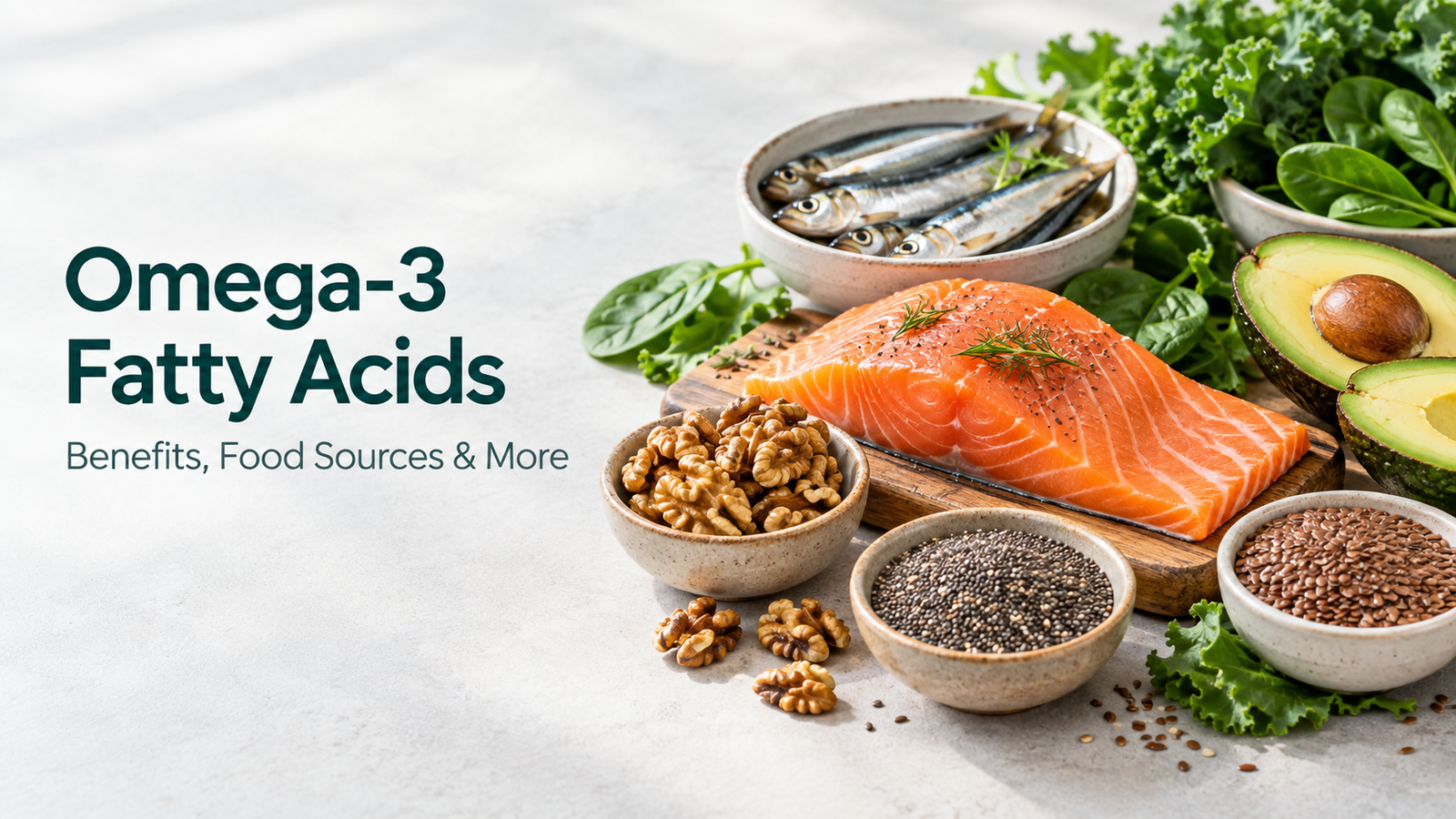

Omega-3 fatty acids are often associated with fish oil, but these essential fats come from a much wider range of foods. They’re a type of polyunsaturated fat that plays several important roles in the body.
The three main omega-3s are ALA, EPA, and DHA. ALA comes mainly from plant foods and is considered an essential fatty acid, while EPA and DHA are found primarily in fish and seafood. Omega-3s are also available through certain supplements.
Important: This article is for general information and is not a substitute for professional medical advice.
The NIH Office of Dietary Supplements identifies ALA, EPA, and DHA as the three omega-3 fatty acids that receive the most scientific attention. This guide covers what each one does, where to find them in food, how much you need, and what to know about supplements.
What Are Omega-3 Fatty Acids?
Omega-3s are a family of fats your body uses to build cell membranes and support several physiological functions. According to the Harvard T.H. Chan School of Public Health, omega-3s are essential nutrients involved in functions like controlling blood clotting and building brain cell membranes — and since the body can’t produce them, they have to come from food. Not all omega-3s work the same way, so it helps to understand each type separately.
ALA
ALA stands for alpha-linolenic acid. It’s found mainly in plant foods, including flaxseed, soybean, and canola oils.
ALA is considered essential because your body can’t produce it — you have to get it from food. Recommended intake for adults is 1.6 g/day for men and 1.1 g/day for women, according to the NIH.
EPA
EPA, or eicosapentaenoic acid, is found primarily in fish and other seafood. It plays a role in several processes throughout the body, including functions related to the heart, blood vessels, and immune system.
DHA
DHA, or docosahexaenoic acid, is also found mainly in fish and seafood. It’s especially important in the retina, brain, and other nervous system tissue, where DHA concentrations are notably high.
The NIH notes that ALA must come from the diet because the body can’t make it, and that the body’s ability to convert ALA into EPA and DHA is limited. In practice, this means getting EPA and DHA directly from food (or supplements) is the most reliable way to raise your levels of these two fats.
What Are the Benefits of Omega-3 Fatty Acids?
Omega-3s are linked to several aspects of health, though it’s worth being precise about what the evidence actually supports.
Supports Heart Health
Regularly eating fish, particularly fatty fish, is associated with a lower risk of cardiovascular disease. The American Heart Association recommends eating fish at least twice a week as part of a heart-healthy dietary pattern, noting that omega-3s from seafood are linked to benefits like lower triglyceride levels. Mayo Clinic adds that omega-3s from fish may help keep the heart healthy by modestly lowering blood pressure and reducing the risk of irregular heartbeats. For a broader look at cardiovascular nutrition, see our guide to heart-healthy foods.
Supports Brain and Eye Health
DHA is a structural component of the brain and retina, which is part of why it’s considered important throughout life, including during pregnancy and early development.
Supports Normal Cell Function
Omega-3s are built into the membranes that surround every cell in your body. This gives them a role in a wide range of everyday physiological processes, not just one specific system.
Role in Inflammation
Omega-3 fatty acids participate in biological pathways involved in inflammation, and researchers continue to study their effects on inflammatory and chronic conditions. This is an active area of research rather than a settled conclusion — omega-3s aren’t a guaranteed treatment for inflammatory disease, but they are a meaningful part of the picture scientists are still investigating.
Foods High in Omega-3 Fatty Acids
Here’s where to find each type of omega-3 in your diet.
Fatty Fish
Salmon, sardines, mackerel, herring, trout, and tuna are among the best sources of EPA and DHA. The NIH identifies cold-water fatty fish like these as important dietary sources of both fatty acids.
Flaxseeds
Ground flaxseed is one of the richest plant sources of ALA and is easy to stir into oatmeal, yogurt, or smoothies.
Chia Seeds
Chia seeds also provide ALA and work well sprinkled over meals or soaked to make a simple pudding.
Walnuts
Walnuts are a practical, portable source of plant-based ALA — a small handful makes an easy snack or salad topping.
Plant Oils
Flaxseed oil, canola oil, and soybean oil all contribute ALA and can replace less healthy cooking fats in everyday recipes.
Omega-3-Fortified Foods
Some eggs, yogurt, milk, and soy beverages are fortified with omega-3s. The NIH lists these fortified products among additional ways to add omega-3s to your diet.
Omega-3 Food Sources at a Glance
| Food | Main Omega-3 | Typical Role |
|---|---|---|
| Salmon | EPA + DHA | Seafood source |
| Sardines | EPA + DHA | Seafood source |
| Mackerel | EPA + DHA | Seafood source |
| Herring | EPA + DHA | Seafood source |
| Flaxseed | ALA | Plant source |
| Chia seeds | ALA | Plant source |
| Walnuts | ALA | Plant source |
| Canola oil | ALA | Cooking oil |
| Soybean oil | ALA | Cooking oil |
| Algae-based foods/supplements | DHA, sometimes EPA | Vegetarian/vegan source |
How Much Omega-3 Do You Need?
This is more nuanced than a single daily number, because the science differs by fatty acid type.
Specific recommended intake exists for ALA, and it varies by age and sex. There’s no established general recommended amount for EPA and DHA, which means individual needs can differ based on diet, health status, and other factors.
For adults, the NIH lists an adequate intake of 1.6 g/day of ALA for men and 1.1 g/day for women.
| Group | ALA Adequate Intake |
|---|---|
| Adult men | 1.6 g/day |
| Adult women | 1.1 g/day |
| Pregnancy | 1.4 g/day |
| Breastfeeding | 1.3 g/day |
These numbers describe ALA intake specifically — not a combined total for EPA and DHA, which don’t have an equivalent established daily target.
Do You Need an Omega-3 Supplement?
Getting nutrients from food is generally preferable when it’s realistic for your diet and lifestyle, but supplements can play a role for some people, particularly those who eat little or no fish.
Common options include:
- Fish oil
- Krill oil
- Algal oil
- Cod liver oil
- Flaxseed oil
The NIH identifies fish oil, krill oil, cod liver oil, and algal oil among the omega-3 supplements available to consumers.
Fish Oil vs. Algal Oil
| Supplement | Main Omega-3s | Suitable For |
|---|---|---|
| Fish oil | EPA + DHA | People who use fish-derived supplements |
| Krill oil | EPA + DHA | Fish-derived supplement users |
| Algal oil | DHA, sometimes EPA | Vegetarian/vegan options |
| Flaxseed oil | ALA | Plant-based ALA source |
Are Omega-3 Supplements Safe?
For most healthy adults, omega-3 supplements are generally well tolerated, but there are a few things worth knowing.
Possible side effects include:
- Gastrointestinal upset
- Fishy aftertaste or burping
- Effects on bleeding time at higher doses
Safety considerations become more relevant with high-dose supplementation. People taking anticoagulant or antiplatelet medications should talk with a healthcare professional before starting an omega-3 supplement, since interactions are possible.
It’s also worth remembering that a supplement isn’t automatically equivalent to eating fish. Whole fish provides protein, vitamins, and minerals alongside omega-3s — benefits a supplement alone doesn’t replicate. Harvard Health Publishing notes that most health experts agree whole foods, which contain a range of nutrients, are generally the best source of omega-3s, and that anyone taking an anticoagulant medication should check with their doctor before starting an omega-3 supplement.
Omega-3 Fatty Acids and Heart Health
Fish is one of the most well-studied dietary sources of omega-3s, and fatty fish in particular provides meaningful amounts of EPA and DHA. Regular fish consumption is linked to benefits like lower triglyceride levels as part of an overall heart-healthy dietary pattern.
The AHA recommends two servings of fish per week, particularly fatty fish, as part of this pattern. It’s worth noting that eating fish isn’t automatically the same as taking a fish-oil supplement — whole fish comes with other nutrients and a different overall nutritional profile.
If you’re building a broader picture of cardiovascular nutrition, see our guides on what is heart health, heart disease, and high blood pressure.
How to Get Omega-3s on Different Diets
If You Eat Fish
Aim to incorporate fatty fish like salmon, sardines, or mackerel into your meals a couple of times a week, in line with AHA guidance.
If You Follow a Vegetarian Diet
Focus on flaxseed, chia seeds, walnuts, canola oil, and omega-3-fortified foods like certain eggs or dairy products.
If You Follow a Vegan Diet
Plant-based ALA sources — flaxseed, chia, walnuts, and canola oil — remain the foundation. Algae-derived DHA (and sometimes EPA) supplements are also an option worth discussing with a healthcare professional, since they provide these fatty acids without any animal-derived ingredients.
Common Myths About Omega-3 Fatty Acids
Myth 1: “All omega-3s are the same.” ALA, EPA, and DHA come from different sources and play somewhat different roles in the body. Grouping them together obscures useful distinctions.
Myth 2: “You can only get omega-3s from fish.” Plant foods like flaxseed, chia seeds, walnuts, and canola oil all provide ALA, a legitimate and essential omega-3.
Myth 3: “More omega-3 is always better.” Higher doses, especially from supplements, aren’t automatically more beneficial and can carry their own considerations, including effects on bleeding time.
Myth 4: “Fish oil supplements are necessary for everyone.” Needs depend on your overall diet. Someone who regularly eats fatty fish may get sufficient EPA and DHA from food alone.
Myth 5: “Omega-3 supplements replace a healthy diet.” Supplements address one nutrient. They don’t substitute for the broader range of nutrients found in a varied, balanced diet like what is a balanced diet or what is a healthy diet.
Frequently Asked Questions
What are omega-3 fatty acids? Omega-3 fatty acids are polyunsaturated fats that play important roles in the body. The three main types are ALA, EPA, and DHA. ALA is mainly found in plant foods, while EPA and DHA are found primarily in fish and seafood.
What are the three main types of omega-3? ALA (alpha-linolenic acid), EPA (eicosapentaenoic acid), and DHA (docosahexaenoic acid) are the three main types that receive the most scientific attention.
What foods are high in omega-3? Fatty fish like salmon, sardines, mackerel, and herring are rich in EPA and DHA. Flaxseeds, chia seeds, walnuts, and canola oil provide ALA.
What is the difference between ALA, EPA, and DHA? ALA comes from plant sources and is an essential fat your body can’t make. EPA and DHA come mainly from fish and seafood and support functions in the heart, brain, and eyes.
How much omega-3 do I need each day? There’s an established recommendation for ALA — 1.6 g/day for men and 1.1 g/day for women — but no general established daily target for EPA and DHA specifically.
Is salmon high in omega-3? Yes, salmon is one of the richest dietary sources of EPA and DHA.
Are walnuts a good source of omega-3? Yes, walnuts provide ALA, making them a useful plant-based omega-3 source.
Do vegetarians get enough omega-3? It depends on the individual diet. Vegetarians who include flaxseed, chia seeds, walnuts, and fortified foods can meet ALA recommendations, though EPA and DHA intake tends to be lower without fish or algae-based sources.
Do I need to take fish oil? Not necessarily. If you regularly eat fatty fish, you may already get adequate EPA and DHA from food. Fish oil may be worth discussing with a healthcare professional if your diet includes little or no fish.
Is algae oil a source of omega-3? Yes, algal oil provides DHA and sometimes EPA, making it a useful option for vegetarians and vegans.
Are omega-3 supplements safe? Generally, yes, for most healthy adults, though gastrointestinal side effects and fishy aftertaste are possible. Higher doses carry more safety considerations, including effects on bleeding time.
Can omega-3 supplements interact with medications? Yes. People taking anticoagulant or antiplatelet medications should talk with a healthcare professional before starting omega-3 supplements, since interactions are possible.
Key Takeaways
- Omega-3s are polyunsaturated fats that include ALA, EPA, and DHA.
- ALA comes from plant sources; EPA and DHA come mainly from fish and seafood.
- Omega-3s support heart, brain, and eye health, and are involved in inflammatory processes still being studied.
- There’s an established daily recommendation for ALA, but not for EPA and DHA specifically.
- Food sources are generally preferred, though supplements can help fill gaps for some people.
- Omega-3 supplements aren’t automatically equivalent to eating fish, and higher doses aren’t automatically better.
This article is for general educational purposes and isn’t a substitute for personalized medical advice. Talk with your doctor before starting any new supplement, especially if you take medications that affect blood clotting.
Sources:
- National Institutes of Health, Office of Dietary Supplements (NIH ODS) — Omega-3 Fatty Acids: Fact Sheet for Consumers
- American Heart Association — Fish and Omega-3 Fatty Acids
- Mayo Clinic — Omega-3 in Fish: How Eating Fish Helps Your Heart
- Harvard Health Publishing — Omega-3 Foods: Incorporating Healthy Fats Into Your Diet
- Harvard T.H. Chan School of Public Health, The Nutrition Source — Ask the Expert: Omega-3 Fatty Acids
7 thoughts on “Omega-3 Fatty Acids: Benefits, Food Sources, and How Much You Need”
Comments are closed.