
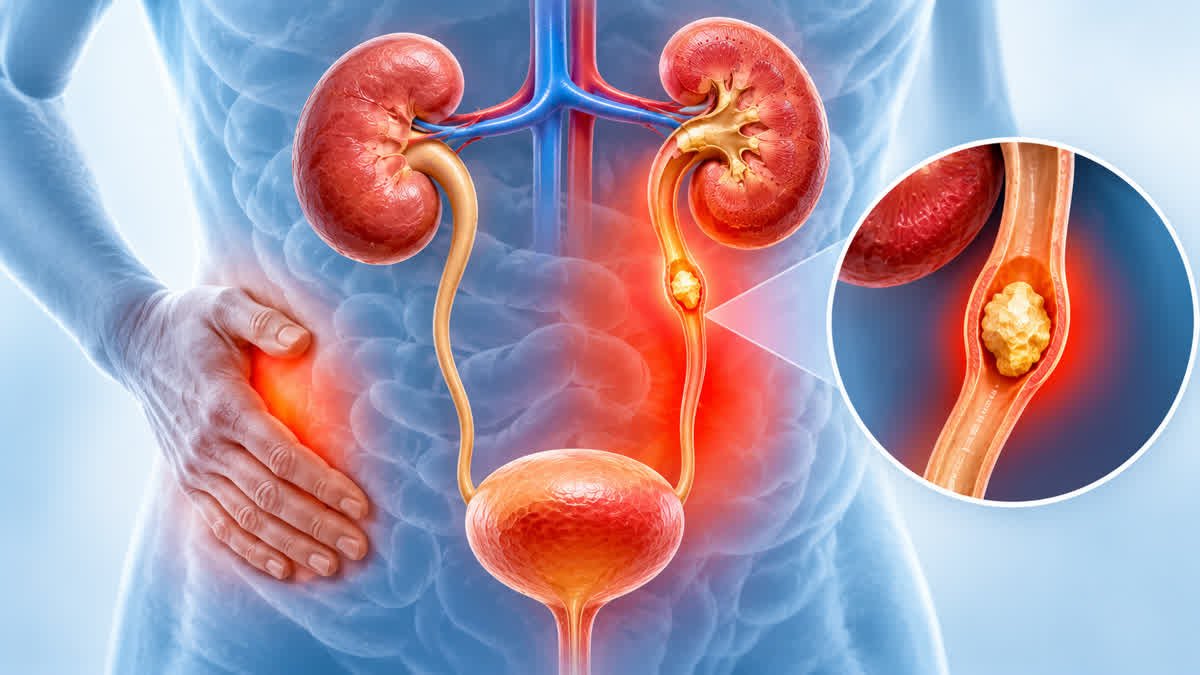

Yes, kidney stones can cause abdominal pain. The pain often starts in the back or side and then spreads toward the lower abdomen or groin. It tends to be strongest when a stone moves into the ureter or blocks the flow of urine.
This pain can feel sharp, cramping, and wave-like. Other symptoms may appear with it, such as nausea, vomiting, blood in the urine, and pain when urinating. Not everyone has every symptom, and some small stones cause no symptoms at all.
Abdominal pain has many possible causes, so pain alone cannot confirm a stone. This guide explains where kidney stone pain is felt, what it can feel like, and why it happens. It also covers how doctors diagnose stones, how they treat the pain, and which warning signs need urgent care.
Can Kidney Stones Cause Abdominal Pain?
Kidney stones can cause pain in the abdomen, especially when a stone irritates or blocks the ureter. The ureter is the narrow tube that carries urine from each kidney to the bladder. According to the National Institute of Diabetes and Digestive and Kidney Diseases (NIDDK), a stone may cause sharp pain in the back, side, lower abdomen, or groin.
The pain often affects one side. Its location and intensity can change as the stone moves. Some people feel mostly a deep ache, while others feel intense pain that comes in waves.
Some stones cause no noticeable symptoms. NIDDK notes that a small stone that passes easily may not cause any.
Abdominal pain alone does not prove you have a kidney stone. Digestive, urinary, and other abdominal conditions can feel similar. Our guide on what causes abdominal pain covers the wider range of possibilities. For background on how often stones occur, see how common kidney stones are.
Where Do You Feel Kidney Stone Pain?
Kidney stone pain can show up in several places. The location often depends on where the stone sits in the urinary tract.
Pain in the Side or Flank
The flank is the area between your lower ribs and your hip. Pain here often affects one side. It may feel sharp, severe, or cramping.
The pain can grow stronger when a stone blocks urine flow. Many people also feel it in the back.
Pain in the Lower Abdomen
Pain may travel from the side or back toward the lower belly. It can feel like a deep, hard-to-pinpoint ache. As the stone moves down the ureter, the pain location may shift.
Pain Near the Groin
A stone that moves farther down the ureter may cause pain closer to the groin. The European Association of Urology (EAU) patient information describes this pattern. It notes that men may feel pain in the testicles.
Can Kidney Stones Cause Pain on One Side of the Stomach?
Yes. Stones often affect one kidney or ureter, so pain commonly appears on one side. However, symptoms vary from person to person.
You can also have stones in both kidneys. In that case, pain may not stay on one side.
What Does Kidney Stone Abdominal Pain Feel Like?
People describe kidney stone pain in several ways. Common patterns include:
- Sharp pain: sudden and intense discomfort
- Cramping pain: pain that feels like a strong muscle cramp
- Waves of pain: pain that peaks, eases, and returns
- Radiating pain: discomfort that spreads from the back or side toward the abdomen and groin
- Shifting pain: a location that changes as the stone travels
Doctors call severe, wave-like stone pain “renal colic.” The EAU explains that it happens when a stone blocks urine flow. Pressure then rises suddenly in the urinary tract. The EAU also notes that this pain does not ease when you change position.
Not everyone has the same experience. Some people have only mild discomfort. Others have no pain. If you want to compare sensations, read our guide on what abdominal pain feels like. You can also read about abdominal pain that comes and goes.
Why Do Kidney Stones Cause Abdominal Pain?
Several things can contribute to the pain.
Movement of the Stone
A stone can move from the kidney into the ureter. As it travels, it can irritate the lining of the urinary tract. That irritation can cause pain.
Blockage of Urine Flow
A stone may become stuck in the ureter. Urine then cannot drain normally. Pressure builds in the urinary tract above the stone, which is a major source of severe pain.
Ureter Spasms and Irritation
The ureter may contract and spasm in response to the stone. These spasms help explain the wave-like pattern of renal colic.
Stone size and location can influence symptoms. Even so, a smaller stone can cause significant pain if it blocks the ureter. A large stone in the kidney, on the other hand, may cause little pain.
Other Symptoms That May Occur With Kidney Stone Abdominal Pain
Pain often comes with other signs. Our guide to the early signs of kidney stones covers these in more depth.
Blood in the Urine
Urine may look pink, red, or brown. Sometimes the blood is too small to see and shows up only on a urine test.
Painful or Frequent Urination
You may feel burning when you urinate. You may also feel a strong urge to go, or need to go more often than usual.
Nausea and Vomiting
Severe stone pain can cause nausea or vomiting. The EAU lists nausea as a common companion to renal colic.
Cloudy or Unusual-Smelling Urine
Changes in urine appearance or smell can occur. They may point to a urinary infection.
Fever and Chills
Fever and chills can signal infection. When a stone blocks urine flow, an infection can become serious. This needs urgent medical evaluation.
Not everyone has all of these symptoms. Some people have only one.
Kidney Stone Pain vs. Other Types of Abdominal Pain
Many conditions cause abdominal pain. The table below shows general patterns. It cannot tell you what is causing your pain.
| Possible cause | Common pain pattern |
|---|---|
| Kidney stones | Often severe pain in the side or back that may spread to the lower abdomen or groin |
| Appendicitis | Often begins near the belly button and moves toward the lower right abdomen |
| Gallstones | May cause pain in the upper right abdomen |
| Gas or bloating | May cause abdominal pressure, cramps, and bloating |
| Urinary tract infection | May cause lower abdominal discomfort, painful urination, and frequent urination |
How Is Kidney Stone Pain Different?
Kidney stone pain often radiates from the side or back. It may come in waves and may not ease when you change position. Urinary symptoms, such as blood in the urine, can offer extra clues.
These are only patterns. Many people do not fit them neatly.
Why You Should Not Self-Diagnose
Some causes of abdominal pain need urgent treatment. A healthcare professional may need to examine you and order tests. If you are unsure how worried to be, read should I worry about abdominal pain.
How Are Kidney Stones Diagnosed?
Doctors use several steps to find the cause of your pain. For more detail, see our guide on how kidney stones are diagnosed.
Medical History and Physical Examination
A healthcare professional may ask about:
- Where the pain is and how strong it is
- When it started
- Whether it moves
- Urinary symptoms
- Any previous kidney stones
Urine Tests
A urine test can detect blood. It can also show signs of infection.
Blood Tests
Blood tests can help check kidney function. They may also point to other problems.
Imaging Tests
Doctors may use ultrasound or a CT scan to see the stone, its location, and any blockage. Imaging choices depend on your situation. For example, the UK’s NICE guideline on renal and ureteric stones recommends ultrasound instead of CT for pregnant women. It recommends low-dose CT for most other adults with suspected renal colic.
How Is Abdominal Pain From Kidney Stones Treated?
Treatment depends on stone size, location, symptoms, and any blockage. Your overall health also matters. Our overview of kidney stone treatment options offers more detail.
Pain Management
A clinician may recommend pain relief based on your medical history. NICE lists a type of medicine called an NSAID as first-line treatment for suspected renal colic. These drugs are not safe for everyone. Check with a healthcare professional before taking any pain medicine.
Passing the Stone Naturally
Some stones pass through the urinary tract without a procedure. Others do not. Learn more about whether kidney stones pass on their own.
Medical Procedures
Depending on the stone, treatment may include:
- Shock wave lithotripsy, which uses sound waves to break the stone into smaller pieces
- Ureteroscopy, which uses a thin scope to find and remove or break up the stone
- Other procedures for larger or more complex stones
Severe or persistent pain should not be managed by simply waiting for the stone to pass. The EAU notes that medication or surgery may be needed for stones that are larger or stuck.
When Should You Seek Medical Attention for Kidney Stone Abdominal Pain?
Seek prompt medical assessment if you suspect a kidney stone and your pain is severe or lasts. The EAU describes renal colic as an emergency situation that needs pain relief from a doctor or hospital.
Get urgent medical care if you have any of these:
- Severe or worsening abdominal, side, or back pain
- Fever or chills
- Repeated vomiting or being unable to keep fluids down
- Difficulty urinating or being unable to urinate
- Signs of a possible urinary infection along with pain
Important warning: Fever or chills with a suspected blocking stone can signal a serious infection. This needs immediate medical attention. Our guide on when abdominal pain is an emergency explains other red flags.
Frequently Asked Questions About Kidney Stones and Abdominal Pain
Can kidney stones cause pain in the lower abdomen?
Yes. Pain can spread from the side or back into the lower abdomen, especially as a stone moves through the ureter. NIDDK lists the lower abdomen among the common pain areas.
Can kidney stones feel like stomach cramps?
They can. The pain may feel like intense cramping. However, it often comes in waves and may spread toward the groin.
Can kidney stones cause pain on the right or left side of the abdomen?
Yes. Stones can affect either kidney, and pain often occurs on the affected side. The exact spot depends partly on where the stone sits.
Does kidney stone pain come and go?
It can. Renal colic often causes waves of pain that vary in strength. Some people also have a dull ache between painful episodes.
Can you have kidney stones without abdominal pain?
Yes. Some small stones cause no symptoms and pass without notice. Stones in the kidney can also stay silent for a long time.
How do I know if my abdominal pain is caused by kidney stones?
You cannot confirm it from symptoms alone. A medical assessment, urine tests, and imaging may be needed to find the cause. This is why persistent or severe pain deserves a professional evaluation.
Final Thoughts
Kidney stones can cause abdominal pain. The pain may start in the back or side and spread toward the lower abdomen or groin. It can be sharp, severe, and wave-like.
Blood in the urine, nausea, vomiting, and urinary symptoms may also occur. Because many conditions cause abdominal pain, medical evaluation matters. Please seek care for severe pain or concerning symptoms instead of trying to diagnose the problem at home.
Once you feel better, you can learn how to prevent kidney stones. Eating more produce may also support your health, as our guide on the benefits of eating vegetables explains.
Sources
- NIDDK: Kidney Stones, Symptoms and Causes
- European Association of Urology: Patient Information on Kidney and Ureteral Stones
- European Association of Urology: Larger Kidney Stones
- European Association of Urology: Information for Patients, Kidney and Ureteral Stones (PDF)
- NICE: Renal and Ureteric Stones, Assessment and Management (NG118)
- Mayo Clinic: Kidney Stones, Symptoms and Causes
Medical Disclaimer: This article is for informational and educational purposes only. It is not meant to replace professional medical advice, diagnosis, or treatment. If you have severe abdominal pain, fever, chills, vomiting, or trouble urinating, seek medical attention promptly.
1 thought on “Can Kidney Stones Cause Abdominal Pain? Symptoms Explained”
Comments are closed.