
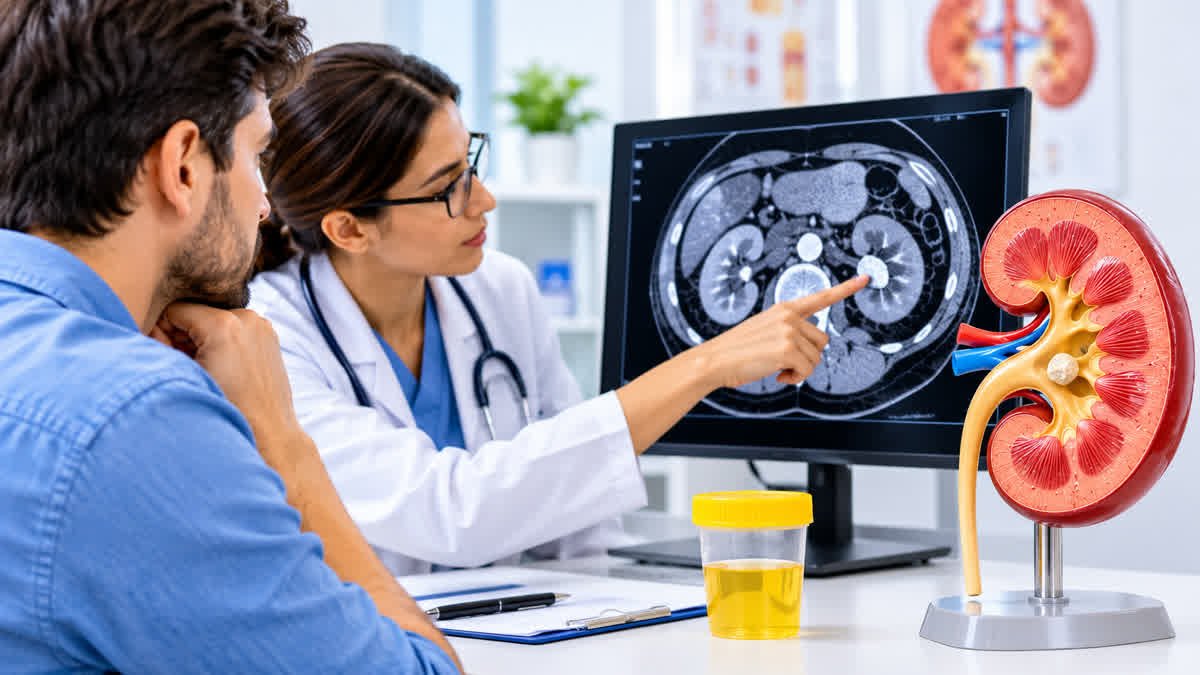

Kidney stones are diagnosed through a combination of medical history, physical examination, urine tests, blood tests, and imaging scans. Doctors commonly use CT scans or ultrasounds to identify a stone’s size and location. Urine and blood tests help detect infection, kidney function problems, and substances that contribute to stone formation.
Are you feeling sharp pain in your back or side and wondering whether kidney stones could be the cause? Many people ask the same question, because stone pain can be intense and sudden. Understanding how doctors reach a diagnosis can make the process feel less stressful.
This guide walks through each step, from the first questions a clinician asks to the scans, lab work, and stone analysis that follow. You will learn why each test is used, what to expect, and when symptoms call for urgent care. This information is general and does not replace an evaluation by a healthcare professional.
How Are Kidney Stones Diagnosed?
A healthcare professional usually starts with your symptoms and medical history, then performs a physical exam. Urine and blood samples are often collected next, and imaging is used to find the stone. The National Institute of Diabetes and Digestive and Kidney Diseases (NIDDK) describes this combination of history, lab tests, and imaging as the standard approach.
The main steps often include:
- Reviewing your symptoms and medical history
- Performing a physical examination
- Ordering urine tests
- Checking blood samples
- Using imaging scans to locate stones
- Analyzing a passed or removed stone, when available
Not every person needs every test. The choices depend on your symptoms, exam findings, age, pregnancy status, and medical history. Someone with mild symptoms and a known history of stones may need fewer tests than a person with severe pain and fever.
What Symptoms Make Doctors Suspect Kidney Stones?
Certain symptoms prompt a clinician to look for kidney stones. Our guide to the early signs of kidney stones covers them in more detail.
Sharp Pain in the Back or Side
Stone pain often starts below the ribs, on one side of the back. It may spread toward the lower abdomen or groin. The pain can come in waves and change in intensity as a stone moves through the urinary tract.
Back pain has many causes, so a stone is not the only possibility. See our article on what causes back pain for other explanations.
Blood in the Urine
A stone can irritate the lining of the urinary tract and cause bleeding. The blood may be visible, making urine pink, red, or brown, or it may be microscopic and found only in a lab test.
Painful or Frequent Urination
Some people notice burning or discomfort when urinating. A stone near the bladder may cause urgency or a need to urinate more often.
Nausea and Vomiting
Severe stone pain is often accompanied by nausea and vomiting. Learn more about what causes nausea and how it relates to other conditions.
Fever and Chills
Fever and chills with possible stone symptoms may point to an infection. This needs urgent medical assessment. Read about what causes fever for general background.
Some stones cause no symptoms at all. They are sometimes found by chance during imaging done for another reason.
What Happens During a Kidney Stone Physical Examination?
The exam often begins with questions. A clinician may ask where the pain is, how severe it is, when it started, and whether anything makes it better or worse. They may also ask about past stones, family history, medications, eating habits, and other health conditions.
They will usually check vital signs such as blood pressure, heart rate, and temperature. They may gently press on your abdomen and sides to check for tenderness, including the area over the kidneys.
A physical exam helps evaluate your symptoms and rule out other causes of pain. It cannot reliably confirm kidney stones on its own, so tests are usually needed.
Urine Tests for Kidney Stones
Urine tests give clues about stones and related problems. They are rarely enough on their own to confirm a diagnosis.
Urinalysis
In a urinalysis, you provide a urine sample that is examined in a lab or with a test strip. It may check for:
- Blood in the urine
- White blood cells
- Bacteria and other signs of infection
- Urine acidity (pH)
- Crystals and other abnormalities
Blood in the urine can support a suspicion of a stone, but its absence does not rule one out. Some people with stones have no detectable blood.
Urine Culture
A urine culture grows any bacteria in the sample to identify an infection and guide antibiotic choice. It may be ordered if urinalysis suggests infection or if you have fever.
Finding infection is especially important when a stone may be blocking urine flow, because a blocked and infected system can become serious quickly.
24-Hour Urine Collection
For this test, you collect all your urine over a full 24 hours in a special container. The lab measures substances linked to stone formation, such as calcium, oxalate, citrate, and uric acid, along with total urine volume.
This test is not usually done during a first painful episode. It is more useful for understanding why stones form and how to reduce the chance of new ones, particularly in people who have had repeated stones. The Urology Care Foundation offers more detail on testing and prevention.
Blood Tests for Kidney Stones
Blood tests cannot show a stone directly. They help your clinician assess kidney health and look for possible causes.
Creatinine and Kidney Function
Creatinine is a waste product filtered by the kidneys. A higher level may suggest the kidneys are not working as well as they should. Results are often used to calculate an estimated glomerular filtration rate (eGFR), a common measure of kidney function.
Calcium Levels
High blood calcium can contribute to certain kinds of stones. If your level is abnormal, your clinician may order more tests to look for an underlying cause.
Uric Acid Levels
Uric acid testing can help assess the risk of uric acid stones. Levels can be high in people with gout or certain metabolic conditions, but they are not always elevated in people who form these stones.
Other Blood Measurements
Depending on your symptoms and health, your clinician may check electrolytes, a complete blood count, or other markers. A high white blood cell count can point toward infection.
Blood tests alone cannot confirm a stone. Imaging is generally needed to find and measure it.
Imaging Tests Used to Diagnose Kidney Stones
Imaging is central to confirming kidney stones. It shows whether a stone is present, how large it is, where it sits, and whether it is blocking urine flow. The NHS and the Mayo Clinic both describe CT, ultrasound, and X-ray as common options.
1. CT Scan for Kidney Stones
A CT scan uses X-rays and computer processing to make detailed cross-sectional images. A non-contrast CT is commonly used for adults with sudden flank pain when a stone is suspected. It can show a stone’s size, location, and number, and it can reveal signs of blockage.
CT can also help identify other causes of abdominal or flank pain, such as appendicitis or other conditions.
During the scan, you lie on a table that slides through a ring-shaped scanner. You need to stay still for short periods, and the scan itself usually takes only a few minutes.
CT uses ionizing radiation. Doctors weigh the benefits and risks, especially when repeat imaging is being considered. Some centers use low-dose techniques to reduce exposure.
2. Ultrasound for Kidney Stones
Ultrasound uses sound waves instead of radiation. A technician applies gel to your skin and moves a handheld probe over your back and abdomen. Ultrasound can show stones in the kidney and signs of blocked urine flow, such as swelling of the kidney.
It is especially useful in pregnancy and for children, and it may be chosen for follow-up exams. However, small stones or stones in certain locations, such as the ureter, can be harder to see.
If an ultrasound does not provide enough information, a clinician may recommend additional imaging.
3. Abdominal X-Ray
An abdominal X-ray can show some kinds of kidney stones, and it may help track known stones over time. It is quick and widely available.
Not all stones show up on X-rays, and it gives less detail than CT. Because of this, it is less often used alone to diagnose a new stone.
Which Imaging Test Is Best?
No single test is best for everyone. The right choice depends on your age, pregnancy status, symptoms, and the questions your clinician needs to answer.
| Imaging test | Main advantage | Important limitation |
|---|---|---|
| CT scan | Detailed stone size and location | Uses radiation |
| Ultrasound | No ionizing radiation | May miss small or hard-to-see stones |
| X-ray | Useful for some visible stones and follow-up | Not all stones appear |
How Do Doctors Determine the Type of Kidney Stone?
Finding the type of stone helps explain why it formed and how to reduce the chance of future stones. Detecting a stone and identifying its makeup are two separate steps.
Stone Analysis
If you pass a stone, or if one is removed during a procedure, it can be sent to a lab for analysis. Methods such as infrared spectroscopy or X-ray diffraction identify its mineral content.
Your clinician may ask you to strain your urine to catch a stone. Our guide on how to manage kidney stones at home explains how this works.
Common Types of Kidney Stones
| Stone type | Main composition |
|---|---|
| Calcium oxalate | Calcium and oxalate |
| Calcium phosphate | Calcium and phosphate |
| Uric acid | Uric acid crystals |
| Struvite | Magnesium ammonium phosphate |
| Cystine | Cystine, linked to an inherited condition |
Knowing the type helps your care team suggest diet changes, medicines, and preventive steps. See what causes kidney stones and kidney stone risk factors for related background.
Can Kidney Stones Be Diagnosed Without a CT Scan?
Often, yes. Ultrasound can detect many kidney stones without radiation, and abdominal X-rays can identify certain stones. Urine and blood tests provide supporting information.
Some people still need CT imaging, particularly when other tests are inconclusive or when the diagnosis is unclear. Pregnancy and childhood generally favor ultrasound as the first imaging choice.
Doctors select imaging based on your situation rather than automatically ordering a CT for everyone. If you are concerned about radiation, ask your clinician why a specific test is recommended and whether alternatives are suitable.
How Are Kidney Stones Diagnosed During Pregnancy and in Children?
Diagnostic choices can differ for these groups, and decisions should be made by qualified healthcare professionals.
Kidney Stone Diagnosis During Pregnancy
Ultrasound is generally the preferred first imaging method because it avoids ionizing radiation. If more information is needed, specialists may consider other imaging, such as MRI or a low-dose approach, after weighing risks and benefits. The European Association of Urology (EAU) urolithiasis guidelines discuss imaging choices for special groups.
Kidney Stone Diagnosis in Children
For children, clinicians rely on medical history, a physical exam, and urine testing. Ultrasound is typically the preferred first imaging approach. Further imaging may be used in selected cases.
Because stones are less common in children, doctors may also look for an underlying cause, such as a metabolic or inherited condition.
What Happens After Kidney Stones Are Diagnosed?
Once a stone is confirmed, your care team looks at several factors:
- The stone’s size and location
- Whether urine flow is blocked
- How much pain you have, and whether there are signs of infection
- How well your kidneys are working
- Whether observation, medication, or a procedure is the best next step
Small stones may pass naturally, while larger or complicated stones may need medical treatment. Learn about kidney stone treatment options to see what may be involved.
Follow-up imaging may be recommended to confirm that a stone has passed or to check whether a blockage remains. For people with recurring stones, stone analysis and 24-hour urine testing may guide prevention. You can also read about what makes kidney stones worse.
When Should You Seek Medical Attention for Possible Kidney Stones?
Do not ignore these warning signs:
- Severe pain in the back, side, or abdomen
- Fever or chills
- Persistent nausea or vomiting
- Blood in the urine
- Difficulty passing urine, or being unable to urinate
- Severe symptoms that are getting worse
Urgent warning: A suspected kidney stone with fever or chills can indicate an infected, blocked urinary system. This is a medical emergency, so seek immediate assessment rather than waiting for a routine appointment. Our guide on when abdominal pain is an emergency explains other red flags.
People with one working kidney, pregnancy, or known kidney disease should seek prompt professional advice whenever kidney stones are suspected.
Frequently Asked Questions About Kidney Stone Diagnosis
What is the most accurate test for kidney stones?
Non-contrast CT is highly accurate for finding suspected stones in many adults. Ultrasound may be preferred in pregnancy, in children, and for some follow-up exams. The best choice depends on your situation, as noted in NIDDK guidance.
Can a urine test detect kidney stones?
A urinalysis may show blood, crystals, or infection that suggest a stone. However, imaging is generally needed to confirm a stone and find where it is. A normal urine test does not rule out a stone.
Can kidney stones be seen on an ultrasound?
Yes, ultrasound can show many stones and signs of blockage. Some small stones, or stones in the ureter, can be difficult to see. If results are unclear, your clinician may suggest another type of imaging.
Can a blood test show kidney stones?
No, blood tests cannot directly confirm a stone. They can reveal kidney function problems and abnormal levels of minerals such as calcium or uric acid. These results can help explain why stones form.
How long does it take to diagnose kidney stones?
It depends on the situation. In an emergency or urgent care setting, an exam, lab work, and imaging may be completed within hours. Additional investigations, such as a 24-hour urine collection or stone analysis, can take days to weeks.
Can kidney stones be present without symptoms?
Yes. Some stones cause no noticeable symptoms and are found by chance during imaging for another medical reason. Your clinician can advise whether a stone without symptoms needs monitoring or treatment.
Final Thoughts
Kidney stones are diagnosed through medical history, a physical exam, lab tests, and imaging. CT scans and ultrasounds are the main tools for finding stones, while blood and urine tests help spot infection, kidney problems, and risk factors. Stone analysis can then reveal what a stone is made of.
An early diagnosis helps your care team catch complications and choose suitable treatment. If you notice symptoms of a kidney stone, seek professional evaluation promptly.
Sources
- National Institute of Diabetes and Digestive and Kidney Diseases (NIDDK). Diagnosis of Kidney Stones
- NHS. Kidney Stones
- Urology Care Foundation. Kidney Stones
- European Association of Urology. Guidelines on Urolithiasis
- Mayo Clinic. Kidney Stones: Diagnosis and Treatment
Medical Disclaimer: This article is for general information and education only. It is not medical advice and does not replace care from a qualified healthcare professional. Do not use it to diagnose or treat any condition. Always talk with your doctor about your symptoms and test results, and seek urgent care if you have severe pain, fever, chills, vomiting, or trouble urinating.
2 thoughts on “How Are Kidney Stones Diagnosed? Tests, Scans, and What to Expect”
Comments are closed.