
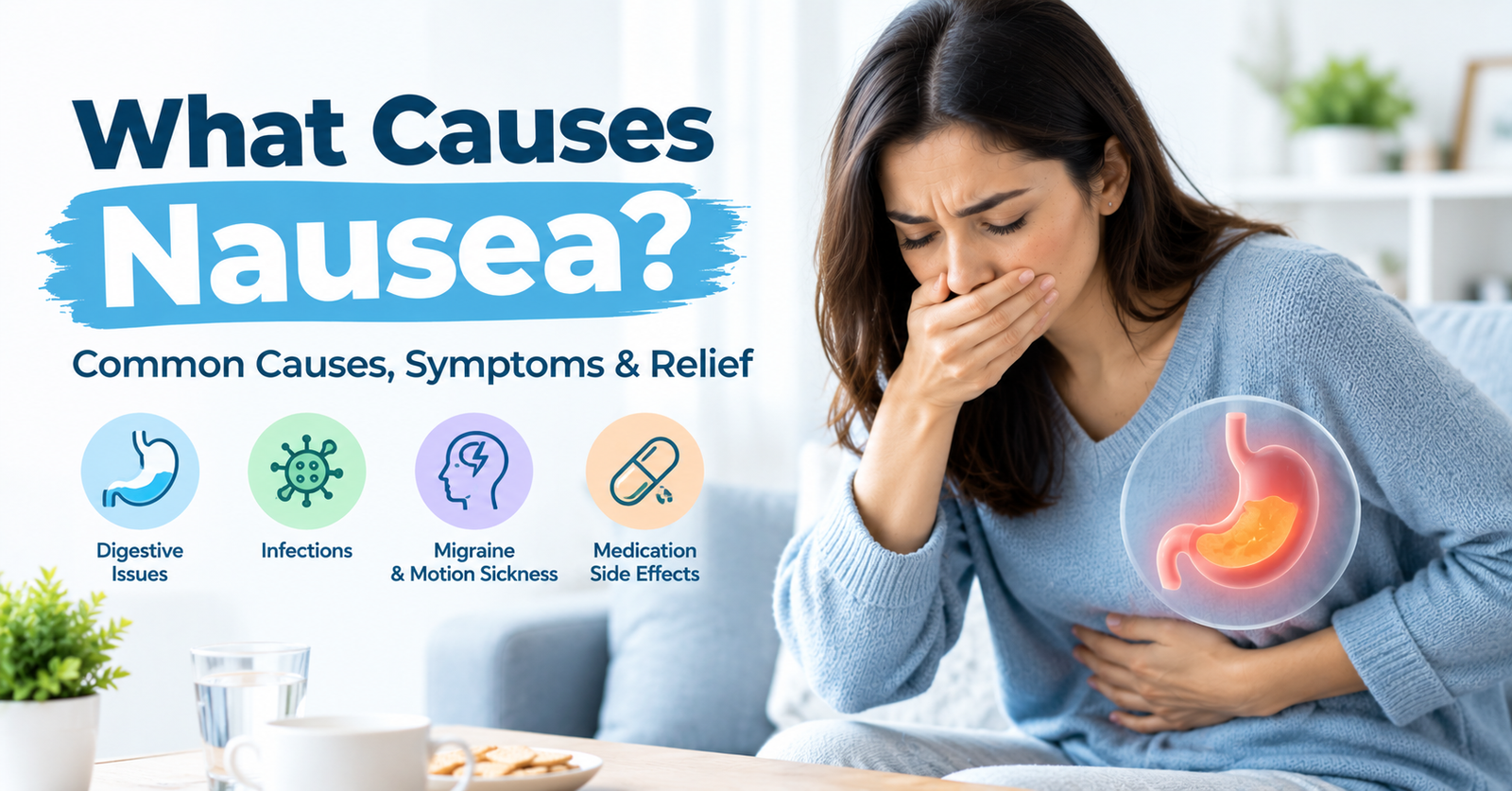

Nausea is one of the most common symptoms in medicine. Almost everyone feels it at some point. It’s that queasy, uneasy feeling in your stomach, often with the sense that you might vomit, even when you don’t.
Nausea isn’t a disease. It’s a symptom. According to MedlinePlus, a service of the National Library of Medicine at the NIH, nausea can stem from something as ordinary as motion sickness or as significant as a warning sign of a serious condition. The cause, not the nausea itself, is what matters most.
This guide covers what typically causes nausea, which symptoms often come with it, when it’s likely nothing serious, and when it’s time to call a doctor. It also looks at what actually helps, based on the evidence.
What Is Nausea?
Nausea is the unpleasant sensation of needing to vomit, even if vomiting never happens. It often starts in the stomach but is actually coordinated by your brain.
How nausea works in the body
Your brain has a specific area that detects signals from your stomach, inner ear, bloodstream, and other organs. When it picks up on something unusual — spoiled food, motion, certain chemicals, or inflammation — it can trigger nausea as a protective response.
Nausea versus vomiting
Nausea and vomiting are related but different. You can feel nauseated without ever vomiting, and Cleveland Clinic notes that many people experience nausea with no other symptoms at all. Whether vomiting happens depends on how intense the nausea is and what’s causing it.
Common Symptoms That Come With Nausea
Nausea rarely shows up entirely alone. It often travels with other symptoms that can offer clues about the cause.
Physical symptoms
People with nausea frequently also notice:
- Increased saliva
- Sweating
- Dizziness or lightheadedness
- Stomach discomfort or cramping
- Loss of appetite
- Fatigue
When nausea leads to vomiting
Vomiting is your body’s forceful way of emptying the stomach. It tends to happen when nausea is severe or when your body detects something it needs to expel quickly, like spoiled food or a toxin.
Related digestive symptoms
Nausea often overlaps with other digestive complaints, including bloating, reflux, or abdominal discomfort. Our overview of common digestive problems covers how these symptoms connect and what they might mean together.
What Causes Nausea?
Nausea has a long list of possible causes. Most are minor and temporary, but understanding the categories helps put your own symptoms in context.
Digestive Infections and Food-Related Causes
Viral gastroenteritis, often called the stomach flu, is one of the most common causes of sudden nausea. Food poisoning and food allergies can also trigger nausea quickly after eating, according to MedlinePlus.
Acid Reflux and GERD
Stomach acid backing up into the esophagus can cause nausea, sometimes without the classic burning sensation of heartburn. Understanding your own acid reflux risk factors can help you figure out whether reflux is behind your symptoms. If you suspect this is the cause, our guides on how acid reflux is diagnosed and how to manage acid reflux at home cover practical next steps.
Motion Sickness
Motion sickness happens when your inner ear, eyes, and body send conflicting signals to your brain, often during car rides, flights, or boat trips. It’s one of the most familiar and well-understood causes of nausea.
Migraine
Migraines frequently cause nausea alongside head pain, sometimes even before the headache itself starts. This is one of the more overlooked causes of recurring nausea, especially in people who don’t realize a migraine is underway.
Pregnancy
More than half of pregnant women experience nausea, often called morning sickness, according to Cleveland Clinic. While usually mild, severe and persistent nausea during pregnancy can signal a more serious condition called hyperemesis gravidarum, which needs medical attention.
Medications and Treatments
Many medications list nausea as a side effect, including certain antibiotics, pain relievers, and diabetes or weight-loss medications. Chemotherapy and radiation treatment are also well-known triggers, and general anesthesia commonly causes nausea after surgery.
Anxiety and Stress
Strong emotions and anxiety can trigger genuine physical nausea. This happens because the gut and brain are closely connected through the nervous system, so emotional stress can directly affect digestion.
Slow Stomach Emptying
A condition called gastroparesis slows how quickly your stomach empties its contents, leading to nausea, especially after eating. This is more common in people with diabetes and can require specific medical management.
Less Common but Important Causes
Most nausea is minor, but a smaller number of causes need closer medical attention.
Severe Pain
Intense pain from conditions like kidney stones can trigger nausea as a secondary symptom. In these cases, the pain itself is usually the more obvious symptom, with nausea following close behind.
Organ-Related Conditions
Problems with the liver, pancreas, gallbladder, or kidneys can all cause nausea. These conditions often come with additional symptoms, like abdominal pain, jaundice, or changes in urine color.
Intestinal Blockage
A blocked or twisted intestine can cause severe nausea and vomiting that doesn’t improve. This is a medical emergency that typically comes with severe abdominal pain and an inability to pass gas or stool.
Heart-Related Causes
Nausea can occasionally be an early sign of a heart attack, particularly in women. This is one of the more serious reasons persistent or unexplained nausea, especially with chest discomfort, shouldn’t be ignored.
Neurological Causes
Severe headaches, head injuries, or increased pressure in the brain can all cause nausea. When nausea comes with a severe headache, confusion, or vision changes, it needs urgent evaluation.
When Nausea Is Likely Not Serious
Most nausea resolves within a day or two and doesn’t point to anything dangerous. A few patterns are generally reassuring:
- It follows a clear trigger, like motion, a specific food, or a strong smell.
- It improves with rest or after the stomach empties.
- It isn’t paired with severe pain, high fever, or other alarming symptoms.
- It resolves within 24 to 48 hours.
If your nausea fits this pattern, home care is often enough, which the sections below cover in detail.
When to See a Doctor for Nausea
Some patterns call for a medical evaluation rather than home management. Contact a doctor if you experience:
- Nausea lasting more than a couple of days
- Vomiting that continues for more than 24 hours
- Signs of dehydration, like reduced urination or a very dry mouth
- Unexplained weight loss
- Nausea that keeps returning without an obvious cause
- Nausea alongside a new or unusual headache pattern
If a headache is a regular part of the picture, our guide to what causes headaches can help you figure out whether the two symptoms are connected.
When Nausea Is a Medical Emergency
Certain symptoms alongside nausea mean you should seek emergency care right away. According to MedlinePlus, contact a healthcare provider immediately if nausea or vomiting occurs with:
- Suspected poisoning
- Blood in the vomit, or vomit resembling coffee grounds
- Severe abdominal pain
- Severe headache with a stiff neck
- Chest pain or pressure
- Signs of a heart attack or stroke
- Confusion or difficulty staying awake
If you notice abdominal pain alongside nausea and aren’t sure how serious it is, that guide can help you describe your symptoms more precisely to a doctor. Don’t wait to see if severe symptoms improve on their own.
How Nausea Is Diagnosed
Figuring out what’s behind nausea usually starts with a conversation and an exam.
Medical History
A doctor will typically ask when the nausea started, how long it’s lasted, what makes it better or worse, and whether it comes with other symptoms like pain, fever, or headache. Recent food, medications, and travel history are also relevant.
Physical Examination and Testing
A doctor may check for signs of dehydration and examine your abdomen for tenderness or swelling. Depending on your symptoms, they might order blood tests, urine tests, or imaging to look for an underlying cause.
How to Find Relief From Nausea
Once serious causes have been ruled out, several strategies can help ease nausea at home.
Rest and Movement
Sitting quietly often helps more than moving around, since activity can make nausea worse. Lying down with your head slightly elevated is a comfortable position for many people.
Staying Hydrated
Sipping small amounts of clear, cold liquids often works better than drinking a large amount at once. According to MedlinePlus, cold water, flat soda, and diluted fruit juice are all reasonable options when you’re nauseated.
Food Choices
Bland, low-fat foods are generally easier to tolerate than heavy or greasy meals. Small, frequent portions tend to sit better than large meals when your stomach is unsettled.
Avoiding Triggers
Strong smells, stuffy rooms, heat, and flickering lights can all make nausea worse for some people. Identifying and avoiding your personal triggers can meaningfully reduce how often nausea flares up.
Ginger
Ginger has real, though mixed, evidence behind it for nausea. Research reviews have found ginger genuinely helps with nausea during pregnancy and after surgery, though the evidence for nausea caused by chemotherapy is weaker. Our guide to whether ginger is good for health covers what the research supports in more detail.
Nausea and Your Broader Diet
What and how you eat day to day can affect how often nausea shows up, particularly when digestive issues are involved.
Building a gentler, more balanced diet
A diet built around whole, easily digestible foods tends to be gentler on the stomach than one heavy in processed or fatty foods. Our broader guide on what makes a healthy diet covers the basics of eating in a way that supports digestion overall.
Managing reflux-related nausea across life stages
Nausea tied to reflux can shift as you get older, since digestive tolerance changes with age. Our guides to acid reflux in your 30s and acid reflux in your 50s cover what tends to change at each stage, and our guide on whether acid reflux can be prevented covers practical steps worth trying.
Nausea and weight changes
Persistent nausea can affect appetite and lead to unintended weight changes over time. If weight has shifted noticeably alongside your symptoms, our overview of current weight-loss approaches can help you understand healthy versus concerning patterns of change.
Supporting Your Overall Health
Nausea is often a sign that something specific needs attention, but general health habits can reduce how often you experience it.
A foundation of healthy habits
Adequate sleep, regular activity, and stress management all support a well-functioning digestive system. Our guide on how to live a healthy lifestyle covers how these habits fit together.
Knowing what’s common
Understanding which conditions commonly cause symptoms like nausea can help you recognize patterns in your own health. Our overview of the most common health issues is a useful reference point for putting your symptoms in context.
Frequently Asked Questions About Nausea
What is the most common cause of nausea?
Viral gastroenteritis, often called the stomach flu, is one of the most common causes of sudden nausea. Motion sickness, food poisoning, migraines, and acid reflux are also frequent triggers.
Can nausea happen without vomiting?
Yes. Many people experience nausea with no vomiting at all. Whether vomiting occurs depends on how severe the nausea is and what’s causing it.
Can stress or anxiety cause nausea?
Yes. Strong emotions and anxiety can trigger genuine physical nausea through the close connection between the gut and the nervous system. This is a real physical response, not something imagined.
Does ginger actually help with nausea?
Research shows ginger genuinely helps with nausea during pregnancy and after surgery, though the evidence is weaker for chemotherapy-related nausea. It’s generally considered a safe option to try alongside other strategies.
When is nausea a sign of something serious?
Nausea deserves closer attention when it comes with severe abdominal pain, chest pain, a severe headache with a stiff neck, confusion, or signs of dehydration. These combinations warrant prompt medical evaluation rather than home management.
How long should nausea normally last?
Nausea tied to a minor cause, like food or motion sickness, usually improves within 24 to 48 hours. Nausea that persists longer, or keeps returning, is worth discussing with a doctor.
What should I eat or drink when I feel nauseated?
Small sips of cold, clear liquids and bland, low-fat foods are generally easiest to tolerate. Avoiding heavy, greasy, or strongly flavored foods until symptoms ease can help prevent things from getting worse.
Sources
- MedlinePlus (National Library of Medicine, NIH). Nausea and Vomiting — Adults
- MedlinePlus (National Library of Medicine, NIH). Nausea and Vomiting
- MedlinePlus (National Library of Medicine, NIH). When You Have Nausea and Vomiting
- Cleveland Clinic. Nausea
- Viljoen E, Visser J, Koen N, Musekiwa A. A Systematic Review and Meta-Analysis of the Effect and Safety of Ginger in the Treatment of Pregnancy-Associated Nausea and Vomiting. Nutrition Journal, 2014.
Medical Disclaimer
This article provides general health information and does not replace individualized medical evaluation or treatment. If you have concerns about nausea or any other symptom, talk to a qualified healthcare professional. If you experience any of the emergency warning signs listed above, seek immediate medical care.
Read our full Medical Disclaimer.