
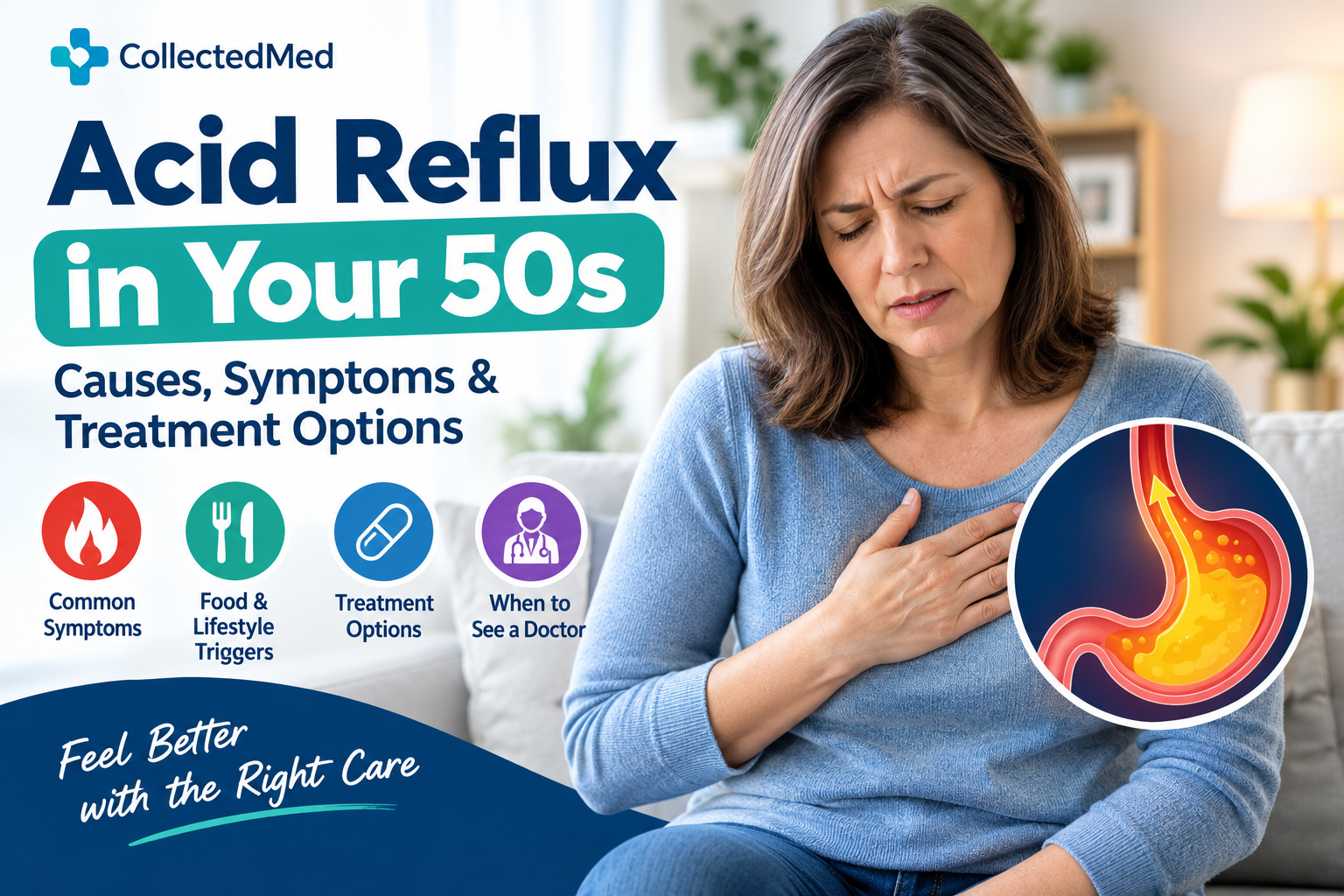

If you’ve noticed more heartburn after dinner, a sour taste when you wake up, or reflux that seems worse than it used to be, you’re not imagining things. Many people first notice — or start noticing more of — acid reflux in your 50s, even if they never had much trouble with it before. That doesn’t mean getting older automatically causes reflux. More often, it’s a combination of shifting habits, weight changes, certain medications, and other factors that tend to show up around this stage of life.
This guide walks through what acid reflux actually is, why it may be more noticeable in your 50s, common symptoms and triggers, practical ways to manage it, and — importantly — how to tell the difference between ordinary heartburn and warning signs that need prompt medical attention.
What Is Acid Reflux?
Acid reflux, also called gastroesophageal reflux (GER), happens when stomach acid flows backward into the esophagus, the tube that carries food from your throat to your stomach. Normally, a ring of muscle called the lower esophageal sphincter (LES) closes after food passes through it, keeping stomach contents where they belong. When that muscle relaxes at the wrong time or weakens, acid can escape upward.
Heartburn is the classic symptom of acid reflux — a burning feeling behind the breastbone that can rise toward the throat. It’s often used interchangeably with “acid reflux,” but heartburn is technically a symptom, not the condition itself.
GERD (gastroesophageal reflux disease) is the more persistent, chronic form. According to the National Institute of Diabetes and Digestive and Kidney Diseases (NIDDK), GERD is diagnosed when reflux happens often enough — generally more than twice a week — or is severe enough to cause bothersome symptoms or damage to the esophagus over time. NIDDK estimates that roughly 20% of people in the United States have GERD, and MedlinePlus notes that anyone, at any age, can develop it.
Acid Reflux Symptoms in Your 50s
Reflux can show up differently from person to person, and not everyone experiences the “classic” burning sensation. Common symptoms include:
- Heartburn — a burning feeling in the chest or throat, often after eating or when lying down
- Regurgitation — the sensation of food or sour liquid coming back up into the throat or mouth
- A sour or bitter taste, especially when lying flat or bending over
- Excessive burping or a feeling of fullness after small meals
- Upper abdominal discomfort or mild pain below the breastbone
- Difficulty or discomfort swallowing
- Nighttime symptoms, including waking up coughing or with a burning throat
- Throat-related symptoms, such as hoarseness, a chronic cough, or a lump-in-the-throat feeling
According to NIDDK, not everyone with GERD has heartburn — some people mainly experience a chronic cough or throat symptoms instead. Nighttime reflux deserves particular attention, since lying flat removes gravity’s help in keeping acid down and can disrupt sleep. If this sounds familiar, CollectedMed’s guide to abdominal pain at night goes deeper into nocturnal digestive symptoms and what tends to cause them.
What Causes Acid Reflux in Your 50s?
It’s a common question: why am I getting acid reflux in my 50s when I never had it before? The honest answer is that turning 50 doesn’t flip a switch that causes reflux on its own. Instead, several factors that become more common around this age can add up:
- Dietary habits — years of eating certain trigger foods, or changes in what and how much you eat, can gradually affect symptoms
- Meal timing — eating later in the evening or lying down soon after meals gives acid more opportunity to travel upward
- Lifestyle changes — shifts in daily routine, stress levels, or sleep patterns can influence digestion
- Weight changes — extra weight, particularly around the abdomen, can put pressure on the stomach and LES
- Reduced physical activity — less movement can slow digestion for some people
- Certain medications — some common prescriptions can relax the LES or irritate the esophagus (more below)
- Smoking — nicotine can weaken the LES and reduce saliva, which normally helps neutralize acid
- Alcohol — can relax the LES and increase stomach acid production
- Hiatal hernia — a condition where part of the stomach pushes up through the diaphragm, which becomes more common with age and can make reflux more likely
If weight has crept up gradually, it’s worth knowing that even modest, sustainable changes can help. NIDDK notes that losing weight can reduce GERD symptoms in people who are overweight. If you’re exploring your options, CollectedMed’s overview of current approaches to weight management covers some of the strategies people are discussing today — though any significant weight-loss plan is worth discussing with your doctor first.
Medications worth discussing with your doctor. Several medicines commonly prescribed in your 50s and beyond — including certain blood pressure medications (like calcium channel blockers), some sedatives and benzodiazepines, and certain pain relievers — can relax the LES or irritate the esophageal lining. This doesn’t mean you should stop taking a prescribed medication on your own. Instead, mention new or worsening reflux to your doctor or pharmacist; they may be able to adjust dosing or timing, or suggest an alternative.
Common Acid Reflux Triggers
Triggers vary quite a bit between individuals — what bothers one person may not bother another at all. That said, some of the most commonly reported acid reflux triggers include:
- Large or heavy meals
- Fatty or fried foods
- Spicy foods
- Caffeine (coffee, tea, some sodas)
- Alcohol
- Chocolate
- Acidic foods, such as citrus fruits and tomato-based sauces
- Eating close to bedtime
Keeping a simple symptom journal for a week or two — noting what you ate and when symptoms appeared — can help you spot your personal patterns rather than guessing. If you’re curious whether specific foods might help rather than hurt, CollectedMed has looked at how yogurt affects acid reflux symptoms and whether ginger may help ease occasional heartburn for some people.
How to Manage Acid Reflux in Your 50s
The good news is that most people can meaningfully reduce reflux symptoms with everyday lifestyle strategies, before reaching for medication. NIDDK’s eating and lifestyle guidance for GER and GERD supports several practical steps:
- Eat appropriate portions. Large meals stretch the stomach and increase pressure on the LES; smaller, more frequent meals can ease symptoms for many people.
- Identify and avoid your personal triggers, rather than eliminating entire food groups unnecessarily.
- Allow time between eating and lying down. Many clinicians suggest waiting two to three hours after a meal before reclining or going to bed.
- Manage nighttime symptoms by elevating the head of your bed (rather than just stacking pillows, which can bend your body at the waist and worsen pressure) and avoiding late meals or snacks.
- Stay physically active. Regular movement supports healthy digestion and can help with weight management.
- Avoid smoking, since nicotine can relax the LES.
- Limit alcohol, especially close to bedtime.
- Talk to your doctor about medications you’re already taking that might be contributing to reflux, rather than stopping them on your own.
Avoid jumping to extreme diets or cutting out large categories of food without good reason — that can create nutritional gaps without necessarily solving the problem. A more targeted, trial-and-error approach around your specific triggers tends to work better long term. CollectedMed’s broader guide to common digestive problems and how to manage them and tips on supporting your gut health naturally offer additional context if reflux is one of several digestive symptoms you’re dealing with.
Medications and Treatment for Acid Reflux
When lifestyle changes aren’t quite enough, several over-the-counter and prescription options are available. According to the FDA and NIDDK, the main categories include:
| Medication Type | How It Works | Typical Use |
|---|---|---|
| Antacids | Neutralize existing stomach acid | Fast relief for mild, occasional symptoms; not meant for daily long-term use |
| H2 blockers | Reduce the amount of acid the stomach produces | Can relieve symptoms and help the esophagus heal, though less effectively than PPIs |
| Proton pump inhibitors (PPIs) | Block acid production at the source | Effective for frequent heartburn; OTC versions are intended for short courses (about 14 days), per FDA labeling |
A few important points about medication use:
- Antacids can cause side effects such as diarrhea or constipation if overused, and shouldn’t be relied on daily without talking to a doctor.
- Over-the-counter PPIs are generally intended for short-term use. If you find yourself needing them repeatedly or for longer than the label suggests, that’s a signal to check in with a healthcare professional rather than continuing on your own.
- Long-term PPI use should be discussed with a doctor, since it may carry considerations worth monitoring over time.
- In some cases, doctors may recommend further evaluation or, less commonly, surgical options if symptoms don’t improve with medication and lifestyle changes.
This article can’t recommend a specific dose or medication for your situation — that’s a conversation for you and your healthcare provider, who can factor in your full medical history and any other medications you take.
Acid Reflux or Something More Serious?
Occasional heartburn is common and usually not a cause for alarm. However, some symptoms shouldn’t automatically be assumed to be “just reflux,” especially as risk for other conditions can increase with age. According to NIDDK, you should see a doctor if you experience:
- Difficulty or pain when swallowing
- Persistent vomiting
- Vomiting blood, or vomit that looks like coffee grounds
- Black or bloody stools
- Unexplained weight loss
- Symptoms that persist or worsen despite lifestyle changes and over-the-counter treatment
- Significant or unusual chest pain
New, severe, or unexplained chest pain should never automatically be attributed to acid reflux. It can be a sign of a medical emergency and warrants immediate evaluation.
Acid Reflux vs. Heart-Related Chest Pain
This distinction matters, and it can genuinely be difficult — even for experienced clinicians — to tell the two apart from symptoms alone. Mayo Clinic notes that heartburn, angina, and a heart attack can feel remarkably similar, which is why emergency rooms typically run tests to rule out a cardiac cause in anyone presenting with concerning chest pain.
Some general patterns, though never a substitute for medical evaluation:
- Heartburn often produces a burning sensation, frequently tied to eating, lying down, or bending over, and may improve somewhat with antacids.
- Heart-related chest pain more often feels like pressure, tightness, or squeezing, and according to the CDC, can come with shortness of breath, breaking into a cold sweat, or pain radiating to the jaw, neck, back, or arms.
Because the overlap is real — and because heartburn itself can accompany a heart attack in some people — the safest approach is: if you’re uncertain, treat it as an emergency. Call 911 or seek immediate medical care rather than trying to self-diagnose, particularly if chest discomfort is new, severe, or accompanied by shortness of breath, sweating, nausea, or pain spreading to your arm or jaw.
When Should You See a Doctor?
Routine medical advice is worth seeking if:
- Reflux symptoms happen two or more times a week
- You’re relying on over-the-counter antacids or acid reducers regularly
- Symptoms interfere with sleep, eating, or daily activities
- You’re unsure whether a medication you take might be contributing to symptoms
Urgent or emergency care is appropriate if you experience:
- Sudden, severe, or crushing chest pain or pressure
- Chest discomfort with shortness of breath, sweating, or nausea
- Pain spreading to your jaw, neck, back, or arm
- Vomiting blood or passing black, tarry stools
- Severe difficulty swallowing or a sensation of food being stuck
If you’re generally trying to stay on top of your health in this decade of life, CollectedMed’s overview of common health issues people face after 50 is a useful starting point for understanding what else is worth watching for.
Frequently Asked Questions
Can you suddenly develop acid reflux in your 50s? Yes. Some people go decades without noticeable reflux and then begin experiencing symptoms in their 50s. This is usually related to factors like weight changes, medications, diet, or other health changes rather than aging by itself.
Why am I getting acid reflux in my 50s? It’s typically a combination of factors — diet, meal timing, weight, reduced activity, certain medications, alcohol, smoking, or a hiatal hernia — rather than a single cause. A doctor can help identify what’s contributing in your case.
Is acid reflux common after 50? It’s common at every adult age, but several contributing factors (weight changes, new medications, hiatal hernia) become more frequent in midlife, which is part of why people often notice it more.
What causes heartburn in your 50s? Heartburn happens when stomach acid backs up into the esophagus. In your 50s, contributing factors often include diet, meal timing, weight, alcohol or tobacco use, and certain medications that affect the lower esophageal sphincter.
How can I stop acid reflux at night? Avoid eating within a few hours of bedtime, elevate the head of your bed, avoid trigger foods in the evening, and consider talking to your doctor if nighttime symptoms are frequent or disrupt sleep.
What foods should I avoid with acid reflux? Common triggers include fatty or fried foods, spicy foods, caffeine, alcohol, chocolate, and acidic foods like citrus and tomato products — though individual triggers vary, so tracking your own symptoms is the most reliable guide.
Can medications cause acid reflux? Yes. Certain blood pressure medications, sedatives, and other prescriptions can relax the lower esophageal sphincter or irritate the esophagus. Never stop a prescribed medication without talking to your doctor first.
Is frequent heartburn a sign of GERD? Heartburn that happens two or more times a week, or that causes damage to the esophagus, is generally considered GERD rather than occasional acid reflux, according to MedlinePlus.
When should I worry about acid reflux? Seek medical attention for difficulty swallowing, unexplained weight loss, vomiting blood, black stools, or symptoms that don’t improve with lifestyle changes and over-the-counter treatment — and seek emergency care for severe or unexplained chest pain.
Can acid reflux feel like chest pain? Yes, heartburn is felt as a burning sensation in the chest, which can sometimes be mistaken for — or occur alongside — heart-related chest pain. Because the two can be hard to distinguish, unexplained or severe chest pain always deserves prompt medical evaluation.
This article is for general informational purposes and isn’t a substitute for professional medical advice. If you have ongoing or concerning symptoms, talk with your doctor, and seek emergency care for severe or unexplained chest pain.
Read our full Medical Disclaimer.
10 thoughts on “Acid Reflux in Your 50s: Causes, Symptoms, and What to Do”
Comments are closed.