
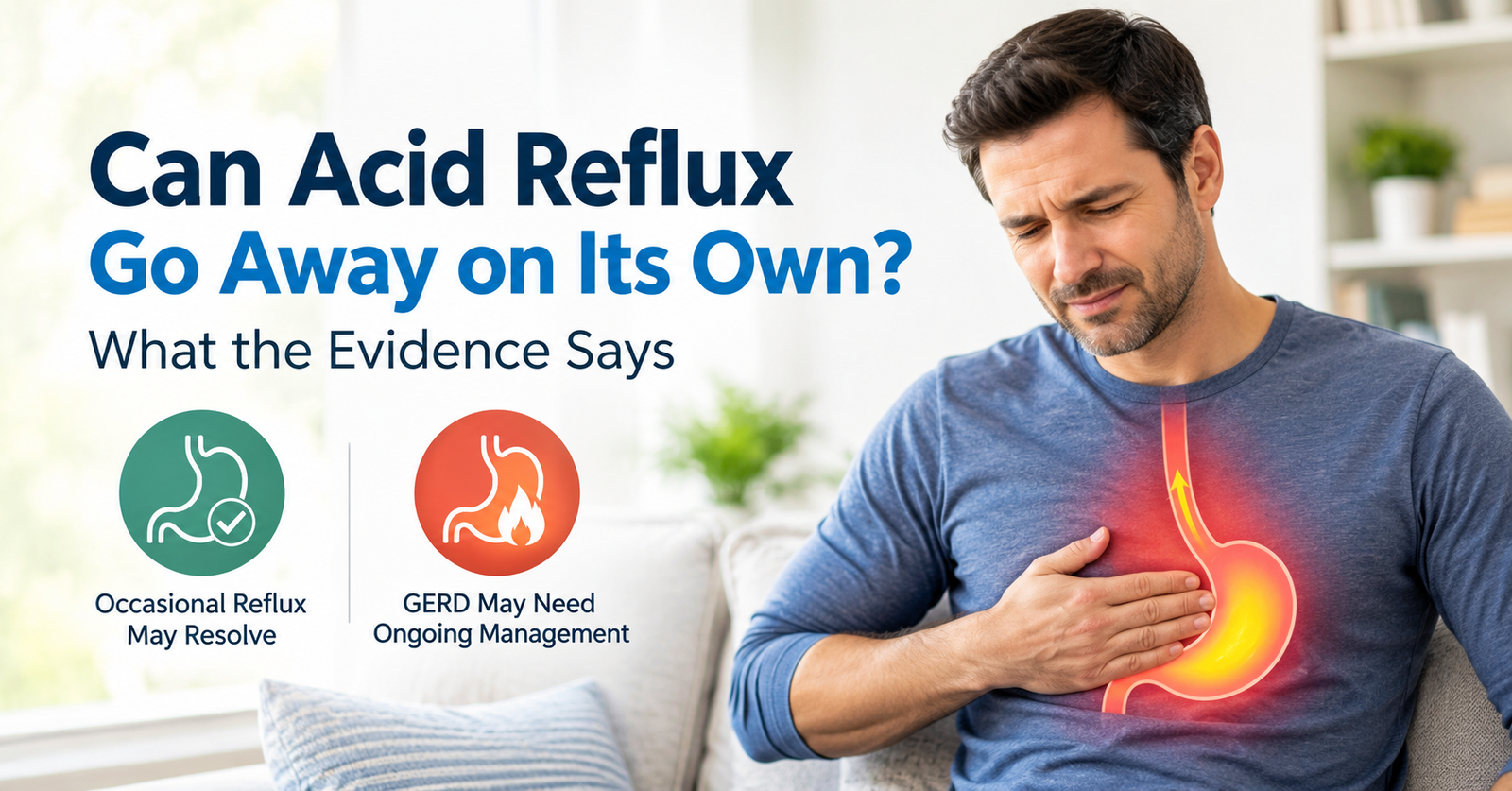

The honest answer depends entirely on what kind of reflux you’re dealing with. Occasional acid reflux after a big meal usually resolves on its own within a few hours. Chronic reflux, the kind doctors call GERD, typically doesn’t disappear without some form of active management.
This guide explains the difference, what determines which category you fall into, and what actually happens if reflux goes untreated for a long time.
The Key Difference: Occasional Reflux vs. GERD
Not all acid reflux is the same condition wearing different masks. The distinction matters a lot for what to expect.
What Counts as Occasional Reflux
The National Institute of Diabetes and Digestive and Kidney Diseases (NIDDK) describes gastroesophageal reflux (GER) as stomach contents coming back up into the esophagus. Having this happen once in a while is common and normal.
Occasional reflux usually shows up after a large meal, spicy food, or a few too many drinks. It resolves within a few hours, often faster with an antacid, and doesn’t require ongoing treatment.
What Counts as GERD
Gastroesophageal reflux disease (GERD) is different. NIDDK defines it as a more severe, long-lasting condition where reflux causes repeated symptoms or leads to complications over time.
Most clinicians use a simple threshold: symptoms happening two or more times a week, or milder symptoms severe enough to affect daily life, point toward GERD rather than occasional reflux.
Why This Distinction Matters Day to Day
Knowing which category you fall into changes how you should respond. It’s the difference between reaching for an antacid once and moving on, versus tracking your symptoms and building an actual management plan.
Does Occasional Acid Reflux Go Away on Its Own?
Yes, in most cases. A single episode of reflux typically clears up as your stomach empties and the esophagus washes acid back down.
What Helps It Resolve Faster
A few things speed up recovery from a single reflux episode:
- Staying upright rather than lying down
- Sipping water
- Avoiding more food or alcohol in the short term
- Taking an antacid if symptoms are bothersome
When “Occasional” Isn’t Really Occasional Anymore
Pay attention to frequency. If you’re reaching for an antacid several times a week, that pattern has likely crossed into GERD territory, even if each individual episode still feels manageable.
Does GERD Go Away on Its Own?
Generally, no. GERD tends to persist or worsen without some kind of change, whether that’s a lifestyle adjustment, medication, or both.
Why GERD Doesn’t Simply Resolve
GERD develops because the lower esophageal sphincter (LES) weakens or relaxes when it shouldn’t. This muscle doesn’t typically repair itself without intervention.
Several underlying factors that cause GERD also don’t resolve spontaneously. A hiatal hernia, where part of the stomach pushes through the diaphragm, is a structural issue that stays put unless treated. Age-related weakening of the LES moves in one direction over time, not both.
Cases Where GERD-Like Symptoms Do Improve
There are real exceptions worth knowing about.
Pregnancy-related reflux often improves significantly after delivery, since it’s driven largely by hormonal changes and physical pressure from the growing uterus that both resolve postpartum.
Reflux tied to temporary weight gain can improve once the weight comes off, since losing weight reduces pressure on the stomach and is one of the few interventions with strong supporting evidence for GERD symptom relief.
Reflux triggered by a specific medication may resolve once that medication is stopped or switched, under a doctor’s guidance.
What Happens If GERD Goes Untreated
This is the part worth taking seriously, since the risks build gradually and often without obvious warning signs.
Esophagitis
Chronic acid exposure irritates and inflames the esophageal lining, a condition called esophagitis. This can cause pain, bleeding, or difficulty swallowing over time.
Esophageal Strictures
Repeated inflammation can lead to scar tissue, narrowing the esophagus. This narrowing, called a stricture, can make swallowing food physically difficult.
Barrett’s Esophagus
In some people with long-term GERD, the cells lining the esophagus change to resemble intestinal cells. This condition, called Barrett’s esophagus, raises the risk of esophageal cancer, though the overall risk in any individual remains fairly low.
Why Duration Matters
The longer GERD goes unmanaged, the more these risks accumulate. This is precisely why untreated, ongoing reflux deserves attention now rather than being something to simply wait out.
Factors That Determine Whether Reflux Resolves
Several factors shape whether your reflux is likely to fade on its own or needs active management.
Frequency and Severity
Reflux happening less than twice a week, with mild symptoms, is more likely to resolve without treatment. More frequent or severe symptoms point toward GERD.
Underlying Cause
Reflux from a one-time trigger, like a heavy holiday meal, resolves easily. Reflux from a hiatal hernia, chronic weight gain, or ongoing medication use tends to persist until that underlying factor changes.
Age
Older adults are less likely to see reflux resolve without help, since age-related changes to the esophagus and LES tend to move in one direction. Our guide to acid reflux in your 50s covers these changes in detail.
Lifestyle Factors
Smoking, alcohol use, and being overweight all make spontaneous resolution less likely, since each one actively works against the body’s natural reflux defenses.
How Doctors Decide If Reflux Needs Treatment
Doctors don’t rely on symptom severity alone. They look at the overall pattern to decide whether reflux is likely to resolve on its own or needs a treatment plan.
Symptom Frequency Over Time
A doctor will often ask how often symptoms happen and whether that frequency is increasing, staying steady, or decreasing. Reflux that’s trending worse over weeks or months is treated differently than reflux that flares occasionally and settles back down.
Response to Initial Changes
If you’ve already tried basic lifestyle changes, that response tells a doctor a lot. Reflux that improves noticeably with weight loss or diet changes suggests a strong lifestyle component. Reflux that persists despite real effort suggests something structural or medication-related is at play.
Warning Signs That Change the Picture
Certain symptoms shift the conversation from “let’s try lifestyle changes first” to “let’s investigate further.” These include difficulty swallowing, unintentional weight loss, and any sign of bleeding. A doctor may recommend an endoscopy to check for esophagitis, a hiatal hernia, or Barrett’s esophagus. This test lets your doctor see the esophagus directly rather than relying on symptoms alone.
What You Can Do to Help It Resolve
Even when reflux won’t disappear entirely on its own, specific changes make a real difference for most people.
Diet Adjustments
Common trigger foods include fatty and fried foods, citrus, chocolate, caffeine, and carbonated drinks. Since triggers vary by person, a short food log often reveals your specific pattern faster than a generic avoidance list.
Weight and Meal Timing
Losing excess weight, eating smaller meals, and avoiding food for three to four hours before bed all reduce pressure on the LES. Our guide to acid reflux risk factors explains why these factors matter so much.
Sleep Position
Elevating the head of your bed by 6 to 8 inches uses gravity to keep acid down while you sleep. Sleeping on your left side may add extra benefit.
If your reflux specifically worsens at night, our guide to abdominal pain at night covers other positional strategies that overlap with reflux management.
When Lifestyle Changes Aren’t Enough
Some people need medication alongside lifestyle changes. Options include:
- Antacids for quick, occasional relief
- H2 blockers for longer-lasting acid reduction
- Proton pump inhibitors for more significant or frequent symptoms
A doctor or pharmacist can help match the right option to your specific pattern, rather than guessing on your own.
When to See a Doctor Instead of Waiting It Out
Waiting for reflux to resolve on its own makes sense for occasional, mild symptoms. It stops making sense once certain signs appear.
See a doctor if you have:
- Symptoms two or more times a week
- Difficulty or pain when swallowing
- Symptoms that don’t improve with over-the-counter antacids
- Reflux that consistently disrupts your sleep
- Unintentional weight loss alongside reflux
- Vomiting, especially if it contains blood
If reflux overlaps with other abdominal symptoms and you’re not sure what you’re dealing with, our guides to what abdominal pain feels like and abdominal pain that comes and goes can help you sort out the pattern.
Frequently Asked Questions
How long does it take for acid reflux to go away on its own?
A single episode of occasional reflux usually resolves within a few hours, especially with an antacid. Chronic GERD symptoms typically don’t resolve without lifestyle changes or medication.
Can acid reflux disappear permanently with lifestyle changes alone?
For many people with mild to moderate GERD, consistent lifestyle changes reduce symptoms enough that reflux stops being a regular problem. For others, especially those with a hiatal hernia, ongoing management tends to work better than expecting a permanent fix.
Is it normal to have acid reflux every day?
No. Daily or near-daily symptoms point toward GERD rather than occasional reflux, and this pattern warrants a conversation with a doctor rather than continued self-management.
Can acid reflux go away after pregnancy?
Yes, often. Pregnancy-related reflux is largely driven by hormonal changes and pressure from the growing uterus, both of which resolve after delivery for many women.
Does losing weight make acid reflux go away?
For many people, yes. Weight loss reduces pressure on the stomach and is one of the few interventions with strong supporting evidence for reducing GERD symptoms.
What happens if I just ignore my acid reflux?
Ignoring frequent or severe reflux allows ongoing acid exposure to irritate the esophagus over time. This can lead to esophagitis, strictures, or in some cases, Barrett’s esophagus, which raises long-term cancer risk.
Can stress-related acid reflux resolve on its own?
It can improve once the stress period passes, since stress appears to heighten how strongly people notice reflux symptoms rather than directly increasing acid production. Managing stress alongside other lifestyle factors often speeds up improvement.
Should I just wait and see if my reflux gets better?
Waiting is reasonable for mild, infrequent symptoms with an obvious trigger. It’s not the right approach if symptoms occur two or more times a week, disrupt your sleep, or come with difficulty swallowing or unintentional weight loss.
The Bottom Line
Whether acid reflux goes away on its own depends on what’s driving it. A single episode after a big meal will almost always resolve without help. Frequent, chronic reflux usually needs active management, whether through lifestyle changes, medication, or both.
The risk of waiting too long isn’t dramatic day to day, but it adds up. Treat a persistent pattern as a signal to act, not a phase to outlast.
Sources
- National Institute of Diabetes and Digestive and Kidney Diseases (NIDDK). Acid Reflux (GER & GERD) in Adults
- American College of Gastroenterology. Guidelines for the Diagnosis and Management of Gastroesophageal Reflux Disease
- World Journal of Gastroenterology. Global Prevalence and Definitions of Gastroesophageal Reflux Disease
- Harvard Health Publishing. Five Health Habits May Help Keep Acid Reflux at Bay
Related Reading
- Can Acid Reflux Be Prevented? What Actually Reduces Your Risk
- Acid Reflux Risk Factors: What Raises Your GERD Risk
- Acid Reflux in Your 50s: What’s Changed and What Helps
- Acid Reflux in Your 30s: Why It’s Starting Now
- What Does Abdominal Pain Feel Like?
- Abdominal Pain That Comes and Goes: Causes and Red Flags
- Abdominal Pain at Night: Causes and Positional Relief
Medical Disclaimer
This article is for general information and education. It is not a diagnosis and cannot replace an in-person medical evaluation. If you have persistent, worsening, or concerning symptoms, talk to a healthcare professional.
Read our full Medical Disclaimer.
1 thought on “Can Acid Reflux Go Away on Its Own? What the Evidence Says”
Comments are closed.