
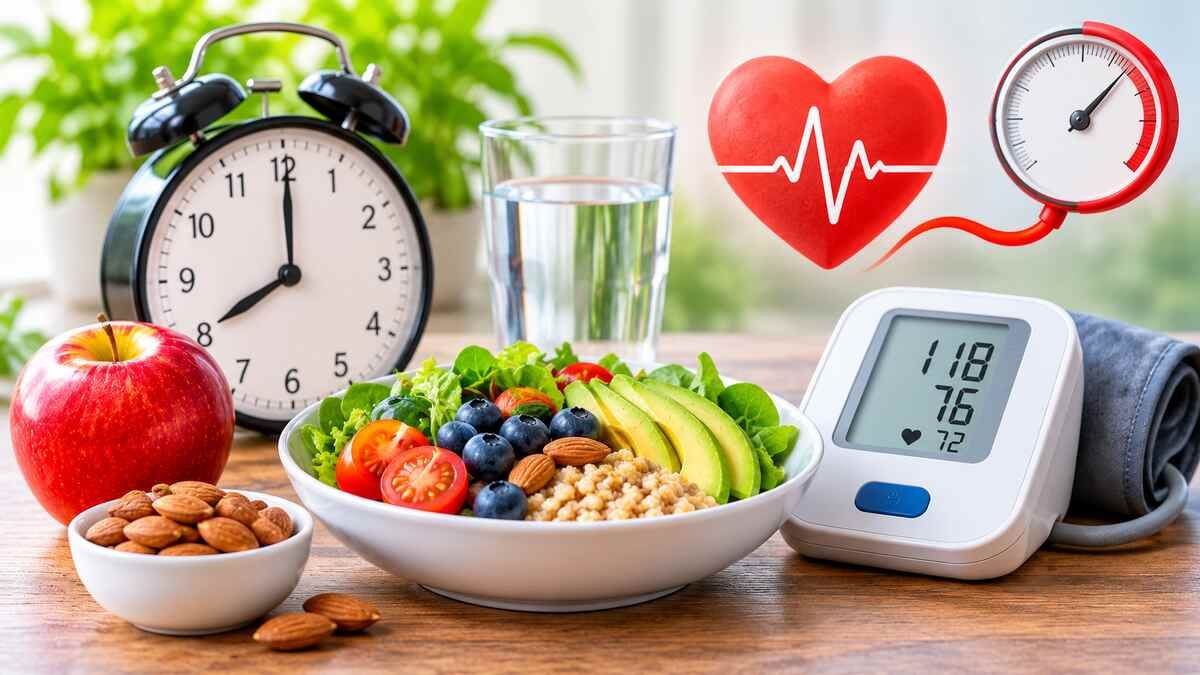

Intermittent fasting is often discussed for weight loss and metabolic health, but could changing when you eat also help lower high blood pressure? It is a fair question, especially if you are already trying to improve your heart health through lifestyle changes. Before you change your eating schedule, though, it helps to know what the research actually shows.
Intermittent fasting is an eating pattern that alternates between periods of eating and periods of fasting. High blood pressure, also called hypertension, is a major risk factor for heart disease and stroke. Some studies suggest that intermittent fasting may modestly reduce blood pressure in certain groups, particularly adults with overweight or obesity, but results vary and the evidence has limits.
This guide explains how intermittent fasting and high blood pressure may be connected, what the research says, and where the risks lie. It also covers food choices, medication safety, and home blood pressure monitoring. Fasting is not a proven substitute for blood pressure medication, and anyone with hypertension should talk with a healthcare professional before starting.
What Is Intermittent Fasting and How Does It Work?
Intermittent fasting is a pattern of eating that limits food to certain hours or days. During fasting periods, people usually have water and other calorie-free drinks. Outside those periods, they eat normally.
It is an eating schedule, not a specific food plan. What you eat during your eating window still matters a great deal. For a broader overview, see our guides to intermittent fasting and intermittent fasting for beginners.
Common intermittent fasting methods
The most popular approaches differ in fasting length, calorie intake, and how demanding they are day to day.
| Method | How it works |
|---|---|
| 12:12 | 12 hours of fasting and a 12-hour eating window |
| 14:10 | 14 hours of fasting and a 10-hour eating window |
| 16:8 | 16 hours of fasting and an eight-hour eating window |
| 5:2 | Eating normally five days a week and substantially restricting calories on two nonconsecutive days |
| Alternate-day fasting | Alternating regular eating days with fasting or modified-fasting days |
Time-restricted eating (such as 16:8) and calorie-restriction approaches (such as 5:2) are not the same thing. They may affect the body in different ways.
Why people try intermittent fasting
People try intermittent fasting for several reasons. Common goals include weight management, simpler eating routines, better metabolic health, and improvements in cardiovascular risk factors.
Intermittent fasting is not automatically healthier than other balanced eating patterns. Whether it suits you depends on your health, medications, nutritional needs, and daily routine. Our article on whether intermittent fasting is safe long term explores this further.
What Is High Blood Pressure and Why Does It Matter?
Blood pressure is the force of blood pushing against your artery walls. Over time, consistently high pressure can strain the heart and blood vessels. You can learn more in our overview of high blood pressure.
Understanding hypertension
A blood pressure reading has two numbers. Systolic pressure (the top number) measures pressure when your heart beats. Diastolic pressure (the bottom number) measures pressure between beats.
The 2025 AHA/ACC guideline keeps the same blood pressure categories as the 2017 version. In general, stage 1 hypertension is 130 to 139 systolic or 80 to 89 diastolic, and stage 2 is 140/90 mmHg or higher. Your clinician will interpret your readings in the context of your overall health.
Common risk factors for high blood pressure
Many factors can raise blood pressure, including:
- Excess body weight
- High sodium intake
- Physical inactivity
- Family history
- Excessive alcohol use
- Chronic stress
- Poor sleep
- Increasing age
- Certain medical conditions
Hypertension often has no obvious symptoms, so regular checks matter. See our guides on how to lower blood pressure, reducing stress, and improving sleep for related lifestyle steps.
How Does Intermittent Fasting Affect Blood Pressure?
Researchers have proposed several ways that intermittent fasting might influence blood pressure. None of them is fully settled, and the effect likely differs from person to person.
Weight loss may contribute to lower blood pressure
Some people eat fewer calories when they follow a fasting schedule and lose weight as a result. Losing excess weight can lower blood pressure and improve cardiovascular health.
Fasting does not guarantee weight loss, though. Some reviews suggest that much of the blood pressure benefit may come from weight loss itself rather than from fasting specifically. Our guide to weight management covers other approaches.
Improved insulin sensitivity and metabolic health
Insulin resistance, when cells respond less well to insulin, is linked to cardiometabolic problems including high blood pressure. Some fasting approaches may improve insulin sensitivity and other metabolic markers.
This does not prove that fasting directly treats hypertension. It means that metabolic improvements may be one pathway. You can read more about insulin resistance on CollectedMed.
Changes in insulin and sodium regulation
Insulin and the way the kidneys handle sodium are connected. Changes in insulin levels and in what people eat during fasting may influence fluid balance and blood pressure.
These mechanisms are complex and not fully established in humans. Treat them as possibilities rather than proven explanations.
Changes in eating patterns and calorie intake
Time-restricted eating may reduce late-night snacking and overall calorie intake for some people. Part of any benefit may come from better eating habits rather than from the length of the fast.
In short, intermittent fasting may support lower blood pressure through several metabolic and lifestyle pathways, but the effect differs among individuals.
Can Intermittent Fasting Lower Blood Pressure?
Intermittent fasting may help lower blood pressure in some people, particularly adults with overweight or obesity. Research suggests it can support modest reductions in systolic and diastolic blood pressure. However, results vary, and fasting should not replace prescribed blood pressure medication or other recommended treatments.
What recent research says
A 2025 systematic review in the International Journal of Obesity analyzed 15 studies with 929 adults who had overweight or obesity. On average, intermittent fasting was associated with about a 4.4 mmHg reduction in systolic pressure and a 2.0 mmHg reduction in diastolic pressure compared with control groups.
These are modest changes. The studies used different fasting methods and populations, so the results should not be read as a guaranteed reduction for everyone, especially for people who already have diagnosed hypertension.
A 2018 study in the Journal of the American Society of Hypertension followed 60 people with newly diagnosed hypertension or prehypertension. Office and ambulatory blood pressure readings fell during fasting, but home and central readings did not change significantly. The researchers also noted greater blood pressure variability during fasting, especially in people who woke before sunrise to eat.
Is fasting better than traditional calorie restriction?
Not necessarily. The International Society of Hypertension position paper describes intermittent fasting with calorie restriction as potentially helpful for weight loss and blood pressure reduction. It also notes that fasting has not been shown to be superior to standard calorie-restricted eating.
A 2021 randomized trial in people with overweight or obesity and hypertension found that a 5:2 approach and continuous calorie restriction were similarly effective for weight and blood pressure over six months. For readers, the best approach is often the one you can maintain safely.
Potential cardiovascular benefits
Sustainable improvements in weight, food choices, and metabolic health can all support better cardiovascular risk management. That said, no strong evidence shows that intermittent fasting prevents heart attacks or strokes. Our guide to blood pressure and heart health explains the broader picture.
Can Intermittent Fasting Make Blood Pressure Worse?
Fasting can cause problems for some people, especially when it is combined with certain medications or too little fluid.
Dehydration and changes in fluid balance
Not drinking enough during fasting can lead to dehydration, which may cause dizziness and blood pressure swings. This matters most in hot weather or during long fasts. Our article on the benefits of hydration offers general tips.
Low blood pressure and dizziness
Some people feel lightheaded, weak, or faint while fasting. Medications, hydration, and underlying health conditions all play a role. If this happens often, see our guide on what causes dizziness and speak with a healthcare professional.
Excessive fasting and inadequate nutrition
Very restrictive schedules can make it hard to get enough calories, protein, and key nutrients. Long-term, this can undermine heart health rather than support it.
Blood pressure fluctuations
Blood pressure naturally changes throughout the day, and fasting may affect people differently. A single low reading does not mean your hypertension is controlled. Look at patterns over time.
The table below summarizes potential effects. These are possibilities, not guaranteed outcomes.
| Potential benefits | Potential risks |
|---|---|
| May support weight loss | May cause dehydration if fluid intake is inadequate |
| May modestly lower blood pressure | May contribute to dizziness in some individuals |
| May improve certain metabolic markers | May complicate medication timing |
| May reduce late-night snacking | May lead to inadequate nutrient intake |
| May encourage structured eating | May not suit people with certain medical conditions |
What Is the Best Intermittent Fasting Schedule for High Blood Pressure?
No single schedule is best for everyone with hypertension. Longer fasts are not automatically more effective for blood pressure. Here is how common options compare.
12:12 fasting
This is a gentle form of time-restricted eating. Because the overnight fast is shorter, it may be easier for beginners to maintain.
14:10 fasting
A 14-hour fast offers a moderate window. Some people find it more manageable than longer schedules.
16:8 fasting
This popular approach may work well for some people, but a longer fast brings more risk of dehydration, low energy, and medication timing issues. It is not necessarily better for blood pressure than shorter schedules.
Choosing a suitable fasting window
Consider these factors before you decide:
- Existing health conditions
- Your blood pressure readings
- Medication schedules
- Hydration needs
- Nutritional requirements
- Daily activity and sleep schedules
Anyone with hypertension should consult a healthcare professional before starting, particularly if taking medication.
What Should You Eat After Fasting If You Have High Blood Pressure?
How you break your fast matters. The DASH (Dietary Approaches to Stop Hypertension) eating plan emphasizes vegetables, fruits, whole grains, lean protein, and lower-sodium choices. The 2025 AHA/ACC guideline also recommends a heart-healthy pattern such as DASH along with sodium reduction. Learn more in our DASH diet for beginners guide.
Foods that support healthy blood pressure
Consider building meals around:
- Leafy green vegetables and other fresh vegetables
- Bananas and other fruits that contain potassium
- Oats and whole grains
- Beans and lentils
- Unsalted nuts and seeds
- Low-fat dairy products
- Fish and lean poultry
Potassium can help with blood pressure regulation. However, people with kidney disease, or those taking certain medications, may need to monitor their potassium intake, so ask your clinician first. For ideas, see our articles on vegetables and blood pressure, cruciferous vegetables, and how to eat more vegetables.
Example of a balanced post-fast meal
A practical meal might include:
- Brown rice or another whole grain
- Grilled fish or lean chicken
- Cooked leafy vegetables
- A serving of fresh fruit
- Water
Keep portions moderate and prepare food with little added salt. For more ideas, read what to eat on intermittent fasting and our heart-healthy foods guide.
Foods and Habits to Limit During Intermittent Fasting
Following an eating window does not automatically make a diet heart-healthy. Try to limit:
- Highly processed foods
- Excess salt and sodium
- Processed meats
- Salty packaged snacks
- Sugary drinks
- Excessive alcohol
- Overeating after a fast
- Poor hydration
The 2025 AHA/ACC guideline advises keeping sodium below 2,300 mg per day, moving toward 1,500 mg where possible. Most sodium comes from packaged and restaurant foods, so check labels.
If you also deal with reflux, our article on intermittent fasting and acid reflux covers digestive considerations.
Is Intermittent Fasting Safe for People Taking Blood Pressure Medication?
This is the most important safety question. Fasting is never a reason to stop, skip, or change prescribed medicine on your own.
Fasting and antihypertensive medications
Some blood pressure medicines can affect fluid balance or blood pressure during fasting. Common categories include:
- Diuretics: These remove extra water and sodium from the body, which may raise the risk of dehydration.
- ACE inhibitors and angiotensin receptor blockers (ARBs): These relax blood vessels and may affect kidney function and potassium levels.
- Calcium channel blockers: These relax blood vessels.
- Beta-blockers: These slow the heart rate and lower blood pressure.
Not every medicine in these groups carries the same fasting-related risks. See the NHLBI overview of blood pressure treatment for how these medicines work.
Why medication timing matters
Some medicines should be taken with food, and others can be taken with or without it. Do not change timing, skip doses, or stop treatment to fit a fasting schedule without checking with your prescriber or pharmacist.
Who should avoid fasting without medical supervision?
Talk with a healthcare professional first if any of these apply:
- Uncontrolled hypertension
- Frequent low blood pressure or fainting
- Chronic kidney disease
- Multiple blood pressure medications
- Diabetes treated with glucose-lowering medication (see intermittent fasting and type 2 diabetes)
- Pregnancy or breastfeeding
- A history of eating disorders
- Older age with frailty or dehydration risk
People with cardiovascular or kidney conditions may need individualized guidance. Lifestyle changes work best alongside, not instead of, prescribed treatment. NHLBI notes that if medicines are prescribed, you should keep up healthy habits as well.
How to Monitor Blood Pressure While Intermittent Fasting
Home monitoring helps you and your clinician see how fasting affects you. The AHA/ACC guideline recommends home blood pressure monitoring to confirm and track high blood pressure.
Check blood pressure consistently
For accurate readings:
- Use a validated automatic upper-arm monitor
- Sit quietly for five minutes first
- Keep your feet flat on the floor
- Rest your arm at heart level
- Take two readings about one minute apart
- Record the results
Keep a blood pressure and symptom diary
Write down:
- Morning and evening readings
- Fasting and eating times
- Medication timing
- Fluid intake
- Dizziness, weakness, or unusual symptoms
Consistent readings are more useful than isolated ones. Bring your log to appointments.
A reading around 180/120 mmHg or higher needs prompt medical attention. If it comes with chest pain, shortness of breath, weakness, vision changes, or difficulty speaking, seek emergency care. Read about heart attack symptoms to know the warning signs.
Frequently Asked Questions About Intermittent Fasting and High Blood Pressure
Can intermittent fasting lower high blood pressure?
Research suggests it may modestly reduce blood pressure in some adults, especially those with overweight or obesity. A 2025 systematic review found average reductions of about 4.4 mmHg (systolic) and 2.0 mmHg (diastolic). Results vary, and fasting is not a replacement for hypertension treatment.
Is 16:8 intermittent fasting good for high blood pressure?
Some people tolerate 16:8 fasting well, but it is not necessarily better than shorter schedules. The ISH position paper suggests choosing an approach based on individual preferences and circumstances. Medical guidance is important if you have hypertension.
Can fasting cause low blood pressure?
It can in some people, particularly if dehydration or blood pressure medicines are involved. Symptoms may include dizziness, weakness, or fainting. Talk with your clinician if this happens.
Should I stop blood pressure medication while fasting?
No. Never stop or change prescribed blood pressure medication without consulting your healthcare professional. NHLBI advises continuing healthy habits alongside any prescribed medicines.
Does skipping breakfast lower blood pressure?
Skipping breakfast does not automatically lower blood pressure. Overall diet quality, calorie intake, weight, sodium, and other lifestyle habits matter more. See our article on meal timing for related context.
Is intermittent fasting safe for people with hypertension?
It may be appropriate for some people, but safety depends on blood pressure control, medication use, kidney health, and personal medical history. Check with your healthcare team first, especially if your blood pressure is not well controlled.
Final Thoughts
Intermittent fasting may offer modest blood pressure benefits for some people, especially when it supports sustainable weight management and healthier eating. It is not a cure for hypertension, and it is not clearly better than other calorie-reduction approaches. Put medical guidance, medication adherence, balanced nutrition, and regular blood pressure monitoring first.
Sources
- Wang et al. Effectiveness and safety of intermittent fasting on blood pressure in adults with overweight or obesity: a systematic review. International Journal of Obesity. 2025.
- Charchar FJ, et al. Lifestyle management of hypertension: International Society of Hypertension position paper. Journal of Hypertension. 2024;42(1):23-49.
- American Heart Association and American College of Cardiology. 2025 High Blood Pressure Guideline press release and highlights. August 2025.
- National Heart, Lung, and Blood Institute (NHLBI). DASH Eating Plan.
- NHLBI. High Blood Pressure Treatment.
- Erdem Y, et al. The effect of intermittent fasting on blood pressure variability in patients with newly diagnosed hypertension or prehypertension. Journal of the American Society of Hypertension. 2018;12(1):42-49.
- He CJ, et al. Effects of Intermittent Compared With Continuous Energy Restriction on Blood Pressure Control in Overweight and Obese Patients With Hypertension. Frontiers in Cardiovascular Medicine. 2021.
Medical Disclaimer: This article is for general educational purposes only and is not medical advice. It does not diagnose, treat, or replace care from a qualified healthcare professional. Talk with your doctor before starting intermittent fasting or changing your diet, especially if you have high blood pressure, take blood pressure medication, have diabetes or kidney disease, are pregnant or breastfeeding, or have a history of disordered eating. Never stop or change a prescribed medicine on your own.