
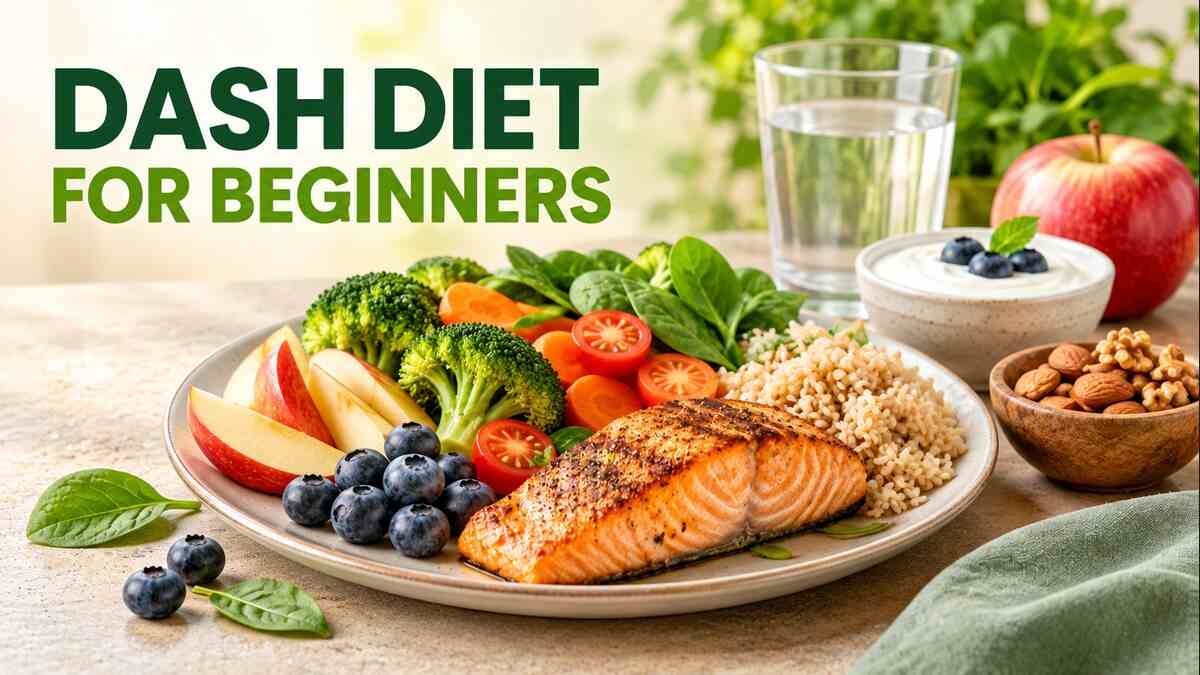

Looking for a simple way to eat healthier and support your blood pressure? The DASH diet offers a flexible approach built around everyday foods such as fruits, vegetables, whole grains, and lean proteins. It does not require special products, expensive supplements, or extreme restrictions.
High blood pressure is one of the most common long-term health concerns, and it often has no obvious symptoms. Diet is one of several habits that can influence it, along with physical activity, sleep, stress, weight, and, when needed, medication. The DASH diet (Dietary Approaches to Stop Hypertension) was designed around the idea that an overall eating pattern matters more than any single “superfood.”
This guide explains what the DASH diet is and how it works, then covers its potential benefits, a beginner food list, foods to limit, and sodium targets. You will also find a 7-day meal plan, a grocery list, and six easy ways to start. Everything here is general information, and your own needs may differ, so it is worth talking with your healthcare professional before making big changes.
What Is the DASH Diet?
The DASH diet is a heart-healthy eating plan that emphasizes fruits, vegetables, whole grains, low-fat dairy, lean proteins, nuts, and legumes while limiting sodium, added sugars, and saturated fat.
The plan was originally developed to help prevent and manage high blood pressure (hypertension). According to the National Heart, Lung, and Blood Institute (NHLBI), it is a flexible, balanced way of eating meant to support heart health over the long term. It requires no special foods and instead sets daily and weekly targets for food groups.
DASH puts the spotlight on nutrient-rich foods, including those that provide potassium, calcium, magnesium, fiber, and protein. It also limits sodium (salt), which is where it gets much of its blood pressure focus.
DASH is a long-term eating pattern, not a crash diet. It can be adapted to different calorie needs, food preferences, and budgets. For a broader view of healthy eating, see our guide to what a healthy diet looks like.
How Does the DASH Diet Work?
DASH works through the combined effect of many food choices, not through one nutrient or ingredient. Several principles are at play:
- Less sodium. Eating less sodium can help lower blood pressure in many people.
- More potassium. Potassium-rich foods such as fruits, vegetables, and beans are part of the pattern. Learn more in our guide to potassium-rich vegetables.
- Calcium and magnesium. These minerals, found in dairy, leafy greens, nuts, and legumes, support normal muscle and blood vessel function.
- More fiber. Fiber-rich foods support overall cardiovascular and metabolic health.
- Better fats. Replacing some saturated fat with unsaturated fat improves overall diet quality.
The research behind DASH is strong. In the DASH-Sodium trial, reported by the American College of Cardiology, 412 adults with prehypertension or stage 1 hypertension ate DASH or a control diet at three sodium levels, each for four weeks. Both the DASH pattern and lower sodium reduced blood pressure, and the effects were larger in people who started with higher blood pressure. The trial excluded people with kidney disease, diabetes, heart failure, or medication-treated hypertension, so results may differ for them.
DASH Diet Benefits for Beginners
Results vary from person to person, and DASH is not a cure or a replacement for medical care. Here are the main potential benefits.
Helps Lower Blood Pressure
Lowering blood pressure is the best-supported benefit. Controlled feeding trials, which measured changes over a few weeks, found meaningful reductions in many participants. In real life, results depend on your starting blood pressure, sodium intake, and how consistently you follow the plan. See our guide on how to lower blood pressure for more.
Supports Heart Health
Mayo Clinic notes that DASH may also lower LDL (“bad”) cholesterol. Combined with better blood pressure, these changes can support cardiovascular health. Our article on blood pressure and heart health explains the connection.
Encourages Better Eating Habits
DASH steers you toward minimally processed foods, including fruits, vegetables, and whole grains. It also encourages cooking more at home, which gives you more control over salt and added sugar.
May Support Healthy Weight Management
DASH is not a weight-loss diet by design, but it can support weight management when your calorie intake matches your needs. NHLBI notes that maintaining weight means eating about as many calories as you burn, and losing weight means eating fewer or being more active. Weight loss is not guaranteed.
May Improve Overall Dietary Quality
Because DASH centers on vegetables, fruit, whole grains, beans, and nuts, it can raise your intake of fiber and many vitamins and minerals. This is a benefit even beyond blood pressure.
DASH Diet Food List: What Beginners Should Eat
DASH encourages variety across several food groups. You do not need to buy every food listed below. Start with familiar, affordable ingredients and build meals around a combination of vegetables, whole grains, and protein.
Fruits
- Apples
- Bananas
- Oranges
- Berries
- Mangoes
- Papaya
- Guava
Vegetables
- Spinach and other leafy greens
- Carrots
- Broccoli
- Tomatoes
- Pumpkin
- Green beans
For more ideas, see our articles on the benefits of eating vegetables and cruciferous vegetables.
Whole Grains
- Oats
- Brown rice
- Whole-wheat bread
- Whole-grain pasta
- Whole-grain cereals
NHLBI recommends whole grains such as whole-wheat bread, whole-wheat pasta, and brown rice for most grain servings.
Lean Protein Sources
- Fish
- Skinless chicken
- Eggs
- Lentils
- Beans
- Chickpeas
Our guide to legumes explains why beans and lentils are such useful staples.
Low-Fat Dairy or Suitable Alternatives
- Low-fat milk
- Plain low-fat yogurt
- Reduced-fat dairy products
- Fortified unsweetened alternatives, where appropriate
Nuts, Seeds, and Healthy Fats
- Almonds
- Walnuts
- Peanuts
- Chia seeds
- Flaxseeds
- Olive oil and other unsaturated vegetable oils
See our guides to nuts and healthy fats for more.
How Many Servings?
NHLBI and Mayo Clinic describe these approximate targets for a 2,000-calorie plan. Your own needs may be different, so treat them as a starting point.
| Food group | Daily or weekly servings (2,000 calories) |
|---|---|
| Grains | 6 to 8 per day |
| Vegetables | 4 to 5 per day |
| Fruits | 4 to 5 per day |
| Low-fat or fat-free dairy | 2 to 3 per day |
| Lean meat, poultry, and fish | 6 or fewer per day |
| Fats and oils | 2 to 3 per day |
| Nuts, seeds, and dry beans | 4 to 5 per week |
| Sweets | 5 or fewer per week |
DASH Diet Foods to Limit or Avoid
DASH is flexible, not an all-or-nothing diet. The goal is to limit certain foods, not to treat an occasional slice of cake as failure.
High-Sodium Foods
- Processed meats
- Instant noodles
- Packaged salty snacks
- Very salty sauces
- Salt-heavy convenience meals
- Pickles and heavily salted preserved foods
Foods High in Saturated Fat
- Fatty cuts of meat
- Excessive butter
- Full-fat dairy products
- Tropical oils such as coconut and palm kernel oil
Sugary Foods and Drinks
- Sugary soft drinks
- Sweetened beverages
- Excessive desserts
- Sweetened packaged snacks
Alcohol also deserves a mention. The 2025 AHA/ACC high blood pressure guideline says the ideal is no alcohol, and that people who drink should limit it to two drinks a day for men and one for women.
DASH Diet Sodium Guidelines for Beginners
Sodium is a key part of DASH. There are two commonly used targets:
| DASH approach | Daily sodium limit |
|---|---|
| Standard DASH | 2,300 mg |
| Lower-sodium DASH | 1,500 mg |
According to Mayo Clinic, 2,300 mg is about one teaspoon of table salt. NHLBI notes that going down to 1,500 mg lowers blood pressure even further. The 2025 AHA/ACC guideline similarly advises keeping sodium below 2,300 mg, with a longer-term target of 1,500 mg.
A few practical points:
- Most sodium comes from packaged, restaurant, and prepared foods, not only from the salt shaker.
- Food labels help. Compare the sodium on similar products.
- Flavor without salt. Try garlic, ginger, lemon, herbs, spices, and salt-free seasoning blends.
- Taste adapts. Your palate may take a few weeks to adjust to less salt.
Ask your healthcare professional which sodium target is right for you. For more flavor ideas, see our guide to garlic and blood pressure.
A Simple 7-Day DASH Diet Meal Plan for Beginners
This plan is an example, not a personalized prescription. Portion sizes and calorie needs vary, so adjust amounts to fit your needs. It uses affordable staples such as rice, lentils, beans, seasonal vegetables, eggs, fish, and fruit, and you can swap in local foods you prefer. Choose whole grains when they are available and practical.
| Day | Breakfast | Lunch | Dinner |
|---|---|---|---|
| Monday | Oatmeal, banana, milk | Brown rice, chicken, vegetables | Grilled fish, spinach, whole grains |
| Tuesday | Whole-wheat toast, eggs, fruit | Lentils, brown rice, salad | Chicken, vegetables, sweet potato |
| Wednesday | Plain yogurt, oats, berries | Chickpea salad, whole-wheat bread | Fish, mixed vegetables, rice |
| Thursday | Oatmeal, apple, nuts | Chicken and vegetable rice | Lentil curry, vegetables, whole grains |
| Friday | Eggs, whole-wheat toast, fruit | Bean salad, brown rice | Grilled chicken, carrots, leafy greens |
| Saturday | Yogurt, banana, oats | Vegetable and lentil soup, bread | Fish, brown rice, broccoli |
| Sunday | Whole-grain cereal, milk, fruit | Chicken, vegetables, whole grains | Chickpeas, mixed vegetables, brown rice |
Snack ideas:
- Fresh fruit
- Unsalted nuts
- Plain yogurt
- Carrot sticks
- A small serving of seeds
Use little or no added salt when cooking, and check sodium on breads, soups, and canned items. Our Mediterranean diet guide offers more meal inspiration.
DASH Diet Grocery List for Beginners
Turn the plan into a shopping list with these basics:
| Category | Shopping items |
|---|---|
| Fruits | Bananas, apples, oranges, seasonal fruit |
| Vegetables | Spinach, carrots, tomatoes, broccoli |
| Whole grains | Oats, brown rice, whole-wheat bread |
| Protein | Eggs, fish, chicken, lentils, beans |
| Dairy | Low-fat milk, plain yogurt |
| Healthy fats | Unsalted nuts, seeds, vegetable oils |
| Flavorings | Garlic, ginger, lemon, herbs, spices |
Practical tip: Buy seasonal produce, use frozen vegetables when convenient, and choose canned beans with no added salt or rinse them before use. Our articles on frozen vegetables and affordable vegetables can help you shop on a budget.
How to Start the DASH Diet: 6 Easy Tips
You do not need to change everything overnight. Small, steady steps are easier to keep.
Start With One Meal
Replace one less nutritious meal each day with a DASH-friendly option. Add more meals as it becomes routine.
Add More Vegetables
Include vegetables at lunch and dinner. If you need ideas, see how to eat more vegetables and how many vegetables to eat a day.
Choose Whole Grains More Often
Replace some refined grains with oats, brown rice, or whole-wheat bread. Whole grains also add fiber, and you can find more options in our list of high-fiber foods.
Reduce Sodium Gradually
Use a little less salt at a time and experiment with herbs and spices. Choose low-sodium or no-salt-added products when you can.
Prepare Meals at Home
Home cooking makes it easier to manage sodium and ingredients. NHLBI suggests trimming visible fat and cooking by broiling, roasting, or poaching.
Read Food Labels
Compare the sodium content of packaged products and choose lower-sodium options. Our guide to reading nutrition facts explains what to look for.
Consistency matters more than perfection. A few days of eating off-plan does not erase your progress, so simply return to your routine. Building healthy habits works best one step at a time.
Is the DASH Diet Safe for Everyone?
DASH is generally considered a healthy eating pattern for many adults, but it is not right for everyone without adjustments. A few cautions apply:
- Kidney disease and potassium. People with kidney disease or other conditions that affect potassium levels may need individualized changes, since DASH is rich in potassium.
- Certain medications. Some medications affect potassium, which can make high-potassium diets or potassium-based salt substitutes unsuitable without medical advice. Many salt substitutes contain potassium, so check with your clinician first.
- Blood pressure medication. If you take blood pressure medicine, do not stop or change it without talking to your clinician. DASH is meant to work alongside treatment, not replace it.
- Other conditions. A registered dietitian can tailor DASH if you have diabetes, kidney disease, or other dietary needs.
Mayo Clinic advises people with kidney disease, those taking blood pressure medications, and those who must manage potassium intake to check with their healthcare provider before starting. For a broader overview of the condition, see our guide to high blood pressure.
Frequently Asked Questions About the DASH Diet
What is the DASH diet for beginners?
It is a flexible eating pattern built around vegetables, fruits, whole grains, lean proteins, low-fat dairy, nuts, and legumes, with less sodium, added sugar, and saturated fat. Beginners can start gradually, for example by changing one meal at a time.
Can you eat rice on the DASH diet?
Yes. Whole grains such as brown rice are encouraged, but portion-conscious white rice can also fit. Pair rice with vegetables and a protein source to keep meals balanced.
Are eggs allowed on the DASH diet?
Yes. Eggs can be part of a balanced diet alongside vegetables, whole grains, and other protein sources. If you have high cholesterol or another condition, ask your clinician how many eggs are appropriate for you.
Can the DASH diet help you lose weight?
It may support weight management when combined with an appropriate calorie intake, but weight loss is not guaranteed. NHLBI notes that calorie needs depend on your age and activity level.
How quickly does the DASH diet lower blood pressure?
Some people may see improvements within weeks, though results depend on baseline blood pressure, sodium intake, and how closely you follow the plan. In the DASH-Sodium trial, each diet period lasted four weeks.
Is the DASH diet expensive?
Not necessarily. Affordable staples such as beans, lentils, oats, rice, eggs, seasonal produce, frozen vegetables, and local fish can make DASH accessible. NHLBI notes the plan is built on common foods sold in most grocery stores.
Final Thoughts: Start the DASH Diet One Step at a Time
The DASH diet is a flexible, heart-healthy eating pattern. Its foundation is fruits, vegetables, whole grains, lean proteins, and lower sodium. Beginners can start with small changes, and consistency is more important than perfection.
Talk with your healthcare professional about your blood pressure and whether DASH fits your needs, especially if you take medication or have kidney disease. Ready to improve your eating habits? Start with one DASH-friendly meal today and gradually build a heart-healthy routine that works for your lifestyle.
Sources
- National Heart, Lung, and Blood Institute (NHLBI). DASH Eating Plan
- NHLBI. Following the DASH Eating Plan
- Mayo Clinic. DASH Diet: Healthy Eating to Lower Your Blood Pressure
- American Heart Association and American College of Cardiology (2025). High Blood Pressure Guideline Highlights
- American College of Cardiology. DASH-Sodium: DASH Diet Plus Sodium Restrictions Can Reduce High BP in Adults
Medical Disclaimer: This article is for educational purposes only and is not a substitute for professional medical advice, diagnosis, or treatment. Talk with your doctor or a registered dietitian before changing your diet, especially if you have high blood pressure, kidney disease, diabetes, or take any medication. Do not stop or change a prescribed medicine because of something you read here.
8 thoughts on “DASH Diet for Beginners: Food List, Benefits & 7-Day Meal Plan”
Comments are closed.