
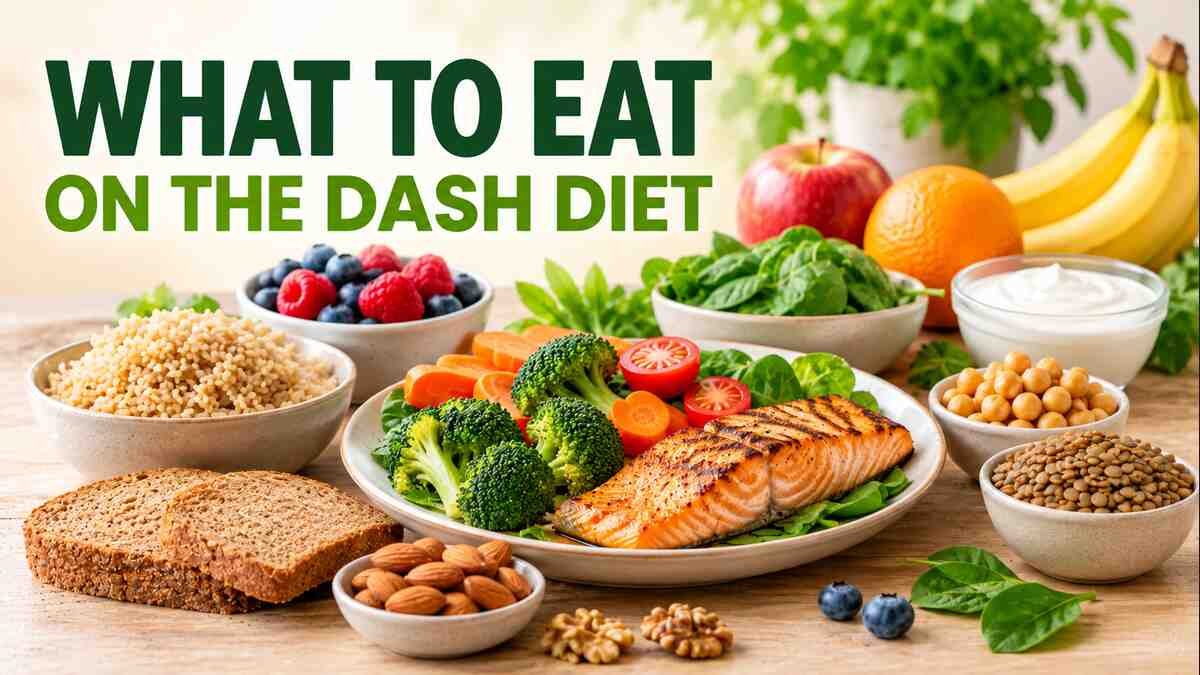

If you’re wondering what to eat on the DASH diet, the good news is that many everyday foods already fit this heart-healthy eating plan. From fresh fruits and vegetables to whole grains, beans, fish, and low-fat dairy, the DASH diet focuses on nutritious foods that are easy to include in regular meals. You do not need special products or expensive ingredients to get started.
DASH stands for Dietary Approaches to Stop Hypertension. It was developed to support healthy blood pressure, and the NHLBI DASH eating plan emphasizes fruits, vegetables, whole grains, lean proteins, and lower-fat dairy while limiting sodium, saturated fat, and added sugars. It is a flexible pattern rather than a strict list of forbidden foods, so most people can adapt it to their culture, budget, and taste.
This guide is a practical food handbook. You will find a complete food list by group, daily serving targets, foods to limit, sodium goals, meal ideas for every part of the day, a grocery list, and tips for making DASH meals taste good. If you want a broader overview first, our DASH diet for beginners guide covers the basics.
What Is the DASH Diet?
The DASH diet is an eating pattern designed to help people support healthy blood pressure through food. It was created from research funded by the National Heart, Lung, and Blood Institute (NHLBI), part of the National Institutes of Health.
The plan centers on foods that provide potassium, calcium, magnesium, fiber, and protein, while reducing sodium. It includes all major food groups, so nothing is eliminated entirely. Instead, it shifts the balance toward whole, minimally processed foods.
Because it is a pattern and not a rigid program, DASH works well for people who want a sustainable approach. The MedlinePlus DASH diet overview describes it as a way of eating that can be used long term. Research suggests that this style of eating may help lower blood pressure for many people, though results vary from person to person.
For more background on blood pressure itself, see our guides on high blood pressure and how to lower blood pressure.
DASH Diet Food List: Foods You Should Eat
The foods below make up the core of the DASH eating plan. The NHLBI guide to following DASH provides food examples and serving sizes for each group.
Fruits
Fruits supply potassium, fiber, and vitamins, and they add natural sweetness to meals and snacks. Good choices include:
- Apples
- Bananas
- Oranges
- Berries
- Mangoes
- Papaya
- Guava
- Pears
- Grapes
- Melons
Fresh fruit works well, and so does frozen fruit without added sugar. Canned fruit packed in water or juice can also fit, as long as it does not contain heavy syrup.
Practical tip: Choose whole fruit more often than juice. Whole fruit provides fiber that juice lacks.
Vegetables
Vegetables are a cornerstone of DASH. They provide potassium, magnesium, fiber, and many other nutrients with relatively few calories. Examples include:
- Spinach
- Broccoli
- Carrots
- Tomatoes
- Cabbage
- Cauliflower
- Pumpkin
- Green beans
- Sweet potatoes
- Eggplant
You can eat vegetables raw, steamed, roasted, grilled, or lightly sautéed. Learn more about the health benefits of vegetables and the cruciferous vegetables such as broccoli, cabbage, and cauliflower.
Practical tip: Add vegetables to rice dishes, soups, curries, omelets, and sandwiches. Our guide on how to eat more vegetables has more ideas.
Whole Grains
Whole grains provide fiber, B vitamins, and minerals. Refined grains have lost much of this nutrition during processing. Good options include:
- Oatmeal
- Brown rice
- Whole-wheat bread
- Whole-wheat pasta
- Whole-grain cereals
- Barley
- Whole-grain tortillas
Practical tip: Replace some refined grains with whole grains gradually. For example, try mixing brown rice with white rice at first. You can find more fiber-rich choices in our list of high-fiber foods for digestive health.
Lean Proteins
DASH includes both animal and plant-based proteins. Choices include:
- Fish
- Skinless chicken
- Lean meat in moderate portions
- Eggs
- Beans
- Lentils
- Chickpeas
- Peas
Practical tip: Choose grilled, baked, steamed, or roasted protein instead of heavily fried or processed options.
Low-Fat Dairy Products
Dairy contributes calcium and protein. Examples include:
- Low-fat milk
- Fat-free milk
- Plain low-fat yogurt
- Reduced-fat cheese
Practical tip: Choose plain yogurt instead of heavily sweetened varieties, and add your own fruit. Cheese can be high in sodium, so check labels.
Nuts, Seeds, and Healthy Fats
Nuts and seeds provide healthy fats, fiber, and minerals. Healthy oils add flavor and help with cooking. Examples include:
- Unsalted almonds
- Walnuts
- Peanuts
- Chia seeds
- Flaxseeds
- Olive oil
- Canola oil
Practical tip: Choose unsalted nuts and use oils in moderate quantities. Nuts are nutritious but calorie-dense, so portion size matters. See our guide to the health benefits of nuts for more detail.
DASH Diet Food Chart: Daily Servings and Portion Sizes
For a 2,000-calorie eating plan, NHLBI provides the following general serving targets. Individual needs vary, and your calorie needs may be higher or lower.
| Food Group | Recommended Servings |
|---|---|
| Grains | 6 to 8 daily |
| Vegetables | 4 to 5 daily |
| Fruits | 4 to 5 daily |
| Low-fat dairy | 2 to 3 daily |
| Lean meat, poultry, fish | 6 or fewer 1-ounce servings daily |
| Nuts, seeds, legumes | 4 to 5 weekly |
| Fats and oils | 2 to 3 daily |
| Sweets | 5 or fewer weekly |
Here is what counts as one serving, based on standard DASH serving definitions (see the Mayo Clinic DASH diet guide for more examples):
- Fruit: 1 medium fruit
- Vegetables: ½ cup cooked vegetables, or 1 cup raw leafy vegetables
- Grains: 1 slice whole-wheat bread, or ½ cup cooked rice
- Dairy: 1 cup milk or yogurt
- Legumes: ½ cup cooked beans
- Nuts: about ⅓ cup (1.5 ounces) of nuts, or 2 tablespoons of seeds
These serving sizes are standard definitions, not necessarily typical restaurant or household portions. A restaurant bowl of rice or pasta can easily equal two or three DASH servings.
What Foods Should You Limit on the DASH Diet?
DASH is not a strict forbidden-food diet. The goal is to limit certain foods and emphasize healthier choices most of the time. The three main categories to watch are sodium, saturated fat, and added sugar.
High-Sodium Foods
- Instant noodles and salty packaged snacks
- Processed meats such as sausages and bacon
- Pickles and heavily salted preserved foods
- Salt-heavy sauces and seasoning mixes
- Canned soups and prepared meals with high sodium
Foods High in Saturated Fat
- Fatty meats
- Excessive butter
- Full-fat dairy products
- Foods prepared with large amounts of saturated fat
Sugary Foods and Drinks
- Sugar-sweetened beverages
- Sweetened packaged drinks
- Excessive sweets and desserts
Occasional treats can still fit. What matters most is the overall pattern across weeks, not a single meal. If you want to explore more heart-friendly options, browse our list of heart-healthy foods.
How Much Sodium Can You Eat on the DASH Diet?
The DASH plan has two commonly used sodium targets, described in the NHLBI guidance on living with DASH:
- Standard DASH: up to 2,300 mg of sodium per day
- Lower-sodium DASH: up to 1,500 mg of sodium per day
Lower sodium intake may provide additional blood pressure benefits for some people. Which target is right for you depends on your health, so ask your healthcare provider.
Packaged and prepared foods are often the biggest sources of sodium, not the salt shaker. A few habits can help:
- Compare nutrition labels when buying similar foods, and choose the lower-sodium option.
- Season with lemon, garlic, ginger, herbs, and spices instead of extra salt.
- Rinse canned beans and vegetables to remove some of the added sodium.
- Choose fresh or plain frozen foods more often than canned or pre-seasoned versions.
What to Eat on the DASH Diet for Breakfast, Lunch, and Dinner
Here is how the food list turns into everyday meals. Feel free to adapt these ideas to your culture, budget, and preferences.
DASH Diet Breakfast Ideas
- Oatmeal with banana and unsalted nuts
- Plain yogurt with berries and whole-grain cereal
- Whole-wheat toast with eggs and fruit
- Vegetable omelet with whole-grain bread
DASH Diet Lunch Ideas
- Brown rice, lentils, and vegetables
- Grilled chicken with whole grains and salad
- Chickpea salad with whole-wheat bread
- Vegetable soup with beans (look for low-sodium broth)
DASH Diet Dinner Ideas
- Grilled fish with vegetables and brown rice
- Skinless chicken with roasted vegetables
- Lentil curry with vegetables and whole grains
- Bean-based stew with a vegetable side
DASH Diet Snack Ideas
- Fresh fruit
- Unsalted nuts
- Plain yogurt
- Carrot sticks
- A small serving of seeds
A Simple DASH Diet Grocery List
A short, flexible list makes shopping easier. Use this as a starting point and swap in foods you enjoy.
| Grocery Category | Foods |
|---|---|
| Fruits | Apples, bananas, oranges, seasonal fruits |
| Vegetables | Spinach, carrots, tomatoes, cabbage |
| Grains | Oats, brown rice, whole-wheat bread |
| Protein | Eggs, fish, chicken, beans, lentils |
| Dairy | Low-fat milk, plain yogurt |
| Healthy fats | Unsalted nuts, seeds, vegetable oils |
| Flavorings | Garlic, ginger, lemon, herbs, spices |
A few practical tips can keep costs and sodium down:
- Choose seasonal produce to save money.
- Keep oats, lentils, and beans on hand.
- Buy frozen vegetables without added sauces or salt.
- Compare sodium levels on packaged foods.
- Use leftovers to build quick lunches.
How to Build a Balanced DASH Diet Plate
A simple plate method can make meal planning easier. Think of it as a visual guide rather than an official DASH serving prescription.
- Fill about half your plate with vegetables.
- Add a protein source such as fish, chicken, beans, or lentils.
- Include whole grains or another suitable carbohydrate.
- Add fruit or low-fat dairy as part of the meal or as a snack.
- Use small amounts of healthy oils and lower-sodium seasoning.
This approach follows the same spirit as DASH, which centers on plants, lean protein, and whole grains. Because it is only a rough guide, use the serving chart above if you want to track your intake more closely.
Tips for Making DASH Diet Foods Taste Better
Some people worry that lower-sodium food will taste bland. A little planning goes a long way.
- Use garlic, ginger, chili, black pepper, lemon, and fresh or dried herbs.
- Roast or grill vegetables to bring out their natural sweetness.
- Mix vegetables into familiar dishes such as rice, pasta, and omelets.
- Try different cooking methods, such as baking, steaming, or air-frying.
- Use unsalted nuts and homemade dressings.
- Reduce salt gradually. Taste preferences often adjust over a few weeks.
Frequently Asked Questions About DASH Diet Foods
Can you eat rice on the DASH diet?
Yes. Whole grains such as brown rice are encouraged, but white rice can also fit in appropriate portions. Aim to make whole grains a regular part of your meals, and watch portion sizes, since ½ cup cooked rice counts as one grain serving.
Are eggs allowed on the DASH diet?
Yes. Eggs can be part of a balanced eating pattern alongside vegetables, whole grains, and other protein sources. The NHLBI DASH plan lists eggs among its protein choices. Pair them with vegetables and whole-grain toast, and avoid adding a lot of salt or processed meat.
Can you eat potatoes on the DASH diet?
Yes. Potatoes and sweet potatoes can fit into DASH. Prepare them with limited salt and moderate amounts of added fat, and choose baking or roasting over deep frying. See our guide to the health benefits of sweet potatoes.
Can you eat bananas on the DASH diet?
Yes. Bananas are a fruit and provide potassium, fiber, and other nutrients. If you have kidney disease or take medications that affect potassium, talk with your healthcare provider about how much potassium is right for you.
Is chicken allowed on the DASH diet?
Yes. Skinless chicken is a lean protein option, especially when grilled, baked, or roasted. Check labels on packaged or pre-seasoned chicken, since these products can contain added sodium.
Can you eat bread on the DASH diet?
Yes. Whole-wheat and other whole-grain breads are preferred. Bread can contribute more sodium than many people expect, so compare labels and choose lower-sodium options when you can.
Can you eat beans on the DASH diet?
Yes. Beans, lentils, and chickpeas are valuable sources of protein, fiber, and minerals. If you use canned beans, rinse them first to reduce some of the sodium, or choose no-salt-added versions.
Final Thoughts: Choose More DASH-Friendly Foods Every Day
The DASH diet is built on whole, nutrient-rich foods. Fruits, vegetables, whole grains, lean proteins, and low-fat dairy are central, and lower-sodium choices matter. You do not have to change every meal at once.
Consistency and realistic choices are what count most. Individual needs differ, especially for people with kidney disease or those taking medications that affect potassium, so check with your healthcare provider before making major changes.
Start by adding one DASH-friendly food to your next meal. Small changes, repeated consistently, can help you build a healthier eating pattern over time.
Sources
- NHLBI: DASH Eating Plan
- NHLBI: Following DASH
- NHLBI: Living With DASH
- Mayo Clinic: DASH Diet, Healthy Eating to Lower Your Blood Pressure
- MedlinePlus: DASH Diet
Medical Disclaimer: This article is for general educational purposes only and is not a substitute for professional medical advice, diagnosis, or treatment. Nutrition needs vary from person to person, especially for people with high blood pressure, kidney disease, or those who take medications. Always talk with your doctor or a registered dietitian before changing your diet, and seek medical care promptly if you have concerning symptoms.
4 thoughts on “What to Eat on the DASH Diet: Complete Food List & Meal Ideas”
Comments are closed.