
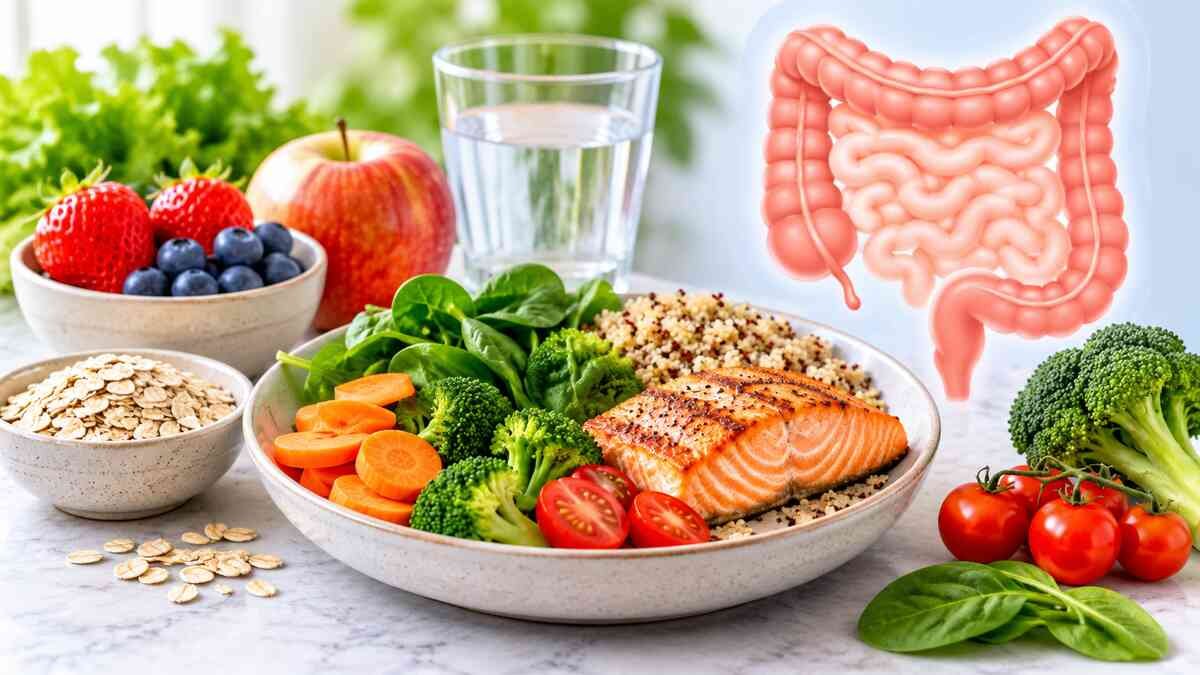

The DASH diet is well known for supporting healthy blood pressure and heart health. It centers on fruits, vegetables, whole grains, lean proteins, and low-fat dairy, which are foods most people are encouraged to eat more of. But if you live with irritable bowel syndrome (IBS), a heart-healthy eating pattern raises a fair question: will it feel good in your gut?
IBS is a common digestive condition that causes abdominal pain, bloating, gas, constipation, diarrhea, or a mix of these. Many people with IBS notice that certain foods set off their symptoms. Some of the foods DASH encourages, such as beans, certain fruits, and certain vegetables, are among those that bother sensitive digestive systems.
This article explains where DASH and IBS-friendly eating overlap and where they differ. You will learn which DASH foods may trigger symptoms, which ones may be easier to tolerate, how DASH compares with the low-FODMAP diet, and how to adapt your meals. The DASH diet is not an established treatment for IBS, so the goal here is to help you make informed, individualized food choices.
What Is the DASH Diet?
DASH stands for Dietary Approaches to Stop Hypertension. The NHLBI DASH eating plan was developed to help people support healthy blood pressure through food.
The pattern emphasizes fruits, vegetables, whole grains, and fiber-rich foods. It includes low-fat or fat-free dairy, lean proteins such as poultry, fish, and beans, and nuts and seeds. It also limits sodium, added sugars, and saturated fat.
DASH was designed to support blood pressure, not to treat digestive disorders. That distinction matters for IBS, because the research behind DASH is about blood pressure and heart health. For a full overview, see our guides on DASH diet for beginners and what to eat on the DASH diet.
Understanding IBS and Its Relationship With Food
IBS is a disorder of gut-brain interaction. According to NIDDK, it involves repeated abdominal pain and changes in bowel movements without visible signs of damage in the digestive tract. Common symptoms include abdominal pain, bloating, gas, constipation, and diarrhea.
Doctors often describe IBS by its main bowel pattern:
- IBS-C: constipation is more common
- IBS-D: diarrhea is more common
- IBS-M: a mix of both
Food can make symptoms worse for many people. One reason is that some carbohydrates, collectively called FODMAPs (fermentable oligosaccharides, disaccharides, monosaccharides, and polyols), are poorly absorbed and ferment in the gut, which can cause gas, bloating, and changes in bowel habits.
Tolerance varies a lot from person to person. IBS is also not caused by unhealthy eating, so symptoms do not mean you did something wrong. For more on related symptoms, see our guides on common digestive problems and abdominal pain after eating.
Is the DASH Diet Good for IBS?
It may offer a useful nutritional foundation for some people with IBS, but it is not designed to manage IBS symptoms and individual adjustments are often needed.
Potential benefits:
- It emphasizes minimally processed foods.
- It encourages dietary variety.
- It includes fiber, which can support bowel regularity for some people.
- It provides many nutrient-dense food choices.
Potential challenges:
- Some fruits and vegetables contain fermentable carbohydrates.
- Beans and legumes may increase gas and bloating.
- Certain whole grains may not be tolerated by everyone.
- Some dairy products contain lactose, which can trigger symptoms in people who are lactose intolerant.
Evidence limitations: There is not enough direct clinical evidence to establish the DASH diet as an IBS treatment. Research showing that DASH helps blood pressure does not show that it helps IBS. Some people may follow a modified DASH-style pattern, but food choices should reflect individual tolerance.
DASH Diet Foods That May Trigger IBS Symptoms
Foods that are healthy under DASH principles are not automatically right for every person with IBS. The foods below contain more fermentable carbohydrates, but they are not universally harmful, and many people tolerate small portions. Avoid cutting foods out for the long term without professional guidance.
Certain Fruits
Apples, pears, and watermelon contain higher amounts of fermentable carbohydrates such as fructose and polyols. They are fine for some people and troublesome for others.
Certain Vegetables
Onions, garlic, cauliflower, and mushrooms can contribute to bloating and gas in sensitive people. This is notable because garlic and onions are common DASH-friendly flavorings used instead of salt. Our guide on cruciferous vegetables explains why vegetables like cauliflower offer benefits even though they may not suit every gut.
Legumes
Chickpeas, lentils, and kidney beans provide fiber and protein but are also high in fermentable carbohydrates. Portion size matters. Smaller portions of canned, rinsed legumes are sometimes better tolerated. See our article on the health benefits of legumes for the nutrition side of the story.
Dairy Products
Regular milk, some soft dairy products, and yogurt that contains lactose can trigger symptoms in people who do not digest lactose well. Lactose intolerance and IBS are different conditions, though they can overlap and look similar.
Whole Grains
Wheat-based whole grains such as whole-wheat bread and pasta contain fructans, a type of FODMAP, and may bother some people with IBS. Others tolerate them well. Many people find oats, rice, and quinoa easier.
IBS-Friendly Foods That Can Fit Into a DASH-Style Diet
Some foods keep DASH’s nutritional principles while being gentler for many people with IBS. These are examples, not a complete low-FODMAP list, and suitability depends on portion size, preparation, and your own response.
| Food Group | Potential Options |
|---|---|
| Fruits | Oranges, strawberries, kiwi |
| Vegetables | Carrots, spinach, zucchini |
| Grains | Oats, rice, quinoa |
| Protein | Eggs, fish, poultry, firm tofu |
| Dairy alternatives | Lactose-free milk, suitable fortified alternatives |
| Nuts and seeds | Walnuts, chia seeds, peanuts |
Portions and cooking methods can change how well a food is tolerated. For example, a small serving of a food may be fine while a large serving causes symptoms. If you want to understand more about how vegetables are prepared, see our article on raw vs. cooked vegetables.
DASH Diet vs. Low-FODMAP Diet for IBS
The two approaches have different goals and are not interchangeable.
| Feature | DASH Diet | Low-FODMAP Diet |
|---|---|---|
| Main purpose | Support blood pressure and cardiovascular health | Help manage IBS symptoms |
| Main focus | Nutrient-rich foods and lower sodium | Reducing selected fermentable carbohydrates |
| Fruits and vegetables | Encourages variety | Selects suitable types and portions |
| Whole grains | Encourages whole grains | Depends on FODMAP content |
| Legumes | Commonly encouraged | Some require restriction or portion adjustment |
| IBS evidence | Limited direct evidence | More established evidence for IBS symptom management |
The American Gastroenterological Association (AGA) describes the low-FODMAP diet as currently the most evidence-based diet intervention for IBS. It has three phases:
- Restriction: a short-term period (no more than 4 to 6 weeks) of limiting high-FODMAP foods
- Reintroduction: gradually adding FODMAP foods back
- Personalization: building a long-term pattern based on how you respond
The AGA recommends working with a registered dietitian who understands IBS where possible, and notes that restrictive diets are not a good fit for everyone, including people at risk of malnutrition or with an eating disorder. Low-FODMAP eating is not meant to be followed strictly forever.
How to Adapt the DASH Diet for People With IBS
These adjustments keep DASH’s spirit without being overly restrictive.
Choose Vegetables Carefully
Start with vegetables that are generally better tolerated, such as carrots, spinach, and zucchini, and adjust based on your symptoms. You do not need to avoid vegetables altogether. Our guide on vegetables for gut health may help.
Select Suitable Fruits
Consider fruits such as oranges, strawberries, and kiwi in sensible portions instead of cutting out fruit. If apples or pears trouble you, try alternatives rather than skipping fruit.
Adjust Fiber Gradually
There are two main types of fiber. Soluble fiber, found in oats, some fruits, and psyllium, may help some people with IBS. Insoluble fiber, found in many whole-grain products and some vegetables, can worsen bloating and pain in some people. The AGA update states that soluble fiber is efficacious for global IBS symptoms.
NIDDK advises adding fiber a little at a time, by about 2 to 3 grams a day, because too much at once can cause gas and trigger symptoms. See our list of high-fiber foods for digestive health.
Consider Lactose-Free Alternatives
If dairy seems to trigger symptoms, lactose-free milk or suitable fortified alternatives can keep calcium and protein in your diet.
Pay Attention to Sodium
Keep DASH’s emphasis on moderate sodium without relying on heavily processed specialty foods. Fresh herbs, lemon, and the green parts of scallions are examples of flavorings that many people tolerate.
Keep a Food and Symptom Diary
Recording meals and symptoms helps you spot patterns and test suspected triggers one at a time. Share the diary with your clinician or dietitian. Our guide on how to improve gut health offers more general habits.
Sample One-Day DASH-Style Meal Plan for IBS
This illustration is not a prescribed diet. Portions and tolerances vary.
| Meal | Example |
|---|---|
| Breakfast | Oatmeal with strawberries and a small serving of walnuts, with lactose-free milk if desired |
| Lunch | Grilled chicken with rice, cooked carrots, and spinach |
| Afternoon snack | Kiwi or an orange with a small serving of suitable nuts |
| Dinner | Baked salmon with quinoa and cooked zucchini |
This menu combines DASH-style principles (whole foods, lean protein, vegetables, fruit, and moderate sodium) with choices that many people find easier to digest. It is not a guaranteed symptom-free menu or a complete low-FODMAP plan. See our heart-healthy foods article for more DASH-compatible ideas.
Common Mistakes to Avoid When Combining DASH and IBS Dietary Principles
- Assuming every high-fiber food is suitable. Some are hard on a sensitive gut.
- Increasing fiber too quickly. Slow changes are gentler.
- Eliminating multiple food groups without professional advice. This can lead to nutrient gaps.
- Treating all IBS symptoms as food intolerances. Stress, sleep, and other factors also play a role.
- Assuming gluten-free foods are automatically low-FODMAP. They are not the same.
- Following restrictive diets indefinitely. Most people can add foods back.
- Ignoring differences between IBS subtypes. What helps IBS-C may not help IBS-D.
Balanced nutrition and individualized guidance matter, because overly narrow diets can affect both your gut and your heart health.
When Should Someone With IBS Seek Professional Advice?
Talk with a healthcare professional or registered dietitian if:
- Your digestive symptoms are persistent or getting worse.
- You struggle to keep a balanced diet.
- You are losing weight without trying.
- You notice blood in your stool.
- Your symptoms interfere with daily activities.
Some symptoms need prompt medical assessment and should not automatically be blamed on IBS. Examples include blood in the stool, unexplained weight loss, severe or worsening pain, or symptoms that wake you at night. A clinician can rule out other conditions. Our article on what causes abdominal pain explains why a medical evaluation matters.
Frequently Asked Questions About the DASH Diet and IBS
Is the DASH diet good for IBS?
The DASH diet may provide a useful nutritional foundation for some people with IBS, but it is not specifically designed to manage IBS symptoms. Individual food adjustments are often necessary, and direct clinical evidence is limited.
Can the DASH diet cause bloating?
It can in some people. Foods such as beans, certain fruits, and certain vegetables contain fermentable carbohydrates that may contribute to bloating in sensitive individuals. Increasing fiber slowly can help, as NIDDK advises.
Is the DASH diet low in FODMAPs?
No. The DASH diet includes several foods that can be high in FODMAPs, so it is not automatically suitable for people following a low-FODMAP approach.
What fruits can people with IBS include in a DASH-style diet?
Some people tolerate oranges, strawberries, kiwi, and other suitable fruits. Tolerance and serving size vary, so use a symptom diary to guide your choices.
Can people with IBS eat whole grains on the DASH diet?
Yes, some whole grains may be suitable. Oats and quinoa are examples, although individual tolerance should guide your choices. Wheat-based whole grains are more likely to cause symptoms.
Is the low-FODMAP diet better than the DASH diet for IBS?
For IBS symptoms, the low-FODMAP diet has more direct clinical evidence, according to the AGA. DASH primarily targets cardiovascular health and blood pressure, so the two serve different purposes.
Can someone follow both DASH and low-FODMAP principles?
Selected principles can be combined, but careful food selection is needed to keep nutrition balanced. A registered dietitian can help you do this safely.
Final Thoughts: Can You Combine the DASH Diet With IBS-Friendly Eating?
DASH is primarily a heart-healthy eating pattern, and it is not an established IBS treatment. Some DASH foods may trigger IBS symptoms, but individualized choices can make the pattern work for many people. Low-FODMAP eating has stronger direct evidence for IBS symptom management.
Professional guidance can help you balance digestive comfort with cardiovascular nutrition. Aim for a sustainable, balanced way of eating instead of unnecessary restrictions, and adjust as you learn what your body tolerates.
Sources
- NHLBI: DASH Eating Plan
- NIDDK: Irritable Bowel Syndrome (IBS)
- NIDDK: Eating, Diet, & Nutrition for Irritable Bowel Syndrome
- Chey WD, et al. AGA Clinical Practice Update on the Role of Diet in Irritable Bowel Syndrome: Expert Review. Gastroenterology (2022)
Medical Disclaimer: This article is for general educational purposes only and is not a substitute for professional medical advice, diagnosis, or treatment. IBS and food tolerance vary from person to person. Always talk with your doctor or a registered dietitian before making major changes to your diet. Seek medical care promptly if you have blood in your stool, unexplained weight loss, severe or worsening abdominal pain, or symptoms that are new or different from usual.