

High cholesterol is one of the most common risk factors for heart disease, and many people who have it feel perfectly fine. The two cholesterol types you hear about most are LDL (the “bad” kind that can build up in artery walls) and HDL (the “good” kind that helps carry cholesterol back to the liver). Our guide to LDL vs. HDL cholesterol explains the difference in more detail.
That is why many people look to the DASH diet, short for Dietary Approaches to Stop Hypertension. It was designed to help manage blood pressure, but its focus on fruits, vegetables, whole grains, beans, nuts, fish, and lower-saturated-fat choices overlaps with what doctors recommend for high cholesterol.
So can this eating plan actually help your numbers? This guide covers what the research shows (including where it is mixed), which foods to emphasize and limit, how soluble fiber and fats fit in, a sample day of meals, and when medication may still be needed.
What Is the DASH Diet?
DASH stands for Dietary Approaches to Stop Hypertension. The National Heart, Lung, and Blood Institute (NHLBI) funded the research that created it, and the plan was first built to help lower blood pressure. NHLBI reports that its studies found the DASH diet lowered blood pressure and LDL cholesterol compared with a typical American diet.
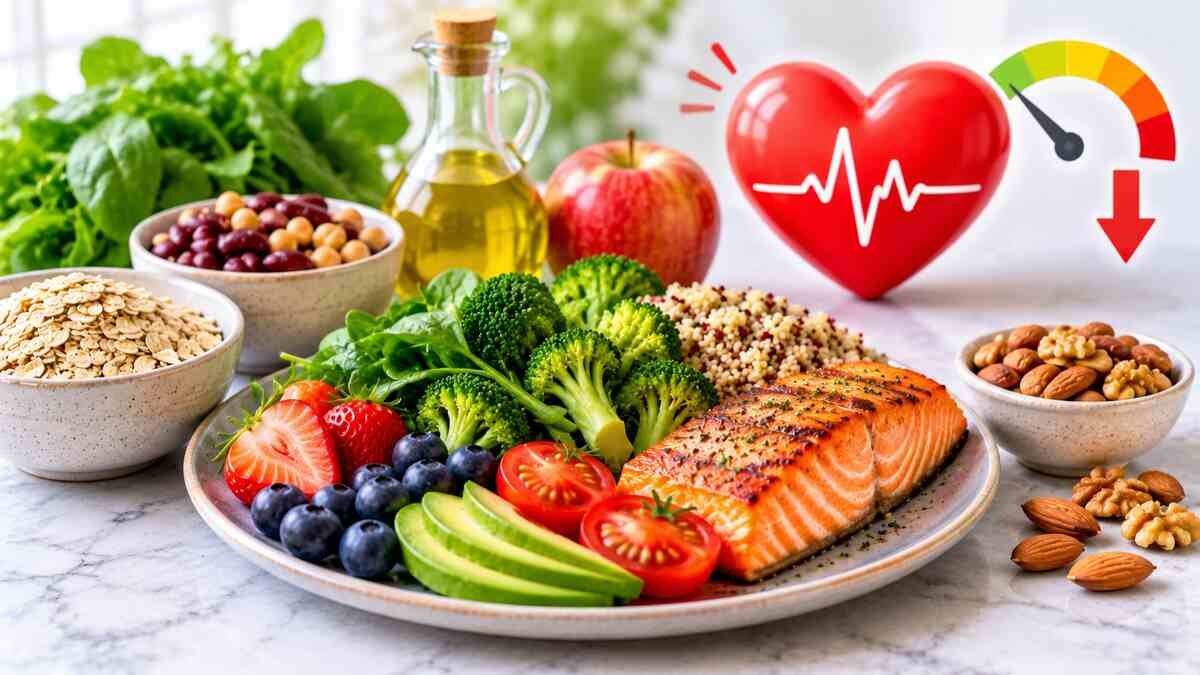
The eating pattern is flexible and uses ordinary grocery store foods. It emphasizes:
- Fruits and vegetables
- Whole grains and other fiber-rich foods
- Low-fat or fat-free dairy products
- Fish, poultry, and other lean proteins
- Beans, legumes, nuts, and seeds
It also limits sodium, saturated fat, added sugars, and highly processed foods. MedlinePlus notes that the standard plan allows 2,300 mg of sodium per day, with a lower 1,500 mg version.
Although DASH began as a blood pressure plan, its overall pattern supports broader heart health. For a beginner-friendly walkthrough, see our DASH diet for beginners guide and our list of what to eat on the DASH diet.
Understanding High Cholesterol and Its Effects on Heart Health
Cholesterol is a waxy, fat-like substance your body needs to build cells and make hormones. Problems arise when certain types build up in the blood. The CDC explains that a lipid panel measures four things:
- Total cholesterol: the overall amount in your blood.
- LDL cholesterol: high levels can lead to plaque buildup in the arteries.
- HDL cholesterol: often called “good” because it helps remove cholesterol from the bloodstream.
- Triglycerides: a type of fat your body uses for energy.
When LDL stays high over time, plaque can narrow and stiffen arteries. This process raises the risk of heart attack and stroke. Our overview of cholesterol and heart health covers how this develops.
Genetics, eating patterns, physical activity, body weight, and certain medical conditions all influence cholesterol. High cholesterol usually causes no symptoms, so the only way to know your levels is a blood test. Ask your healthcare professional how often you should be tested.
Can the DASH Diet Help Lower High Cholesterol?
The DASH diet may modestly improve some cholesterol measurements, but the evidence is mixed and results vary from person to person. It is best viewed as a heart-healthy eating pattern rather than a guaranteed way to lower LDL.
DASH has several features that fit cholesterol management. It is rich in fruits, vegetables, and fiber. It includes legumes, nuts, and whole grains. It replaces many high-saturated-fat foods with lower-fat options and encourages fish and lean protein.
What the research shows. The original DASH trial measured blood lipids in 436 adults. According to the published results, the DASH diet lowered total cholesterol by about 13.7 mg/dL and LDL by about 10.7 mg/dL compared with the control diet. HDL also fell by about 3.7 mg/dL, and the authors noted that this drop needs further study.
A newer review is less clear. A 2025 Cochrane review looked at five trials in adults without heart disease. A summary in American Family Physician reports small improvements in total cholesterol, triglycerides, and HDL in one small study, but little to no effect on LDL. The review also found no clear effect on heart attacks, strokes, or deaths, partly because the trials were short and had few events.
The takeaway: DASH is a sound heart-healthy pattern, but its effect on LDL is not guaranteed.
Best DASH Diet Foods for Managing High Cholesterol
The foods below fit the DASH pattern and have a good track record in heart-healthy eating. No single food will fix high cholesterol, so think of them as building blocks.
Fruits and Vegetables
Apples, oranges, berries, broccoli, spinach, and carrots add fiber and plenty of volume for few calories. Eating more of them can also crowd out foods higher in saturated fat. Our guides to the best vegetables for heart health and vegetables for blood pressure offer more ideas.
Whole Grains
Oats, barley, brown rice, and whole-grain bread are core DASH foods. Oats and barley contain beta-glucan, a soluble fiber with a well-studied link to lower LDL (more on this below).
Legumes and Beans
Lentils, chickpeas, kidney beans, and black beans provide fiber and plant protein. Swapping them in for some meat lowers saturated fat intake, as the American Heart Association suggests. See our guide to the health benefits of legumes.
Nuts and Seeds
Almonds, walnuts, chia seeds, and flaxseeds supply unsaturated fats and fiber. A small handful of unsalted nuts fits the DASH pattern; our article on the best nuts for heart health compares options.
Fish and Lean Proteins
Salmon, sardines, and skinless chicken are DASH-friendly proteins. Replacing fatty or processed meats with these choices can lower saturated fat intake. Read more in our salmon health benefits guide.
Foods to Limit When Following the DASH Diet With High Cholesterol
The goal is not to eliminate all fat. It is to cut back on foods that supply a lot of saturated fat, trans fat, sodium, or added sugar. The AHA recommends keeping saturated fat below 6% of daily calories, which is about 13 grams on a 2,000-calorie diet.
- Fatty and processed meats: sausage, bacon, fatty cuts of beef, and other processed meat products.
- High-fat dairy: full-fat cheese, butter, cream, and whole milk. DASH uses low-fat or fat-free versions instead.
- Foods with trans fat: the FDA determined in 2015 that partially hydrogenated oils, the main source of artificial trans fat, are not generally recognized as safe. They are now largely gone from U.S. foods, but it is still smart to check ingredient lists, since a “0 g” label can hide small amounts.
- Fried and heavily processed foods: deep-fried fast food, packaged snacks, and many ready-made meals.
- Foods high in added sugar: sugary drinks, sweetened desserts, and candy.
Tropical oils such as coconut oil are also high in saturated fat. See our article on coconut oil and high cholesterol for details.
How Soluble Fiber in the DASH Diet Supports Healthy Cholesterol
Soluble fiber dissolves in water and forms a gel-like substance during digestion. According to Harvard Health, this gel can trap some cholesterol and bind bile acids so they leave the body as waste. The liver then pulls more cholesterol from the blood to make new bile acids, which can lower circulating LDL.
Oats and barley are especially useful. Federal regulations for the oat and barley heart-health claim point to 3 grams or more per day of beta-glucan soluble fiber as part of a diet low in saturated fat and cholesterol. Other good sources include beans, lentils, apples, and citrus fruits.
Simple pairings make it easy:
- Oatmeal with berries
- Lentil soup with vegetables
- Barley added to a vegetable stew
- An apple with a small handful of nuts
Increase fiber gradually and drink enough fluids to avoid gas, bloating, or constipation. For more options, see our list of high-fiber foods for digestive health.
Healthy Fats vs. Unhealthy Fats: What Should You Choose?
Not all fats affect cholesterol the same way. The American Heart Association recommends replacing foods high in saturated and trans fats with foods that contain monounsaturated and polyunsaturated fats.
| Fat type | Common sources | Dietary guidance |
|---|---|---|
| Monounsaturated fats | Olive oil, avocado, almonds | Choose regularly |
| Polyunsaturated fats | Walnuts, seeds, fatty fish | Include in balanced meals |
| Saturated fats | Butter, fatty meat, full-fat dairy | Limit |
| Trans fats | Some partially hydrogenated oils | Avoid as much as possible |
What you swap in matters as much as what you cut. Replacing saturated fat with unsaturated fat is more useful than simply lowering total fat, and replacing it with refined carbohydrates offers little benefit. Our guides to healthy fats and olive oil benefits can help you choose.
How to Follow the DASH Diet for Better Cholesterol Management
You do not need to overhaul everything at once. These steps keep the DASH pattern practical:
- Choose whole grains more often. Replace refined grains with oats, barley, brown rice, and whole-grain bread.
- Eat more fruits and vegetables. Include a variety of colors throughout the day.
- Add legumes to meals. Use beans, chickpeas, and lentils for plant protein and fiber.
- Choose healthier cooking fats. Use olive oil or other unsaturated vegetable oils instead of butter.
- Include fish regularly. Choose fish in place of fatty or processed meats.
- Watch sodium. DASH emphasizes limiting salt, especially from packaged and processed foods.
- Build sustainable habits. Gradual changes tend to last longer than a dramatic reset.
If you have kidney disease or another long-term condition, talk with your healthcare professional before starting DASH, since the plan may need adjusting. For a broader look at the pattern, see whether the DASH diet is safe long term.
Sample One-Day DASH Diet Meal Plan for High Cholesterol
This is an illustrative example, not a prescribed medical diet. Portions and calorie needs vary, so a registered dietitian can tailor a plan to you.
- Breakfast: Oatmeal topped with strawberries, blueberries, and walnuts.
- Lunch: Lentil and chickpea salad with spinach, tomatoes, carrots, and an olive oil dressing.
- Afternoon snack: An apple with a small serving of unsalted almonds.
- Dinner: Grilled salmon with brown rice and steamed broccoli.
This day combines soluble fiber from oats, beans, and apples with unsaturated fats from nuts, olive oil, and salmon. Whole grains and vegetables add more fiber, while fish supplies lean protein. Using unsalted nuts and light seasoning also keeps sodium in check.
Other Lifestyle Habits That Support Healthy Cholesterol
Food is only one piece of the picture. Other habits that complement DASH include:
- Regular physical activity suited to your abilities (see the benefits of exercise)
- Avoiding tobacco and secondhand smoke
- Getting enough sleep (our guide on how to improve sleep can help)
- Managing stress, as covered in how to reduce stress
- Keeping up with recommended checkups and lipid testing
The 2026 ACC/AHA dyslipidemia guideline, which replaced the 2018 guideline, supports healthy lifestyle habits as part of managing cholesterol. Our guide on how to prevent heart disease puts these habits together.
Can the DASH Diet Replace Cholesterol Medication?
No. The DASH diet can complement medical treatment, but it is not a substitute for prescribed cholesterol medication when medication is needed.
Some people can improve their cholesterol with diet and lifestyle changes alone. Others need medication because of family history, existing cardiovascular disease, diabetes, or an overall high risk. The 2026 guideline says statins remain the foundation of lipid-lowering therapy, with other medicines added when LDL is still not at goal.
An ACC analysis of the guideline notes that people whose LDL is only slightly above goal may reach it with dietary measures. People who already eat well but have high LDL often need combination therapy. Never stop or change prescribed medication without talking with your healthcare professional.
Common Mistakes to Avoid When Following the DASH Diet
- Assuming low-fat packaged foods are healthy. Many are high in sugar, refined starch, or sodium.
- Eating too many refined carbohydrates. White bread and sweets can crowd out fiber-rich foods.
- Ignoring saturated fat. Butter, cheese, and fatty meats add up quickly.
- Avoiding all fats. Unsaturated fats from olive oil, nuts, and fish are part of the plan.
- Skipping soluble-fiber foods. Oats, beans, and fruit do much of the heavy lifting.
- Relying on supplements instead of meals. Balanced meals offer more than a pill can.
- Expecting instant results. Cholesterol changes take time, and a follow-up blood test shows your response.
- Assuming diet erases inherited risk. Some people have genetically high cholesterol that food alone may not control.
Consistency matters more than perfection, and a registered dietitian can individualize your plan.
Frequently Asked Questions About the DASH Diet and High Cholesterol
Is the DASH diet good for high cholesterol?
The DASH diet supports heart health through fruits, vegetables, whole grains, legumes, nuts, and lower-saturated-fat choices. It may improve some cholesterol measurements, but its effect on LDL is not consistent across studies. NHLBI research found lower LDL in trials, while a 2025 Cochrane review found little to no effect.
Can the DASH diet lower LDL cholesterol?
Some clinical studies have found modest LDL reductions with DASH, including the original DASH lipid trial. However, findings vary, and results depend on your starting diet and other health factors. It is not a guaranteed way to lower LDL.
What are the best DASH diet foods for high cholesterol?
Oats, barley, beans, lentils, apples, berries, walnuts, vegetables, and fish are useful choices. They supply soluble fiber, unsaturated fats, and lean protein. Pair them with limits on saturated fat, sodium, and added sugar.
Does oatmeal help lower cholesterol?
Yes, when eaten regularly as part of a balanced diet. Oats contain beta-glucan, and U.S. rules link 3 grams or more per day of oat or barley beta-glucan, within a diet low in saturated fat and cholesterol, to a lower risk of heart disease. Oatmeal is not a cure on its own.
Should people with high cholesterol avoid eggs?
Not necessarily. An AHA science advisory found no specific limit for dietary cholesterol and said healthy people can include up to one whole egg a day within a heart-healthy pattern. It urged more caution for people with dyslipidemia, especially those with diabetes. Ask your healthcare professional what fits your history.
How long does the DASH diet take to improve cholesterol?
It varies. The original DASH trial measured lipids after 8 weeks, but real-world results differ. A follow-up blood test can show how you are responding, and your healthcare professional can advise on timing.
Can the DASH diet replace cholesterol medication?
No. Some people need medication in addition to lifestyle changes, and the 2026 ACC/AHA guideline keeps statins as the foundation of treatment. Never discontinue prescribed treatment without medical guidance.
Final Thoughts: Is the DASH Diet a Good Choice for High Cholesterol?
The DASH diet promotes a heart-healthy pattern built on fiber-rich foods, fruits, vegetables, and healthy fats. Limiting saturated and trans fats is a key part of cholesterol management. Research suggests possible benefits for some cholesterol measurements, although LDL results are mixed.
Lifestyle changes can work alongside medical treatment, but they do not replace it when it is needed. Your cholesterol plan should reflect your own health needs and your healthcare professional’s advice. Start with a few small, sustainable changes, and let healthy habits build over time.
For more heart-friendly ideas, browse our heart-healthy foods guide.
Sources
- National Heart, Lung, and Blood Institute. Health Benefits of DASH
- MedlinePlus. Understanding the DASH diet
- Obarzanek E, et al. Effects on blood lipids of a blood pressure-lowering diet: the DASH Trial. Am J Clin Nutr. 2001.
- Bensaaud A, et al. DASH for the primary and secondary prevention of cardiovascular diseases. Cochrane Database Syst Rev. 2025.
- American Family Physician. DASH Diet for the Primary and Secondary Prevention of Cardiovascular Diseases (Cochrane for Clinicians summary). 2026.
- American College of Cardiology. ACC/AHA Issue Updated Guideline for Managing Lipids, Cholesterol
- American College of Cardiology. Getting to Goals: Applying the 2026 Dyslipidemia Guideline in High-Risk Patients
- Carson JAS, et al. Dietary Cholesterol and Cardiovascular Risk: A Science Advisory From the American Heart Association. Circulation. 2019.
- American Heart Association. Dietary Fats
- American Heart Association. Saturated Fat
- Centers for Disease Control and Prevention. Cholesterol Testing
- Harvard Health Publishing. 11 foods that can help lower your cholesterol
- U.S. Food and Drug Administration. 21 CFR 101.81: Soluble fiber from certain foods and risk of coronary heart disease
- U.S. Food and Drug Administration. Determinations Regarding Partially Hydrogenated Oils (Federal Register, 2015)
Medical Disclaimer: This article is for general educational purposes only and is not medical advice. It cannot diagnose, treat, or prevent any condition, and it does not replace care from a qualified healthcare professional. Always talk with your doctor or a registered dietitian before changing your diet, and never stop or change prescribed medication without their guidance. If you have symptoms such as chest pain or shortness of breath, seek medical care right away.