
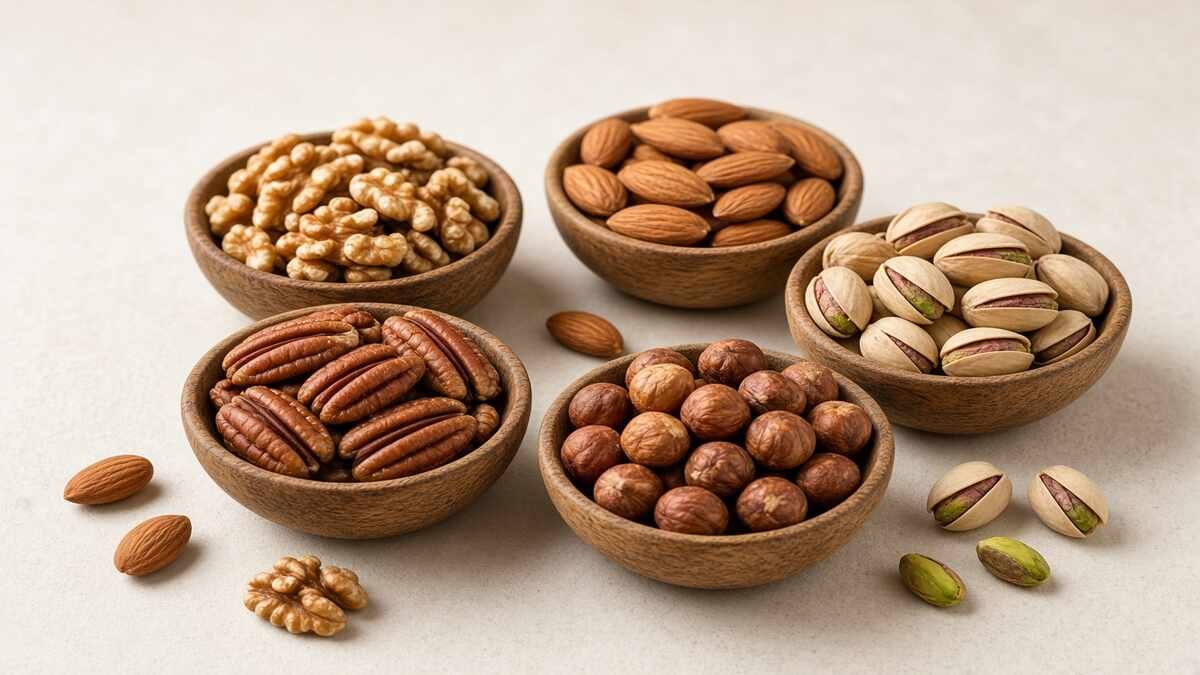

Nuts are nutrient-rich foods that can fit into a balanced, heart-conscious eating pattern. They provide unsaturated fats, fiber, plant protein, minerals, and antioxidant compounds, all in a snack that needs no preparation. Popular choices include walnuts, almonds, pistachios, peanuts, pecans, hazelnuts, and cashews.
So which are the best nuts for heart health? The short answer is that several varieties offer heart-friendly nutrients, and eating a mix is often more useful than relying on a single type. Walnuts stand out for plant-based omega-3 fat, almonds for vitamin E and fiber, and pistachios and peanuts for protein and convenience.
This guide compares the leading options, explains how nuts may support healthy cholesterol, and covers portions, preparation, and precautions. For a broader overview, see our guide to the health benefits of nuts. Keep in mind that nuts support heart health as part of an overall eating pattern. They are not a treatment for heart disease.
Are Nuts Good for Heart Health?
For most people, yes. Nuts are a well-studied food in cardiovascular nutrition, and major health organizations include them in heart-healthy eating patterns. The American Heart Association’s 2026 dietary guidance recommends replacing saturated fats with unsaturated fats, including those from nuts, seeds, avocados, and nontropical plant oils. It also encourages shifting protein choices toward plant sources such as legumes and nuts.
Several features of nuts help explain this:
- Unsaturated fats can improve blood lipid profiles when they replace saturated fats.
- Fiber contributes to cholesterol management and digestive health.
- Plant sterols and polyphenols are naturally occurring compounds found in nuts.
- Magnesium and potassium contribute to normal cardiovascular function.
- Satisfying texture and protein can make nuts a good replacement for highly processed snacks.
A USDA-supported 2010 Dietary Guidelines Advisory Committee review rated the evidence as moderate. It concluded that unsalted peanuts and tree nuts, specifically walnuts, almonds, and pistachios, favorably affect cardiovascular risk factors, particularly blood lipids, when included in an adequate diet with calories held constant.
Large cohort studies add support. Harvard research following more than 210,000 health professionals found that regular nut intake was associated with lower cardiovascular risk. These findings show associations, not proof of cause and effect.
Best Nuts for Heart Health
No single nut is the absolute healthiest. Here is how the leading options compare, with their main nutritional strengths and relevant research.
| Nut | Standout nutrients | Notes |
|---|---|---|
| Walnuts | Plant-based omega-3 ALA, polyunsaturated fat | Most distinctive omega-3 source among nuts |
| Almonds | Vitamin E, fiber, magnesium, monounsaturated fat | Versatile and widely studied |
| Pistachios | Protein, fiber, potassium | In-shell option can slow eating |
| Peanuts | Plant protein, niacin, unsaturated fat | Legume; affordable |
| Pecans | Monounsaturated fat, antioxidant compounds | Good for salads and oatmeal |
| Hazelnuts | Vitamin E, unsaturated fat, fiber | Works well in yogurt and trail mix |
| Cashews | Magnesium, copper, unsaturated fat | Less lipid research than walnuts or almonds |
1. Walnuts
Walnuts are particularly rich in alpha-linolenic acid (ALA), a plant-based omega-3 fatty acid. They also provide polyunsaturated fat, fiber, and plant compounds. Mayo Clinic notes that walnuts have high amounts of omega-3s.
In the Harvard cohorts, eating walnuts at least once a week was associated with a lower risk of cardiovascular disease and coronary heart disease. A 2026 meta-analysis of 49 randomized trials also found modest reductions in total cholesterol and triglycerides. Walnuts are useful if you want more plant-based omega-3 in your diet. See our full guide to the health benefits of walnuts and our overview of omega-3 fatty acids.
2. Almonds
Almonds provide monounsaturated fat, fiber, vitamin E, and magnesium. They can be a helpful swap for snacks high in saturated fat. A 2025 meta-analysis of 36 publications found that almond intake improved LDL cholesterol and total cholesterol, though the review was funded by the Almond Board of California.
Almonds work well as a snack or an addition to oatmeal and salads. Learn more in our guide to the health benefits of almonds.
3. Pistachios
Pistachios provide unsaturated fats, protein, fiber, potassium, and plant compounds. A meta-analysis of 12 randomized trials found that pistachio intake lowered total cholesterol, LDL cholesterol, and triglycerides but did not change HDL cholesterol.
Eating pistachios in their shells can make portion awareness easier, since shelling slows you down. Choose unsalted or lightly salted varieties.
4. Peanuts
Peanuts are technically legumes, though dietary guidance commonly groups them with nuts. They provide unsaturated fats, plant protein, and niacin. Plain peanuts and natural peanut butter can be affordable options.
In the Harvard cohorts, peanut intake was associated with a lower risk of cardiovascular disease, but peanut butter was not significantly associated with it. The researchers suggested peanut butter is often eaten with refined foods such as white bread. Choose products without excessive added salt, sugar, or tropical oils.
5. Pecans
Pecans contain monounsaturated fats and plant antioxidant compounds. They add flavor and texture to salads, oatmeal, and snacks. Choose plain or dry-roasted versions instead of heavily sugar-coated products.
6. Hazelnuts
Hazelnuts provide vitamin E, unsaturated fats, fiber, and minerals. They offer another way to add variety to a heart-conscious diet, and they work well in oatmeal, yogurt, and homemade trail mix.
7. Cashews
Cashews provide magnesium, copper, and unsaturated fats. They have been studied less for lipid effects than walnuts and almonds, and trial results have been mixed. They still fit well into a varied nut rotation, such as in vegetable stir-fries.
An important note on rankings. A network meta-analysis of 34 clinical trials found favorable lipid effects for pistachio- and walnut-enriched diets and ranked pistachios best for LDL cholesterol, total cholesterol, and triglycerides. However, the authors noted that the quality of evidence was low and that the available studies were few and often poorly reported. This ranking does not prove that one nut is superior. A broader review of nut and lipid trials also concluded that it remains unclear whether some nuts work better than others.
For a direct comparison of two popular picks, see almonds vs. walnuts.
How Nuts May Help Lower Cholesterol
Nuts may support healthier cholesterol through several routes. The effect is modest, and it depends partly on the overall diet and on what the nuts replace.
LDL cholesterol. Replacing foods high in saturated fat with nuts can help improve LDL cholesterol. A meta-analysis of 61 controlled trials found that tree nut intake lowers total cholesterol, LDL cholesterol, apolipoprotein B, and triglycerides. The size of the effect appeared to depend more on the amount of nuts than on the type.
Triglycerides. Some nut-enriched diets have shown improvements in triglyceride levels, as seen in the pistachio and walnut analyses above.
HDL cholesterol. Results for HDL are inconsistent, so eating nuts should not be expected to raise HDL much.
Plant sterols. Nuts contain plant sterols, which are compounds that can influence how the body absorbs cholesterol.
Dietary substitution. Benefits are larger when nuts replace foods like processed meats, pastries, or chips. Mayo Clinic explains that nuts may lower unhealthy cholesterol levels, including LDL and triglycerides, as part of a balanced diet.
Key message: Nuts may support healthier cholesterol, but they do not replace cholesterol-lowering medication or medical advice. For more background, read about high cholesterol, LDL vs. HDL cholesterol, and vegetables and cholesterol.
Nutrients That Make Nuts Heart Healthy
No single nutrient explains all of the cardiovascular benefits of nuts. Together, these components appear to work as a package.
Unsaturated fats. Monounsaturated and polyunsaturated fats make nuts useful alternatives to foods high in saturated fat. See our guide to healthy fats.
Omega-3 ALA. Walnuts are particularly rich in this plant-based fatty acid. ALA is not the same as the EPA and DHA found in fish.
Fiber. Fiber supports digestive health and can contribute to cholesterol management. Explore more high-fiber foods.
Vitamin E. This antioxidant nutrient is found in almonds and hazelnuts.
Magnesium. It contributes to normal muscle and nerve function, including normal cardiovascular function.
Plant sterols and polyphenols. These naturally occurring compounds may contribute to the health effects of nuts.
How Many Nuts Should You Eat Daily?
About 1 ounce (28 grams), or a small handful, is a useful general portion for many adults. The American Heart Association describes a serving as a small handful of nuts or 2 tablespoons of nut butter.
Counts differ by nut. One ounce is roughly 23 almonds, 12 to 14 walnut halves, or about 49 shelled pistachios. Mayo Clinic describes about 4 to 6 servings of unsalted nuts per week as one approach.
Nuts are energy-dense, with roughly 160 to 200 calories per ounce, so portions matter. Choose plain, unsalted varieties most often, and use nuts to replace less nutritious snacks instead of adding extra calories. For details, read our guide on how many nuts you should eat every day.
Raw, Roasted, Salted, or Unsalted Nuts?
Preparation affects how heart friendly a nut is, mostly through added ingredients.
- Raw nuts: Convenient and minimally processed.
- Dry-roasted nuts: Also nutritious, but check the ingredient list for added oils or seasonings.
- Salted nuts: May add excess sodium when eaten often or in large portions.
- Sugar-coated or honey-roasted nuts: Often contain added sugar and are less suitable for everyday eating.
- Nut butters: Look for products with minimal ingredients and low sodium and added sugar.
Mayo Clinic notes that adding salt or sugar to nuts may cancel out some of their heart-healthy benefits. AHA News advises reading nut butter labels to compare saturated fat, sodium, and added sugar, and notes that some brands have switched to saturated fats. It also recommends refrigerating opened nut butters.
For everyday heart-conscious eating, unsalted or lightly seasoned nuts are the best choice.
Best Ways to Add Nuts to a Heart-Healthy Diet
Small additions are the easiest way to build the habit.
- Add walnuts to oatmeal or whole-grain cereal.
- Sprinkle almonds over salads.
- Use pistachios as a portion-controlled snack.
- Add peanuts or cashews to vegetable stir-fries.
- Mix chopped hazelnuts into plain yogurt.
- Spread natural peanut or almond butter on whole-grain toast.
- Prepare a small mixed-nut snack portion for work or travel.
Emphasize variety, moderation, and swapping. For example, trade a bag of chips or a pastry for a measured handful of nuts. This reflects the broader pattern the AHA encourages, which includes minimally processed foods and lower sodium and added sugar.
Nuts also fit well with a Mediterranean-style eating pattern. For wider ideas, see our guides to heart-healthy foods and how to prevent heart disease. If you are also managing blood pressure, see how to lower blood pressure.
Can Eating Too Many Nuts Be Unhealthy?
More nuts do not automatically mean greater heart benefits. Possible downsides of large portions include:
- Excess calories from unmeasured handfuls.
- Digestive discomfort when you eat too many at once.
- High sodium in heavily salted varieties.
- Added sugars in coated or flavored nuts.
- Allergic reactions in people with nut allergies.
- Excess selenium from frequent large portions of Brazil nuts. The NIH Office of Dietary Supplements reports that a single Brazil nut can contain about 68 to 91 micrograms of selenium, and the adult upper limit is 400 micrograms per day.
A regular, moderate portion is more practical than eating large amounts.
Who Should Be Careful With Nuts?
Nuts are safe for most people, but some should take extra care.
- People with diagnosed tree nut or peanut allergies. Avoid the relevant nuts and follow your clinician’s allergy-management advice.
- People on medically prescribed dietary restrictions. Ask your healthcare team how nuts fit.
- People who get digestive discomfort from nuts. Smaller portions may be easier to tolerate.
- Young children. Whole nuts are a choking hazard. Ask a pediatrician about appropriate forms and amounts.
- People eating Brazil nuts. Be mindful of their very high selenium content.
If you have heart disease or high cholesterol, discuss dietary changes with your healthcare professional, especially if you take medication.
Final Verdict
Walnuts are an excellent source of plant-based omega-3 ALA. Almonds provide vitamin E, fiber, and magnesium. Pistachios and peanuts offer useful combinations of unsaturated fats, protein, and other nutrients, while pecans, hazelnuts, and cashews add variety. There is no need to rely on one particular nut.
The main recommendation is simple: choose a variety of unsalted nuts in moderate portions as part of a balanced, heart-healthy eating pattern. Use this quick guide to match a nut to your goal. These are nutritional strengths, not medical rankings.
| Your goal | Nut to consider |
|---|---|
| More plant-based omega-3 ALA | Walnuts |
| More vitamin E | Almonds or hazelnuts |
| A convenient protein-rich snack | Peanuts or pistachios |
| More variety in unsaturated fats | Mixed nuts |
| A crunchy salad topping | Almonds or pecans |
| A portion-conscious snack | Pistachios in shells |
Frequently Asked Questions
What are the best nuts for heart health?
Walnuts, almonds, pistachios, peanuts, pecans, and hazelnuts all fit a heart-healthy diet. Mayo Clinic describes walnuts, almonds, macadamias, hazelnuts, pecans, and peanuts as heart healthy. Eating a variety of unsalted nuts is a good approach.
Are walnuts good for your heart?
Walnuts provide plant-based omega-3 ALA, and research links them to modest improvements in cholesterol and triglycerides. A 2026 meta-analysis of 49 trials supports this. They are not a treatment for heart disease.
Which nuts may help lower cholesterol?
Trials suggest walnuts, almonds, and pistachios can modestly lower LDL cholesterol, total cholesterol, or both. A large meta-analysis found the amount of nuts mattered more than the type.
Are almonds good for heart health?
Yes, they can be part of a heart-healthy diet. A 2025 meta-analysis found almond intake improved LDL and total cholesterol, though it was industry funded. Almonds also provide fiber, vitamin E, and magnesium.
Are pistachios good for your heart?
They may be. A meta-analysis of 12 randomized trials found lower total cholesterol, LDL cholesterol, and triglycerides with pistachio intake. The authors called for larger studies to confirm the results.
How many nuts should you eat every day?
About 1 ounce (28 grams), or a small handful, is a practical amount for many adults. Some guidance uses weekly targets, such as 4 to 6 servings per week from Mayo Clinic. Adjust for your calorie needs and health.
Are salted nuts bad for heart health?
Heavily salted nuts can add sodium, and salt or sugar can offset some of the benefits of nuts, according to Mayo Clinic. Unsalted or lightly salted nuts are the better everyday choice. The occasional salted handful is not a major concern for most people.
Can eating nuts every day help lower LDL cholesterol?
A daily portion may modestly lower LDL cholesterol, especially when nuts replace foods high in saturated fat. The effect is usually small and varies by person. Nuts do not replace prescribed treatment.
Are peanuts good for your heart?
Peanuts are legumes, but they provide similar unsaturated fats and protein. In Harvard cohort data, peanut intake was associated with lower cardiovascular risk. Choose plain peanuts or natural peanut butter without added sugar or tropical oils.
Can people with high cholesterol eat nuts?
Many people with high cholesterol can eat nuts, and they may be a useful swap for foods high in saturated fat. Keep portions moderate and talk with your healthcare professional, especially if you take cholesterol medication.
Sources
- Lichtenstein AH, et al. 2026 dietary guidance to improve cardiovascular health: a scientific statement from the American Heart Association. Circulation. 2026. Full text.
- USDA Nutrition Evidence Systematic Review. 2010 Dietary Guidelines Advisory Committee review: health effects of nut consumption.
- Harvard T.H. Chan School of Public Health. Nuts for the heart.
- Mayo Clinic. Nuts and your heart: Eating nuts for heart health.
- American Heart Association News. Nut butters are a healthy way to spread nutrients. 2020.
- Liu K, et al. Comparative effects of different types of tree nut consumption on blood lipids: a network meta-analysis of clinical trials. American Journal of Clinical Nutrition. 2020;111(1):219-227. PubMed.
- Del Gobbo LC, et al. Effects of tree nuts on blood lipids, apolipoproteins, and blood pressure: systematic review, meta-analysis, and dose-response of 61 controlled intervention trials. American Journal of Clinical Nutrition. 2015;102(6):1347-1356. Full text.
- Kris-Etherton PM, et al. Effects of nut consumption on blood lipids and lipoproteins: a comprehensive literature update. Nutrients. 2023;15(3):596. Full text.
- Asbaghi O, et al. Consumption of pistachio nuts positively affects lipid profiles: a systematic review and meta-analysis of randomized controlled trials. Critical Reviews in Food Science and Nutrition. 2023;63(21):5358-5371. PubMed.
- Musa-Veloso K, et al. Blood lipid levels in response to almond consumption: a systematic review and meta-analysis of randomized controlled trials. Nutrients. 2025;17(17):2791. Full text.
- Effects of walnut consumption on blood lipid profile and apolipoproteins in adults: a systematic review and dose-response meta-analysis of 49 randomized controlled trials. Food Science & Nutrition. 2026. Full text.
- National Institutes of Health, Office of Dietary Supplements. Selenium: fact sheet for consumers.
Medical Disclaimer: This article is for general educational purposes only and does not replace professional medical advice, diagnosis, or treatment. Nutrition needs vary from person to person. Talk with your doctor or a registered dietitian before making major changes to your diet, especially if you have a food allergy, a chronic condition, or take medication. If you think you are having a medical emergency, call your local emergency number right away.
1 thought on “Best Nuts for Heart Health: 7 Healthy Choices to Try”
Comments are closed.