
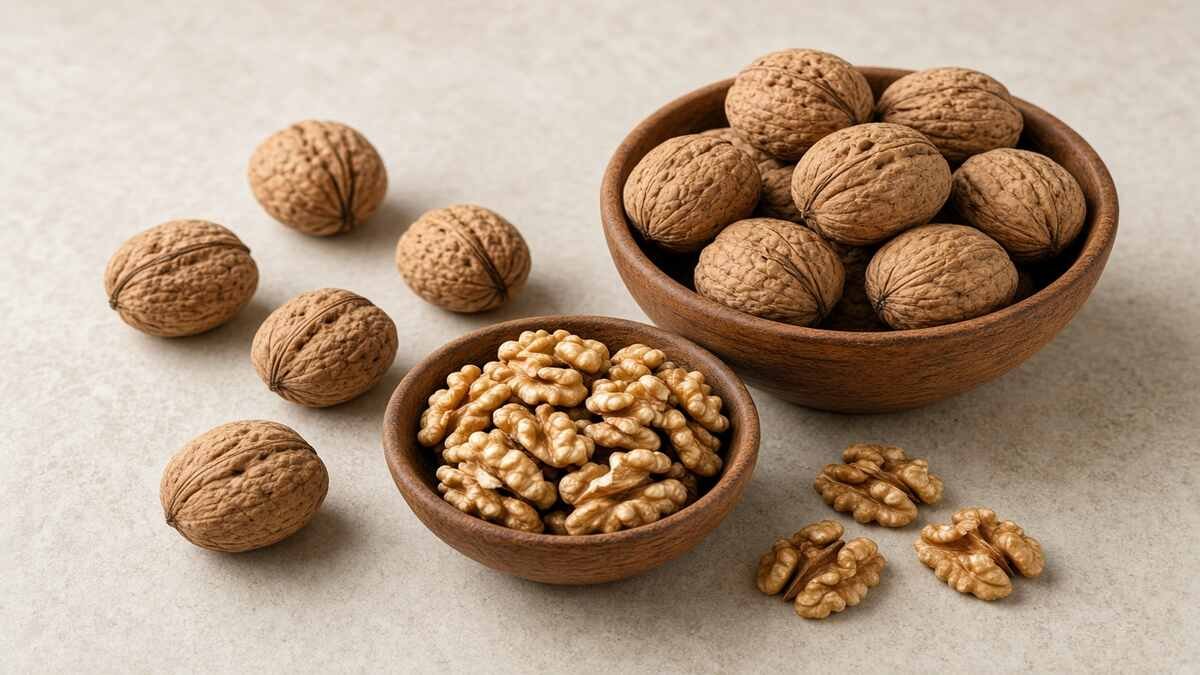

Walnuts are among the most studied tree nuts in nutrition research, and for good reason. They stand out for their unusual fat profile, which includes alpha-linolenic acid (ALA), a plant-based omega-3 fatty acid that most other nuts contain in very small amounts. They also provide fiber, protein, minerals, and plant compounds called polyphenols.
The health benefits of walnuts have been examined in trials and large cohort studies, with the strongest evidence centered on blood cholesterol and heart health. Research on brain function, gut bacteria, and healthy aging is more preliminary. This guide explains what is well supported, what is still emerging, and how to tell the difference.
Some people avoid walnuts because they are high in fat and calories. In reality, most of the fat in walnuts is polyunsaturated, the type associated with better cholesterol levels when it replaces saturated fat. Below, you will learn about walnut nutrition, evidence-based benefits, sensible portions, and practical ways to enjoy them as part of a broader look at the health benefits of nuts.
Walnut Nutrition Facts: What Makes Walnuts So Healthy?
Walnuts are energy-dense, but they are also nutrient-dense. A one-ounce serving (28 grams, about 14 halves) provides roughly 185 calories, about 18 grams of fat, 4 grams of protein, and 2 grams of fiber. Most of that fat is polyunsaturated, with smaller amounts of monounsaturated and saturated fat.
The table below shows approximate values for one ounce of English walnuts. Figures are based on USDA data and may vary slightly by source and variety. You can verify them in the USDA FoodData Central database.
| Nutrient (1 oz / 28 g) | Approximate amount |
|---|---|
| Calories | 185 |
| Total fat | 18 g |
| Polyunsaturated fat | 13 g |
| Monounsaturated fat | 2.5 g |
| Saturated fat | 1.7 g |
| Alpha-linolenic acid (ALA) | 2.5 g |
| Protein | 4 g |
| Total carbohydrate | 4 g |
| Dietary fiber | 2 g |
| Magnesium | 44 mg |
| Potassium | 130 mg |
Walnuts also contribute copper, manganese, and vitamin B6, along with polyphenols and other antioxidant compounds. Polyphenols are plant chemicals that may help protect cells from oxidative damage. To learn more about this topic, see our guides to antioxidant-rich foods and what antioxidants are.
Compared with almonds, pistachios, and peanuts, walnuts contain far more ALA. Almonds are better known for vitamin E and fiber, as covered in our guide to the benefits of almonds. Each nut has its own strengths, so variety is a sensible approach.
Walnuts and Omega-3 Fatty Acids: What ALA Does
Omega-3 fatty acids come in three main forms: ALA, EPA, and DHA. According to the NIH Office of Dietary Supplements, ALA is found mainly in plant sources such as flaxseed, soybean oil, canola oil, chia seeds, and walnuts. EPA and DHA come mostly from fish and other seafood.
ALA is an essential fatty acid, meaning your body cannot make it. The body can convert a small amount of ALA into EPA and then DHA, but the conversion is very limited. This is why ALA from walnuts is not a substitute for the EPA and DHA found in fatty fish.
The NIH lists adequate intake of ALA at about 1.6 grams per day for adult men and 1.1 grams for adult women. A one-ounce serving of walnuts provides about 2.5 grams, so a single serving can exceed that level. For sources of EPA and DHA, see our guides to omega-3 fatty acids and fatty fish.
8 Science-Backed Health Benefits of Walnuts
The evidence behind each benefit varies. The first two are best supported by randomized trials, while the others are promising but less certain.
1. Supports Heart Health
Regular nut intake is linked with lower cardiovascular risk in large cohort studies, and walnuts have been included in that research. These are associations, not proof of cause and effect. Walnuts fit best within an overall heart-healthy dietary pattern.
2. May Help Improve Cholesterol Levels
Randomized trials suggest walnut-enriched diets modestly lower total cholesterol, LDL cholesterol, and triglycerides. The effect is clearest when walnuts replace foods higher in saturated fat. See our explainer on LDL vs. HDL cholesterol.
3. Provides Plant-Based Omega-3 Fatty Acids
Walnuts are a notable plant source of ALA, an essential fat. People who eat little or no fish may find walnuts a useful way to meet ALA needs, though they do not supply EPA or DHA.
4. Supports Brain Health
Walnuts contain polyunsaturated fats, vitamin E compounds, and polyphenols that are biologically relevant to the brain. Human trial results on cognition are mixed, as discussed below.
5. Promotes Digestive Health
The fiber and polyphenols in walnuts may influence gut bacteria. Early trials show shifts in microbiome composition, but the clinical meaning is still being studied.
6. May Support Healthy Blood Sugar Regulation
Walnuts are low in digestible carbohydrate and contain fat, protein, and fiber, which may help moderate blood sugar responses. Findings on glucose and insulin sensitivity are inconsistent across studies and populations. People with diabetes can read more in our guide to the diabetes diet.
7. Provides Antioxidant Compounds
Walnuts contain polyphenols and tocopherols that act as antioxidants in the laboratory. Whether eating walnuts meaningfully reduces oxidative damage in daily life is harder to prove.
8. May Support Healthy Aging
Observational research links regular nut intake with healthier aging, but walnuts should not be described as a proven longevity food. Our overview of antioxidants for healthy aging offers broader context.
Walnuts and Brain Health: Can They Support Memory and Cognitive Function?
The brain is rich in fat, and the types of fat in your diet can influence cell membranes and inflammation. Walnuts supply ALA and polyphenols, which has led researchers to study whether they support memory, attention, and cognitive aging. The biology is plausible, but human evidence is not conclusive.
The largest trial to date is the Walnuts and Healthy Aging (WAHA) study. It randomly assigned 708 cognitively healthy adults aged 63 to 79 in Spain and California to either add walnuts to their diet (about 30 to 60 grams per day) or avoid walnuts for two years. The published results found no difference between groups in the global cognitive score.
The authors noted that some secondary and subgroup analyses hinted at possible benefits in people at higher risk of cognitive decline. They described these findings as encouraging but inconclusive. In other words, WAHA does not show that walnuts prevent cognitive decline, and it does not rule out benefits for certain groups.
It helps to separate two ideas. Walnuts can contribute nutrients that support normal brain function as part of a balanced diet. That is different from claiming they prevent or treat dementia or Alzheimer’s disease, which current evidence does not support.
For broader brain-supportive habits, see our guides on how to improve sleep and exercise and mental health.
Walnuts and Heart Health: What Research Shows
Heart health is where the evidence for walnuts is strongest, especially for blood lipids. Unsaturated fats can lower LDL cholesterol when they replace saturated fats, and walnuts also provide ALA, fiber, and polyphenols.
A February 2026 systematic review and dose-response meta-analysis in Food Science & Nutrition pooled 49 randomized controlled trials with 4,611 participants. Walnut intake significantly lowered total cholesterol and triglycerides, and LDL cholesterol also improved. Effects on HDL cholesterol and apolipoproteins were inconclusive. The reductions were modest, in the range of a few to several mg/dL.
An earlier meta-analysis in the American Journal of Clinical Nutrition found similar lipid improvements and no significant change in body weight or blood pressure. This suggests walnuts can be added to a diet without the weight gain some people fear, as long as they replace other foods.
Walnuts may also influence blood vessel function. A 2024 meta-analysis in Phytotherapy Research found that walnut intake improved flow-mediated dilation, a measure of how well blood vessels widen. It did not find consistent effects on several inflammatory and adhesion markers.
Large cohort studies, such as Harvard research on nut intake, link walnuts and other nuts to lower cardiovascular risk. These studies cannot prove cause and effect, because people who eat nuts often have other healthy habits.
Walnuts are not a treatment for heart disease. They work best when they replace less nutritious foods rather than adding extra calories. Our guides to how to prevent heart disease and high cholesterol provide more context.
Walnuts and Gut Health: How They May Support Digestion
Fiber supports regular bowel movements and feeds beneficial gut bacteria. A one-ounce serving of walnuts provides about 2 grams, a modest but useful contribution. For more options, see our list of high-fiber foods for digestive health.
Researchers are also studying how walnuts affect the gut microbiome. In a randomized crossover trial of 194 healthy adults, eating 43 grams of walnuts daily for eight weeks shifted the microbiome, increasing some butyrate-producing species. Butyrate is a compound that helps nourish cells lining the colon. The trial received research funding from the California Walnut Commission.
Walnut polyphenols may also interact with gut bacteria, which can convert them into other compounds. Some researchers think these changes could link to cholesterol and metabolic effects, but this is a developing area. Microbiome findings do not establish walnuts as a treatment for any digestive disorder. For general guidance, see how to improve gut health.
How Many Walnuts Should You Eat Per Day?
A practical reference is about 1 ounce (28 grams) per day. That equals roughly 12 to 14 walnut halves, a small handful, or about one-quarter cup. Each serving provides around 185 calories.
Because walnuts are calorie-dense, portion awareness matters. Eating several large handfuls on top of your usual meals can add up quickly. The better approach is to use walnuts in place of something less nutritious, such as chips or pastries.
Keep in mind that research trials sometimes use larger amounts, such as 40 to 60 grams per day. Those quantities are chosen for study purposes and should not automatically become daily recommendations. Individual needs depend on age, energy needs, health conditions, and overall diet.
A registered dietitian can help tailor portions to your situation. For general planning, see our guides to weight management and what a balanced diet looks like.
Healthy Ways to Add Walnuts to Your Daily Diet
There is no proven best time of day to eat walnuts. What matters most is that they fit your routine and replace less nutritious options. Here are simple ideas:
- Stir chopped walnuts into oatmeal or breakfast cereal.
- Sprinkle walnuts over salads for crunch.
- Mix walnuts with plain yogurt and fresh fruit.
- Blend a few walnuts into smoothies.
- Add walnuts to vegetable stir-fries.
- Use walnut pieces in whole-grain baking.
Choose unsalted, minimally processed walnuts when possible. For more ideas on building meals around plants, see how to eat more vegetables and our guide to healthy habits.
Walnuts contain a lot of polyunsaturated fat, which makes them more prone to going rancid. Store them in an airtight container in the refrigerator or freezer to keep them fresh longer.
Raw vs. Roasted Walnuts: Which Is Better?
Raw walnuts have a mild, slightly bitter flavor, while roasting brings out a deeper, toasty taste. Heat may slightly affect some sensitive nutrients and fats, but the differences are generally small. Both forms are nutritious, so personal preference is a reasonable guide.
The more important factor is what is added. Salted walnuts increase sodium, and candied, honey-glazed, or heavily seasoned versions often contain added sugar and other ingredients. These extras can offset some of the benefits of eating nuts.
Look for plain walnuts, either raw or dry-roasted, and check the ingredient list. If you like extra flavor, add cinnamon or a pinch of spice at home.
Freshness matters, too. Rancid walnuts smell sharp or paint-like and taste bitter. Discard them if you notice these signs, and buy smaller amounts if you do not eat them quickly.
Possible Side Effects and Who Should Avoid Walnuts
For most people, walnuts are safe in normal food amounts. However, there are important exceptions.
Allergies. Walnuts are a tree nut, and tree nut allergy can cause serious, even life-threatening reactions. People with a confirmed walnut allergy should avoid walnuts completely. Anyone who suspects an allergy should talk with a doctor or allergist.
Digestive discomfort. Eating large amounts at once may cause bloating, gas, or stomach upset, especially if you are not used to the fiber and fat.
Calorie density. Large portions can lead to unintended weight gain if they are added without adjusting other foods.
Choking risk. Whole nuts and large pieces are a choking hazard for young children. Ask your child’s pediatrician what forms and amounts are appropriate.
Spoilage. Old or poorly stored walnuts can turn rancid and taste unpleasant. Keep them cool and sealed.
If you have a food allergy, swallowing difficulty, or a medical condition that affects your diet, seek advice from a qualified healthcare professional before changing what you eat.
Conclusion: Make Walnuts Part of a Healthy Eating Pattern
The health benefits of walnuts come from a distinctive combination of ALA omega-3 fat, polyunsaturated fats, fiber, minerals, and polyphenols. The strongest evidence supports modest improvements in cholesterol and triglycerides and a role in a heart-healthy diet. Research on brain health, gut bacteria, blood sugar, and healthy aging is promising but not yet conclusive.
Aim for about one ounce per day, choose plain varieties, and let walnuts replace less nutritious foods instead of adding extra calories. A simple place to start is adding a small handful to your breakfast, salad, or afternoon snack.
For more ideas, explore our guides on healthy fats and what a healthy diet looks like.
Frequently Asked Questions
What are the main health benefits of walnuts?
Walnuts provide plant-based omega-3 ALA, fiber, protein, minerals, and polyphenols. The best-supported benefit is modest improvement in blood cholesterol and triglycerides, according to a 2026 meta-analysis of randomized trials. Evidence for brain, gut, and blood sugar benefits is still developing.
How many walnuts should you eat daily?
About 1 ounce (28 grams), or roughly 12 to 14 halves, is a practical daily serving. This provides around 185 calories. Your ideal amount depends on your overall diet and calorie needs.
Are walnuts good for brain health?
Walnuts supply nutrients that support normal brain function, but trial evidence is mixed. The two-year WAHA trial found no effect on cognition in healthy older adults overall. Walnuts have not been shown to prevent dementia or Alzheimer’s disease.
Do walnuts help lower cholesterol?
Randomized trials suggest walnuts can modestly lower total cholesterol, LDL cholesterol, and triglycerides, especially when they replace saturated fat sources. Effects on HDL cholesterol are less clear. They are not a replacement for medical treatment if your doctor has prescribed it.
Are walnuts a good source of omega-3?
Yes, they are a rich plant source of ALA, with about 2.5 grams per ounce according to USDA-based data. ALA is not the same as the EPA and DHA found in fish, and the body converts only a small amount of ALA into those forms, as explained by the NIH Office of Dietary Supplements.
Is it healthy to eat walnuts every day?
For most people without a tree nut allergy, a small daily serving fits well into a balanced diet. Keep portions near one ounce to manage calories. Choose unsalted varieties to limit sodium.
Are raw walnuts better than roasted walnuts?
Neither is clearly better. Roasting may slightly change some heat-sensitive compounds, but the difference is small. Choose plain raw or dry-roasted walnuts without added salt, sugar, or coatings.
Sources
- Effects of Walnut Consumption on Blood Lipid Profile and Apolipoproteins in Adults: A GRADE-Assessed Systematic Review and Dose-Response Meta-Analysis of 49 Randomized Controlled Trials. Food Science & Nutrition. 2026. Full text on PubMed Central (DOI: 10.1002/fsn3.71526).
- Effect of walnut consumption on markers of endothelial function in adults: a systematic review and meta-analysis of randomized controlled trials. Phytotherapy Research. 2024;38:1358-1366. Record.
- Effects of walnut consumption on blood lipids and other cardiovascular risk factors: an updated meta-analysis and systematic review of controlled trials. American Journal of Clinical Nutrition. 2018;108(1):174-187. PubMed.
- Sala-Vila A, et al. Effect of a 2-year diet intervention with walnuts on cognitive decline. The Walnuts and Healthy Aging (WAHA) study. American Journal of Clinical Nutrition. 2020. DOI link.
- Bamberger C, et al. A walnut-enriched diet affects gut microbiome in healthy Caucasian subjects: a randomized, controlled trial. Nutrients. 2018;10(2):244. PubMed.
- Harvard T.H. Chan School of Public Health. Nuts for the heart.
- National Institutes of Health, Office of Dietary Supplements. Omega-3 fatty acids: fact sheet for consumers.
- U.S. Department of Agriculture. FoodData Central.
Medical Disclaimer: This article is for general educational purposes only and does not replace professional medical advice, diagnosis, or treatment. Nutrition needs vary from person to person. Talk with your doctor or a registered dietitian before making major changes to your diet, especially if you have a food allergy, a chronic condition, or take medication. If you think you are having a medical emergency, call your local emergency number right away.
3 thoughts on “Health Benefits of Walnuts: Omega-3 Rich and Good for You”
Comments are closed.