


Almonds health benefits are easy to overlook because this nut shows up everywhere: in snack packs, salad toppings, almond butter, and baked goods. Yet almonds are more than a crunchy add-on. They contain fiber, plant protein, monounsaturated fats, vitamin E, magnesium, and polyphenol compounds that may support heart health, steadier blood sugar, satiety, and digestive regularity when they replace less nutritious snacks, according to Harvard T.H. Chan School of Public Health and USDA FoodData Central.
This guide explains what the research supports, how much to eat, who should be cautious, and simple ways to use almonds in a balanced eating pattern. You will also learn common myths, practical serving sizes, and when to talk with a clinician.
Key Takeaways
- Almonds provide fiber, protein, healthy fats, vitamin E, magnesium, and plant compounds in a small serving (USDA, NIH ODS).
- Regular, moderate intake may support LDL cholesterol, blood pressure, blood sugar control, satiety, and digestive regularity as part of an overall healthy diet (Harvard, BMJ).
- One ounce, about 23 almond halves, is a practical starting point because almonds are energy dense (USDA).
- People with tree nut allergies, certain medical conditions, or major diet changes should check with a clinician (FDA, NIH ODS).
- Almonds are a helpful food, not a cure or replacement for prescribed care (WHO).
What Are Almonds and What Do They Contain?
Almonds are edible seeds from the tree Prunus dulcis, commonly grouped with tree nuts. They are eaten raw, dry roasted, sliced, slivered, ground into almond butter, or milled into flour. The most studied form is whole almonds, especially when eaten with the brown skin, which holds many antioxidant polyphenols (Harvard).
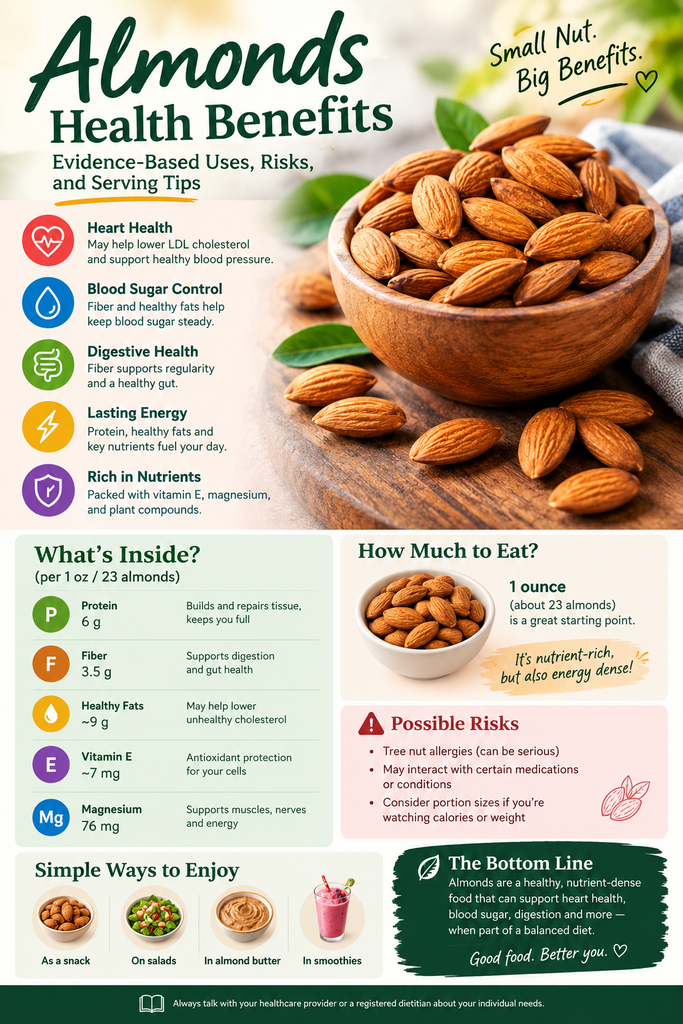
A standard 1-ounce serving of raw almonds—about 23 halves—provides roughly 164 calories, 6 grams of protein, 3.5 grams of fiber, 14 grams of fat, 76 mg of magnesium, and about 7 mg of vitamin E, according to USDA FoodData Central. The fat is mostly monounsaturated oleic acid, the same type highlighted in olive oil, while the fiber and protein help slow digestion and support fullness (Harvard).
Almonds also contain potassium, calcium, phosphorus, and plant sterols. Vitamin E acts as an antioxidant that helps protect cell membranes, as explained by the NIH Office of Dietary Supplements. Magnesium participates in muscle, nerve, and energy metabolism, according to NIH’s magnesium fact sheet. Because almonds deliver several nutrients in one food, they can fit well into high-fiber foods plans and healthy fats strategies.
One-Ounce Nutrition Snapshot
| Component | About in 1 oz raw almonds | Why it matters |
| Protein | 6 g | Supports satiety and tissue repair (NIH protein) |
| Fiber | 3.5 g | Supports regularity and gut bacteria (NIH fiber) |
| Monounsaturated fat | ~9 g | May help replace less healthy fats (Harvard) |
| Vitamin E | ~7 mg | Antioxidant nutrient (NIH vitamin E) |
| Magnesium | 76 mg | Bone, nerve, and energy functions (NIH magnesium) |
Almonds Health Benefits for Heart Health: Cholesterol, Blood Pressure, and Vessels
Cardiovascular disease is a leading global health concern, and dietary patterns matter. The World Health Organization recommends diets rich in fruits, vegetables, legumes, whole grains, and nuts while limiting ultra-processed foods, salt, and saturated fat. Almonds can contribute to that pattern.
Large observational studies suggest that people who eat nuts regularly tend to have lower risk of death from cardiovascular causes. A pooled analysis of more than 300,000 participants found nut consumption was associated with lower total and cause-specific mortality, including cardiovascular mortality, in JAMA Internal Medicine. A broader BMJ review linked nut intake with lower risk of cardiovascular disease, diabetes, and some other chronic outcomes, though it emphasized that nuts are part of overall diet quality, not magic bullets (BMJ).
Possible mechanisms
For cholesterol, almonds may help in two ways. First, their monounsaturated fats can displace saturated fats and refined carbohydrates in meals, which is associated with better lipid profiles, according to Harvard T.H. Chan School of Public Health. Second, fiber and plant sterols may reduce intestinal cholesterol absorption. The FDA has recognized a qualified health claim stating that eating about 1.5 ounces of most nuts per day, as part of a diet low in saturated fat and cholesterol, may reduce heart disease risk (FDA).
Almonds may also support blood vessel function. In a randomized crossover trial involving adults with metabolic syndrome, an almond-enriched eating pattern was associated with improved vascular function and lower markers of oxidative stress and inflammation compared with a control diet, as reported in The Journal of Nutrition. These changes do not guarantee fewer heart attacks, but they are biologically plausible pathways.
If you have high cholesterol or high blood pressure, almonds are best viewed as one piece of a larger plan that may include heart-healthy foods, guidance on how to lower blood pressure, medication when prescribed, and regular medical follow-up.
Almonds Health Benefits for Blood Sugar Control
For adults watching glucose levels, almonds may be useful because they combine fiber, protein, fat, and magnesium while being relatively low in digestible carbohydrates. One ounce has about 6 grams of total carbohydrate and 3.5 grams of fiber, leaving a smaller net carbohydrate load than many snacks, according to USDA FoodData Central.
The mechanism is straightforward: fiber and fat slow stomach emptying, and protein can promote satiety. Together, these effects may help blunt rapid post-meal glucose rises when almonds are paired with carbohydrate-rich foods. Harvard T.H. Chan School of Public Health notes that nuts, including almonds, have been associated with better insulin sensitivity and lower risk of type 2 diabetes in observational studies. The BMJ review also found nut consumption linked to lower diabetes risk, although it did not isolate almonds alone.
Magnesium may play a supporting role. It is involved in insulin signaling, and low magnesium status has been associated with insulin resistance, according to NIH’s magnesium fact sheet. Almonds are not a treatment for diabetes, but they can be a sensible snack option within a meal plan. Whole almonds may be better than highly processed snacks because they require chewing and release nutrients slowly.
If you take insulin or medicines that lower glucose, monitor how your body responds and talk with your care team before making frequent snack changes. For broader guidance, see our page on blood sugar and diabetes diet.
Almonds, Satiety, and Weight Management
Many people avoid nuts because they are calorie dense, but research does not consistently show that moderate nut intake leads to weight gain. Harvard notes that observational studies have not linked nut consumption with weight gain, and the JAMA Internal Medicine analysis found higher nut intake was associated with lower total and cardiovascular mortality. Harvard also explains that nuts’ protein, fiber, and fat may increase satiety and reduce overall energy intake by curbing later snacking.
Almonds can help with weight management when they replace lower-satiety foods. A handful of almonds may be more filling than a refined cracker or candy bar because the combination of fiber and protein slows digestion. The NIH protein fact sheet notes that protein is the most satiating macronutrient, while the NIH fiber fact sheet explains that fiber adds bulk and supports fullness.
Still, portion control matters. One ounce is about 23 halves, and eating an entire bag mindlessly can add hundreds of calories. For people focused on weight management, a practical approach is to pre-portion snacks, pair almonds with fruit or vegetables for volume, and track total calories if needed. If you are using high-protein foods to support appetite control, almonds can contribute, but they should not replace lean protein sources entirely. If you have a history of disordered eating or strict calorie targets, ask a registered dietitian how nuts fit your plan.
Almonds and Gut Health
Gut health depends on total diet, not a single food. Almonds contribute fiber, which is one of the most studied dietary components for digestive regularity. The NIH fiber fact sheet explains that fiber adds bulk to stool, helps food move through the intestines, and can be fermented by gut bacteria into short-chain fatty acids that support colon cells.
A 1-ounce serving provides about 3.5 grams of fiber, or roughly 10% to 14% of common adult daily targets, based on USDA values and NIH guidance. Almonds also contain polyphenols in the skin, which are being studied for antioxidant effects, but human evidence for gut-specific benefits is still developing (Harvard). Because almonds are a whole food with fiber, they can contribute to a gut-friendly dietary pattern, though they are not a proven treatment for digestive disease.
If you are increasing fiber, do it gradually and drink fluids. Sudden large increases can cause gas, bloating, or changes in bowel habits, as described by NIH. For people managing digestive discomfort, almonds may be helpful in small amounts, but individual tolerance varies. Those following a low-FODMAP or restricted diet should speak with a clinician or dietitian before relying on nuts as a fiber source. See also our guide to how to improve gut health. Chewing almonds well may also improve the eating experience and help you notice fullness cues. They are not a substitute for medical evaluation if you have persistent abdominal pain, bleeding, or unexplained weight loss.
Antioxidants, Inflammation, and Cellular Protection
Oxidative stress happens when free radicals overwhelm the body’s antioxidant defenses. It is implicated in aging and chronic disease pathways, though it is not a diagnosis by itself. Almonds contain vitamin E, polyphenols, and other plant compounds that may help neutralize reactive molecules. The NIH vitamin E fact sheet describes vitamin E as a fat-soluble antioxidant that helps protect cell membranes from oxidative damage.
Almond polyphenols are concentrated in the skin. Roasting or blanching may reduce some skin compounds, but whole almonds with skin remain a practical source. Harvard states that nuts contain antioxidants and anti-inflammatory phytochemicals, and observational research links higher nut intake with lower markers of inflammation. In the metabolic syndrome trial cited earlier, almond consumption was associated with improved vascular function and reduced oxidative stress and inflammation biomarkers (Journal of Nutrition).
These benefits should not be overstated. Eating almonds will not reverse chronic disease, and antioxidant supplements are not automatically better than food-based antioxidants. For broader patterns, include antioxidant-rich foods such as berries, leafy greens, beans, and tea, and consider anti-inflammatory foods like olive oil, fish, and vegetables as part of a balanced diet. If you take anticoagulant medication, discuss major changes in vitamin E intake with your clinician, because high-dose supplements can affect bleeding risk, according to NIH. Food amounts are generally different from supplement doses.
Bone, Muscle, and Energy Support
Almonds are not a complete protein source, but they do contribute plant protein and minerals that matter for musculoskeletal health. One ounce supplies about 6 grams of protein, which can help support muscle maintenance when combined with other protein foods across the day. The NIH protein fact sheet explains that protein is essential for building and repairing tissues, including muscle.
Almonds also provide magnesium, phosphorus, and calcium. Magnesium is important for bone structure and muscle contraction, according to NIH’s magnesium fact sheet. Phosphorus works with calcium in bone mineralization, as described by NIH’s phosphorus fact sheet, while calcium is a primary bone mineral, according to NIH’s calcium fact sheet. The USDA lists about 76 mg magnesium, 136 mg phosphorus, and 76 mg calcium per ounce of raw almonds. These amounts are meaningful, but almonds should complement—not replace—other calcium sources such as dairy, fortified plant milks, or leafy greens.
For adults over 40, preserving muscle becomes increasingly important. Resistance training, adequate protein, and nutrient-dense snacks work together. If you are working on muscle strength, almonds can be a convenient calorie and nutrient boost, but total protein intake and training stimulus matter more than any single snack. Pair them with lean meats, legumes, tofu, Greek yogurt, or eggs as part of a balanced plan. Energy levels also depend on sleep, hydration, medical conditions, and overall calorie intake. If fatigue persists, evaluate causes rather than relying on snacks alone.
Who Benefits Most from Almonds?
Almonds may be especially useful for adults looking to improve diet quality without drastic changes. People with elevated LDL cholesterol, borderline blood pressure, or insulin resistance may benefit from swapping processed snacks for nuts, as part of clinician-guided care, according to Harvard and the BMJ review. Vegetarians and vegans can use almonds to add plant protein, magnesium, and vitamin E, though they should still pair them with other protein sources for complete amino acids.
Older adults may also benefit because almonds are easy to chew when sliced or as almond butter, and they provide nutrients linked to muscle and bone maintenance. However, appetite changes, dental issues, or swallowing difficulties should guide texture choices. If you have chronic kidney disease, a history of nut allergy, or are on a medically supervised diet, ask your care team before making almonds a daily habit. For prevention-focused readers, almonds can fit into routines alongside screenings, activity, sleep, and stress care. Beginners can start with a small handful a few times per week and observe tolerance.
Risks, Side Effects, and Who Should Be Cautious
The biggest risk is allergy. Tree nuts, including almonds, are among the major food allergens identified by the FDA. Reactions can range from itching and hives to swelling, vomiting, wheezing, or anaphylaxis. Anyone with known tree nut allergy should avoid almonds and carry prescribed emergency medication. If symptoms involve trouble breathing, throat tightness, faintness, or widespread swelling, seek emergency care immediately. Severe reaction symptoms are emergencies; do not wait to see if they pass.
For non-allergic adults, almonds are usually well tolerated, but they are calorie dense. One ounce has about 164 calories, according to USDA. Eating large amounts daily can contribute to weight gain if total energy intake rises. Increasing fiber too quickly may cause gas, bloating, or loose stools, as noted by NIH. Drinking water and ramping up slowly can help.
Calories, fiber, and medical conditions
People with certain conditions should personalize intake. Those with chronic kidney disease may need to limit potassium or phosphorus, and almonds contain both, according to USDA and NIH guidance on potassium and phosphorus. The article does not provide individual medical advice; discuss nuts with a nephrologist or registered dietitian if you have kidney disease. Individuals taking blood thinners should not make dramatic changes in vitamin E-rich foods or supplements without talking to their clinician, because high vitamin E intake may affect bleeding risk, according to NIH. Finally, store almonds in a cool, dry place and discard bitter or off-smelling nuts.
How Much to Eat and Safe Ways to Use Almonds
A practical starting point is 1 ounce per day, about 23 almond halves, a small handful, or 2 tablespoons of almond butter. This serving provides meaningful nutrients without overwhelming calories. The FDA’s qualified health claim for nuts references about 1.5 ounces per day as part of a diet low in saturated fat and cholesterol (FDA). If you are watching weight, stay closer to 1 ounce and count it within your total intake.
Choose forms that fit your goals and budget:
- Raw or dry roasted unsalted almonds are simplest and avoid added sodium or oils.
- Almond butter can be convenient, but check labels for added sugar, hydrogenated oils, or excess salt.
- Almond milk varies by brand; check fortification and protein content if you use it as a milk substitute.
- Sliced or slivered almonds add crunch to salads, oats, yogurt, and stir-fries.
For safety, chew well, store nuts properly, and introduce them gradually if you are not used to high-fiber snacks. People with swallowing difficulties, dentures, or a history of aspiration should choose smoother textures such as thinned almond butter after discussing options with a clinician. For broader meal planning, build balanced plates with vegetables, lean proteins, whole grains, and fruit. If you use almonds for heart-health support, consistency matters more than occasional large portions. A few times per week can be a realistic goal, then build to daily if tolerated and appropriate. When dining out, ask for sauce on the side and watch honey-roasted or candied varieties, which add sugar. For Mediterranean diet patterns, almonds can substitute for some cheese or processed snacks.
Myths vs. Facts and How Almonds Fit a Healthy Lifestyle
Myth: Almonds are too fattening for a healthy diet. Fact: Moderate nut intake is not consistently linked to weight gain and may support satiety. The key is replacing less nutritious calories, not adding almonds on top of an already excessive intake, according to Harvard and JAMA Internal Medicine.
Myth: Almond products automatically match whole almonds. Fact: Processing, dilution, added sugars, and salts change nutrient density. Whole almonds provide fiber and protein in a compact serving, as shown by USDA. Compare labels and choose options that fit your goals.
Myth: You need special almond products to get benefits. Fact: Plain whole almonds, slices, and unsweetened almond butter can work. The WHO emphasizes overall dietary patterns—plenty of plants, limited ultra-processed foods, and mindful salt and sugar—rather than single superfoods.
Almonds fit best as part of a Mediterranean diet or other balanced eating pattern. They can support healthy habits, but they are not a standalone solution. Pair them with regular physical activity, adequate sleep, stress management, and routine preventive care for a stronger health foundation. If a product claims to cure disease, be skeptical. Evidence-based nutrition focuses on consistent patterns, not miracle ingredients. Small, sustainable swaps often outperform short-term fixes.
FAQ
How many almonds should I eat a day?
A common serving is 1 ounce, about 23 almond halves, which provides fiber, protein, healthy fats, vitamin E, and magnesium (USDA). If you are managing calories, start with a small handful and fit it into your total intake. For heart-health guidance, some recommendations reference about 1.5 ounces of nuts daily as part of a low-saturated-fat diet (FDA).
Are almonds good for cholesterol?
Almonds may help improve cholesterol markers when they replace refined carbs or saturated-fat snacks. Their monounsaturated fats, fiber, and plant sterols are thought to support healthier LDL levels, according to Harvard. The FDA also notes a qualified health claim linking nut intake, as part of a low-saturated-fat diet, to reduced heart disease risk (FDA).
Do almonds raise blood sugar?
Almonds are relatively low in digestible carbohydrates and contain fiber, protein, and fat, which may slow glucose absorption (USDA). Research on nuts suggests they can be part of eating patterns associated with better blood sugar control, according to Harvard. People with diabetes should still monitor portions and coordinate changes with their care team.
Can almonds help with weight loss?
They may support weight management by increasing satiety, but they are not a magic food. One ounce has about 164 calories, so portions matter (USDA). Reviews and cohort studies suggest moderate nut intake is not linked to weight gain and may support satiety (Harvard). Use almonds as part of a calorie-aware, balanced diet.
Are almonds good for gut health?
Almonds provide about 3.5 grams of fiber per ounce, which can support regularity and feed gut bacteria when part of a high-fiber diet (USDA, NIH). Increase fiber gradually and drink fluids to reduce gas or bloating. If you have persistent digestive symptoms, seek medical evaluation rather than relying on snacks alone.
Who should avoid almonds?
People with tree nut allergy should avoid almonds because reactions can be serious, including anaphylaxis (FDA). Those with swallowing problems, certain kidney conditions, or prescribed dietary restrictions should ask a clinician before making almonds daily. Also limit large amounts if you are trying to control calories or are sensitive to fiber.
Conclusion
Bottom line: almonds health benefits are real but modest. They can add fiber, protein, healthy fats, vitamin E, magnesium, and antioxidants to an overall dietary pattern. The strongest evidence supports nuts as part of heart-healthy, diabetes-conscious, and satiety-friendly eating plans—not as cures. Start with a small, consistent portion, choose minimally processed forms, and adjust based on your medical history.
If you have allergy symptoms, chest pain, severe abdominal pain, or unexplained weight loss, seek appropriate medical care. For lasting results, pair almond snacks with vegetables, whole grains, lean proteins, movement, sleep, and preventive checkups. This article is for general education and is not a substitute for personalized advice from a qualified clinician.
References
- USDA FoodData Central. Almonds, raw. U.S. Department of Agriculture. URL: https://fdc.nal.usda.gov/food-details/171690/nutrients [VERIFY]
- Harvard T.H. Chan School of Public Health. Nuts. The Nutrition Source. URL: https://www.hsph.harvard.edu/nutritionsource/food-features/nuts/
- National Institutes of Health Office of Dietary Supplements. Vitamin E Fact Sheet for Health Professionals. NIH. URL: https://ods.od.nih.gov/factsheets/VitaminE-HealthProfessional/
- National Institutes of Health Office of Dietary Supplements. Magnesium Fact Sheet for Health Professionals. NIH. URL: https://ods.od.nih.gov/factsheets/Magnesium-HealthProfessional/
- National Institutes of Health Office of Dietary Supplements. Fiber Fact Sheet for Health Professionals. NIH. URL: https://ods.od.nih.gov/factsheets/Fiber-HealthProfessional/
- National Institutes of Health Office of Dietary Supplements. Protein Fact Sheet for Health Professionals. NIH. URL: https://ods.od.nih.gov/factsheets/Protein-HealthProfessional/
- National Institutes of Health Office of Dietary Supplements. Phosphorus Fact Sheet for Health Professionals. NIH. URL: https://ods.od.nih.gov/factsheets/Phosphorus-HealthProfessional/
- National Institutes of Health Office of Dietary Supplements. Calcium Fact Sheet for Health Professionals. NIH. URL: https://ods.od.nih.gov/factsheets/Calcium-HealthProfessional/
- National Institutes of Health Office of Dietary Supplements. Potassium Fact Sheet for Health Professionals. NIH. URL: https://ods.od.nih.gov/factsheets/Potassium-HealthProfessional/
- U.S. Food and Drug Administration. Qualified Health Claim: Nuts. FDA. URL: https://www.fda.gov/food/food-labeling-nutrition/qualified-health-claim-nuts [VERIFY]
- U.S. Food and Drug Administration. Food Allergens. FDA. URL: https://www.fda.gov/food/food-allergens
- World Health Organization. Healthy diet. WHO fact sheet. URL: https://www.who.int/news-room/fact-sheets/detail/healthy-diet
- Bao Y, et al. Association of nut consumption with total and cause-specific mortality. JAMA Internal Medicine. 2013. URL: https://pubmed.ncbi.nlm.nih.gov/23478894/
- Kris-Etherton PM, et al. Effects of almond consumption on vascular function and biomarkers of oxidative stress and inflammation in patients with the metabolic syndrome. The Journal of Nutrition. 2009. URL: https://pubmed.ncbi.nlm.nih.gov/19710185/
- Zhang Y, et al. Nut consumption and risk of mortality, cancer incidence, cardiovascular disease, respiratory disease, diabetes, infection, and neurodegenerative disease: systematic review and dose-response meta-analysis. BMJ. 2017. URL: https://pubmed.ncbi.nlm.nih.gov/28253006/
3 thoughts on “Almonds Health Benefits: Evidence-Based Uses, Risks, and Serving Tips”
Comments are closed.