

Have you ever felt tired, foggy, or headachy in the middle of the afternoon, only to realize you have barely had anything to drink all day? It is a common experience, and it points to something simple but easy to overlook. Hydration is a basic part of everyday health, and your body relies on it constantly.
Hydration is more than drinking water when you feel thirsty. Water helps your body regulate temperature, move nutrients and waste, cushion joints, and support digestion. It makes up a large share of your body weight, and Mayo Clinic notes that water accounts for about 50% to 65% of body weight.
This guide explains why hydration matters, walks through 10 health benefits, and clears up how much you actually need to drink. You will also learn the signs of dehydration, which foods help, whether you can drink too much, and practical habits for staying hydrated. The information here is general; individual needs vary, and some medical conditions call for personalized advice.
What Is Hydration and Why Is It Important?
Hydration means having enough water in your body to support normal function. Water is needed by all cells and organs. The British Nutrition Foundation explains that water is the medium in which most body reactions take place, and that it helps remove waste and carry nutrients.
Your body is always losing water. You lose it through sweat, breathing, and urine, and more when you exercise, spend time in heat, or have a fever, vomiting, or diarrhea. Replacing those losses keeps your fluid balance steady.
Fluids come from more than plain water. According to MedlinePlus, water comes from foods and from beverages such as milk, tea, coffee, juice, and plain water. Even so, water is generally the best everyday choice because it has no calories or added sugar.
10 Important Health Benefits of Hydration
Some of these benefits are well established, while others are better described as “supported by research, with more needed.” Each section notes where evidence is limited.
1. Supports Healthy Brain Function
Water balance matters for how clearly you think. The CDC notes that dehydration may cause unclear thinking and mood changes. The British Nutrition Foundation reports that even low levels of dehydration (1% to 4% of body water) can cause poor concentration.
This does not mean that drinking extra water will sharpen your mind if you are already well hydrated. The benefit lies in avoiding the dip that comes with being low on fluids.
2. Helps Regulate Body Temperature
Sweating is one of the main ways your body cools itself, and sweat is made of water. The CDC lists regulating body temperature as a key role of water. Not drinking enough can contribute to overheating, according to the same source.
This matters most during exercise and hot weather. Replacing the fluids you lose through sweat helps your body keep cooling effectively.
3. Supports Healthy Digestion
Water helps move food through the digestive system. MedlinePlus notes that water helps prevent constipation by keeping things moving, and the CDC links not drinking enough water with constipation.
If you struggle with constipation, hydration is only one piece. Fiber, activity, and other factors matter too. Our guides on how to improve gut health and natural home remedies for constipation offer more ideas.
4. Promotes Healthy Kidney Function
Your kidneys filter waste from the blood and remove it in urine, and they need enough water to do this smoothly. The CDC links not drinking enough water with kidney stones. Mayo Clinic states that adequate water intake may lower the risk of kidney stones and urinary tract infections.
The word “may” matters here. Hydration is one factor among many, and it does not guarantee that stones or infections will not occur. People with kidney disease or a history of stones should follow their own doctor’s fluid advice.
5. Helps Maintain Healthy Skin
Skin contains water, and dehydration can make skin look and feel drier. Staying hydrated supports normal skin function, which is why mild dryness can sometimes ease with better fluid intake.
However, drinking extra water is not a proven way to remove wrinkles or clear acne. Skin concerns have many causes, and persistent problems deserve a professional look. For dryness, see our guide on dry skin.
6. Supports Joint Lubrication
The CDC notes that water helps lubricate and cushion the joints, and the British Nutrition Foundation lists joint lubrication among its main roles. Joint fluid, which helps joints move smoothly, is largely water.
Good hydration supports normal movement and physical activity. It is not a treatment for joint conditions, so ongoing joint pain should be checked by a healthcare professional.
7. Helps Maintain Energy Levels
Even mild dehydration can leave you feeling flat. Mayo Clinic notes that mild dehydration can reduce energy and make it harder to think clearly. The British Nutrition Foundation lists fatigue as a symptom of dehydration.
Drinking more water will not automatically boost energy in someone who is already hydrated. If you feel tired all the time, many causes are possible, and our article on what causes fatigue can help you think them through.
8. Supports Nutrient Transportation
Water is the main component of blood plasma, which carries nutrients, hormones, and waste through the body. The British Nutrition Foundation describes water as helping transport nutrients in plasma and remove waste in urine.
This supports normal cell function throughout the body. In practice, it is one reason why persistent low fluid intake can affect how you feel overall.
9. Helps Prevent Dehydration-Related Headaches
Low fluid intake can trigger headaches in some people. The British Nutrition Foundation reports that low levels of dehydration can cause headaches. Mayo Clinic adds that some studies link more water to better outcomes for headaches and migraines, but more research is needed.
Water does not cure every headache, and it is not a treatment for migraine. If headaches are frequent or severe, learn what causes headaches and talk with a healthcare professional.
10. Supports Physical Performance and Recovery
Fluid loss from sweat can reduce performance. Mayo Clinic lists reduced physical performance among the signs of dehydration. Drinking fluids before, during, and after exercise helps replace what you lose.
This is especially relevant if you exercise often or work outdoors. For more on recovering after activity, see our guide on workout recovery.
How Much Water Should You Drink Every Day?
There is no single number that fits everyone. Your needs depend on your age, body size, activity level, climate, and health conditions. The CDC says needs vary with age, sex, pregnancy, breastfeeding, and activity level, and that you need more in heat, during exercise, and when you have a fever, vomiting, or diarrhea.
Water vs. Total Fluid Intake
It helps to separate total fluid from plain water. MedlinePlus states that adult intake targets of 91 to 125 fluid ounces (2.7 to 3.7 liters) per day refer to all food and beverages combined. Mayo Clinic says that about 20% of daily water comes from food.
The “eight glasses a day” rule is a popular, easy-to-remember goal, but Mayo Clinic notes that individual needs vary. The NHS suggests about 6 to 8 cups or glasses of fluid a day as a general guide, with more in hot weather or during activity. MedlinePlus adds that drinking when you are thirsty and having beverages with meals is generally enough for most people.
Practical Takeaways
- Water, milk, tea, and coffee all contribute to fluid intake, according to the NHS.
- Alcohol does not add to body water, according to MedlinePlus.
- Pale yellow urine is a handy sign of good hydration, according to the NHS.
Older adults, pregnant or breastfeeding women, and people with kidney, heart, or liver conditions may need personalized targets from their healthcare provider.
Signs You May Not Be Drinking Enough Water
Your body gives hints when fluids run low. Common signs of mild dehydration include:
- Increased thirst and a dry mouth.
- Darker urine, or urinating less often.
- Headaches.
- Tiredness or low energy.
- Dizziness or lightheadedness.
Mayo Clinic lists headaches, dark urine, and reduced physical performance among the signs, and notes that colorless or light yellow urine is a sign of adequate hydration. If you often feel dizzy, see our guide on what causes dizziness, since many things besides dehydration can be responsible.
When Dehydration Is an Emergency
Severe dehydration can be life-threatening, as MedlinePlus notes. Seek urgent medical care for confusion, fainting, very little or no urination, a rapid heartbeat, or an inability to keep fluids down. Infants, older adults, and people with chronic illness can become dehydrated more quickly and should be assessed sooner.
Best Ways to Stay Hydrated Throughout the Day
Small habits make hydration easier. Try a few that fit your routine:
- Start your day with a glass of water. It is an easy first step.
- Keep a reusable bottle nearby. The CDC suggests carrying one to make drinking easier.
- Drink regularly through the day. Sip steadily instead of gulping a lot at once.
- Eat water-rich foods. Many fruits and vegetables add to your fluid intake.
- Drink extra when exercising or sweating. Replace what you lose.
- Choose water over sugary drinks. The CDC notes that water has no calories, so swapping it for sugary drinks can cut calorie intake.
- Add flavor if plain water is boring. The CDC suggests a lime or lemon wedge.
- Drink more when you are sick. Follow medical advice if you have a fever, vomiting, or diarrhea.
For broader habits that support your overall wellbeing, see our guides on how to live a healthy lifestyle and how to improve your health.
Foods That Help Keep You Hydrated
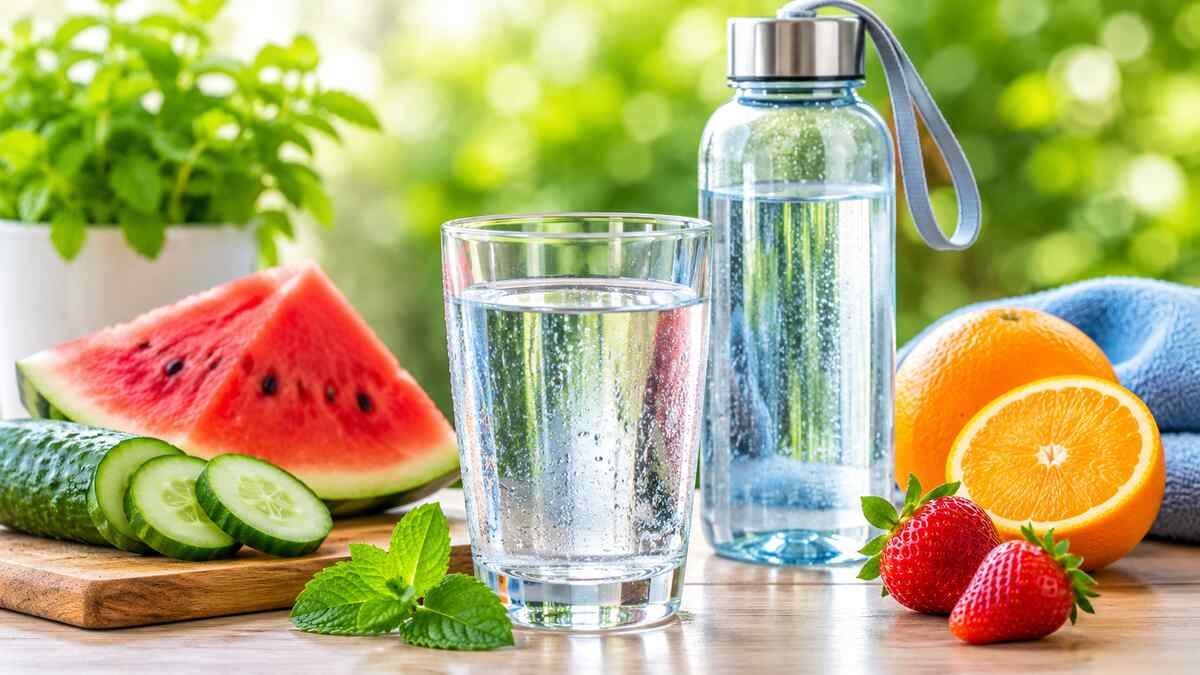
Food contributes to hydration, and some foods are mostly water. Mayo Clinic notes that fruits and vegetables such as watermelon, cantaloupe, strawberries, cabbage, and squash are nearly 100% water by weight. Other good choices include:
- Cucumber
- Lettuce
- Tomatoes
- Oranges
- Celery
Water-rich foods should complement your drinks, not replace them. For more ideas, see our guide to hydrating vegetables.
Can You Drink Too Much Water?
Yes, though it is uncommon in healthy adults. Overhydration happens when you take in more water than your body can handle. This can lower blood sodium to unsafe levels, a condition called hyponatremia.
Mayo Clinic says drinking too much water is rare for healthy adults but can occur in some athletes, and that hyponatremia can be life-threatening. Endurance athletes and people with certain medical conditions may need special attention. Drinking according to thirst and your needs is safer than forcing large amounts of water in a short time.
Who Needs to Pay Extra Attention to Hydration?
Some groups face a higher risk of falling short, or have special needs:
- Older adults, whose sense of thirst can change with age. MedlinePlus advises talking with a provider if you are concerned.
- People who exercise regularly.
- Outdoor workers.
- People living in hot climates.
- Pregnant and breastfeeding individuals. Both the NHS and the British Nutrition Foundation note higher fluid needs.
- People with a fever, vomiting, or diarrhea.
People with kidney, heart, or liver conditions, or those told to limit fluids, should follow their healthcare provider’s guidance rather than general targets.
Frequently Asked Questions About Hydration
What are the biggest benefits of hydration?
Hydration helps regulate body temperature, supports digestion and kidney function, cushions joints, and carries nutrients and waste through the body. It also helps you avoid problems linked to dehydration, such as headaches and poor concentration. The CDC outlines many of these roles.
Does drinking water improve skin?
Staying hydrated supports normal skin function, and dehydration can make skin look dry. However, drinking extra water is not a proven fix for wrinkles or acne. Persistent skin concerns should be assessed by a healthcare professional.
Can hydration help with fatigue?
If tiredness is caused by dehydration, drinking fluids may help. Mayo Clinic notes that even mild dehydration can reduce energy. If you are already well hydrated, extra water is unlikely to change your energy, and ongoing fatigue should be evaluated.
Does coffee count toward daily hydration?
Generally, yes. The NHS lists tea and coffee among drinks that count toward fluid intake, and MedlinePlus includes coffee among sources of body water. Water is still the best everyday choice, and it is wise to watch added sugar.
What is the best time to drink water?
There is no single best time. Drinking steadily through the day, with meals, and around exercise works for most people. MedlinePlus notes that drinking when thirsty and having beverages with meals is generally enough for most people.
How do you know if you are properly hydrated?
Light yellow or colorless urine and not feeling thirsty often are good signs, according to Mayo Clinic. The NHS suggests aiming for pale yellow urine. Some medications and supplements can change urine color, so use it as a guide, not a test.
Final Thoughts on the Benefits of Hydration
Hydration supports nearly everything your body does, from temperature control and digestion to clear thinking and physical performance. Most of the benefits come from avoiding dehydration rather than drinking extra water beyond your needs. There is no one-size-fits-all target, so pay attention to your thirst, urine color, activity, and surroundings.
A simple plan works well: drink water through the day, include water-rich foods, drink more when you sweat or feel unwell, and check with your healthcare provider if you have a condition that affects fluids. Small, steady habits do more than occasional big efforts.
Sources
- About Water and Healthier Drinks, Centers for Disease Control and Prevention
- Water: How much should you drink every day? Mayo Clinic
- Water, drinks and hydration, NHS
- Water in diet, MedlinePlus
- Importance of drinking water, British Nutrition Foundation
Medical Disclaimer: This article is for general educational purposes only and is not a substitute for professional medical advice, diagnosis, or treatment. Fluid needs vary from person to person, and some medical conditions, including kidney, heart, and liver conditions, require personalized guidance. Always talk with a qualified healthcare provider about your health. If you or someone else has confusion, fainting, or cannot keep fluids down, seek urgent medical care right away.
2 thoughts on “Benefits of Hydration: Why Drinking Enough Water Matters for Your Health”
Comments are closed.