
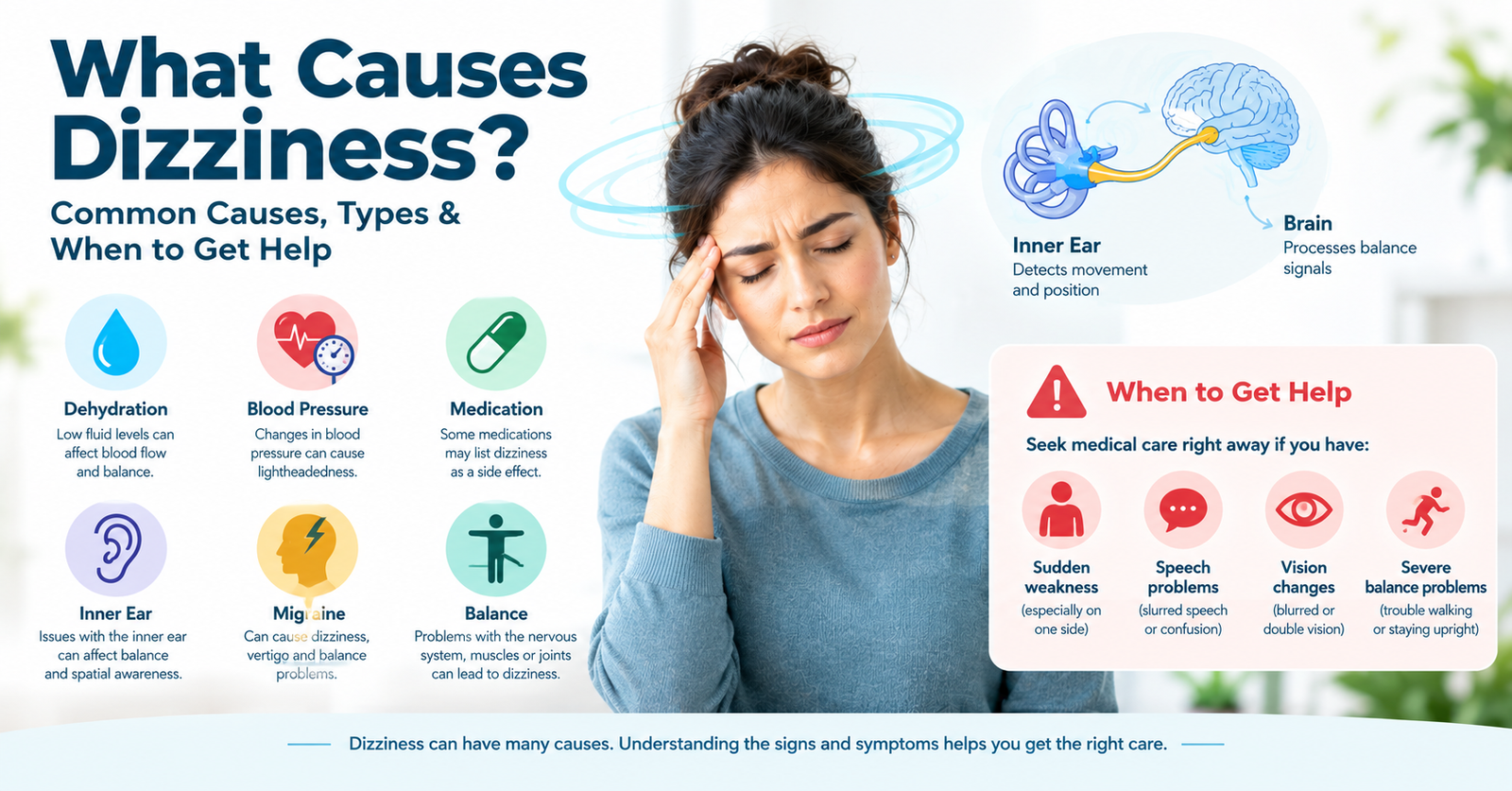

Dizziness is one of the most common reasons people see a doctor. It isn’t one single sensation. It’s a word people use to describe several different experiences, from feeling faint to feeling like the room is spinning.
Most causes of dizziness are minor and short-lived. Dehydration, standing up too fast, or a medication side effect can all bring it on. Other causes, like inner-ear disorders or migraine, need a more specific approach. And in rare cases, sudden dizziness can signal a genuine emergency.
This guide walks through what dizziness actually means, the most common causes, how it differs from vertigo, and the warning signs that call for urgent care.
What Is Dizziness?
“Dizzy” isn’t a precise medical term. MedlinePlus, a resource from the National Institutes of Health, describes dizziness as a word that’s often used for two different symptoms: lightheadedness and vertigo.
The Different Sensations People Mean by “Dizzy”
When people say they feel dizzy, they might mean:
- Lightheadedness, or feeling like you might faint
- Feeling woozy or “off”
- Feeling unsteady on your feet
- Loss of balance
- A spinning or moving sensation
- Feeling like the room itself is spinning
Why Vertigo Is Different
Vertigo is a specific type of dizziness. It’s the sensation that you, or your surroundings, are spinning or moving, even when you’re standing still. This distinction matters because vertigo points toward a different set of causes than general lightheadedness does.
What Causes Dizziness?
Dizziness comes from a wide range of causes, spanning several body systems. Here are the most common categories.
Dehydration
Not drinking enough fluids is one of the simplest, most fixable causes of dizziness. Fluid loss from vomiting, diarrhea, fever, or heat exposure can all bring on lightheadedness by reducing blood volume.
Sudden Blood Pressure Changes
Standing up quickly after sitting or lying down can cause a brief drop in blood pressure. Doctors call this orthostatic or postural hypotension. It happens because blood temporarily pools in your legs, leaving less available for your brain.
Low Blood Sugar
Low blood sugar, or hypoglycemia, is an important cause of dizziness, especially for people with diabetes. Skipping meals or taking certain diabetes medications can trigger it. Following a balanced diet with regular meals can help reduce blood sugar swings for many people.
Medications
Many medicines list dizziness as a possible side effect, including some blood pressure drugs, sedatives, and antidepressants. If you suspect a medication is causing your dizziness, don’t stop taking it on your own. Talk to your doctor or pharmacist first.
Inner-Ear Problems
The inner ear plays a central role in balance, which is why inner-ear disorders are a leading cause of vertigo specifically. NIDCD, part of the National Institutes of Healthk, identifies benign paroxysmal positional vertigo (BPPV), labyrinthitis, and Ménière’s disease as among the most common balance disorders. Vestibular neuritis is another common cause. These conditions are covered in more detail below.
Migraine
Dizziness can occur along with migraine headaches, and some people experience a specific pattern called vestibular migraine, which causes vertigo or balance problems along with, or instead of, head pain. For more on migraine and other headache types, see our guide to what causes headaches.
Anxiety and Stress
Stress and anxiety can contribute to dizziness in some people. That said, not every unexplained dizzy spell is psychological, and persistent symptoms still deserve a proper evaluation rather than an assumption. Our guide to how to reduce stress covers practical approaches if stress is a factor for you.
Anemia and Other Medical Conditions
Several other conditions can cause or contribute to dizziness, including:
- Iron-deficiency anemia
- Viral illness
- Heart rhythm problems
- Other circulation-related conditions
Persistent or unexplained dizziness deserves proper evaluation rather than guesswork. A doctor can check for these underlying conditions directly.
Types of Dizziness
Because “dizzy” covers so much ground, it helps to see the main patterns side by side.
| Type of Sensation | What It May Feel Like | Possible Causes |
|---|---|---|
| Lightheadedness | Feeling faint or about to pass out | Dehydration, blood pressure changes |
| Vertigo | Spinning or room-moving sensation | BPPV, inner-ear disorders, migraine |
| Imbalance | Unsteady or difficulty walking | Inner-ear, neurological, or other causes |
| General wooziness | Vague dizzy or “off” feeling | Medication, illness, dehydration, multiple causes |
Symptoms alone can’t establish a diagnosis. This table is a starting point for describing what you’re feeling, not a substitute for a medical evaluation.
What Is the Difference Between Dizziness and Vertigo?
These two terms get used interchangeably in everyday conversation, but they describe different experiences.
Dizziness: The Broader Term
Dizziness is a broad term. It covers lightheadedness, unsteadiness, wooziness, and several other sensations that don’t involve spinning.
Vertigo: A Specific Sensation
Vertigo is more specific. It’s the feeling that you or your surroundings are spinning or moving. MedlinePlus notes that vertigo is not the same as being lightheaded, since people with vertigo feel actual motion rather than a vague sense of faintness.
Why the Distinction Helps
Compare these three descriptions:
- “I feel like I might faint.”
- “The room is spinning.”
- “I feel unsteady when walking.”
Each points toward a different set of likely causes. Using specific language like this helps a healthcare professional narrow things down faster than a general “I feel dizzy.”
Dizziness Symptoms to Watch For
Dizziness often shows up alongside other symptoms, and which ones accompany it matters for figuring out the cause.
Common Accompanying Symptoms
Symptoms that can occur alongside dizziness include:
- Nausea or vomiting
- Headache
- Ringing in the ears
- Hearing changes
- Blurred or double vision
- Weakness or numbness
- Trouble walking
- Loss of balance
- Fainting
- A racing or irregular heartbeat
Why These Details Matter
The timing, duration, triggers, and accompanying symptoms of your dizziness all help a healthcare professional narrow down the likely cause. Two people with “dizziness” as their only complaint can end up with very different diagnoses once these details are considered.
When Is Dizziness an Emergency?
This is the most important section in this guide. Some causes of dizziness need care right away.
Warning Signs That Need Immediate Attention
Seek emergency medical care for sudden or severe dizziness along with any of the following:
- Weakness or numbness, especially on one side of the body
- Trouble speaking or understanding speech
- Sudden vision changes
- Severe difficulty walking or loss of coordination
- Fainting or loss of consciousness
- Severe chest pain
- Severe shortness of breath
- A seizure
- A severe headache with other concerning neurological symptoms
- Dizziness following a significant head injury
The Stroke Connection
The CDC includes sudden trouble walking, dizziness, loss of balance, or lack of coordination as one of the recognized warning signs of stroke, particularly when it appears alongside other sudden symptoms like facial drooping, arm weakness, or speech difficulty. The CDC recommends the BE FAST method to help recognize a possible stroke quickly.
Dizziness alone does not mean someone is having a stroke. The concern rises specifically when sudden dizziness appears together with other sudden neurological symptoms. If that combination shows up, call 911 right away rather than waiting to see if it passes.
When Should You See a Doctor About Dizziness?
Not every dizzy spell needs an ER visit, but plenty of situations still call for a medical evaluation.
Reasons to Schedule an Appointment
Talk to a doctor if:
- Your dizziness is new or unexplained
- It keeps coming back
- It isn’t going away
- Symptoms are getting worse
- Dizziness affects your walking or daily activities
- You notice hearing loss or tinnitus
- Symptoms began after starting a new medication
- Dizziness occurs with fainting or a significant change in your pulse
- You have other symptoms that concern you
Don’t Just Self-Treat Indefinitely
Persistent or recurrent dizziness that you keep managing on your own, without ever getting it checked, can delay treatment for a condition that’s actually easy to address once identified.
How Is Dizziness Diagnosed?
Diagnosis usually starts with a detailed conversation, not a battery of tests.
Questions Your Doctor Will Likely Ask
Expect questions about:
- When the dizziness started
- How long each episode lasts
- Whether it’s constant or comes and goes
- Whether movement triggers it
- Whether standing up brings it on
- Any recent illness or infection
- Your current medications and supplements
- Any recent head injury
- Hearing changes
- Headache or migraine symptoms
- Other neurological symptoms
Possible Evaluation Steps
Depending on what your doctor suspects, evaluation may include:
- Blood pressure measurement
- A physical and neurological exam
- A balance assessment
- Hearing testing
- Heart evaluation, sometimes including an ECG
- Imaging, in certain situations
Imaging like an MRI or CT scan isn’t something every person with dizziness needs. Whether it’s appropriate depends on your specific symptoms and exam findings.
How Is Dizziness Treated?
Treatment depends entirely on the underlying cause, which is part of why an accurate diagnosis matters so much.
Common Treatment Approaches
Depending on the cause, treatment may involve:
- Rehydration
- Treating an underlying illness or infection
- Adjusting a medication, under medical guidance
- Balance or vestibular exercises
- Canalith repositioning maneuvers for certain cases of BPPV
- Medication for specific causes or symptoms
- Treatment aimed at migraine or another underlying condition
No single treatment works for every type of dizziness. What helps BPPV won’t necessarily help dizziness from dehydration or a medication side effect.
What Can You Do for Mild Dizziness at Home?
For mild, uncomplicated dizziness, a few simple steps can help you get through an episode safely.
Immediate Steps
- Sit or lie down until the feeling passes
- Get up slowly afterward
- Move carefully rather than quickly
- Drink fluids if dehydration might be a factor
- Rest if you need to
Safety Precautions
- Avoid sudden head movements if they make symptoms worse
- Don’t drive or operate machinery while dizzy
- Stay off ladders or other spots where a fall could cause injury
This approach lines up with general guidance from the NHS, which similarly recommends moving slowly, staying hydrated, and avoiding potentially dangerous activities while dizzy.
Dizziness When Standing Up
Feeling dizzy specifically when you stand is common enough to deserve its own explanation.
Why This Happens
A few factors commonly explain this pattern:
- A sudden drop in blood pressure (orthostatic hypotension)
- Dehydration
- Certain medications, particularly blood pressure drugs
- Standing up after prolonged sitting or lying down
Practical Precautions
Sit on the edge of a bed or chair for a few moments before standing fully. Rising in stages, rather than all at once, gives your blood pressure time to adjust. If this happens often, mention it to a healthcare professional, since it may point to a treatable underlying cause.
Dizziness and Nausea
Dizziness and nausea frequently show up together, and the combination can stem from several different sources.
Possible Causes
Dizziness with nausea can occur with:
- Vertigo
- Motion sickness
- Migraine
- Inner-ear disorders
- Certain illnesses or medications
Nausea alongside dizziness doesn’t automatically point to an inner-ear problem. Many unrelated causes produce this same pairing. Some people find that ginger helps settle mild nausea; our article on ginger and health covers what the evidence actually supports.
Dizziness and Headache
Head pain and dizziness together have several possible explanations.
Common Connections
This pairing can relate to:
- Migraine
- Dehydration
- Viral illness
- Blood pressure changes
- Other, less common causes
When This Combination Is Urgent
A new, sudden, and severe headache combined with dizziness or other neurological symptoms needs urgent evaluation. This isn’t the same as an ordinary headache paired with mild lightheadedness. For a broader look at headache types and causes, see our guide to what causes headaches.
Dizziness and Ear Problems
The inner ear does far more than let you hear. It’s central to your sense of balance, which is why several ear-related conditions cause dizziness or vertigo.
Common Inner-Ear Conditions
- BPPV (benign paroxysmal positional vertigo): Brief vertigo episodes triggered by specific head movements, caused by small crystals shifting out of place in the inner ear
- Labyrinthitis: Inflammation of the inner ear, often following a viral infection, that affects both balance and hearing
- Vestibular neuritis: Inflammation of the vestibular nerve, usually viral, that primarily affects balance
- Ménière’s disease: A condition involving episodes of vertigo, hearing loss, and tinnitus, linked to fluid changes in the inner ear
Related Symptoms
Hearing loss and tinnitus, or ringing in the ears, can accompany several of these conditions. Reporting these details to your doctor helps distinguish between them.
Can Dizziness Go Away on Its Own?
Some dizziness resolves once the underlying trigger passes. Dehydration-related dizziness often improves once you rehydrate, for example. But dizziness that keeps coming back or doesn’t improve isn’t something to count on resolving by itself.
There’s no guarantee that dizziness will go away without treatment, especially if there’s an underlying condition driving it. Recurrent or persistent symptoms are worth a proper evaluation rather than an indefinite wait-and-see approach.
How to Prevent Dizziness
Prevention depends heavily on the underlying cause, so these strategies work better for some people than others.
General Preventive Measures
- Stay adequately hydrated throughout the day
- Eat regular, balanced meals rather than skipping them
- Get up slowly from sitting or lying positions
- Review your medications with a healthcare professional if dizziness is a possible side effect
- Manage known migraine triggers
- Treat underlying illnesses promptly
- Reduce fall hazards around your home
- Avoid driving when you feel dizzy
The Bigger Lifestyle Picture
Several everyday habits support overall balance and reduce dizziness risk indirectly. Adequate sleep, regular movement covered in our guide to the benefits of exercise, and consistent healthy habits all play a supporting role. Our broader guide to how to improve your health covers this kind of preventive approach in more depth.
Frequently Asked Questions About Dizziness
What is the most common cause of dizziness?
There isn’t one single cause for all dizziness. What’s most likely depends on whether you feel lightheaded, faint, unsteady, or experience true vertigo, since each of these points toward a different set of causes.
What causes dizziness and spinning?
A spinning sensation usually points to vertigo, most often caused by inner-ear conditions like BPPV. Migraine and certain neurological conditions can also cause vertigo.
Why do I feel dizzy when I stand up?
This is often caused by a temporary drop in blood pressure when you change position, sometimes called orthostatic hypotension. Dehydration and certain medications can make this more likely.
Can dehydration cause dizziness?
Yes. Not drinking enough fluids reduces blood volume, which can lead to lightheadedness. That said, dehydration isn’t the cause of every dizzy episode, so persistent symptoms still deserve evaluation.
Can anxiety cause dizziness?
Anxiety and stress can contribute to dizziness in some people. However, dizziness that’s persistent or unexplained shouldn’t automatically be attributed to anxiety without a proper evaluation.
Is dizziness a sign of a stroke?
Dizziness can occur with stroke, but dizziness by itself doesn’t establish that diagnosis. Sudden dizziness combined with weakness, numbness, speech difficulty, vision changes, or severe balance problems requires emergency evaluation.
When should I worry about dizziness?
Worry about dizziness that’s sudden and severe, especially with other neurological symptoms like weakness, numbness, or trouble speaking. Also pay attention to dizziness that’s persistent, recurrent, or getting worse over time.
What should I do when I feel dizzy?
Sit or lie down until the feeling passes, move carefully afterward, and avoid driving or hazardous activities while dizzy. Seek medical care based on how severe the episode is and whether any warning signs are present.
Sources
- MedlinePlus (National Institutes of Health). Dizziness
- MedlinePlus (National Institutes of Health). Vertigo-Associated Disorders
- National Institute on Deafness and Other Communication Disorders (NIDCD). Balance Disorders
- Centers for Disease Control and Prevention. Signs and Symptoms of Stroke
Related Reading
- What Causes Headaches? Common Types, Symptoms & When to Seek Care
- How to Reduce Stress
- How to Improve Sleep
- Benefits of Exercise
- Healthy Habits
- How to Improve Your Health
- Most Common Health Issues: An Overview
- Is Ginger Good for Health?
Medical Disclaimer
This article is for general information and education. It is not a diagnosis and cannot replace an in-person medical evaluation. If you are experiencing sudden, severe dizziness with any of the emergency warning signs described above, call 911 or seek immediate medical care.
Read our full Medical Disclaimer.
16 thoughts on “What Causes Dizziness? Common Causes, Types & When to Get Help”
Comments are closed.